REVIEW · BUCHAREST
Exploring a Former Communist Prison
Book on Viator →Operated by Local Hosts · Bookable on Viator
One sentence can’t hold the full weight of this day. You’ll tour Bucharest’s communist landmarks and get exclusive access to Fort 13 Jilava, a former detention and execution site. I love the contrast between the big, symbolic sights and the more difficult real-world spaces in working prisons, and I especially like the way the day is paced with food stops and driving time so you can absorb it all without rushing. One heads-up: the subject matter is heavy, and inside the prison phones aren’t allowed, with photos only permitted with a camera.
What makes it feel personal is the guide style. The experience is run by Local Hosts, and on recent departures the guide Mircea is highlighted for bringing firsthand context—he’s been at Piața Revoluției in December 1989 when communism fell. The main consideration is practical: you’ll be walking and standing for parts of the day, and you’ll want a camera plan before you enter Jilava Fort 13.
In This Review
- Key things I’d circle before you go
- From Revolution Square to a former execution camp
- Piața Revoluției: the “map” of modern Bucharest
- The Palace of Parliament: the big photo stop with a darker angle
- Ferentari’s “Bronx” drive: seeing the prison connection in the real city
- Carol Park and the leaders’ mausoleum
- Inside Jilava Fort 13: the rules you must plan for
- How the day is paced (and why that matters)
- Price and value: what you’re really paying for
- Who this tour suits best
- Should you book Fort 13 Jilava and Bucharest’s communism tour?
- FAQ
- How long is the tour?
- Where does the tour start and end?
- What’s the meeting time?
- Is the group small?
- Do I get a ticket on my phone?
- What’s included in the price?
- Is the Palace of Parliament visit included?
- Can I use my phone inside Jilava Fort 13?
- Are photos allowed at Jilava Fort 13?
- What happens if weather is poor?
- FAQ
- Can I cancel for a full refund?
- What if I cancel later than 24 hours before the start time?
- Do I need any special confirmation after booking?
- Is the tour suitable for most people?
- What should I bring if I want photos?
- Are meals and drinks fully covered?
- What if I need another drink during the day?
- Where do I look for the tour when it ends?
- Is there an admission ticket included for Jilava Fort 13?
- Is the tour dependent on a minimum number of participants?
Key things I’d circle before you go
- Exclusive access to Fort 13 Jilava inside a larger active prison setting
- Revolution Square context at the exact location tied to 1989
- Real neighborhood driving through Bucharest’s “Bronx” area, not a showroom route
- Food breaks built in: covrig-style snacks plus a traditional communist meal
- No-phone prison rule and camera-only photos inside the fort
- Small group size (max 8) for a day that needs time and attention
From Revolution Square to a former execution camp
This tour works because it moves in the right order. You start at Piața Revoluției—the symbolic hinge of Romania’s communist era—and you finish with Fort 13 Jilava, where the story turns physical: walls, cells, and the way a regime used prisons as tools of fear.
Bucharest can look like a city of grand façades and dramatic corners. This is different. The point is to connect what you see from the street—squares, administrative buildings, parks, neighborhood streets—to the human reality behind it. You’ll also get a steady rhythm: short stops for context, then driving for perspective, and food breaks so the day doesn’t turn into nonstop absorbing.
You can also read our reviews of more tours and experiences in Bucharest.
Piața Revoluției: the “map” of modern Bucharest
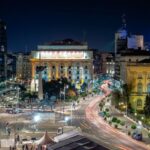
Your day begins at the Memorial of Rebirth on Piața Revoluției. From the first moments, you’re not just looking at a square—you’re building a timeline for the city. The guide frames how Bucharest developed over roughly the last 500 years and how the city’s military fortification system came into existence.
That background matters. It helps you understand why Bucharest is shaped the way it is, and why later regimes could take advantage of existing fortifications and strategic structures. Even if you’ve read a few pages about Romania, it’s a different experience to get a quick guided orientation that links city design to political control.
A practical plus: this stop also acts like a reset. The tour isn’t an all-day walk, and beginning in a central meeting area keeps the logistics simple.
The Palace of Parliament: the big photo stop with a darker angle
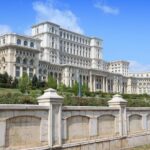
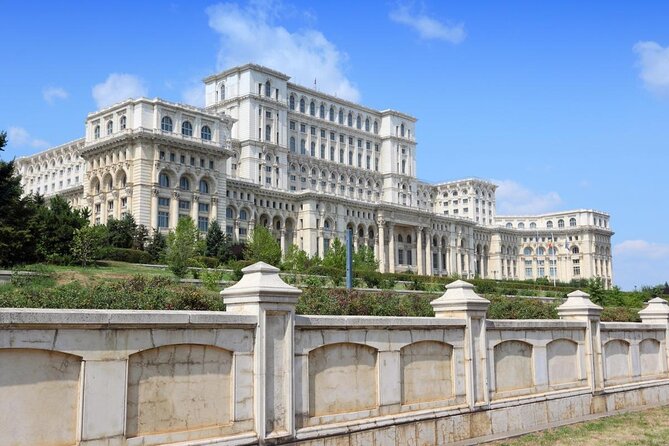
At some point you’ll circle the Palace of Parliament, including a brief moment for the iconic photo you’ve probably seen online. This building is often treated as pure spectacle. Here, you’ll get the other side: the darker stories tied to it and what the building means for the local community today.
The value isn’t the photo. The value is being able to hold two ideas at once: monumental architecture and the social cost behind it. In a city full of impressive structures, this is the one you’ll want to view with your eyes open.
Just note the practical detail: you don’t have admission included for the palace. You’re there for the exterior circle and the guided context, not a full interior visit.
Ferentari’s “Bronx” drive: seeing the prison connection in the real city
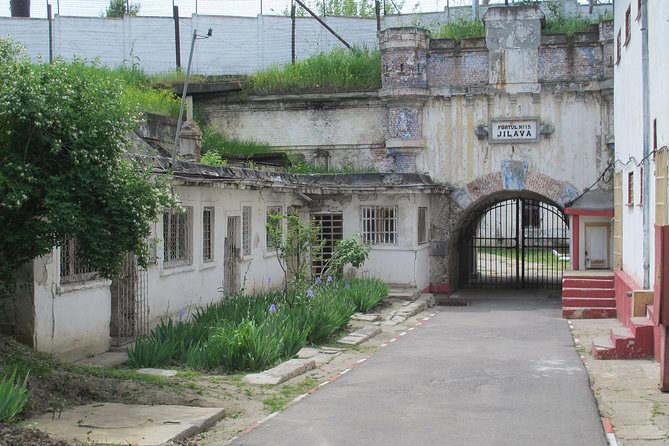
Then the day takes its sharp turn. You drive through the Bronx of Bucharest, heading out toward the Ferentari area and beyond the usual visitor route. This is where you start seeing how communist-era systems connected to real neighborhoods and hard realities.
The focus lands on an old military fort inside an active prison area. It’s used as an extermination camp for people who stood against the regime. Even if you know the general history, the connection to an existing prison setting makes it feel less abstract. You’re not just learning about the past—you’re seeing how the infrastructure survives and still shapes the city’s geography and memory.
One reason I like this stop: it changes your understanding of the phrase communist prison. Instead of imagining something isolated, you see how it was built into systems that could reach ordinary lives.
Carol Park and the leaders’ mausoleum
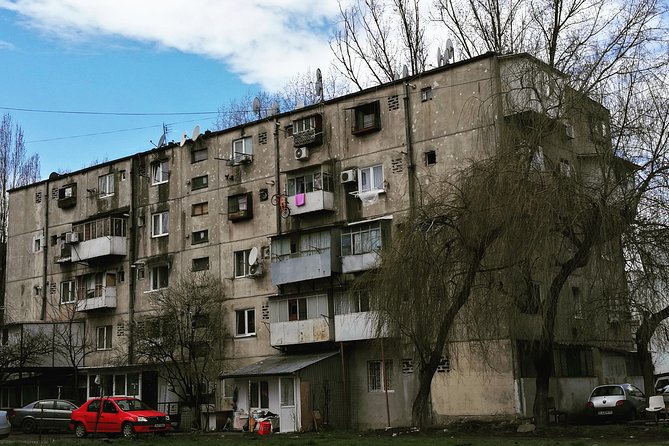
After the harder prison-adjacent scenes, you’ll get a breather at Carol Park. The tour includes time to admire a local communist leaders mausoleum located inside the park, mixing outdoor scenery with political symbolism.
It’s also one of the moments where the tour balances tone. You’re not only learning about oppression—you’re also seeing how regimes tried to memorialize themselves in public space. Parks can feel neutral, but here they’re part of the story.
And then you’ll eat. The tour includes a full traditional communist meal here, which is exactly the kind of “culture lesson” that travel can miss. Food isn’t a substitute for history, but it does help you feel the everyday side of a time period—how people actually lived, ate, and gathered.
If you’re picky about what you’ll eat, you’ll still likely find this manageable, since the tour also provides snacks and drink breaks. Still, treat the meal as part of the experience, not just fuel.
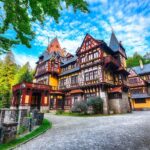
Inside Jilava Fort 13: the rules you must plan for
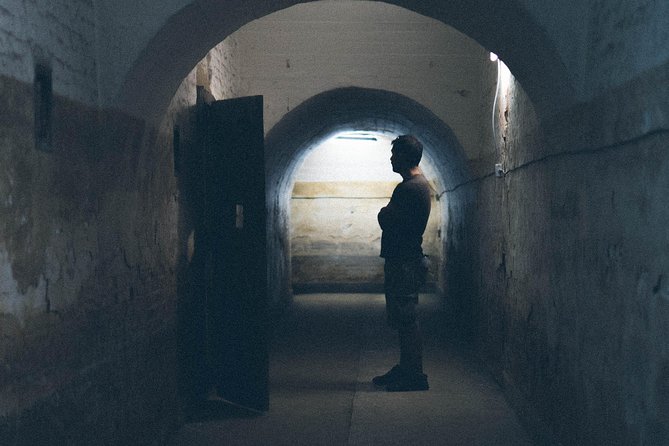
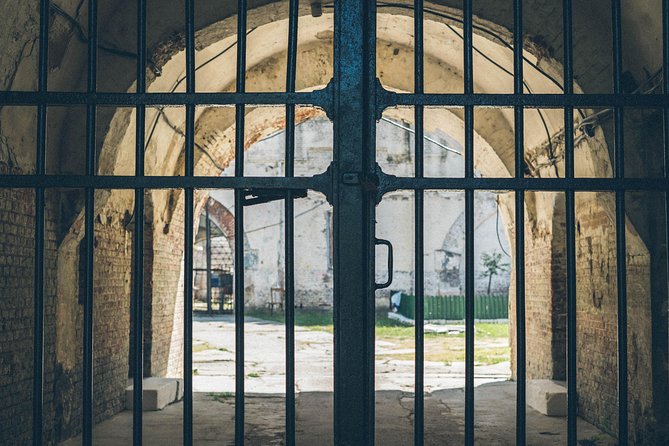
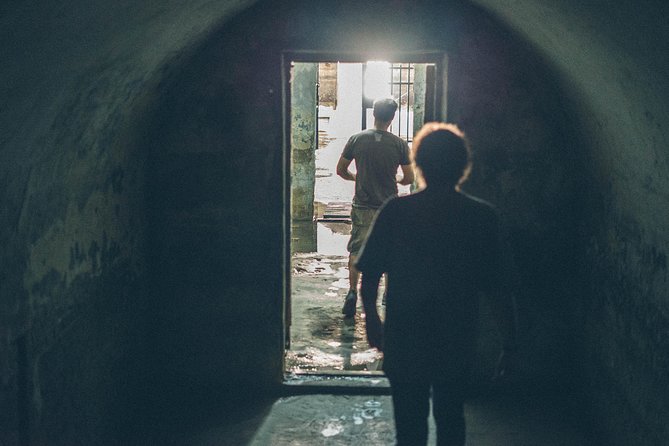
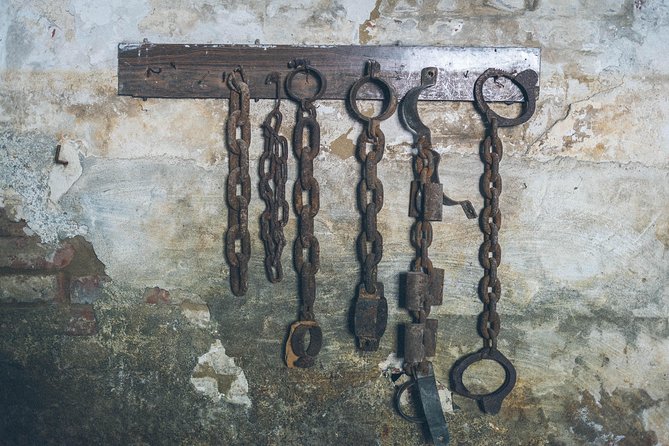
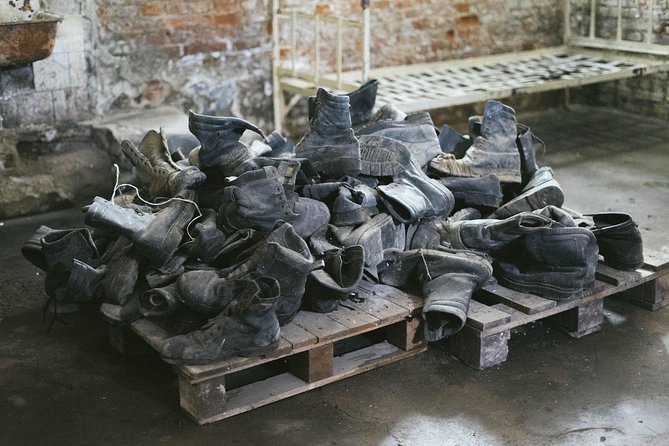
The final stop is Jilava Fort 13. This is the former military fort transformed into a communist detention and execution camp. The tour includes admission, and it’s the part of the day that most people remember—because it isn’t presented like a museum diorama.
You’ll get about two hours here, which is enough time to take it seriously without feeling rushed. The key is how the site is managed: it’s not just a “heritage attraction.” It operates within an active prison context.
Two important rules shape your experience:
- Mobile phones are not allowed inside the prison.
- Photos are allowed only with a camera.
That means you should plan your device setup before you arrive. If you rely on your phone as your only camera, you’ll want to bring an actual camera (or at least something camera-like) if you want photos.
Emotionally, this place tends to hit hard. Even with a guide explaining the story, you should expect silence and discomfort at times. Bring patience for yourself and for the group.
How the day is paced (and why that matters)
A 6-hour tour in Bucharest can either feel efficient or feel like a blur. This one does better than average because it keeps your attention moving but not your legs nonstop.
You’ll be in an air-conditioned vehicle for a good portion of the day, which helps when the weather isn’t perfect. The tour starts at 9:30am and ends back at the meeting point, so you’re not trying to figure out your next transfer during the most mentally intense part of the day.
Group size is limited to a maximum of 8 people. For a subject like this, that matters. Smaller groups make it easier to hear the guide clearly during transitions, and it also helps you have space to step back when the material gets heavy.
One more pacing detail I appreciate: refreshments are built in. You’ll get snack time with covrig, plus local traditional bites, and you’ll also have bottled water on board. There’s coffee and/or tea, and even an alcoholic beverage—either a 400ml beer or an equivalent. That doesn’t erase anything you’ll learn at Fort 13. It just makes the day more human.
Price and value: what you’re really paying for
The price is $173.47 per person for about 6 hours. That might look like a lot at first glance, especially if you’re comparing it to a standard walking tour.
Here’s the value logic:
- You’re paying for a small group (max 8), not a mass departure.
- You get a full day that mixes city driving plus multiple guided stops, rather than one site and done.
- The tour includes snacks, bottled water, coffee or tea, and a beer.
- You also get the ticket for the Fort 13 Jilava visit, including the access element that sets this experience apart from generic history tours.
The exterior Palace of Parliament time is quick and admission isn’t included, so you shouldn’t treat this as a full palace ticket day. But for what you do get—the combination of political context, hard-to-access prison history, and the food breaks—the price tends to feel fair.
Who this tour suits best
This is a strong fit if you want history with direct location context. If you like tours that connect “big story” politics to street-level reality, you’ll appreciate how this one is structured.
It also suits you if you’re traveling with an eye for authenticity rather than only comfort. You’ll spend time outside the typical tourist corridor, and you’ll face restrictions at the prison that remind you this isn’t entertainment.
You might want to skip it if you know you’re sensitive to darker historical content or if you strongly prefer smartphone-based photography only. The phone rule inside Jilava is real, and it affects how you document the day.
Should you book Fort 13 Jilava and Bucharest’s communism tour?
Yes—if you’re ready for a day that mixes context, food, and a very real former prison site. The part that makes it worth booking is the access to Fort 13 Jilava plus the way the guide connects Bucharest’s layout and landmarks to communist-era power. It’s also hard to beat the small group size, the built-in breaks, and the fact that you’re not just looking—you’re learning with your feet on the ground.
If you do book, plan around the no-phone prison rule and bring a camera if you want photos. And mentally, go in expecting heaviness. The guide’s role is to explain and frame, but you’re still walking through a place built to control people.
FAQ
How long is the tour?
It’s about 6 hours.
Where does the tour start and end?
It starts at the Memorial of Rebirth on Piața Revoluției, București 030167, Romania, and it ends back at the meeting point.
What’s the meeting time?
The start time is 9:30am.
Is the group small?
Yes. The maximum group size is 8 people.
Do I get a ticket on my phone?
Yes, it’s a mobile ticket.
What’s included in the price?
Snacks (including covrig and local traditional bites), bottled water (500 ml), coffee and/or tea, and one beer (400 ml) or an equivalent, plus an air-conditioned vehicle.
Is the Palace of Parliament visit included?
You’ll stop near it for a brief exterior moment, but admission is not included.
Can I use my phone inside Jilava Fort 13?
No. Mobile phones are not allowed inside the prison.
Are photos allowed at Jilava Fort 13?
Photos are allowed only with a camera.
What happens if weather is poor?
This experience requires good weather. If it’s canceled due to poor weather, you’ll be offered a different date or a full refund.
FAQ
Can I cancel for a full refund?
Yes. You can cancel up to 24 hours in advance for a full refund.
What if I cancel later than 24 hours before the start time?
If you cancel less than 24 hours before the experience starts, the amount you paid won’t be refunded.
Do I need any special confirmation after booking?
You receive confirmation within 48 hours of booking, subject to availability.
Is the tour suitable for most people?
Most people can participate, and it’s near public transportation.
What should I bring if I want photos?
Bring a camera, since photos are allowed only with a camera inside the prison.
Are meals and drinks fully covered?
The tour includes snacks, water, coffee/tea, and a beer or equivalent, plus a traditional communist meal at Carol Park. Additional food and drinks aren’t included.
What if I need another drink during the day?
Additional food and drinks aren’t included, so you’d cover those yourself.
Where do I look for the tour when it ends?
The tour ends back at the same meeting point where it started.
Is there an admission ticket included for Jilava Fort 13?
Yes, admission for Jilava Fort 13 is included.
Is the tour dependent on a minimum number of participants?
Yes. If the minimum isn’t met, you’ll be offered a different date/experience or a full refund.