REVIEW · BUCHAREST
Private Day Trip True Castles of Vlad Dracula and Transfagarasan Road
Book on Viator →Operated by Trip2Ro · Bookable on Viator
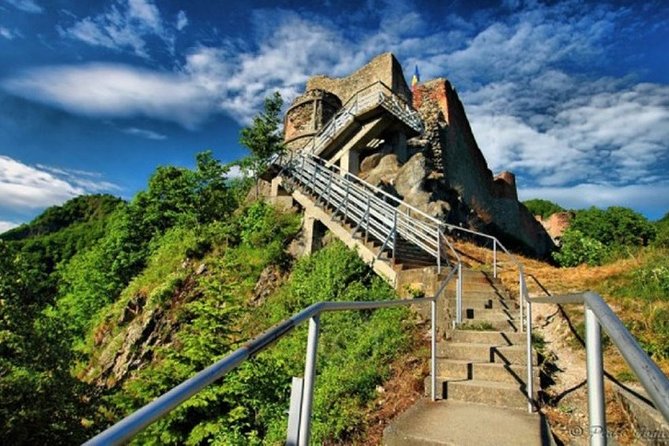
Stairs lead to Vlad’s forgotten fortress. This private full-day Dracula route from Bucharest strings together real places tied to Vlad the Impaler, from Târgoviște’s royal seat to the cliff ruins of Poenari. You’ll get pickup, a guide in English, and a long day that moves with purpose, not tourist drift.
I like two things most. First, the human factor: guides such as Mr Andrei, Alex, and Rasvan are friendly and hands-on, and the ride stays smooth thanks to a very clean car and attentive driving. Second, I love the effort-to-reward setup at Poenari, where the walk up is steep but the views and the feeling of being at the edge of Vlad’s world make it click.
One consideration: this is not a sit-and-stroll day. Between the long driving hours and the climb at Poienari (about 1,400 steps), you’ll want good weather and a realistic pace. If you’re expecting an easy, casual Dracula photo tour, adjust your expectations early.
In This Review
- Key highlights worth planning for
- Private pickup from Bucharest: how the full day really works
- Târgoviște Princely Church and Royal Court: Vlad’s seat, his defiance, his surviving landmarks
- Curtea de Argeș Princely Church: frescoes in the middle of a former capital
- Poienari Castle: the 1,400-step hike to the Dracula ruins
- Vidraru Dam and Transfăgărășan Road: two kinds of wow
- Price and value for a private Dracula day trip
- Practical tips to make the long day feel easier
- Should you book this tour?
- FAQ
- What time does the tour start and how long does it take?
- Is hotel pickup and drop-off included?
- Is this tour private?
- Are entrance fees included?
- Will I see Transfăgărășan Road and Târgoviște on my date?
- Does the tour require good weather?
Key highlights worth planning for
- Private guide, hotel pickup and drop-off: door-to-door convenience with your own group.
- Târgoviște and Vlad’s power base: history grounded in specific landmarks like the Chindia Tower.
- Curtea de Argeș Princely Church frescoes: early Romanian painting details in a royal setting.
- Poienari Castle hike: a real stair climb to the ruins tied to the Dracula legend.
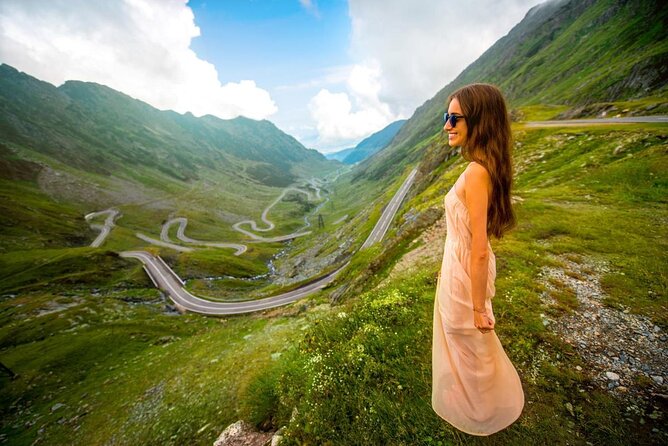
- Vidraru Dam plus Transfăgărășan Road: the famous road trip payoff, depending on season.
Private pickup from Bucharest: how the full day really works
This is built as a long, single-day loop. You meet your guide in Bucharest at 8:00 am, then head west toward Târgoviște and the southern Carpathian region, depending on the time of year. The tour runs about 12 hours, with an air-conditioned vehicle and hotel pickup and drop-off across the city.
That schedule matters. You’re going to feel travel time. The upside is you don’t have to solve transportation yourself, and you get someone explaining what you’re seeing while you’re riding. It’s the kind of day that works best when you’re ready to focus, not when you want to wander independently between stops.
Also note the seasonal swap. From July 1 to October 30, the tour skips Târgoviște and visits the Transfăgărășan Road. From October 30 to June 30, the Transfăgărășan Road is closed, and you visit the Târgoviște Princely Court instead (open Tuesday to Sunday). Your itinerary shape changes with the road, so your “Dracula day” in summer looks a bit different than it does in winter.
You can also read our reviews of more private tours in Bucharest

Târgoviște Princely Church and Royal Court: Vlad’s seat, his defiance, his surviving landmarks
When you reach Târgoviște, the Dracula story gets grounded fast because you’re starting at the place tied to Vlad Dracul and Vlad Dracula Tepes. The Royal Court area is where Vlad Dracul became ruler of Wallachia in 1436 and later moved his base there. It’s also where Vlad Dracula became famous for cruelty, including the famous Easter Sunday episode in 1459 when older noblemen were impaled and younger ones were forced into building work connected with Poienari Fortress.
You also get the Ottoman conflict side of the story, not just the horror-gossip version. In 1459, Vlad Dracula refused to pay tribute to the Ottoman Empire, and there’s even an account of a memorable victory involving him disguising himself as a Janissary and attacking an Ottoman camp near Târgoviște.
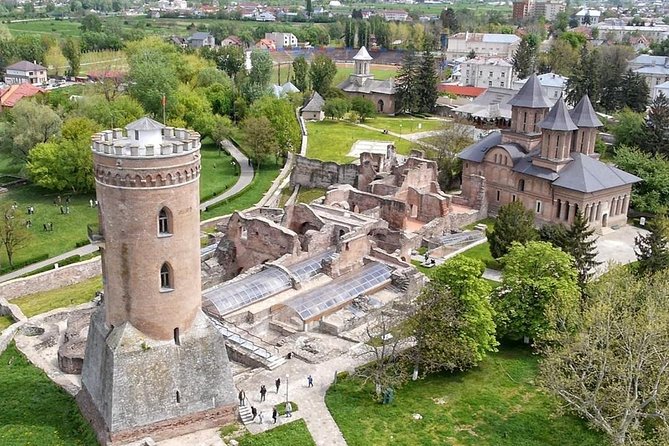
Even if you’re not a walking-history nerd, you’ll probably appreciate the practical “what to look for” details. Chindia Tower is one of the city’s landmarks, described as partly built from a church, with a height of 27 meters and a diameter of 9 meters. The legend says that after climbing the 122 stairs, you’ll never forget Târgoviște and you’ll return.
Two more things help you understand why this site feels dramatic even in ruins and reconstructions. Written records about the Royal Court date back to 1396, and in the 17th century it was set on fire on Ottoman orders, which helped push the capital of Wallachia to Bucharest. That context turns the day from a single monster story into a story about power, pressure, and displacement.
How long you’ll spend here: about 1 hour, with an admission ticket listed for the stop in the schedule.
Curtea de Argeș Princely Church: frescoes in the middle of a former capital
Curtea de Argeș adds a different mood: less battlefield energy, more royal-court atmosphere. This was a former second capital of Wallachia, and the strongholds were rebuilt in the 14th century. So instead of only following Dracula’s footsteps, you also get the setting of Wallachian rule.
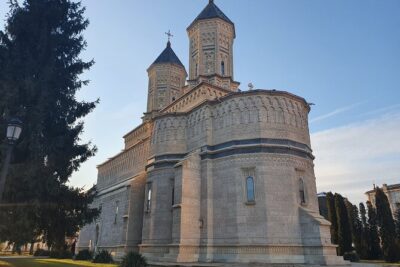
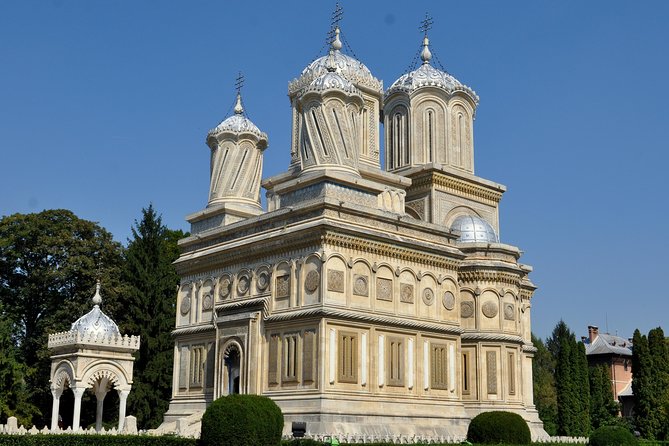
The main stop is the Princely Church, where you can see frescoes inside the building. The frescoes are noted as one of the first examples of Romanian paintings, which is the kind of detail that makes this stop feel more than just a name on a map. You’re also looking at how later reconstructions preserve earlier cultural signals.
The Episcopal Church is described as a recreation of the original monastery built between 1512 and 1517 by prince Neagoe Basarab, and then rebuilt from 1875 to 1885. The schedule also mentions Olari Church in that context, so there’s a layered “then and now” feeling here rather than one frozen moment.
Time-wise, plan on about 1 hour. Admission is listed in the schedule for this stop, but entrance fees are listed as not included overall for the tour, so it’s smart to budget a bit for tickets at sites.
Poienari Castle: the 1,400-step hike to the Dracula ruins
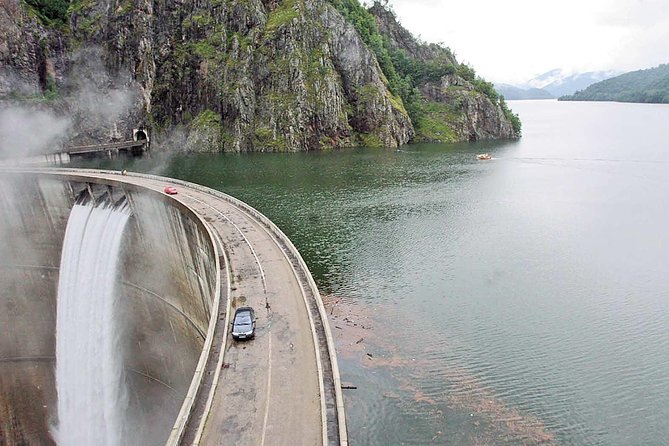
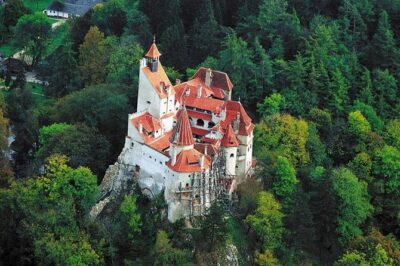
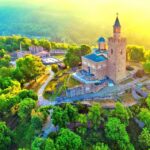
If Târgoviște gives you the political story, Poienari gives you the physical one. Poienari Castle sits on a cliff but is now in ruins, and it’s widely treated as the real castle connected with Vlad Tepes, with the Dracula legend tied to the location.
Here’s the main decision point for you: you climb. To reach the top, the schedule calls for about 1 hour and roughly 1,400 steps. It’s steep, and your calves will notice. But the pay-off is real. At the top, the citadel is surprisingly small, and you’ll learn why: one third of the castle collapsed down the mountainside in 1888.
You also move through narrow, ruined spaces rather than a polished viewpoint. There’s a narrow wooden bridge to enter, then you come across crumbling remains of two towers. One is described as prism-shaped and linked to Vlad’s residential quarters.
The legend details are part of the atmosphere. The story says that Vlad’s wife flung herself out of a window rather than being captured by the Turks besieging the castle. Another legend says Vlad escaped over the mountains on horseback. Whether you treat those as myth or as folklore rooted in fear, it helps explain why people still make the hike.
Plan on about 2 hours total for this stop, including time to climb and take in the views. The route is physically demanding enough that you’ll want comfortable shoes, water, and a calm pace. This is the stop that makes the day feel different from a standard “drive-by castles” tour.
Vidraru Dam and Transfăgărășan Road: two kinds of wow
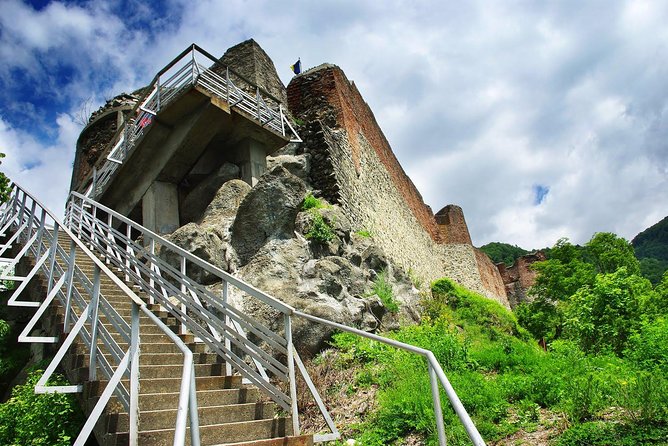
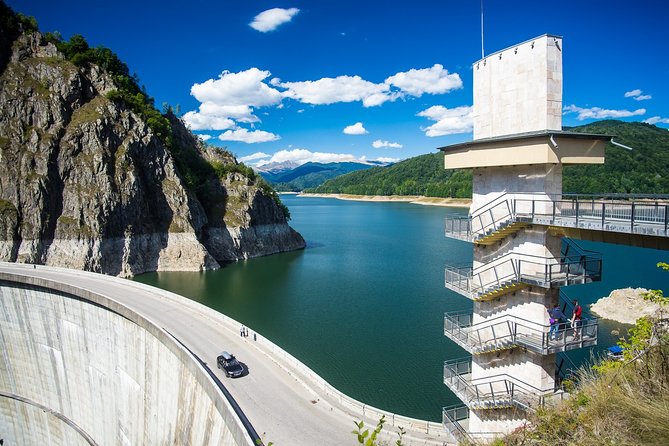
The itinerary then shifts gears into the modern “wow” of the Romanian landscape and engineering. First comes Vidraru Dam, completed in 1966. The dam is described as 166 meters tall and tied to a hydroelectric plant, producing up to 400 GWh of power per year.
You’re not staying long here—about 15 minutes—but you do get a couple useful context clues. The Transfăgărășan Highway passes over the dam top, and the dam top length is described as 305 meters. The project took more than five years to build, and it created the artificial Vidraru Lake on the Argeș River in 1965. Even on a brief stop, it’s easy to connect the road views with the engineering that supports them.
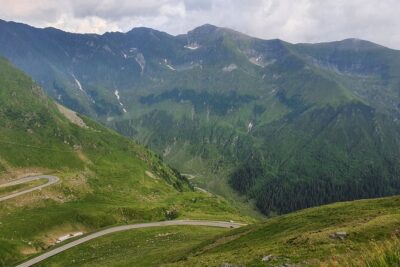
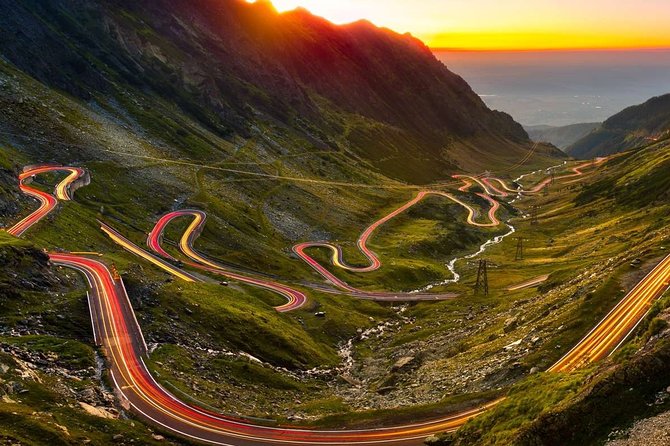
Then comes the famous part, when the schedule allows. The Transfăgărășan Highway is described as more than 150 kilometers long and Romania’s most spectacular and best known road. It’s famously open only from June to October, with the highest point listed as 2,042 meters. The tunnel connecting the northern and southern sides at Lake Balea (Balea Lac) is the key feature at the top.
This is the part I’d recommend even if you think you only care about Dracula. One of the best pieces of advice I can offer: treat the road as a destination, not just transport. On a good day, you’ll understand why someone who initially isn’t excited about it ends up loving it. And yes, there are also mountain shops at the top area, which can be handy for snacks or a quick break.
If your trip date falls in the months when the Transfăgărășan Road is skipped, don’t worry that you’re losing something essential to the Dracula theme. The tour is structured so the historic sites and the road payoff swap based on what’s open.
You can also read our reviews of more tours and experiences in Bucharest


Price and value for a private Dracula day trip
The price is $260.36 per person for a private day trip, with a duration of about 12 hours. That might sound steep if you compare it to public tours or rental-car costs, but the value logic here is straightforward.
You’re paying for three big items: a professional guide, a private vehicle with air-conditioning, and door-to-door pickup and drop-off in Bucharest. Add in the fact that this is one full, organized day with no need to line up transport across multiple sites, and the price starts to make sense—especially if you’re traveling in a small group.
Two more value notes matter for decision-making. Entrance fees are listed as not included, and tips for the guide or driver aren’t included either, so your final “true cost” will be a bit higher than the base price. On the flip side, the tour notes group discounts, which can help if you book with others or end up with a small party.
Where this tour really pays off is the guide quality. In the field, people have named guides like Mr Andrei, Alex, and Rasvan as standouts for being friendly, helpful, and clear during the long drive. That sort of guidance changes how Poienari and Târgoviște land, because you’re not just staring at stone—you’re getting meaning.
Practical tips to make the long day feel easier
A few things will help you enjoy this day without stressing.
Wear for stairs. Poienari involves about 1,400 steps and an hour climb to the top, and you’ll feel it if your footwear isn’t up to it. Choose shoes you trust on uneven ground.
Plan your expectations for pace. The itinerary packs five major stops plus driving time. You’ll want to keep your questions ready for your guide, then let the schedule do its job.
Pack the basics. Bring water and something light to eat. The road day (when Transfăgărășan is included) also includes breaks, and having your own supplies keeps you calm if timing runs tight.
Think about weather. The experience requires good weather. If weather turns, you’ll be offered a different date or a full refund, which is worth noting if you’re traveling with tight flight schedules.
Should you book this tour?
Book it if you want a Dracula day that feels anchored in real places and real effort, not just a themed checklist. I especially recommend it if you care about the story details tied to Vlad’s power base in Târgoviște, want the contrast of Curtea de Argeș’s frescoes, and don’t mind doing the work at Poienari for the cliff-top reward.
Skip it or adjust if you need a low-effort day. The Poienari climb is the main physical hurdle, and the schedule is time-tight by design. Also, if your travel window is outside the Transfăgărășan open months, the itinerary becomes more history-heavy, which may or may not match your priorities.
If you’re choosing between “easy Dracula photos” and “a full day with a guide who actually helps,” this leans clearly toward the second option—and that’s the best reason to book.
FAQ
What time does the tour start and how long does it take?
It starts at 8:00 am and runs for about 12 hours.
Is hotel pickup and drop-off included?
Yes. Pickup and drop-off from any hotel or accommodation in Bucharest are included.
Is this tour private?
Yes. It’s a private tour/activity, and only your group participates.
Are entrance fees included?
Entrance fees are listed as not included. The itinerary mentions admission tickets for some stops, but you should still plan for entrance costs.
Will I see Transfăgărășan Road and Târgoviște on my date?
It depends on the season. From July 1 to October 30, the tour skips Târgoviște and visits Transfăgărășan Road. From October 30 to June 30, Transfăgărășan Road is closed and you’ll visit Târgoviște Princely Court (open Tuesday to Sunday).
Does the tour require good weather?
Yes, the experience requires good weather. If it’s canceled due to poor weather, you’ll be offered a different date or a full refund.
If you tell me your travel dates (month is enough), I can help you predict which version of the route you’ll get and which stop will likely be your biggest time commitment.