REVIEW · OTOPENI
Discover Medieval Transylvania Small Group Tour – 7 days
Book on Viator →Operated by Active Travel Day Tours · Bookable on Viator
Bran Castle lines can steal your whole morning. This small-group tour keeps you moving with skip-the-line tickets for Bran Castle and guided time at the region’s medieval highlights, from Saxon cities to fortress churches. I also like how the itinerary balances spooky Dracula lore with real-world context in places like Sibiu and Sighisoara, so you’re not just staring at stone walls.
One thing to keep in mind: only Bran and Peles Castle basic entrances are included, while several other major sites on the route list admission as not included—so your final spend will depend on what you choose to pay at each stop.
In This Review
- Key things that make this tour worth a spot
- Skip-the-Line to Bran and Peles: What It Changes for Your Day
- Price and Logistics: Does $1,618.39 Feel Fair?
- Your 7-Day Route: From Bucharest Airport to Saxon Towns and Fortress Churches
- Day 1: Bucharest Airport to Sibiu and a First Taste of Saxon Culture
- Day 2: Corvin Castle in Hunedoara and Sibiu After Dark
- Day 3: Astra Open-Air Museum, Biertan Fortified Church, and Sighisoara UNESCO Core
- Day 4: Viscri Fortified Church and Rupea’s Triple-Ring Fortress
- Day 5: Peleș Castle (Royal Splendor) to Bran Castle (Dracula Lore) and Rasnov Views
- Day 6: Magura and the Bat Cave Walk Through Village Transylvania
- Day 7: Back to Otopeni (and How to Think About Departure Time)
- Where This Tour Fits Best (and Who Might Want to Adjust Expectations)
- Should You Book This Medieval Transylvania Tour?
- FAQ
- Where does the tour start and end?
- How long is the Medieval Transylvania small group tour?
- What is the group size limit?
- What’s included in the price?
- Are entrance fees for every stop included?
- What are the accommodations like?
- Is this tour only for Dracula fans?
- When does the tour operate?
- What ticket type do I get?
Key things that make this tour worth a spot
- Skip-the-line entry at Bran Castle so you spend time inside, not in a queue
- Small group size (max 6) for a calmer pace and easier listening to your guide
- UNESCO Saxon strongholds across multiple towns, not just one “Dracula stop”
- Fortified churches and citadels with heavy defensive design you can actually see
- Bat Cave walking day with cave details and countryside village life
- Private transportation and an English-speaking guide/driver for smoother transfers
Skip-the-Line to Bran and Peles: What It Changes for Your Day
The headline here is simple: pre-booked, skip-the-line admission for Bran Castle. That matters in Transylvania because peak-season entry lines can turn your plan into guesswork. With a timed ticket in hand, you can keep your day structured instead of burning energy waiting outside stone gates.
You also get guided access at Peleș Castle with entry included as part of the tour package (not just the drive-by photo). Peleș is not a “generic castle” stop. It’s a royal residence in a Bavarian-style setting, and it’s the kind of place where a guide helps you notice the details instead of rushing room to room.
The tone of the tour works because it doesn’t treat Dracula as the only story. Yes, Bran is on the itinerary. But you also spend real time on medieval defenses, Saxon architecture, and UNESCO-listed town centers—so the whole region starts to make more sense.
You can also read our reviews of more tours and experiences in Otopeni.


Price and Logistics: Does $1,618.39 Feel Fair?
At $1,618.39 per person for about 7 days, you’re paying for a bundle: 6 nights of lodging, private transportation, an English-speaking guide/driver, breakfasts (6), lunch, and included castle entrances at Bran and Peleș.
For value, it’s important to compare this to a “DIY plan” where you book your own transfers and line up tickets for multiple sites. Here, the route is already stitched together. That’s especially useful because the driving segments are not tiny: Bucharest to Sibiu is about 280 km / around 4 hours, and you’ll keep doing similar day-to-day transfers across the region.
Where the price gets you flexibility is in pacing and stress reduction. You’re not coordinating buses, reshuffling time, or trying to figure out the order of castle tickets. You also don’t have to spend your limited vacation hours “solving logistics,” which is often what separates a good trip from an exhausting one.
Just plan ahead for extra site admissions. Several stops explicitly list admission as not included, so your budget should allow for those moments if you want to go inside everything.
Your 7-Day Route: From Bucharest Airport to Saxon Towns and Fortress Churches
This trip runs as a loop starting and ending at Bucharest Henri Coandă International Airport (Otopeni). Day 1 kicks off with a transfer to Sibiu, and you’re back at the airport on Day 7.
The route is designed like a medieval geography lesson: Saxon cities first, then castle and fortified architecture, then a countryside walking day. It’s a good pattern if you like understanding how Transylvania’s towns defended themselves and why certain places became cultural anchors.
Also, the group size is capped at 6 travelers, which is rare for a multi-day route like this. With fewer people, you usually get a better rhythm on guided walks and during the transitions between stops.
Day 1: Bucharest Airport to Sibiu and a First Taste of Saxon Culture
You start with a transfer from Bucharest airport to Sibiu, about 280 km and roughly 4 hours by car. That’s a longish first day, but it’s also how you make the itinerary efficient without losing the whole trip to travel.
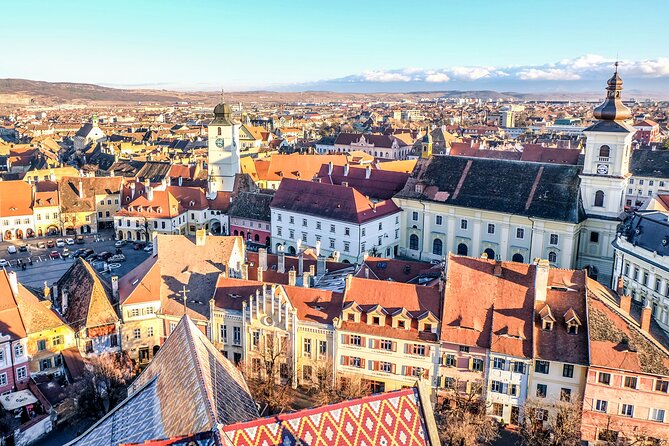
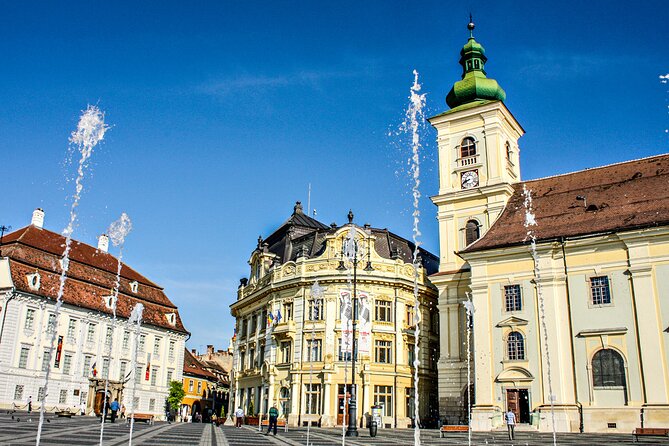
Once in Sibiu, you sleep in a 3 guesthouse/hotel. Sibiu is a smart opening choice because it’s not only “pretty old town.” It was once a leading Transylvanian Saxon town and served as a capital for Saxons. You’ll also hear about the city’s early institutions: Romania’s first hospital (1292), first pharmacy (1494), and the Brukenthal Museum, opened in 1817.
On a day like this, you’ll probably want an easy first evening. The schedule here gives you space in that direction, and Sibiu by night is a theme that continues later in the trip.
Day 2: Corvin Castle in Hunedoara and Sibiu After Dark
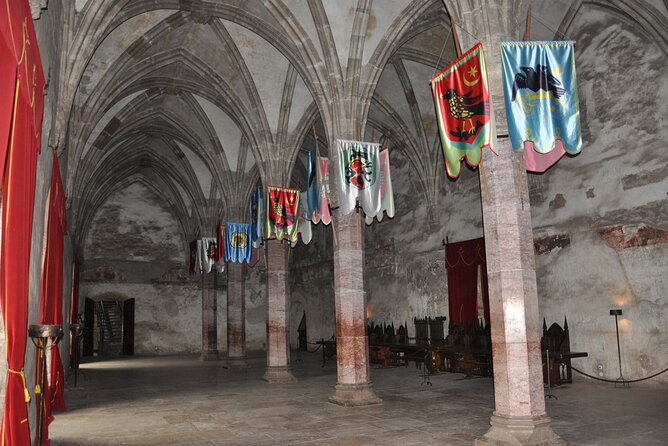
Today includes a drive to Hunedoara of about 130 km (around 2 hours). The anchor is Castelul Corvinilor, also known as Hunyadi Castle / Hunedoara Castle. This is a Gothic-Renaissance castle and one of the largest castles in Europe, often mentioned among the seven wonders of Romania.
The reason this stop works on a medieval tour is the feel. It’s big enough that you don’t just glance at it—you can sense how a fortress and a residence could dominate a landscape. It’s also a strong transition from Sibiu’s urban Saxon feel to something more militarized and sprawling.
You then return to Sibiu, take lunch, and head out for Sibiu by night. That evening walk is one of the easiest “value-adds” in the itinerary because it lets you see how the city’s medieval center behaves after dark, without adding extra travel time.

Day 3: Astra Open-Air Museum, Biertan Fortified Church, and Sighisoara UNESCO Core
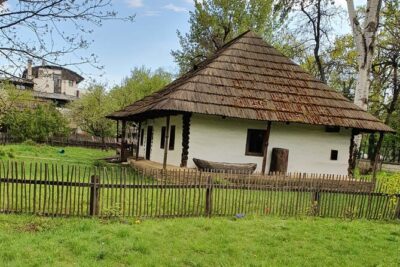
Day 3 is where you really start layering Transylvania’s story. First up is Muzeul Astra, an open-air museum that covers 250 acres. It’s in a forested area beside a lake and includes more than 300 buildings, plus watermills and windmills, representing village architectural styles from different parts of Romania.
This stop can be a hit or a miss depending on your interests. If you like crafts, farm-life architecture, and seeing how daily life looked, you’ll enjoy the slower pace. If you prefer only “grand castle drama,” you might find it less flashy—but it’s still a useful piece of the puzzle.
Next you drive to Biertan, about 70 km / 1 hour. Biertan’s fortified church is a UNESCO World Heritage Site (since 1993) and a great example of defense built into religion. You’ll notice late-gothic architecture, heavy doors, and double exterior walls. The church also has the largest Transylvanian multi-paneled wooden altar and a notable wooden door that once protected treasures in the sacristy.
Then it’s on to Sighisoara, about 30 km from Biertan. Sighisoara’s old city center is UNESCO-listed, and you’ll learn about legends tied to Vlad the Impaler, a Wallachian prince and warlord who inspired Bram Stoker’s fictional Dracula. The tour also emphasizes something practical: Sighisoara is presented as the only Romanian city that looks exactly the same way as in the 16th century. Whether you take that as literal or poetic, the core idea is clear—this is a town center you can walk and visually map to medieval times.
Day 4: Viscri Fortified Church and Rupea’s Triple-Ring Fortress
On Day 4, you head to Viscri first, about 1 hour away. You approach the village and see the whitewashed walls and red-roofed towers that surround it—designed to protect early inhabitants from invading Turks. That defensive design is the theme again, and it helps you understand that “church architecture” wasn’t just about faith; it was also about survival.
You’ll visit the UNESCO-listed fortified church in Viscri. The tour also highlights Prince Charles as an owner of a house there and frames it in terms of personal connection to Transylvania. It’s a nice reminder that these places aren’t just tourist objects; they’re lived-in landscapes with modern ties.
Later, you go to Cetatea Rupea (the Rupea fortress). This fortress dates from the 14th century and sits on a basalt rock with three rings. A key detail here is the 60 m deep well inside the fortress, and the fact that the water is still drinkable. That’s the kind of practical medieval engineering detail that makes the fortress feel real instead of decorative.
The day ends by driving onward to Brasov. You’ll stay in Brasov at a 3 hotel for 3 nights, and you get time for meals (lunch and dinner are included on the schedule for this day).
Day 5: Peleș Castle (Royal Splendor) to Bran Castle (Dracula Lore) and Rasnov Views
Day 5 stacks three big-ticket sites, with driving between them that keeps things moving.
You start with Peleș Castle near Sinaia, about 45 minutes from Brasov. Peleș is expansive and Bavarian-style, built in the 19th century to house Romania’s royalty. It’s also known for ornate, carefully maintained interiors. You’ll have a guide-led tour of many rooms, and you can also tour the neighboring Pelișor Castle, described as smaller and decorated in art nouveau finery.
Then you continue to Bran Castle, about 60 minutes from Sinaia. Bran is presented as the hilltop estate often called Dracula’s Castle, with Gothic chambers and connections to Bram Stoker’s Count Dracula story. You also hear about Vlad the Impaler, a 15th-century prince known for campaigns against invading Turks, and how his reputation fed the Dracula myth-making.
Bran is where the skip-the-line ticket pays off most. One review noted the line savings as at least an hour, and that’s believable: when you’re timed in, you don’t lose your energy or your place in the day.
After Bran, you visit Râșnov Citadel, about 30 minutes away from the castle area. The fortress is described as a walled stone compound meant to ward off attacks by Tartars and used as a refuge for villagers. You’ll explore ramparts, courtyards, and a well built by the Teutons, then drive back to Brasov. The panoramic payoff matters here: after castle interiors, outdoor views reset your eyes.
Day 6: Magura and the Bat Cave Walk Through Village Transylvania
This is the day that gives the tour breathing room. Instead of more castles, you get a small-group walking tour from Brasov to the rural villages of Pestera and Magura. You’ll walk with a guide in the area for about 3 to 4 hours, with an easy-to-medium pace and up to 12 km walking.
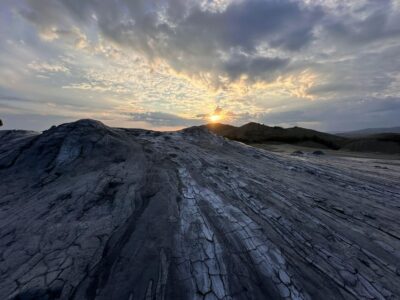
The highlight is the Bat Cave, within the National Park “Piatra Craiului.” The cave entrance is described as starting through a narrow corridor, then moving into a grotto and a gallery. You’ll see Jurassic limestone formations, including formations called tears of the earth.
A meaningful detail: the cave is not electrified to protect the bat habitat. That means you should treat the cave as darker and more “natural-feeling” than a lit show cave, and bring your patience for slower steps and footing.
You also interact with locals and get village-life context during the walk. If you like learning how people live around the landmarks, this is the day that makes the tour feel less like a museum circuit.
Day 7: Back to Otopeni (and How to Think About Departure Time)
Your final day is a transfer back to Bucharest airport, about 3 hours. The tour ends back at the meeting point at Bucharest Henri Coandă International Airport.
Plan your end-of-trip timing so you’re not racing through security and boarding. You’ll also want to keep in mind that your last hours are travel time, not sightseeing—so treat this day as a cleanup day for laundry, souvenirs, and your travel documents.
Where This Tour Fits Best (and Who Might Want to Adjust Expectations)
This tour is ideal if you want a “greatest hits” medieval route that still tries to make sense of what you’re seeing.
- You’ll likely love it if you care about fortified churches, Saxon architecture, and castles with defense built into their design.
- You’ll like the pacing if you prefer private transportation and a guide who keeps the story connected from town to town.
- You might want to adjust expectations if you mainly want Dracula-themed moments. Bran is included, but the itinerary also spends significant time on fortified churches, open-air village architecture, and countryside walking.
If you’re sensitive to walking, note that the bat cave day includes up to 12 km and cave navigation through narrow passages. It’s described as easy-to-medium, but it’s still a real physical day.
Should You Book This Medieval Transylvania Tour?
I’d book it if your top priorities are skip-the-line time at Bran, guided visits at Bran and Peleș, and a route that spreads beyond one castle into Sibiu, Sighisoara, and UNESCO fortified sites. The small group size (max 6) and private transfers are the kind of extras that quietly improve the whole feel of the trip.
Hold back if your budget can’t stretch to extra admissions at sites that list entry as not included. Also think twice if you dislike walking days, since Day 6 includes a long walk plus a cave visit with minimal lighting.
If you want medieval Transylvania with less waiting and more structure, this is a strong value way to do it.
FAQ
Where does the tour start and end?
It starts at Bucharest Henri Coandă International Airport (Otopeni) and ends back at the same meeting point.
How long is the Medieval Transylvania small group tour?
It’s listed as 7 days (approx.).
What is the group size limit?
The tour has a maximum of 6 travelers.
What’s included in the price?
Included are lunch, entrance fees at Bran Castle and Peleș Castle (basic tour), private transportation, an English-speaking tour guide/driver, 6 nights accommodation (2 nights Sibiu, 1 night Sighișoara, 3 nights Brașov), and breakfast (6).
Are entrance fees for every stop included?
No. Bran and Peleș Castle basic entrances are included, while several other sites are listed with admission tickets as not included.
What are the accommodations like?
You stay in 3 guesthouse/hotel in Sibiu, then 3 hotel for 3 nights in Brașov. Upgrades to 3 to 5 hotels in Brasov old city center are offered based on availability, with example hotels listed.
Is this tour only for Dracula fans?
You’ll see Dracula-related sites like Bran Castle, but the itinerary also focuses heavily on Saxon towns, fortified churches, and medieval fortresses.
When does the tour operate?
The opening hours listed are 04/22/2025 – 11/04/2025, and it runs on Tuesday, with a time window of 8:00 AM – 1:30 PM.
What ticket type do I get?
You receive a mobile ticket.