REVIEW · BUCHAREST
Bucharest: Museum of Senses Entry Ticket
Book on GetYourGuide →Operated by 6S Entertainment Romania SRL · Bookable on GetYourGuide
Some places mess with your eyes on purpose. The Museum of Senses in Bucharest turns that into a 1-hour walk through 40 hands-on exhibits across 11 rooms, where you test how your brain interprets light, space, sound, and motion all at once.
I especially like the interactive exhibits that make you do the thinking, not just watch it. I also love the human touch from the staff, who often jump in to help with photos and even point out rooms you might miss, with names like Kaleen and Calin popping up in guest comments. One downside to plan around: the visit is timed and can feel short, especially if you stop for lots of photos in every room.
In This Review
- Key Things to Know Before You Go
- Museum of Senses Bucharest at a Glance
- Tickets, Timing, and Finding the Place in the Mall
- Your 1-Hour Route Through 11 Rooms of Optical Tricks
- Mirror Maze: Your First Test of Depth and Control
- RGB Room and the Illusion Factory Between Stops
- Infinite Tunnel, Vortex Tunnel, and the 2D Cafe Room
- Ames Room and Infinity Mirror: The Perception Payoff
- Photos, Videos, and Staff Help That Actually Matters
- Price and Value: Is $10 Worth It?
- Who This Experience Fits Best
- Accessibility and Practical Considerations
- Quick Tips to Make Your Hour Go Smoothly
- Should You Book the Museum of Senses Entry Ticket?
- FAQ
- How much does the Museum of Senses entry ticket cost?
- How long is the visit?
- How many exhibits and rooms are included?
- Do I need to exchange my ticket at the entrance?
- What should I expect inside the museum?
- Is there Wi‑Fi, and are lockers provided?
- Is the museum wheelchair accessible?
- Is the experience good for taking photos and videos?
- Are there staff who help with photos?
- Is there free cancellation?
Key Things to Know Before You Go
- 40 exhibits / 11 rooms means nonstop variety in a compact visit
- Mirror maze kicks things off with a fun, slightly chaotic challenge
- Ames room + infinity mirror are the big perception moments
- Expect photo-friendly setups and staff help with images and video
- Some areas may involve steps, so keep an eye out if mobility is limited
Museum of Senses Bucharest at a Glance
The Museum of Senses entry ticket is straightforward: you exchange your ticket at the entrance, then you get access to a full circuit of sensory experiences spread across 11 rooms. The building is set up like a playful house of optical illusions and perception tests, where your job is to react and figure out what your brain is doing to you.
You should expect a visit that moves at a brisk, fun pace. The listed duration is 1 hour (check available starting times), which is part of the design. This isn’t a slow museum with long explanations; it’s more like a guided game where the exhibits do the teaching.
At about $10 per person, you’re paying for the experience of physically interacting with perception tricks and for the infrastructure that makes it easy to enjoy: Wi‑Fi, a cloakroom, and free lockers. That last bit matters more than you’d think. When you have a place to stash your bag, you can focus on the exhibits instead of your shoulder strap digging into your life choices.
You can also read our reviews of more tours and experiences in Bucharest


Tickets, Timing, and Finding the Place in the Mall
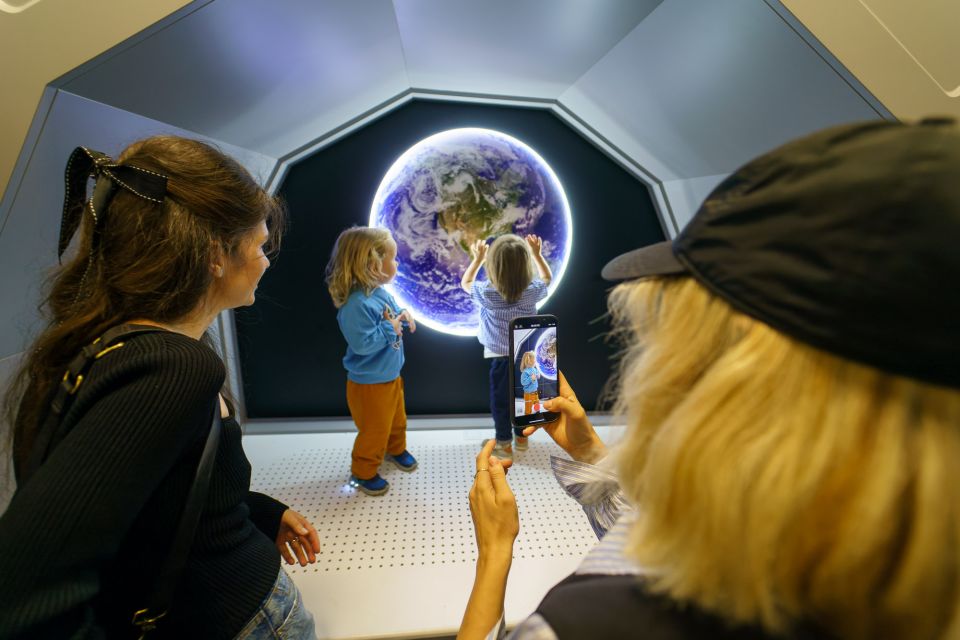
You’ll want to check starting times when you book, since this is scheduled access rather than an open-ended roam. The museum also gives a clear setup: you exchange your ticket right away, get any guidelines you need, then step into the first challenge.
Location can be a little tricky to spot. One helpful detail from past visitors is that the museum sits inside a shopping center and may be on the top floor, so don’t assume you’ll see it from street level. If you’re arriving with time pressure, do yourself a favor: give yourself a few extra minutes to find the entrance and settle in before your start time.
The staff tends to be hands-on. People specifically mention staff who were friendly, interactive, and willing to take photos and videos for them. If you’re going solo, that’s a big deal. You can enjoy the rooms without spending the whole time aiming your camera at your own feet.
Your 1-Hour Route Through 11 Rooms of Optical Tricks
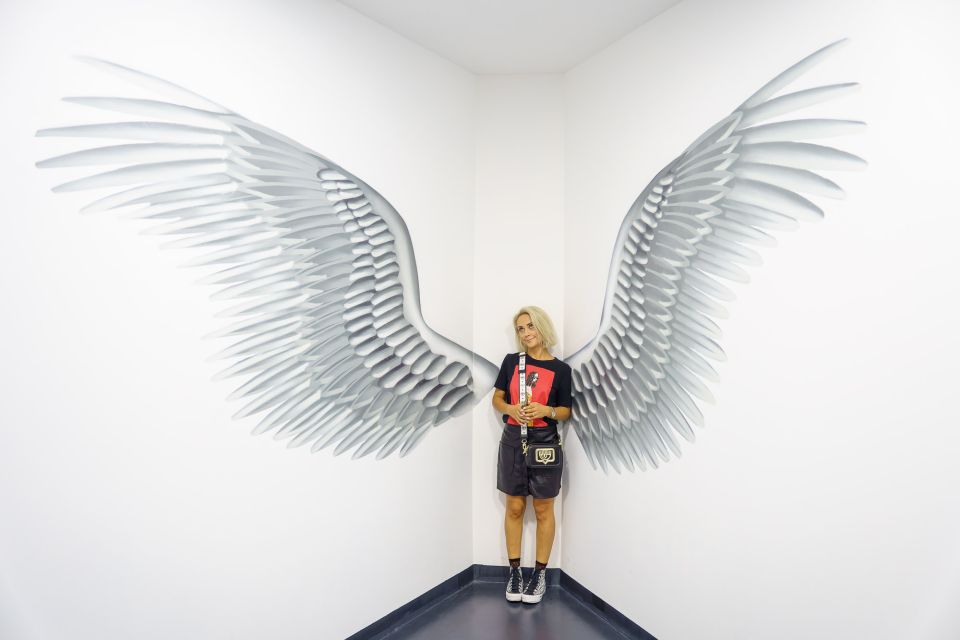
The museum layout is designed to feel like a continuous journey. You don’t need a deep strategy, but knowing the sequence helps you pace yourself and avoid the “wait, where am I going?” scramble.
Here’s the flow you can expect:
- You start with the museum’s first major puzzle: the biggest mirror maze in Bucharest.
- You move through rooms that test color and visual processing (including an RGB room).
- You then face motion and space challenges like an infinite tunnel, designed to mess with your sense of depth.
- After that comes a zone of optical illusions, including a desert-style illusion area, a 2D cafe room, and a vortex tunnel.
- The circuit ends with the classic crowd-favorites: the Ames room and the infinity mirror room where you can dance to music.
It’s not just a collection of photo spots. The exhibits are built to demonstrate how easily your brain fills in gaps. You’ll see it in real time: your perception guesses, your eyes correct (or don’t), and your body reacts like it’s sure of something… until it isn’t.
Mirror Maze: Your First Test of Depth and Control
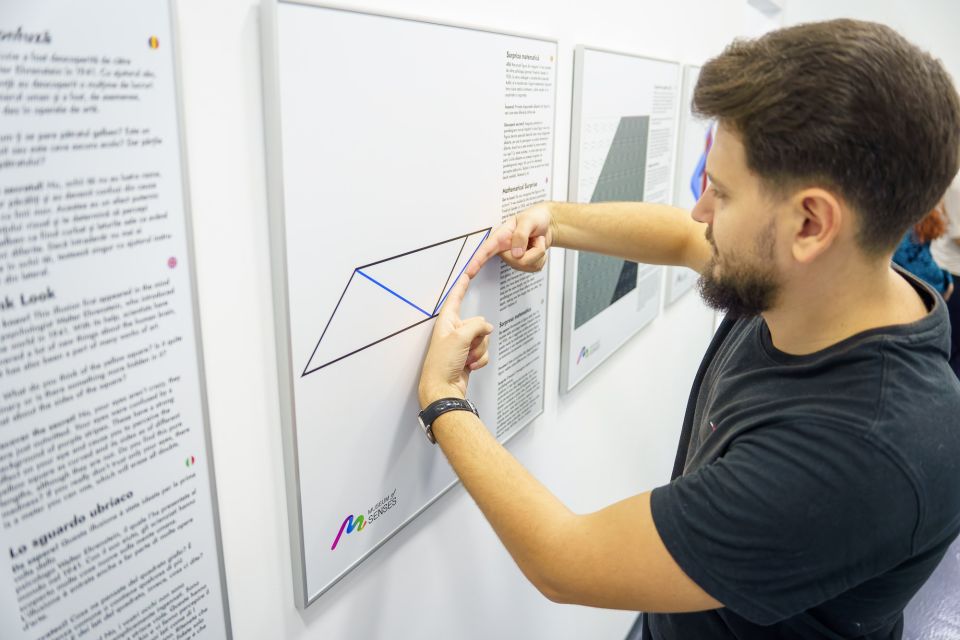
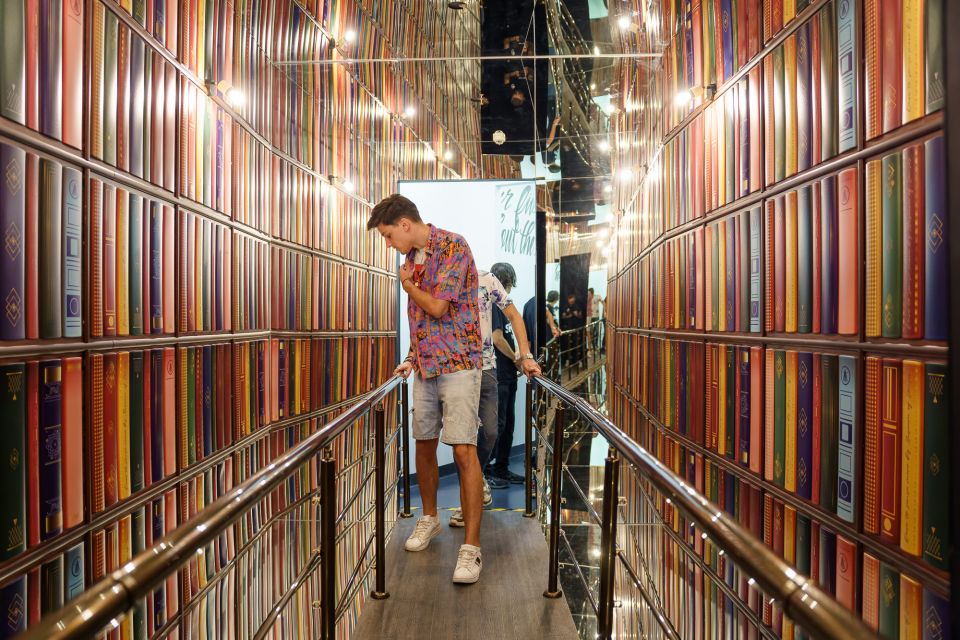
The first big moment is the mirror maze, framed as a challenge: find the exit of the biggest one in Bucharest. This works as a warm-up for the whole museum because it forces you to pay attention to direction, reflection, and spatial cues.
What I like about the mirror maze is that it’s active. You’re not standing still hoping your photo comes out. You’re moving, turning, recalculating, and trying to make sense of a space that keeps rewriting itself.
One practical note: mirror maze rooms are the kind of place where people want to take photos immediately. Try to do a quick sweep for the exit first, then slow down for pictures. Otherwise you’ll lose your bearings and end up doing laps that feel like homework.
RGB Room and the Illusion Factory Between Stops
After the maze, the experience shifts toward color perception and visual rhythm. The RGB room is where you can start thinking about how your brain builds color from light signals. It’s the kind of exhibit that makes you notice details you normally ignore—how a single change in light can make a whole space feel different.
Then the museum keeps the momentum with more perception-bending setups:
- The infinite tunnel is built to challenge your comfort with what looks like endless depth. It’s fun, but if you’re sensitive to heights or disorienting perspectives, take it slow at the edges.
- The desert of optical illusions is a tonal shift. It’s a themed space, but it still plays the same game: what you think you’re seeing versus what your brain is actually interpreting.
This is where you can feel why the museum is designed for a timed hour. The exhibits stack on each other. If you spend too long freezing for a perfect shot early, the later rooms may pass by faster than you’d like.
You can also read our reviews of more museum experiences in Bucharest






Infinite Tunnel, Vortex Tunnel, and the 2D Cafe Room
A couple of rooms are especially memorable because they put you in the middle of the trick.
The infinite tunnel leans into your fear of misjudging distance. Your eyes offer a clear path; your brain reads it as reality. Then the exhibit’s perspective cues make that certainty wobble. It’s the kind of room that can be hilarious with friends, but also genuinely unsettling if you hate enclosed, optical-depth environments. You can usually manage this by stepping in gradually and giving yourself a moment before you commit to the center for photos.
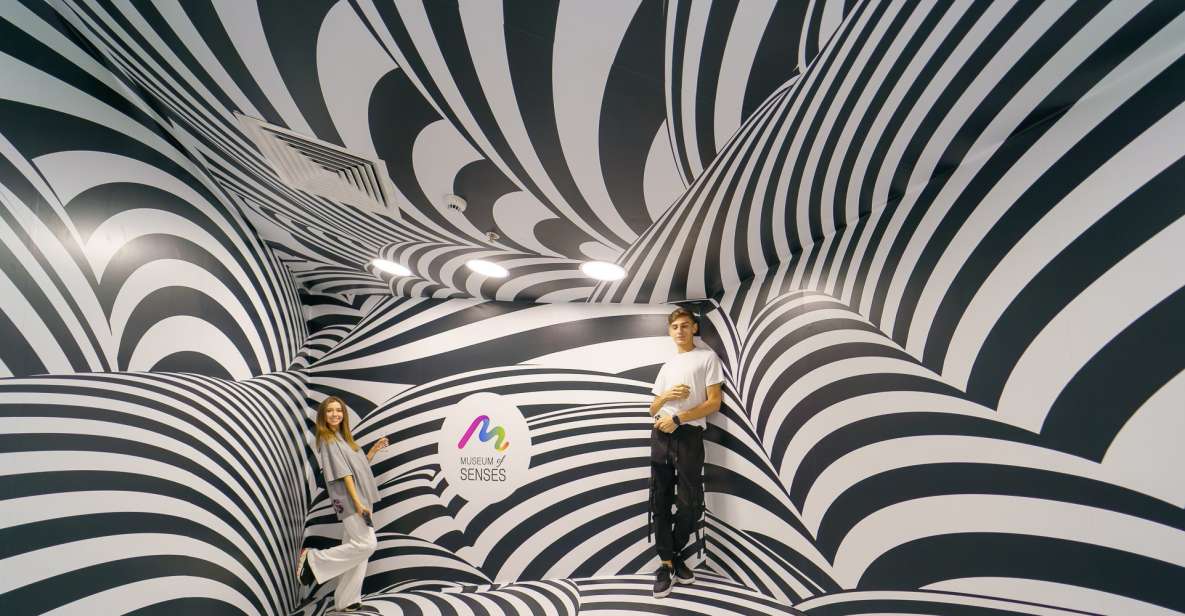
The vortex tunnel is another depth illusion, built around spiraling distortion. This one often works best when you move with the room rather than fighting it—step, turn, and let the angles do their thing.
And then there’s the 2D cafe room—a playful, clever spot designed for picture-perfect misunderstandings. The idea is simple: it helps you create images where the space looks flat or sideways in ways your brain struggles to correct. It’s popular because it turns your pose into part of the illusion.
If you’re thinking about photos, this is where you’ll likely spend the most time. The museum is friendly about pictures and even encourages live video sharing, so bring the expectation that you’ll be documenting your confusion.
Ames Room and Infinity Mirror: The Perception Payoff
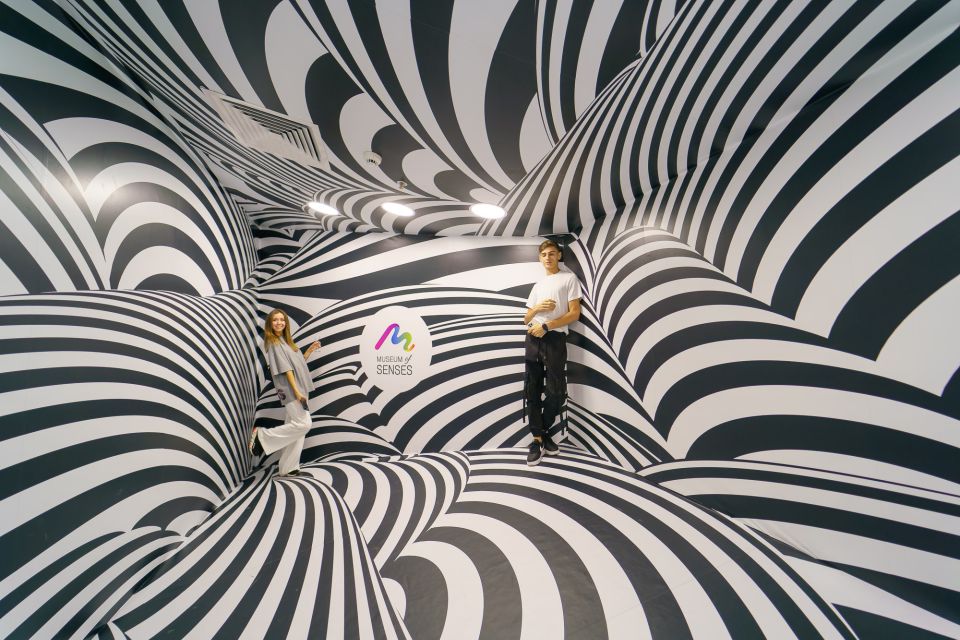
If you want the most talked-about perception moments, save your energy for the final stretch.
The Ames room is world-famous for creating distorted proportions. The room makes people look larger or smaller than they should, depending on where you stand. It’s one of those experiences where you can feel your brain insisting on a wrong answer, even while your eyes keep screaming that something is off.
Then comes the infinity mirror room. This is less about distorting your body proportions and more about creating the feeling of endless space. It’s also described as music-based, so you’re not just staring—you’re doing something physical, like dancing, while the room does its infinite trick around you.
I find this combo makes the experience satisfying. You get a maze, then color and depth, then you land on two rooms that deliver clear, visible changes. Your brain gets the message: perception isn’t a camera. It’s an educated guess.
Photos, Videos, and Staff Help That Actually Matters
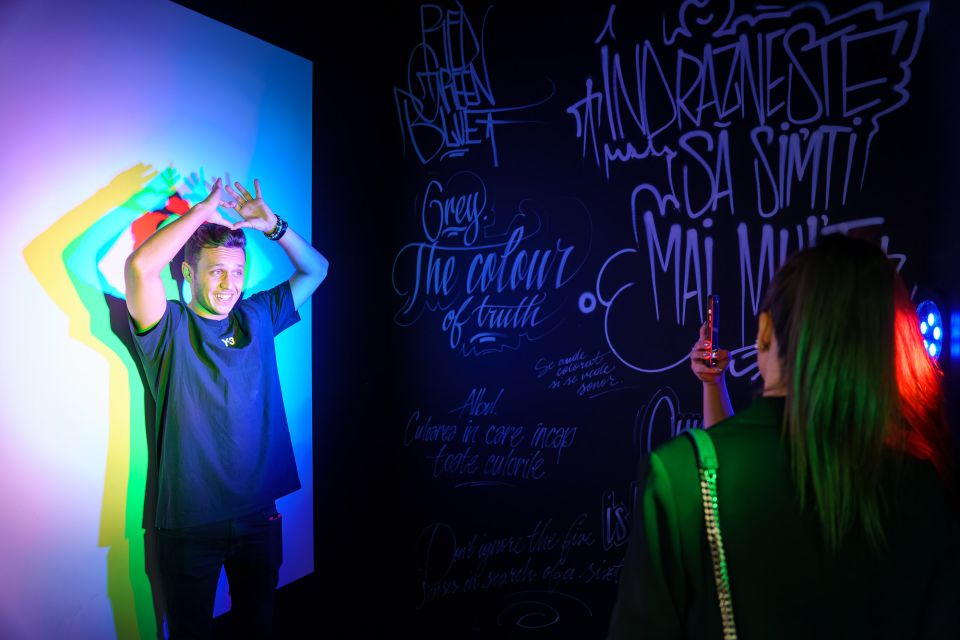
This museum is built for content, but it’s not just about selfies. It’s about understanding how to get a good result from a perspective illusion.
The big advantage is that staff are interactive. Multiple visitors mention staff members who helped them take photos and even made sure they saw rooms they might have missed. Names that come up include Kaleen and Calin, and that kind of hands-on assistance matters. In a place full of camera angles and reflections, a quick suggestion on positioning can turn a blurry shot into something you’ll actually want to keep.
You’ll also like that the museum encourages taking pictures and supports live video sharing to friends and family. That means you can share the experience as it happens instead of just waiting for later to explain what you saw.
Price and Value: Is $10 Worth It?
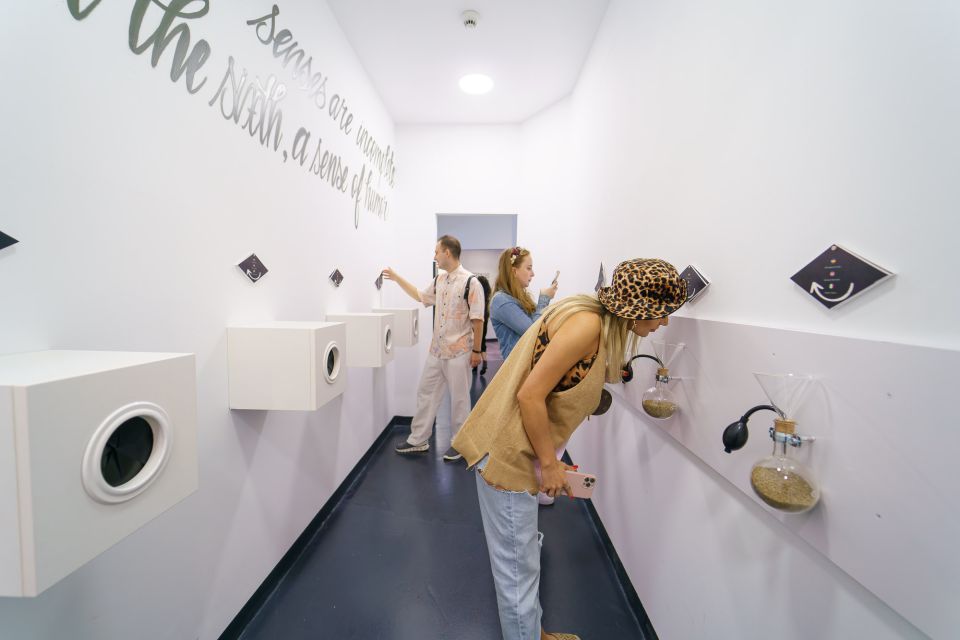
At around $10 per person, the museum offers solid value because you’re getting:
- 40 exhibits across 11 rooms
- Wi‑Fi
- Cloakroom and lockers
- A full, self-guided circuit with a built-in sense of flow
Is it perfect value for everyone? Not always. Some visitors note that it can feel short and that parts can be less intense than others. If you’re the type who loves long explanations and slow pacing, this may feel like a fast roller coaster rather than a deep museum.
But if your idea of fun in Bucharest is interactive, goofy, and photo-friendly, the math works. You’re paying for time in a controlled environment where your senses are the entertainment. With lockers included and staff help available, you aren’t fighting logistics while trying to enjoy the show.
Who This Experience Fits Best
This ticket is best for people who like hands-on experiences more than quiet viewing.
It’s a good fit if:
- You enjoy optical illusions and perception tricks
- You want something fun for a group, including teens and kids
- You’re traveling solo and want staff help for photos
- You want a break from long walking days in the city
It may be less ideal if:
- You hate disorientation (infinite tunnel and vortex areas may be challenging)
- You need a lot of downtime between activities
- You want a museum with long, detailed explanations
For adults, it can still be enjoyable. The tone is light-hearted, but the exhibits teach real lessons about how your brain builds reality.
Accessibility and Practical Considerations
The museum is listed as wheelchair accessible. However, one review notes that while many exhibits are accessible, there are a few that aren’t due to a step. If mobility is a concern, it’s worth asking staff what areas are easiest to access once you’re inside.
Also, the mirror maze and infinity-style rooms can involve standing, turning, and moving around quickly. Wear shoes you’re comfortable walking in, especially if you tend to rush when you’re excited.
Quick Tips to Make Your Hour Go Smoothly
A few small choices can make a big difference in a short, high-energy visit:
- Focus on the maze exit first, then slow down for photos.
- If you don’t love height-like illusions, step into the infinite tunnel slowly and keep one hand steady for balance.
- In the Ames room, reposition carefully. Small changes in where you stand can change the effect.
- Use lockers early. It keeps you free to move and take pictures without juggling bags.
- If you’re solo, ask staff for photo help before you settle into a tricky angle.
Finally, come with the right attitude. This is a museum where your eyes and brain will disagree. That’s the point.
Should You Book the Museum of Senses Entry Ticket?
I’d book it if you want a fun, interactive sensory experience that packs a lot into one hour. The mix of mirror maze, RGB and optical illusion rooms, and the big finish with the Ames room and infinity mirror room makes it a strong value—especially at about $10 with lockers and Wi‑Fi included.
Skip it if you prefer slower museums, longer storytelling, or you know you’ll feel uncomfortable in disorienting depth illusion spaces. Also consider your pace: the visit is short, so if you need lots of time to settle in, plan to move efficiently.
If you’re looking for a different kind of Bucharest moment—one that’s playful, visual, and surprisingly mind-bending—this ticket is a very practical choice.
FAQ
How much does the Museum of Senses entry ticket cost?
The price is listed as about $10 per person.
How long is the visit?
The duration is about 1 hour. Starting times depend on availability.
How many exhibits and rooms are included?
You’ll explore 40 exhibits across 11 rooms.
Do I need to exchange my ticket at the entrance?
Yes. You exchange your ticket at the entrance before you go inside.
What should I expect inside the museum?
You’ll move through interactive exhibits designed to stimulate your senses, including a mirror maze, an RGB room, an infinite tunnel, optical illusion areas, the Ames room, and an infinity mirror room.
Is there Wi‑Fi, and are lockers provided?
Yes. Wi‑Fi is included, and the ticket includes a cloakroom and lockers.
Is the museum wheelchair accessible?
The museum is listed as wheelchair accessible. Some exhibits may involve steps, so access can vary by room.
Is the experience good for taking photos and videos?
Yes. The museum encourages visitors to take pictures and it supports live video sharing to friends and family.
Are there staff who help with photos?
Staff are described as friendly and interactive, with people mentioning that employees helped take photos and videos.
Is there free cancellation?
Free cancellation is available up to 24 hours in advance for a full refund.