REVIEW · BUCHAREST
Communism in Bucharest – Landmarks, Museum & Communist Appetizers
Book on Viator →Operated by Bucharest by Foot Tours · Bookable on Viator
Concrete memories hit fast in Bucharest’s communist core, and this tour is built for you to get your bearings quickly on foot. I really like the small-group format and the way you move from major symbols like the Palace of Parliament to real street-level places tied to the 1989 revolution. You also get real payoff at the end with the Museum of Communism, where you try on period-style clothes and taste a communist sweet or salty snack with communist coffee.
One consideration: you see the Palace of Parliament from outside, with no interior visit, so if you’re chasing an inside-the-building look, plan for another option.
In This Review
- Key things I’d circle before you book
- A compact walk through Bucharest’s communist symbols
- Palace of Parliament (outside only) and Ceaușescu’s building dream
- Manastirea Antim: a monastery that survived the demolition era
- Bloc 6 and the boulevard in front of power
- Piata Revolukiei (Revolution Square): Ceaușescu’s last speech and the spark
- The University of Bucharest and the 21st of December 1989 memorial area
- Museum of Communism Bucharest (Undeva in Comunism): snacks, try-ons, and communist coffee
- Price and what you’re really paying for ($48.37)
- Who this Bucharest communism walk is best for
- Should you book this Communism in Bucharest tour?
- FAQ
- How long is the Communism in Bucharest tour?
- What does the tour include?
- Do you enter the Palace of Parliament?
- How many people are in the group?
- What are the start and end points?
- What time does it start?
- Is the tour offered in English?
Key things I’d circle before you book
- A tight 3-hour walking loop that keeps the focus on major communist-era landmarks and key 1989 locations
- Small groups (up to 15 on some departures, with some maxing even lower), which helps the guide pace the talk
- Hands-on museum time at Undeva in Comunism, including trying on clothes and a snack
- Outside viewing of the Palace of Parliament, plus nearby sites that explain the dictator’s urban plans
- Revolution Square + the University area tied to the 21st of December 1989 story
- Communist coffee included, so you’re not just reading labels on exhibits
A compact walk through Bucharest’s communist symbols
This is the kind of Bucharest tour that helps you connect the dots fast. You’re not trying to cover everything in the city. You’re focusing on a specific storyline: the communist era, the rise of Nicolae Ceaușescu’s massive projects, and the lead-up to the 1989 revolution that began in Bucharest on 21 December.
The route also makes practical sense. It’s a walking tour, designed to keep you close to the big landmarks so you can actually see what the guide is pointing at. Starting at Bulevardul Unirii 1–3 and ending at Revolution Square means you can build the rest of your day around that final stop.
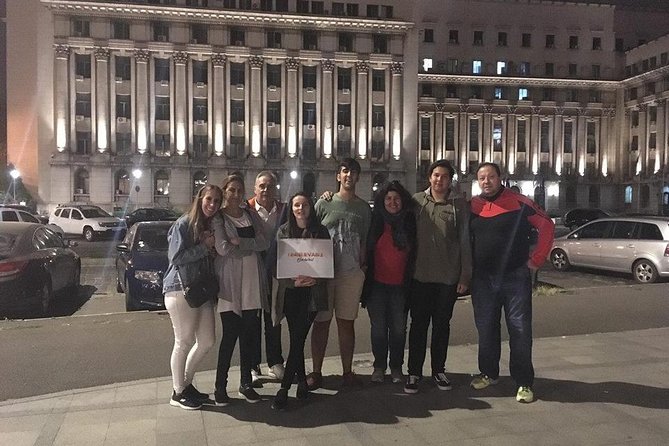
I also like that the group stays small. With guides such as Ali, Maria, Gabriela, and Gabi, the pace tends to stay human: enough time to ask questions, and enough stops to keep the story from turning into one long lecture.
One more value point: the museum part is planned as included time with a skip-the-line ticket, which is useful in a city where you may otherwise waste energy waiting.
You can also read our reviews of more museum experiences in Bucharest


Palace of Parliament (outside only) and Ceaușescu’s building dream
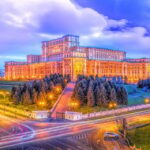
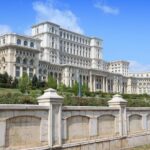
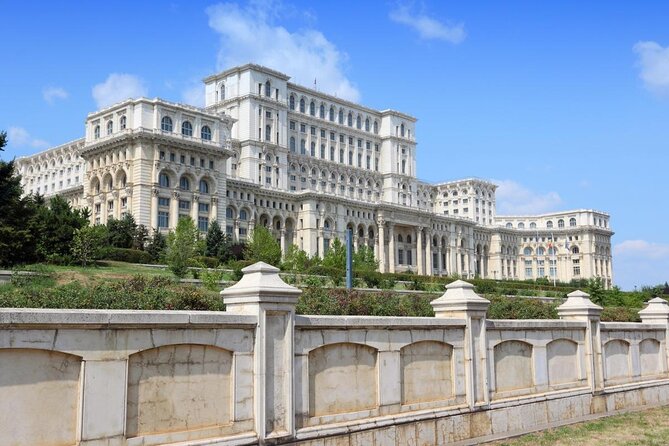
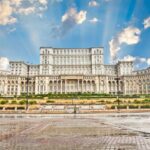
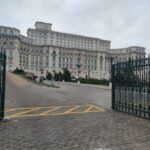
Your first major stop is the Palace of Parliament area. You’ll learn why it was built and how the project unfolded, plus what the guide frames as Ceaușescu’s outsize ambitions. The big thing here is that you’re not going inside—you’ll take it in from the outside and use that perspective to understand the scale and the planning choices.
Why this works for you: a building like this is hard to appreciate on your own because the story is tied to what the regime wanted people to see and feel. From the sidewalk, you can still read a lot of the symbolism. You just need the context—what it meant, and how it fit into the dictator’s ideas.
A drawback is also obvious: if you want interiors, you won’t get that on this tour. But if your goal is to understand the communist-era power theme and connect it to nearby locations, this outdoor-first approach makes sense and keeps your time efficient.
Also note the duration: this stop is about 20 minutes. That’s enough for the key points without turning your morning into a slog.
Manastirea Antim: a monastery that survived the demolition era
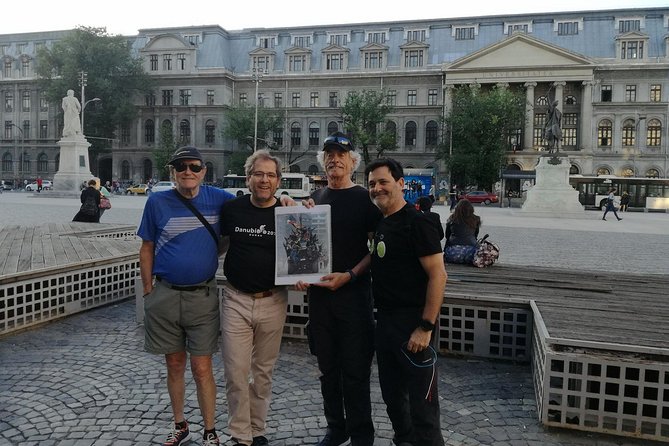
Next you head to Manastirea Antim, a monastery built in the 18th century. Here, the theme shifts from grand state projects to survival—this is about a religious site that escaped demolition under communism. Even more striking in the way your guide presents it, part of the structure was moved to fulfill the dictator’s plans.
This stop adds balance. After seeing massive political architecture, you get a human-scale place with a different kind of resilience. It also gives you something you can feel with your eyes: older stone and the sense that not everything in Bucharest followed the same fate.
The time is short—around 15 minutes—so go into this expecting a clear story and a focused look, not a long sit-down at the site. If you’re the type who likes quick, story-driven stops between big sights, this timing is a feature.
Bloc 6 and the boulevard in front of power
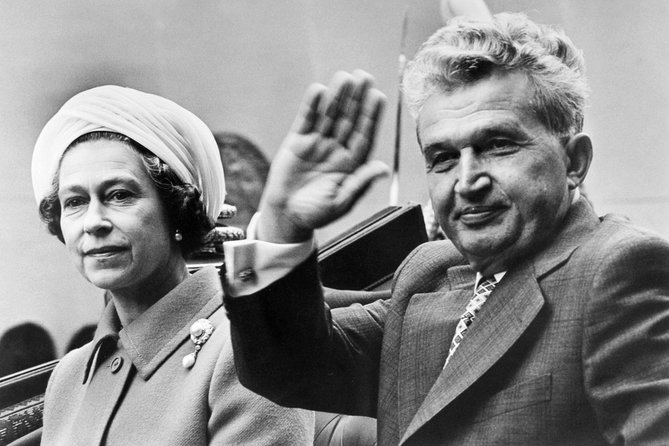
Then comes Bloc 6, described as the boulevard area built in front of the Palace of Parliament and the secrets behind it. Even without extra museum-level time here, this stop is important because it explains the surrounding urban planning, not just the centerpiece building.
Why I think this matters for you: when people visit the Palace of Parliament, they often see scale but miss the role of nearby streets and housing blocks in the overall message of authority and control. A stop like Bloc 6 helps you understand that the communist story isn’t only in sculptures and monuments. It also lives in the layout of everyday life.
Expect roughly 10 minutes here. It’s a quick alignment point—your guide helps you look at the city’s design with different eyes before you move to the revolution sites.
Piata Revolukiei (Revolution Square): Ceaușescu’s last speech and the spark
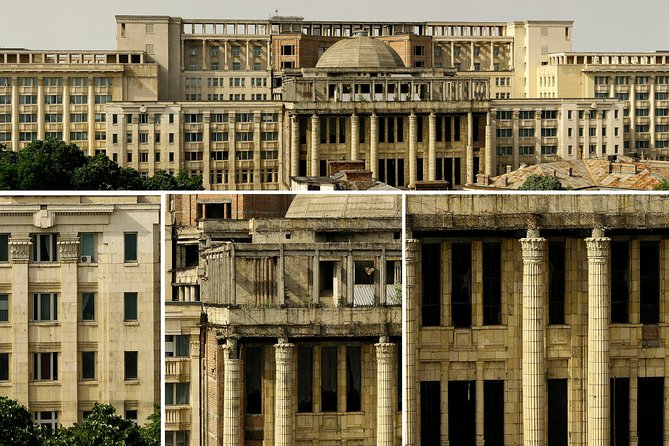
Your next big marker is Piaka Revolukiei, which is tied directly to the events of 21 December 1989. You’ll hear that this is where Ceaușescu had his last speech, and where the revolution began in Bucharest.
Revolution Square can feel like just another central plaza if you arrive without the story. The value of a guided stop is that you look at the space as a stage for a turning point, not simply as a pretty photo backdrop. The guide gives you the sequence and the significance, so the square clicks into place.
Time-wise you get about 20 minutes, which is enough to connect the emotional moment to the physical location. And since the tour is walking, you also get the momentum of moving from Ceaușescu-era power into the moment that disrupted it.
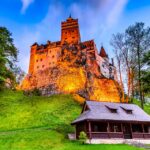
The University of Bucharest and the 21st of December 1989 memorial area
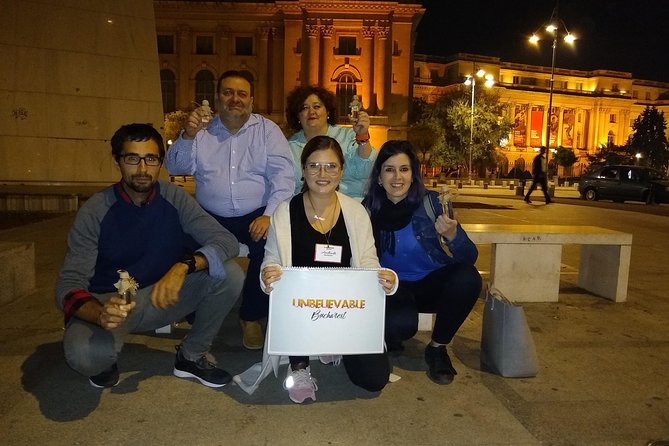
After Revolution Square, the tour continues to the University of Bucharest area, where a small square nearby bears the name 21st of December 1989. This is presented as the place where a major part of the Romanian revolution took place.
This stop adds what I’d call the thinking layer. The square is a reminder that the communist story doesn’t end in 1989; it continues into what came next. Your guide connects this moment to post-communist Romania, including the mistakes made on the way to democracy.
I appreciate that your time here is about 15 minutes—enough to understand why the memorial matters, without forcing you into heavy political theory the whole day. If you like tours that explain consequences, not only dates, you’ll likely enjoy this part.
Museum of Communism Bucharest (Undeva in Comunism): snacks, try-ons, and communist coffee
The final stop is the most hands-on: Museum of Communism Bucharest – Undeva in Comunism. You’ll spend about 40 minutes inside, and this is where the tour becomes memorable in a different way.
You get:
- interactive exhibits that let you interact with what you’re seeing
- the chance to try on clothes
- a communist snack (sweet or salty, depending on what’s available)
- communist coffee
- a ticket that skips the line
The value here is that you’re not just hearing about communism as an idea. You’re experiencing how the museum frames everyday objects and settings. Trying on the clothes is the part that tends to stick in your memory because it turns history into something physical.
The snack and coffee also work as a storytelling tool. You’re tasting what the museum labels as communist-style fare, which makes the museum feel less like a passive gallery. Just keep your expectations aligned: this is included as a snack and coffee, and the tour info says other drinks aren’t included.
One practical tip: since this is included and timed, it’s a good idea to go into the museum ready to participate. If you’re the type who likes to look first and ask questions later, you’ll still find the structure helps.
Guides such as Gabriela and Gabi are often praised for explaining the communist history clearly for different ages, so if you’re bringing kids, this museum segment is often the hook that keeps everyone engaged.
Price and what you’re really paying for ($48.37)
At $48.37 per person for about 3 hours, this is priced like a tour that’s trying to deliver more than sightseeing. You’re paying for:
- a guided walk that ties together multiple sites
- inclusion of the museum ticket (skip-the-line)
- a communist snack and communist coffee
- guide time across multiple stops (including the Revolution Square + university area storytelling)
You’re also getting small-group attention. In tours like this, that matters. A bigger group usually means less time at each stop and fewer questions. Here, the group size is capped (up to 15 on some departures, and some departures cap lower), and that’s part of the value equation.
One more thing I like: the tour is popular enough that it’s often booked about 56 days in advance on average. If you’re traveling in busy season, book early so you can choose an English-speaking slot that fits your schedule.
Who this Bucharest communism walk is best for
This tour fits best if you:
- want a focused introduction to communism in Bucharest without spending the whole day researching
- like walking tours that connect big landmarks to the human story behind them
- enjoy museums that involve you rather than just pointing you at labels
- want a small-group format where the guide can keep pace and answer questions
It’s also a reasonable family option. The tour has been described as working well even for kids because the guide explains in a way that keeps the story understandable.
If your goal is strictly photography of buildings from every angle or full interior access to every monument, you might feel limited by the fact that you do not enter the Palace of Parliament.
Should you book this Communism in Bucharest tour?
I’d recommend booking if you want a clear, well-paced storyline that starts with the symbols of communist power and ends with an interactive museum where you can actually handle pieces of the past. The small group, the walkable route, and the hands-on museum time are the main reasons it’s worth your attention.
Skip it only if you specifically need interior access to the Palace of Parliament or you don’t care for museums at all. Otherwise, this is a strong way to understand Bucharest’s communist era and the 1989 turning point without getting lost in information overload.
FAQ
How long is the Communism in Bucharest tour?
It’s about 3 hours walking and museum time.
What does the tour include?
You get an English-speaking guide, entry to the Museum of Communism Bucharest – Undeva in Comunism (skip-the-line), communist coffee, and a communist snack (sweet or salty depending on availability). All fees and taxes are included.
Do you enter the Palace of Parliament?
No. You’ll view the Palace of Parliament from outside, and you do not enter the building.
How many people are in the group?
The tour runs with a maximum of 15 people in some cases, and it also states a maximum of 8 travelers. It’s designed for a small-group experience.
What are the start and end points?
It starts at Bulevardul Unirii 1-3, București 040101, Romania and ends at Revolution Square (Piața Revoluției), București, Romania.
What time does it start?
The listed start time is 10:00 am.
Is the tour offered in English?
Yes, it’s offered in English. Confirmation is received at booking time.