REVIEW · BUCHAREST
Dracula beyond the legend: 8-day private tour in Transilvania
Book on Viator →Operated by Rolandia · Bookable on Viator
A Dracula tour shouldn’t feel like a theme park. This one leans into Vlad the Impaler connections while still giving you real castles, churches, and towns across Romania. You start with Bucharest so the myth has a setting, not just a costume.
I especially like how the itinerary pairs big-ticket sights with strong historical framing. The guided visits to places tied to Vlad and Wallachian power centers give you a clearer sense of why the Dracula legend stuck. And I like that you’re not left bouncing between tickets and directions.
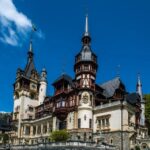
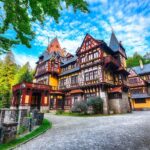
One thing to consider: the “Bran and Peles” promise appears in the tour highlights, but the day-by-day stops you provided only list Bran. I’d confirm whether Peles Castle is actually scheduled for your dates.
In This Review
- Key points worth your attention
- Dracula without the fog: what makes this tour different
- Day 1 in Bucharest: Palace of Parliament and Centrul Vechi
- Day 2: Târgoviște and Curtea de Argeș, the Wallachian power corridor
- Day 2’s driving detour: Transfăgărășan road toward tomorrow’s views
- Day 3: Transfăgărășan photo hour, then Sibiu’s ASTRA Museum and Piata Mare
- Day 4: Corvin Castle and Densuș Church, where legends meet older stone
- Day 5: Alba Iulia’s Citadel plus Salina Turda’s underground playground
- Day 6: Saxon fortifications at Biertan and UNESCO streets in Sighișoara
- Day 7: Brasov center, Bran Castle’s cliff view, then Snagov’s burial legends
- Day 8: a simple send-off and time to fly
- Price and what you’re really buying for $3,113.31 per person
- Who this 8-day Dracula tour suits best (and who should skip it)
- Should you book this Dracula tour?
- FAQ
- How long is the Dracula tour in Transylvania?
- Where does the tour start, and is pickup offered?
- What language is the guide?
- What is the maximum group size?
- What does the tour include?
- What is not included in the price?
- Is there a mobile ticket?
- Which Dracula-related sites are included?
- How fit do I need to be?
- What is the cancellation policy?
Key points worth your attention
- Small-group feel with pickup from any Bucharest hotel starting at 9:00 am
- Vlad-linked stops like Târgoviște, Snagov Monastery, and the medieval strongholds
- Transfăgărășan mountain views with a high-altitude photo moment around 2,042 meters
- Sibiu’s ASTRA Museum carriage ride plus a walk through Piata Mare
- Fortress variety across the trip: Corvin Castle, Alba Iulia, Biertan, and Sighișoara
- A practical Dracula triangle: Bran Castle plus the Snagov burial-site legend
Dracula without the fog: what makes this tour different
This tour works because it treats Dracula as a starting point, not the finish line. You’ll move through Wallachia and Transylvania in a way that connects stories to specific places: old courts, monasteries, fortified churches, and castles with legends attached.
What I like is the balance between “myth you’ve heard” and “history you can see.” Bran is the obvious Dracula draw, sure. But you’ll also spend time on Saxon-era towns and fortifications, where Gothic churches, towers, and defensive walls explain the region’s mood.
The second reason this works is the pace is built for guided comfort. You get a professional English-speaking guide, modern vehicle transport, airport transfers, and entrance fees bundled in—so you can focus on the route and the sights, not admin.
You can also read our reviews of more private tours in Bucharest

Day 1 in Bucharest: Palace of Parliament and Centrul Vechi
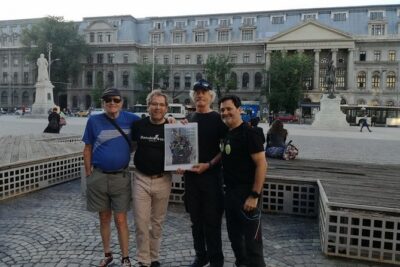
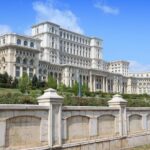
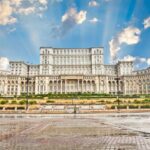
You begin in Bucharest with a guided visit to the Palace of the Parliament (Casa Poporului). It’s not a subtle building. Constructed between 1984 and 1997, it’s described as the largest administrative building in the world and today it’s the seat of Romania’s Parliament. Even if you’re not into architecture, it gives you an immediate sense of scale and power—an easy bridge to Vlad Tepes’s era.
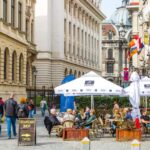
After that, you’ll walk through Old Town (Centrul Vechi). This is the part of Bucharest where the city feels lived-in: cafes, restaurants, and old streets. Your guide also points to Curtea Veche (The Old Court), once tied to the first royal court in Bucharest and linked to Vlad Tepes in the city’s story.
Practical note: Old Town walking usually means cobblestones and frequent stopping for context. Wear shoes that don’t punish your feet after an hour.
Day 2: Târgoviște and Curtea de Argeș, the Wallachian power corridor
The second day heads to Târgoviște, historically important as a capital for Wallachia. You’ll hear how it shifted from Saxon colony status in the 1200s to a secondary residence for Wallachian princes in the 1300s. The best part is how that timeline becomes part of the Dracula conversation—because Vlad’s story is not just spooky legend. It’s political, military, and personal.
You’ll visit the Princely Church and the Chindia Tower, with the guide connecting Târgoviște’s sieges and Ottoman pressure to Vlad’s reputation. In the tour description, Vlad’s Night Attack is mentioned as a key moment that helped stop an Ottoman invasion from reaching the city in 1462. Whether you view the details literally or as folklore-adjacent history, it gives you a sharper sense of the stakes.
Next comes Curtea de Argeș Monastery, built between 1512 and 1517. It’s famous for the Manole legend about sacrifice—an idea that echoes through how Romanians explain monuments meant to last. The monastery is also described as a final resting place for members of the Royal House of Romania, so you get both myth and royal-era context in one stop.
If you like your stories grounded, this day is a highlight: it’s where the tour starts to feel like you’re moving through a real power corridor, not just “Dracula stops.”
Day 2’s driving detour: Transfăgărășan road toward tomorrow’s views
After Curtea de Argeș, you head toward Valea cu Pești, a hotel placed on the famous Transfăgărășan road. That placement matters because it sets you up for the mountain portion the next day and helps break up the driving.
In other words: you’re not just riding in a van all day. You’re transitioning to a route with built-in wow factor.
Day 3: Transfăgărășan photo hour, then Sibiu’s ASTRA Museum and Piata Mare
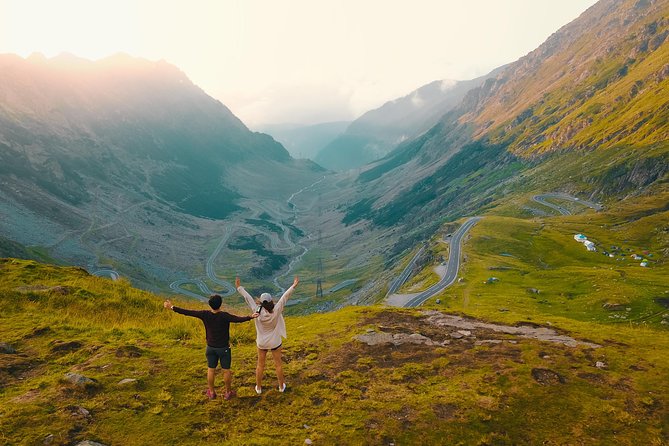
You get a chance to step away from pure vampire lore and enjoy the Carpathians. The tour describes Transfăgărășan passing through the Southern Carpathians, reaching heights of about 2,042 meters. That’s an easy “put it in the camera” moment—high altitude views and mountain roads that feel like they belong to a road movie.
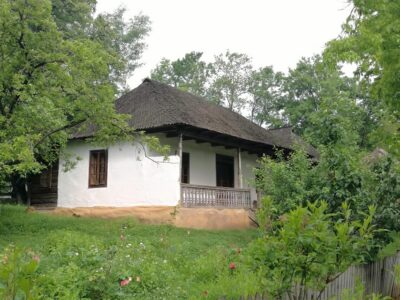
Then you go to ASTRA Museum in Sibiu. The highlight here is the ride with a wooden carriage, plus the museum’s collection of over 300 traditional buildings and thousands of traditional household objects. If you think Dracula is all castles and bloodlines, this museum shifts the focus toward everyday life—how people lived in Romanian rural and cultural traditions.
After that, you’ll walk Piata Mare (Big Square) in Sibiu and see major landmarks, including the Brukenthal Museum, the Holy Trinity Roman Catholic Cathedral, and Huet Square with its Evangelical Church. You’ll also get hours to explore the city center on your own, which is smart. Sibiu is the kind of place where a second look pays off: side streets, small squares, and that comfortable “older than modern life” feeling.

Day 4: Corvin Castle and Densuș Church, where legends meet older stone
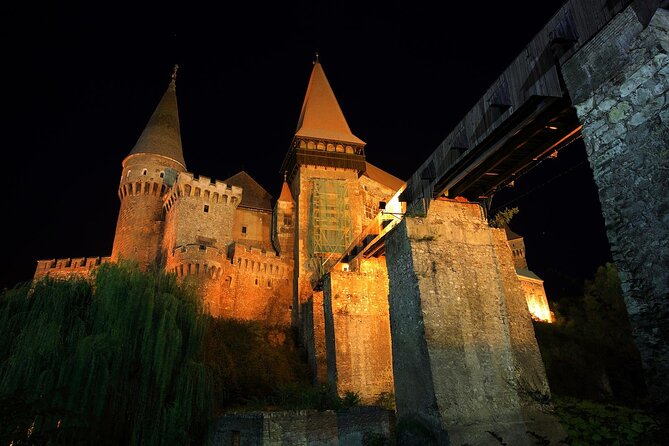
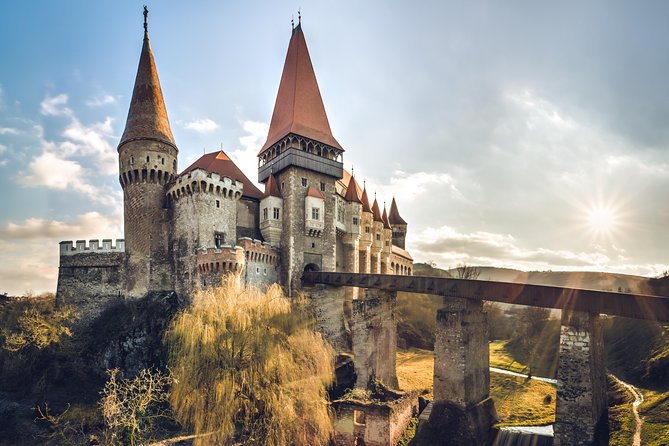
Day 4 is all about medieval clout. You start at Castelul Corvinilor (Hunyadi Castle) in Hunedoara County—one of the largest medieval castles in Europe, with Renaissance-Gothic architecture. It’s described with towers, bastions, a moat, and an inner courtyard. Even from the description, you can tell this isn’t a quick photo stop. It’s a place designed for scale and drama.
Your guide shares a legend that Vlad the Impaler was imprisoned here for seven years. Legends like this can be hard to verify, but the value for you is how the site is used in regional storytelling—and how it fits Vlad’s broader reputation in the Balkans and Transylvanian borderlands.
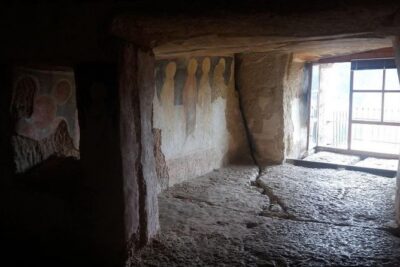
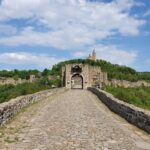
Next you head to Densuș Church in the village of Densuș. The tour description says it’s one of the oldest Romanian churches still standing, constructed sometime during the 7th century, with murals dating to the 15th century. The murals depict Jesus wearing traditional Romanian clothing, which is a detail you might not expect, and that contrast is part of the point.
There are also hypotheses included: one theory suggests it began as a pagan temple, with clues like the altar position, a roof shaped like a dove, and lion statues. Another theory says it was built as a mausoleum to the Roman general Longinus Maximus. Either way, you get a real lesson in how older structures get repurposed and reinterpreted over time.
Day 5: Alba Iulia’s Citadel plus Salina Turda’s underground playground
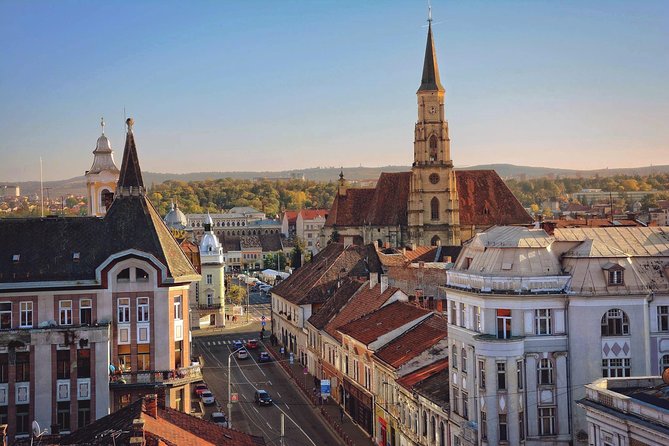
On Day 5, you move to Alba Iulia and the Alba Carolina Citadel, described as the largest medieval citadel in Romania, built between 1715 and 1738. It sits within a fortification system associated with Prince Eugene of Savoy, built to defend newly conquered Habsburg provinces. The tour also references the Roman Castle of Legio XIII Gemina and the Bălgrad Medieval Citadel as earlier fortifications in the same area.
If you like military architecture, this stop makes sense. It’s where the story of the region’s defenses becomes more than a vibe. It becomes geometry, walls, and planning.
After that comes the surprising fun: Salina Turda, the Turda Salt Mine. It’s referenced as being used for mining salt for hundreds of years, first mentioned in 1075. Today it’s turned into an entertainment space underground, with activities such as mini-golf, ping pong, bowling, a Ferris wheel, and even a boat ride on the underground lake.
This is a strong “recharge day” between heavy castle stops. It also changes the soundscape: you stop hearing echoing stone halls and start hearing something closer to playful chaos.
Day 6: Saxon fortifications at Biertan and UNESCO streets in Sighișoara
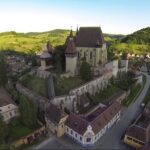
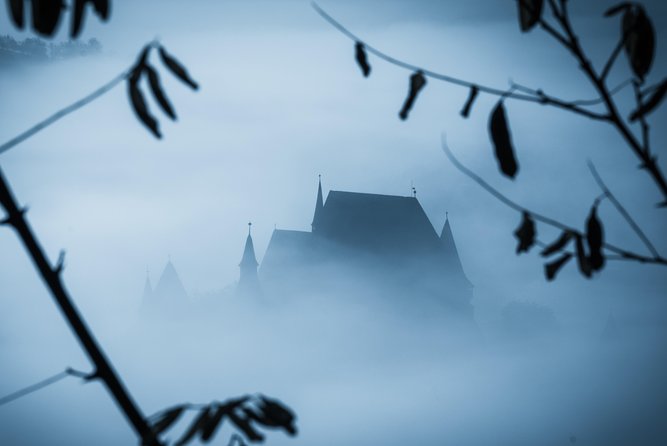
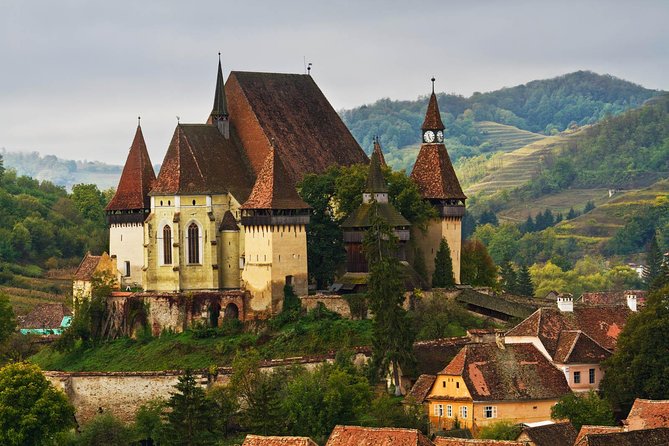
Day 6 keeps the defensive theme, but in a more human scale. You visit Biertan Fortified Church, surrounded by three sets of walls and known for Gothic architecture. Fortified churches are part of the Saxon story in Transylvania, and walking around them helps you understand how communities protected themselves when borders and rulers kept shifting.
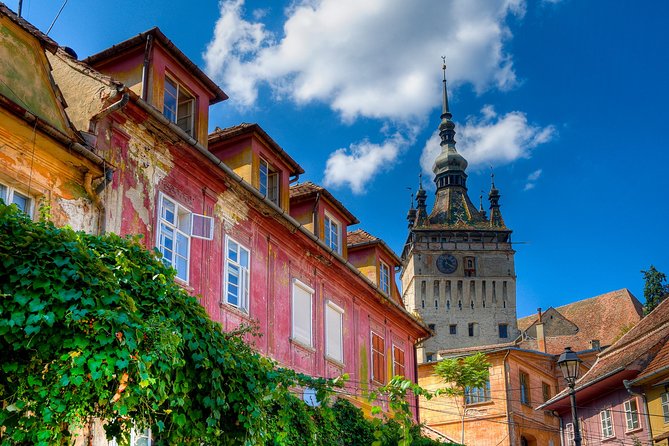
Then you go to Sighișoara, described as the only inhabited medieval fortress in Europe and a UNESCO World Heritage Site. The key moment here is the Clock Tower, which shelters a museum of medieval weapons and a torture chamber. The tour frames Sighișoara as considered the birthplace of Vlad the Impaler, and you’ll visit the place where he lived during his first years.
Even if you’re not interested in the darker “torture chamber” angle, the medieval streets can still be worth it. They’re tight, winding, and built for foot travel. This day is where you’ll likely feel the walking most.
Day 7: Brasov center, Bran Castle’s cliff view, then Snagov’s burial legends
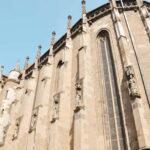
Day 7 starts in Brașov with a walking tour. You’ll explore the Council Square and learn about the Black Church, a famous Gothic cathedral. The tour description notes you’ll walk along one of the narrowest streets in the world. That detail matters because narrow streets change your pace. You slow down without being asked to. It makes your photos more about feeling than about scale.
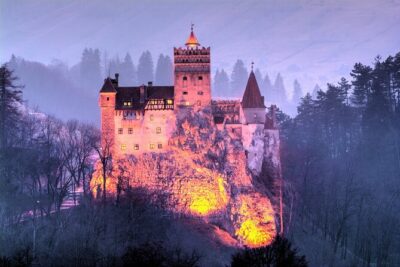
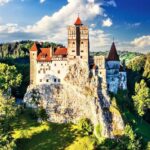
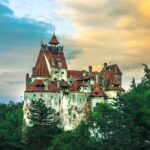
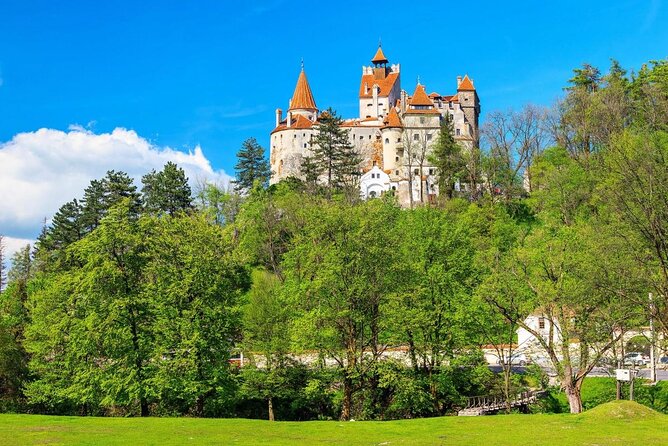
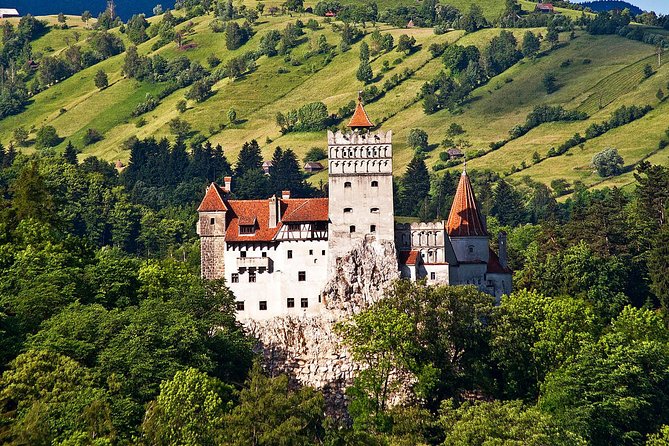
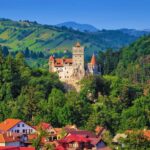
Next is the big Dracula moment: Bran Castle (Dracula’s Castle). It was built in the 13th century and sits on top of a 60-meter cliff, guarding the most important access route into Transylvania. That defensive placement is probably why Bran remains so “spooky” even before you bring any myth into it.
Then you head to Snagov Monastery, described as the burial place of Vlad Tepes. The tour also warns the burial story has controversy and includes a legend tied to Napoli in Italy, where Vlad is said to have been ransomed by his daughter. The more commonly accepted legend in the tour description goes like this: after Vlad’s death, rival aristocratic families prevented his Christian burial, and monks at Snagov stole the body to give him a proper burial in secrecy.
This stop is where you’ll decide what you want from the Dracula experience. If you like myths, you’ll enjoy the way different stories orbit the same person and place. If you prefer history-first travel, you’ll still appreciate that the tour doesn’t pretend the story is straightforward.
Day 8: a simple send-off and time to fly
On the last day, you’ll enjoy breakfast and then get transferred to the airport based on your flight hours. It’s a clean wrap, and it helps you avoid the stress of last-day logistics that can spoil the last hours of a trip.
Price and what you’re really buying for $3,113.31 per person
At $3,113.31 per person, this is not a budget “do-it-yourself Dracula weekend.” You’re paying for the structure: a private-style plan that includes 7 nights of accommodation with breakfast, a professional English guide, modern vehicle transport, airport pick-up and drop-off, and entrance fees for the sights listed in the program, plus the carriage ride in Sibiu.
The value is in the bundling. Entrance fees in multiple major castles/citadels plus guided interpretation across eight days can add up fast if you plan it separately. And Transylvania’s distances are real; having transport handled keeps you from burning your day in transit without context.
Two price-adjacent cautions:
- The overview says “hand-picked 3-star hotels,” while the package details say “centrally located 4* hotels.” You’ll want to confirm the exact hotel category for your dates.
- The highlights mention visiting Bran and Peles, but the stop list you shared only names Bran. Confirm Peles Castle timing before you commit.
Who this 8-day Dracula tour suits best (and who should skip it)
This tour fits best if you want:
- Guided context on Vlad Tepes and the Dracula legend without needing to research every stop yourself
- A mix of castles, fortified churches, monasteries, and medieval towns
- A route that includes both the famous Dracula sites and other Transylvanian history (like fortified churches and Saxon UNESCO streets)
It might not fit if:
- You’re allergic to walking and climbing. Medieval centers, citadels, and towers can be steep and uneven.
- You only care about Bran and a few photos. This program gives plenty of time to the region’s broader story.
Should you book this Dracula tour?
I’d book it if you want a well-organized way to connect Dracula to real geography. The “myth plus place” approach is the core win: you’ll see why these legends cling to the stone, the churches, the towers, and the roads.
But do two quick checks before booking: confirm whether Peles Castle is included for your dates, and clarify the hotel star level (3-star vs 4-star) so your expectations match what you’ll actually get.
If those details line up, this is a strong pick for an 8-day Transylvania trip that feels like more than a spooky checklist.
FAQ
How long is the Dracula tour in Transylvania?
It’s listed as 8 days (approximately).
Where does the tour start, and is pickup offered?
The start time is 9:00 am, and pickup is offered from any hotel in Bucharest.
What language is the guide?
The tour is offered in English, with a professional English-speaking guide.
What is the maximum group size?
The tour/activity has a maximum of 8 travelers, and there is also a note that there is a maximum of 14 people per booking.
What does the tour include?
It includes a professional English-speaking guide, accommodations for 7 nights with breakfast, transportation with a modern vehicle, airport pick-up and drop-off, entrance fees, and a carriage ride in Sibiu.
What is not included in the price?
It does not include health insurance, airplane tickets, meals other than those included in the itinerary, or entrance fees for sights not listed as included.
Is there a mobile ticket?
Yes, the tour includes a mobile ticket.
Which Dracula-related sites are included?
Bran Castle (Dracula’s Castle) is included. The highlights also mention Peles Castle, so you should confirm if it’s scheduled for your dates. Snagov Monastery is included as the burial place legend site.
How fit do I need to be?
The tour states you should have a moderate physical fitness level.
What is the cancellation policy?
Free cancellation is offered. You can cancel up to 24 hours in advance for a full refund, and cut-off times are based on the local time of the experience.