Romania can feel like three countries in one trip. This itinerary strings together Transylvania legends with Bucovina’s painted monasteries, then wraps it up with Saxon-era towns like Sibiu. I like that it’s arranged as a smooth route—driving is handled, and you spend nights in B&B-style inns instead of racing around for lodging.
The big upside for me is the mix: medieval Sighisoara and Dracula house, plus monasteries where the walls are basically the main story. The only catch is pacing: you’ll spend a lot of time in the car crossing regions and passes, so plan for long drives and keep snacks handy.
In This Review
- Key highlights and what to watch for
- Why this Romania route works so well for first-timers
- Day 1 in Bucharest: Palace of Parliament plus a quick orientation
- Sinaia and Bran: Peles Castle’s royal craftsmanship and Dracula’s hilltop myth
- Brasov and Agapia: a mountain town viewpoint plus working monastery craft
- Bucovina Painted Churches: Voronet’s Last Judgment, Moldovita’s fresco drama, Sucevita’s Virtue Staircase
- Voronet Monastery
- Moldovita Monastery
- Sucevita Monastery
- Bicaz Gorge to Sighisoara: Red Lake’s Dracula vibe and a UNESCO medieval fortress
- Exploring Sighisoara Old Town and Dracula’s house details
- Biertan Fortified Church and Sibiu: UNESCO fortifications and a walking tour with landmark bridges
- Sibiu landmarks on Day 6
- Curtea de Arges to Bucharest: ending with a princely-capital monastery
- Price and value: what the $1,708.12 per person really buys
- Transportation comfort and the reality of long car days
- What kind of traveler should book this Romania tour?
- Should you book this Romania tour?
- FAQ
- How long is the tour and how many nights do I stay?
- Where does the tour start and end?
- What’s included in the price?
- Are meals included?
- Are entrance tickets included for castles and monasteries?
- Which UNESCO World Heritage Sites are included?
- Is pickup available?
- Is this a private tour?
- When does the daily meeting start?
- How does cancellation work?
Key highlights and what to watch for
- Two UNESCO World Heritage Sites: Sighisoara Citadel and the fortified church of Biertan
- Dracula-world stops: Vlad Tepes’ birthplace in Sighisoara plus Bran Castle’s hilltop legend
- Bucovina Painted Monasteries: Voronet, Moldovita, and Sucevita with famous exterior fresco scenes
- Orthodox monastic life, not just photo stops: you visit a large nunnery and multiple fortified church complexes
- Saxon Transylvania towns: Sibiu walking sights plus defense walls, towers, and landmark bridges
- A guide-driver who can handle the details: strong English support plus practical routing
Why this Romania route works so well for first-timers
If you only have a week, this kind of trip is built for you. You start and end in Bucharest, and the loop takes you across the Southern Carpathians into Transylvania, then into Bucovina for the painted churches, and back toward Wallachia for the final stop.
What I like most is that the day-by-day plan doesn’t treat Romania like a checklist. Each area has a different “language” visually and culturally. In one stretch you’re looking at royal-era elegance at Peles Castle, then you pivot to hilltop folklore at Bran, then switch to the bold blue-and-red church murals of Bucovina. It gives you variety without forcing you to figure out trains, tickets, and connections.
One more practical win: the tour includes transport by air-conditioned car/minivan/minibus and fuel/parking fees. That means fewer decision points for you, which matters when you’re spending lots of hours on the road.
You can also read our reviews of more tours and experiences in Bucharest
Day 1 in Bucharest: Palace of Parliament plus a quick orientation
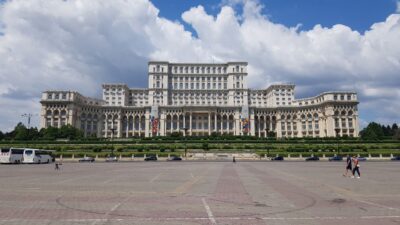
Your tour meets in Bucharest with a meet-and-greet by the guide-driver at Henri Coandă Airport. If your arrival timing fits, you may get a tour of Bucharest’s most important sights. Either way, you’ll start with the Palace of Parliament stop.
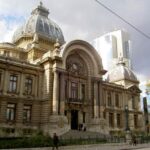
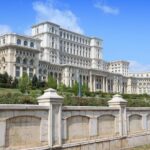
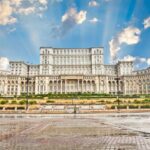
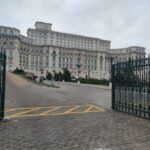
The Palace of Parliament is a statement building—huge, dramatic, and impossible to ignore even if you aren’t into architecture. On day one, it also does a useful job: it sets the scale of the city. Bucharest can be confusing at first. A landmark like this helps you get your bearings fast.
This stop lists admission not included, so budget for the ticket separately. It also helps to know your arrival time matters for whether the add-on orientation in Bucharest happens.
Sinaia and Bran: Peles Castle’s royal craftsmanship and Dracula’s hilltop myth
Day 2 is two very different castles, and that’s exactly why it’s fun.
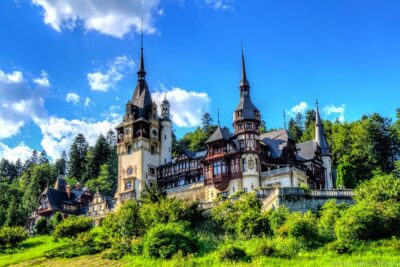
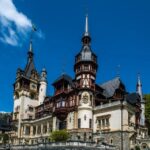
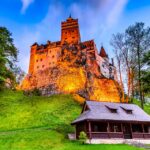
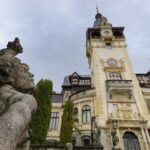
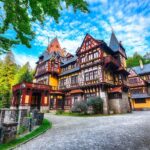
First comes Peles Castle in Sinaia, a royal residence and one of the best-preserved castles in Eastern Europe. You’ll see heavy ornamentation both outside and in—plus detailed wood sculptures and paintings connected to Richard Wagner. That Wagner connection gives you a “why this place looks like this” lens, because it’s not just decorative. It’s tied to the cultural tastes of its era.
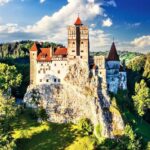
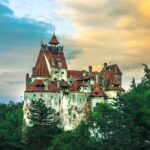
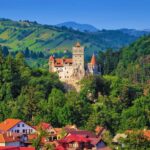
Then you cross into Bran Village for Bran Castle, often linked to Dracula folklore. The main draw isn’t only the building itself—it’s the way the castle sits on the hill. That dramatic placement is part of why the myths and legends took hold.
Both castles list admission tickets not included, so this is one of the days where your budget for entries will likely feel real. Still, the structure is good: you’re seeing royal-era elegance and then immediately stepping into medieval legend.
Brasov and Agapia: a mountain town viewpoint plus working monastery craft
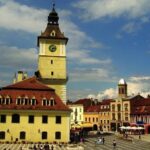
Day 3 starts in the Brasov Historical Center, a well-preserved old town in central Romania. It’s the kind of place where a short walk can give you a lot quickly—cobbled streets and old burgher houses. A smart way to see it is from above, and this tour builds that in by using the option of a cable car to Tâmpa Mountain (995 m) for a viewpoint.
After Brasov, you head toward Bucovina and stop at Agapia Monastery, one of Romania’s larger nunneries. This is where the trip feels more human and less theatrical. You can visit workshops where the nuns make things like painted icons and handmade carpets, so you’re not only looking at buildings—you’re seeing ongoing craft and routine.
Agapia’s stop lists admission ticket free, which is a nice cost-control win on a day that includes travel. Brasov and Agapia together also balance mood: city charm in the morning, monastery life and hands-on work in the afternoon.
Bucovina Painted Churches: Voronet’s Last Judgment, Moldovita’s fresco drama, Sucevita’s Virtue Staircase
Day 4 is the painted-church day, and it’s one of the reasons people come to this region. You visit three monastery sites that are famous for exterior murals, fortress-like layouts, and story-driven fresco scenes.
Voronet Monastery
At Voronet Monastery (1488), you’ll see a combination of Byzantine, Gothic, and local elements. The star is the western exterior murals, including the famous Last Judgment scene, described as unique in the world. Even if you don’t read the religious symbolism fluently, you’ll recognize the narrative style: the images are meant to communicate. In a short visit, that makes the place easier to “get” and remember.
Admission at Voronet lists not included, so plan for that.
Moldovita Monastery
Next is Moldovita Monastery (built 1532), reached via one of the most scenic approaches in the country—over the Ciumarna Pass with Bucovina Mountains panoramas. Moldovita’s central painted church includes impressive frescoes, and its fortified quadrangular enclosure with gates and towers gives it a sense of defense, not just worship.
One fresco scene described here is the Siege of Constantinople (626), with figures in Turkish dress even though it’s focused on a different conflict. That detail matters because it shows how church art uses the present’s idea of enemies and threats.
Admission listed not included again.
Sucevita Monastery
Finally, Sucevita Monastery. This stop centers on the “Virtue Staircase,” noted for its scale and the contrast between angelic order and devilish chaos. It’s exactly the kind of artwork that makes a short stop feel longer. You end up mentally “reading” the scene.
Sucevita also lists admission not included.
If you like visual storytelling and the feel of older routes through the countryside, this day is a high point. The main drawback: it’s also a day where timing can feel tight if you linger for photos, so set a comfortable pace.
Bicaz Gorge to Sighisoara: Red Lake’s Dracula vibe and a UNESCO medieval fortress
Day 5 shifts from monastery murals to Transylvania’s dramatic scenery and then into medieval town life.
You cross the Eastern Carpathians through Bicaz Gorge and arrive at Red Lake, tied to the same mood that inspired Dracula-style storytelling. The area is also described as part of the region inhabited mostly by the Hungarian Szekler community, so you’re not only chasing spooky vibes. You’re moving through cultural zones.
Red Lake lists admission free, a helpful cost break.
In the evening you reach Sighisoara Medieval Town, part of the UNESCO listing and noted as the only still inhabited medieval fortress in Europe. That line isn’t just marketing—it matters because it changes how you experience the town. You’re not walking through ruins. People live in the medieval structure’s footprint.
Sighisoara’s Citadel is where you’ll start the Dracula storyline in a more direct way, including Dracula’s house.
Exploring Sighisoara Old Town and Dracula’s house details
The next part of Day 6 is half-day Sighisoara, then it becomes fortified church and Saxon city time later.
In the morning, you explore the Old Town of Sighisoara: cobbled streets, burgher houses, and ornate churches. You’ll visit key landmarks including the Clock Tower, the Church on the Hill, and Dracula’s house, presented as Vlad Tepes’ birthplace in 1431.
This matters for people who like the story angle. The Dracula connection can turn into a gimmick in some places. Here, it’s placed inside a real medieval town layout, so the legend stays grounded.
The tour lists admission tickets not included for these stops, so budget accordingly.
If you prefer not to feel rushed, Sighisoara is the kind of place where you can take a second lap without it feeling like wasted time. But since the itinerary continues on to another UNESCO site, keep an eye on meeting times.
Biertan Fortified Church and Sibiu: UNESCO fortifications and a walking tour with landmark bridges
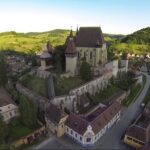
After Sighisoara, you head to Biertan Fortified Church, another UNESCO World Heritage Site and described as one of the first German settlements in Transylvania. You’ll see a fortified church with three rows of fortifications built by German peasants. It also served as a long-term residence for the Transylvanian Archbishop.
One particularly memorable detail in the itinerary is the mention of a reconciliation room used historically for couples about to divorce. That kind of social history is why fortified churches feel bigger than their walls. They were community centers, not only places of worship.
Admission at Biertan lists not included.
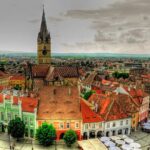
Then the tour moves to Sibiu, run by and associated with the Transylvanian Saxons. You get a walking tour of the old town, including defense walls and remaining towers tied to specific guilds. The focus is on how the city organized itself—group by group—so you start understanding why the architecture looks the way it does.
Sibiu landmarks on Day 6
In Sibiu, you’re also scheduled for the Brukenthal Museum (assembled by Baron Brukenthal, governor of Transylvania at the end of the 18th century). You’ll visit the Evangelical Cathedral, noted for completion in its current shape in 1520, and inside there’s an exquisite Crucifixion fresco on the north wall of the choir dating from 1445.
Other sights include the Passage of Stairs linking Upper town to Lower town, the Liar’s Bridge (1859), and the Byzantine-style Orthodox Cathedral, described as a replica of St. Sophia in Constantinople.
Most major entries list admission not included, but the walking components and orientation help you appreciate what you’re buying tickets for.
Curtea de Arges to Bucharest: ending with a princely-capital monastery
Day 7 winds down in a way that feels like a proper finish: a historic monastery stop, then a drive back to Bucharest.
You visit Curtea de Arges Monastery, presented as the first capital of Wallachia, connected with an old Princely Court. The itinerary also notes that three of the four Romanian Kings of the Hohenzollern dynasty are buried here. Even if you don’t follow royal dynasties closely, it gives the site extra weight beyond local architecture.
After that, the tour drives back to Bucharest.
Again, admissions are marked not included. The upside is you won’t be sprinting between too many different towns on the final day—you finish with a single strong historical stop.
Price and value: what the $1,708.12 per person really buys
At $1,708.12 per person, you’re paying for a lot of logistics: 6 nights of B&B accommodation, a driver/guide, and door-to-door transport by air-conditioned vehicle, including fuel and parking fees. That’s the core value here.
The part you need to budget separately is what the itinerary flags as Admission Ticket Not Included. Many of the headline sites—Peles Castle, Bran Castle, Voronet, Moldovita, Sucevita, and several Sighisoara/Sibiu highlights—aren’t included. A few stops are listed as free (Brasov town center, Agapia Monastery, Red Lake), but most of your costs will likely land on castle and church entries.
Food is another separate budget line: food and drinks aren’t included unless specified. Since accommodation is listed as BB (bed and breakfast), you do get breakfast coverage through the lodging, but lunch and dinner are on your own.
If you’re comparing this to doing everything independently, the biggest savings is time and stress. You also get a guided narrative, which can turn a set of churches and castles into a connected story instead of isolated stops.
Transportation comfort and the reality of long car days
This itinerary crosses regions and rises into pass-country drives. The route is designed around a lot of ground—Southern Carpathians, then Bucovina roads, then back toward Wallachia.
That leads to two practical tips:
- Bring snacks and water for the road days. Even when a stop is quick, the drive time adds up.
- Plan for a “sit and watch” mode. If you try to be constantly productive on long drives, you’ll feel drained. Better to treat the windows as part of the experience.
On the people-side, there’s a clear advantage: the guide-driver is reported to speak very good English, and that matters when you want explanations that go beyond ticket booths. When language is solid, you spend less time translating or guessing what you’re looking at.
What kind of traveler should book this Romania tour?
This suits you best if:
- You want Transylvania + painted churches in one tight week
- You prefer a guided route with transport and lodging handled
- You’re happy to pay some separate entry fees for major sites
- You like story-driven sights (Dracula links, UNESCO fortifications, fresco scenes)
It may feel like hard work if you:
- Hate driving hours and would rather stay in one area
- Want all-in pricing for meals and admissions with zero extras
- Need very flexible pacing, since the plan is structured by day
Should you book this Romania tour?
Yes, if you want a high-value week that covers the big Romanian pillars without you doing the planning math. The mix of UNESCO Sighisoara + Biertan, plus Voronet/Moldovita/Sucevita, plus castles at Sinaia and Bran makes the route feel complete. And with B&B-style inns plus guided transport, you’ll spend less energy coordinating.
I’d say book it when you’re comfortable budgeting for separate tickets and meals, and when you can handle long car days without resentment. If that sounds like you, this is one of the more straightforward ways to see a lot of Romania’s most memorable places on a reasonable pace.
FAQ
How long is the tour and how many nights do I stay?
The tour is approximately 7 days and includes 6 nights of accommodation on a BB (bed and breakfast) basis.
Where does the tour start and end?
It begins in Bucharest and returns to Bucharest at the end of the tour.
What’s included in the price?
The price includes 6 nights accommodation (BB basis), a driver/guide, transport in an air-conditioned car/minivan/minibus, and fuel and parking fees.
Are meals included?
Food and drinks are not included unless specifically stated. Breakfast is covered because the accommodation is on a BB basis.
Are entrance tickets included for castles and monasteries?
Admission tickets are not included for many stops. Some stops are listed as free, including the Brasov Historical Center, Agapia Monastery, and Red Lake.
Which UNESCO World Heritage Sites are included?
You’ll visit two UNESCO sites: Sighisoara Citadel and the Biertan Fortified Church.
Is pickup available?
Yes, pickup is offered.
Is this a private tour?
Yes, it’s described as a private tour/activity, meaning only your group participates.
When does the daily meeting start?
The meeting points start at 8:00 am.
How does cancellation work?
You can cancel up to 6 days in advance of the experience for a full refund. Cancellation changes closer than 6 days have reduced or no refunds based on how many days before the start date you cancel.