REVIEW · BUCHAREST
Bucharest: City Highlights Guided Walking Tour
Book on GetYourGuide →Operated by Bike The City Bucharest · Bookable on GetYourGuide
Bucharest gets personal on this walk. I like how this route stitches together Cismigiu Gardens calm with the grand architecture of Calea Victoriei, so you feel the city’s timeline in one go. I also love that you’re guided like a friend walking you through neighborhoods, not like you’re checking boxes.
One thing to keep in mind: it’s a steady 2.5-hour stroll rain or shine, and food or drink isn’t included. So wear comfy shoes, plan a snack or meal on your own before or after, and you’ll be in good shape.
In This Review
- Key highlights in plain terms
- Starting at Hanu’ Lui Manuc: the walking route that actually makes sense
- Old Town foundations: Old Princely Court, Manuc’s Inn, and Stravopoleos
- Calea Victoriei: the boulevard that turns into a walking architecture course
- Cismigiu Gardens: the oldest park break that resets your brain
- Communism in stone: Ceausescu’s Palace and the Union Boulevard comparison
- Finishing at the Palace of Parliament: seeing the scale without needing a ticket
- Price and value for $21: what you’re really buying
- Who this walking tour suits best (and who might want another plan)
- Should you book this Bucharest highlights walk?
- FAQ
- How long is the Bucharest City Highlights Guided Walking Tour?
- Where do I meet the guide?
- Is the tour offered in English?
- Does the tour run in bad weather?
- What’s included in the price?
- Is the tour wheelchair accessible?
Key highlights in plain terms
- Old Town orientation that starts with Bucharest’s earliest landmarks
- Manuc’s Inn and the remaining caravanserais that still shape the city
- Calea Victoriei’s big-name facades without needing a map
- A real breather in Cismigiu Gardens, ending near City Hall
- Communist-era scale at Ceausescu’s Palace and Union Boulevard
- A dramatic finish at the Palace of Parliament
Starting at Hanu’ Lui Manuc: the walking route that actually makes sense
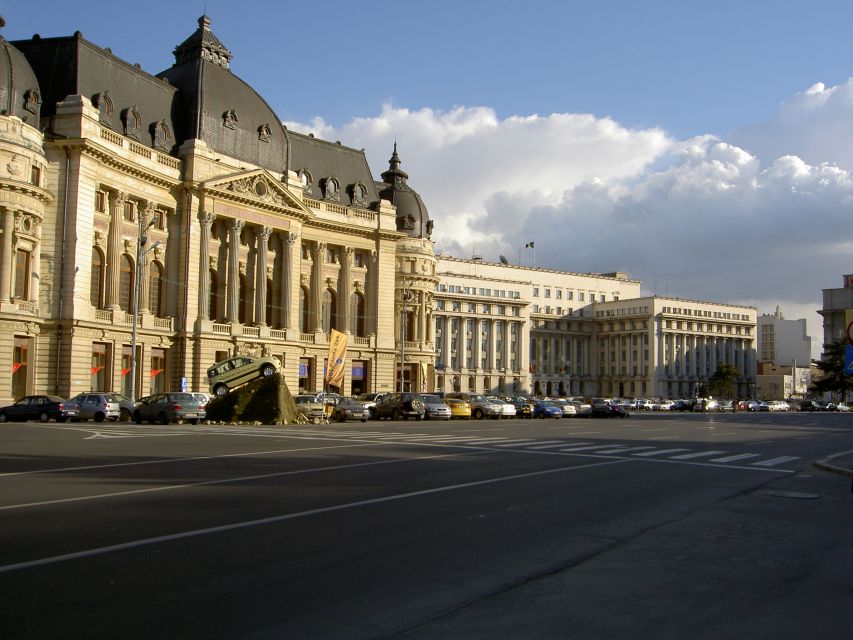
Meet your guide in front of Hanu’ Lui Manuc restaurant, right in the Old Town zone. That matters more than you’d think, because it means you start in the older fabric of the city, where streets feel tighter and history is easier to spot. From there, the tour works like a timeline you can walk.
You’ll move from “how Bucharest formed” toward “how it was reshaped,” then into the architectural and political statements of the 20th century. That arc is a big reason this is such a good first-day activity: it gives you names, locations, and mental anchors to help you explore later without getting turned around.
Guides are a big part of the experience. In past tours, names like Ed, Lucia, and Dan show up in participant feedback, and the common theme is clear explanations plus room for questions. If you enjoy conversation, this style tends to work well, especially when the guide points out details that are easy to miss on your own.
You can also read our reviews of more walking tours in Bucharest


Old Town foundations: Old Princely Court, Manuc’s Inn, and Stravopoleos
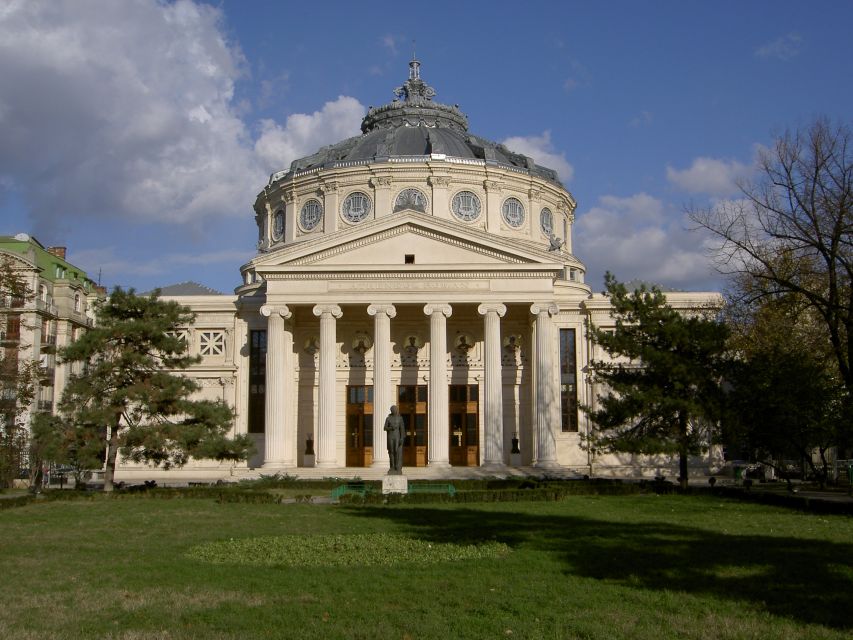
The first leg centers on Bucharest’s older core—places described as the earliest witnesses to the city’s birth and growth. You begin with the Old Princely Court, then head toward Manuc’s Inn, and you’ll also see Stravopoleos Church.
This trio works because it hits three different “ways to read” the city:
- Old Princely Court helps you understand the early political and cultural roots of Bucharest, before the big boulevards and monumental buildings.
- Manuc’s Inn is one of the standout stops for history fans, and it connects to the tour’s emphasis on the only three caravanserais (historic inns) that remain in Bucharest. You learn why these surviving buildings are so important: they’re rare physical leftovers from older trading and lodging traditions.
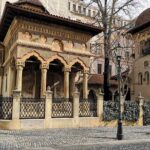
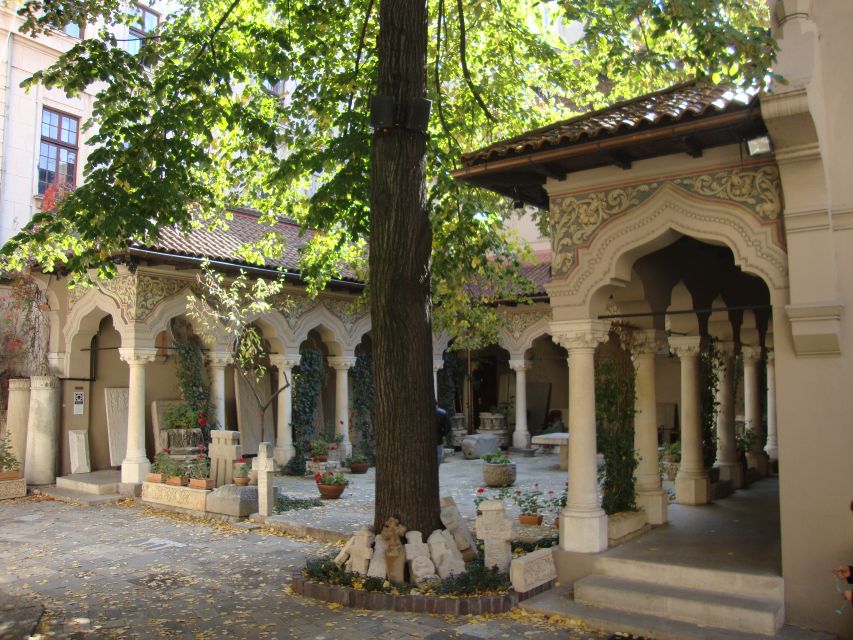
- Stravopoleos Church is the religious stop tied to the tour highlight about one of the oldest and most well-preserved monasteries/sites in Bucharest. Even if churches aren’t your main interest, it helps you ground the city beyond politics and architecture.
You’ll also pass through the area linked with Revolution Square and the city’s former financial district. That’s not just sightseeing flavor. It helps you connect the dots between architecture and power: who held influence, what changed, and why certain neighborhoods became important.
Practical note: Old Town streets can be uneven. This is where comfortable shoes really earns their keep.
Calea Victoriei: the boulevard that turns into a walking architecture course
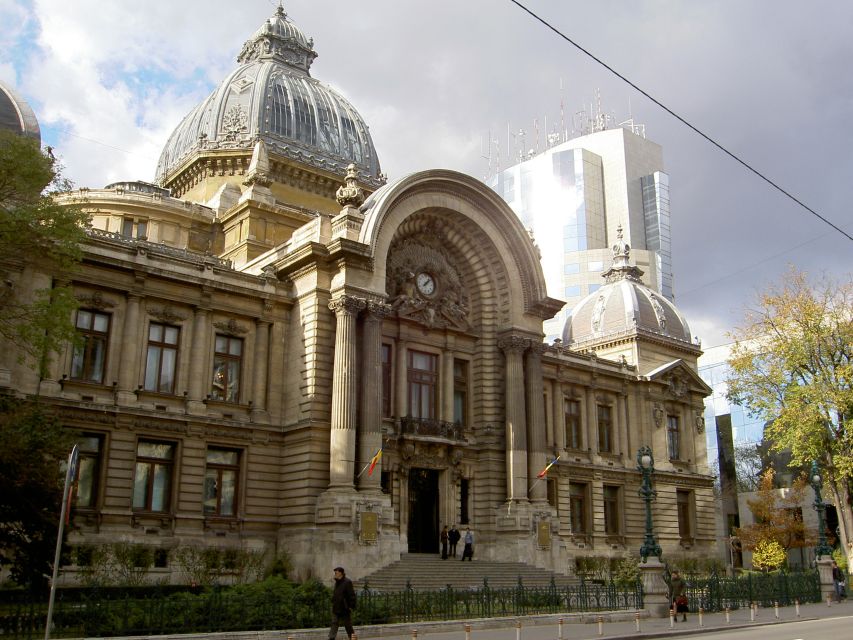
After the older center, you shift to Calea Victoriei, Bucharest’s famous boulevard and one of the best places to see how styles, eras, and status show up in one corridor. This part is a strong pick if you care about buildings, because you’re not just told names—you’re given reasons the facades matter.
Along the way, you’ll see grand landmarks including the National Military Circle, the Telephone Palace, and the Royal Palace of Bucharest. The stop that tends to excite people most is the Romanian Atheneum, because it’s such a recognizable cultural symbol and a perfect pause point for photos and questions.
Here’s what I think this segment delivers for you: it turns “pretty buildings” into a sense of pattern. Even if you’re not an architecture person, the guide’s storytelling helps you notice things like how different periods tried to project authority and identity through design.
Also, this is where walking with a local friend is most valuable. You don’t just learn what you’re seeing; you learn how to interpret it when you return later on your own.
Drawback to watch for: this stretch is city-street walking. If the weather is rough, your pace can feel slower than you planned, because you’ll likely want to keep an eye on footing and traffic.
Cismigiu Gardens: the oldest park break that resets your brain
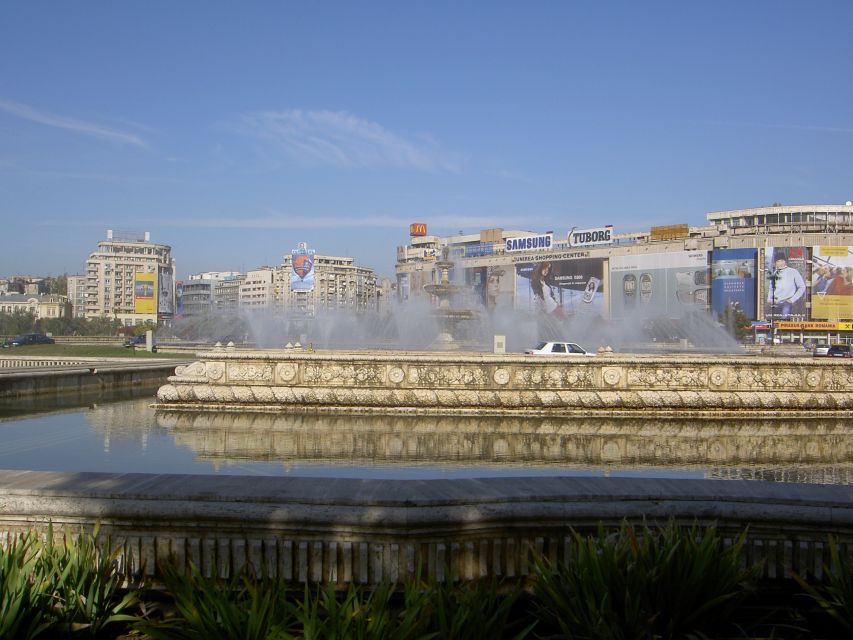
Then comes the best kind of pacing break: a calm stroll through Cismigiu Gardens. The tour calls it the oldest park in Bucharest, and it fits the itinerary perfectly because it gives you air after the dense architecture and monument-focused sightseeing.
This is more than a scenic detour. You’ll appreciate it because it lets you cool down—physically and mentally. After hours of stone, corners, and big statements, the park is a reset: you get a softer rhythm, a chance to look around without rushing, and a moment to re-charge before the route pushes into heavier political-era buildings.
The tour also ends this segment near Bucharest City Hall, which is helpful for orientation. If you later want to explore civic buildings, nearby streets, or simply wander toward museums and squares, you’ll remember the general geography because this garden-to-center transition is so clear.
Communism in stone: Ceausescu’s Palace and the Union Boulevard comparison
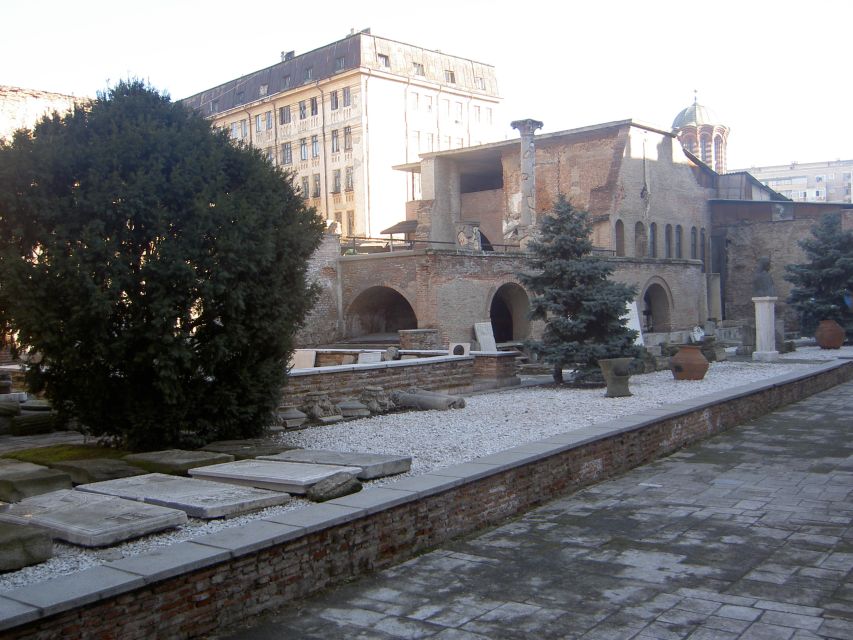
Next, the tour steps into the 20th century and the Communist era, with stops tied to Ceausescu’s Palace and Union Boulevard. This is where the city’s “scale language” becomes obvious.
The guide explains that Union Boulevard was designed to be longer and wider than the Champs-Élysées. Even if you’ve never stood on the Paris avenue, the comparison helps you understand what the builders were trying to achieve: a street meant to impress, control movement, and signal power through length and width.
Ceausescu’s Palace is the kind of place that can feel surreal at walking distance. You don’t need to love political history to be affected by how the building’s presence dominates the streetscape. The value here is in the framing: why these choices were made, and what they tried to project.
If you’re traveling with someone who finds “monuments only” boring, this segment can still work because it’s explained as a story of planning and ideology, not just a photo stop.
You can also read our reviews of more guided tours in Bucharest

Finishing at the Palace of Parliament: seeing the scale without needing a ticket
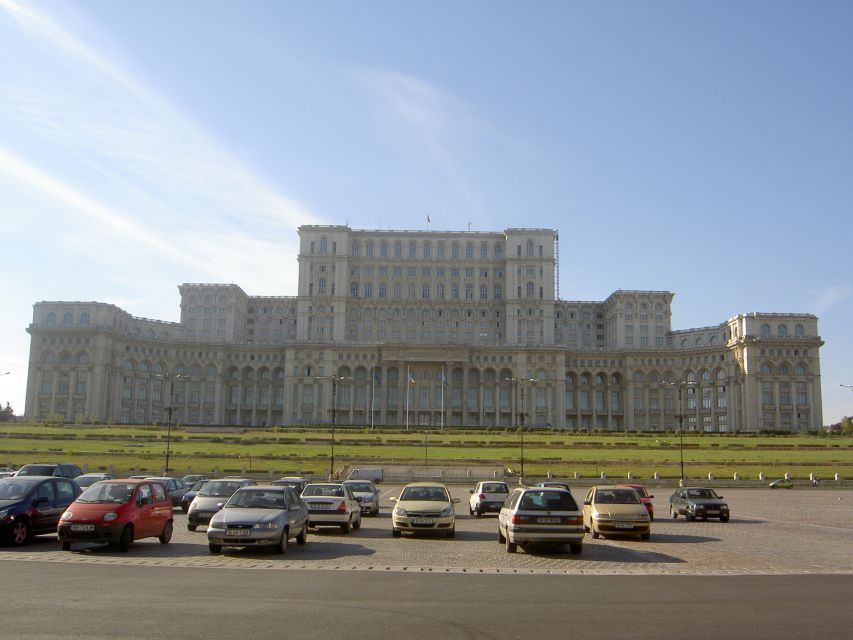
The tour’s endpoint is the Palace of Parliament, described as the second largest and the heaviest building in the world. Even if you don’t go inside (the tour data doesn’t specify an interior visit), simply reaching the finish point gives you that wow-factor scale that makes the rest of Bucharest start to make sense.
I like ending here for one practical reason: it’s a natural marker. After this, you know which part of town you’re dealing with, and you can plan your next day around it—museums, nearby neighborhoods, or longer walks—without guessing.
If you’re the type who likes to revisit a building with better light or more time, this ending helps because you’re not left with only “I saw it once.” You’ll know where it is and what to notice on a second visit: the surrounding approach routes, the way the building dominates views, and the difference between pre-20th-century textures and later monumental planning.
Price and value for $21: what you’re really buying
At $21 per person for a 2.5-hour guided walking tour, you’re paying for three things: a local perspective, efficient coverage, and interpretation.
First, it saves you time. You get a guided sequence that links older Bucharest to newer street-scale landmarks and then to monumental Communist-era statements—all within a short time window. That’s hard to replicate on your own unless you already know exactly where to go.
Second, it helps you avoid “random walking.” You’re moving through specific points: Old Princely Court, Manuc’s Inn, Stravopoleos Church, Calea Victoriei sites like Telephone Palace and the Romanian Atheneum, then onward to Ceausescu’s Palace, Union Boulevard, and finally the Palace of Parliament.
Third, the guide-led storytelling seems to be the main reason people rate this so highly. The feedback pattern includes guides such as Ed, Lucia, and Dan being engaging, clear in English, and willing to answer questions. That’s the difference between seeing a street and understanding a city.
What you should budget separately: food and drinks aren’t included. Also, no matter what the weather does, it’s still a walking tour—so plan your stamina.
If you’re looking for value, this is a solid pick for your first or second day, especially if you want a smart overview before you pick deeper-dive activities later.
Who this walking tour suits best (and who might want another plan)
This tour is a great match if:
- you want a first-time orientation in Bucharest
- you like architecture, city planning, and how eras leave physical marks
- you want a guide to point out why places matter, not just what’s there
- you enjoy parks as a breather, not only monuments
It might be less ideal if you’re looking for a relaxed, mostly sit-down outing. The route is built for walking and transitions. Also, since there are no included meal stops, you’ll want to handle food on your own schedule.
One more practical detail: group size can vary. On at least one occasion (New Year’s timing), a guide managed a larger group and kept it moving. If you prefer a quieter experience with lots of space, you might still enjoy it, but keep your expectations flexible.
Should you book this Bucharest highlights walk?

Yes, if you want the best kind of “city starter pack”: Old Town roots, caravanserai survival, boulevard architecture, a real park reset, and a strong finish at the Palace of Parliament. The 2.5-hour length makes it doable even on a tight schedule, and the English guidance plus frequent question time makes it feel like learning without feeling like homework.
Book it especially if your Bucharest days are short, or if you like to come back later to specific stops with a better sense of what you’re seeing.
If you’re unsure, do this: wear your comfiest shoes, bring layers for weather (it runs rain or shine), and plan a meal afterward. With that setup, this tour tends to pay off fast.
FAQ
How long is the Bucharest City Highlights Guided Walking Tour?
It lasts 2.5 hours.
Where do I meet the guide?
You meet your guide in front of Hanu’ Lui Manuc restaurant.
Is the tour offered in English?
Yes. The live tour guide speaks English.
Does the tour run in bad weather?
Yes, it runs rain or shine.
What’s included in the price?
The price includes a walking tour and a local guide.
Is the tour wheelchair accessible?
Yes, the tour is wheelchair accessible.