REVIEW · BUCHAREST
Skip the Line Ticket of the Palace of Parliament in Bucharest
Book on Viator →Operated by CT&T, Romania · Bookable on Viator
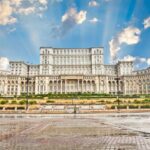
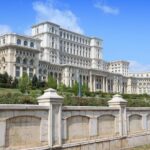
One building, a whole era of control. This Skip-the-Line tour gives you a timed, guided look at the Palace of Parliament, one of Europe’s strangest monuments, built for power and designed to survive earthquakes.
You get a focused route through big, show-stopping rooms, with a guide who turns the story into something you can actually follow. I also like that you’re not left guessing what you’re seeing—pass by the main staircases, conference spaces, and grand galleries with clear context.
What really sells it for me are two things: first, the guide’s ability to explain the building without turning it into a lecture (I’ve seen guides praised for humor and honest, sensitive wording about why it was built). Second, the interior craft—marble, crystal, carpets, curtains, stucco, all made with local materials—makes the whole place feel physical, not just political.
One drawback to plan around: access is limited, and security is strict. You’ll spend time in airport-style screening, and you might not see everything in the way you expect (for example, the balcony has been reported as not available at times).
In This Review
- Key Highlights You’ll Care About Before You Go
- Palace of Parliament in 60 Minutes: What You Actually See
- Where You Meet (and Which Entrance Matters): Izvor vs Calea 13 Septembrie
- Weekdays (Monday to Friday): Constantin Brancusi Hall route
- Weekends (Saturday and Sunday): Romanian Senate side
- Security Check Like an Airport: Pack Light and Move Smart
- Inside the Palace: Staircases, Conference Halls, and Grand Galleries
- The kinds of spaces you’ll see
- What makes the interiors feel special
- The Communist Story Behind the Concrete: Earthquake-Safe Power
- Photo Opportunities and the Balcony Reality
- Skip-the-Line and the Value Question: Is $28.91 a Good Deal?
- Who This Tour Suits Best (and Who Might Feel Frustrated)
- Booking Smart: What to Do to Avoid the Common Headaches
- Final Take: Should You Book This Skip-the-Line Tour?
- FAQ
- How long is the Palace of Parliament skip-the-line tour?
- What’s the price per person?
- Is pickup offered?
- What language is the tour in?
- Where do I meet the guide on weekdays?
- Where do I meet on weekends?
- What ID do I need, and what can’t I bring?
Key Highlights You’ll Care About Before You Go
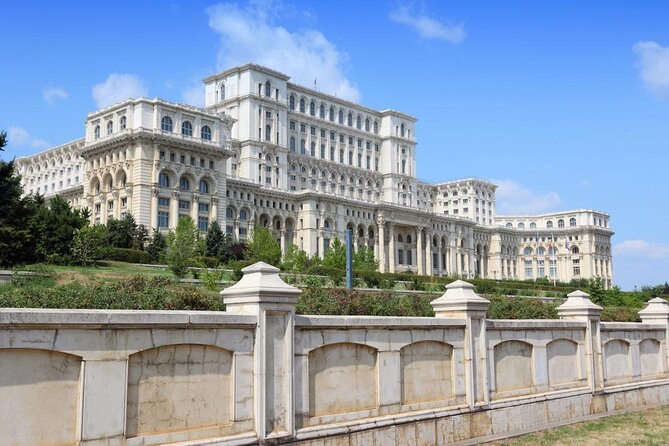
- Earthquake-safe, heavy engineering: built starting in 1984 on the safest ground, with twelve floors and four underground levels including a nuclear bunker
- Security is real security: airport-style checks; big luggage and liquids like bottles are prohibited
- Romanian materials, hands-on craftsmanship: marble, crystal, carpets, curtains, stucco, and work by local craftsmen
- A short route with big payoff: about an hour focused on major halls, staircases, galleries, and conference spaces
- Weekend entrance differs: weekdays use one access point, while Saturdays and Sundays use another entrance side
- Not the whole palace: you’ll see selected public areas; sometimes fewer rooms are available due to events or closures
Palace of Parliament in 60 Minutes: What You Actually See
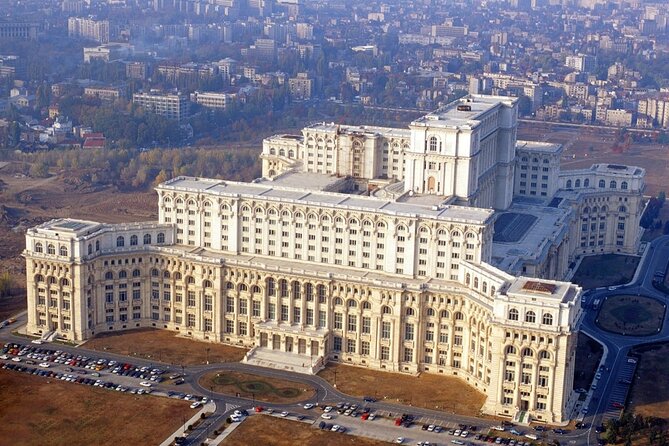
The Palace of Parliament is so large that even a guided tour can feel oddly small—until you remember what you’re really buying here: a time-efficient way inside the most important public-facing spaces.
Expect to move through the main ceremonial rhythm of the building: you’ll pass by large corridors and impressive galleries, then shift into bigger open rooms where the scale finally makes sense. You’ll also get to see major staircases and large hallways that make the building feel more like a vertical city than a single structure.
The guide is the difference between seeing “huge rooms” and understanding why they were made that way. In particular, you should be prepared for a frank discussion of Communist-era intent—why the structure exists, who it was meant to serve, and what it cost the city socially. Guides are often praised for honesty and for handling the topic with care rather than just repeating slogans.
Duration is about 1 hour. That short window matters: you’re not trying to conquer a giant museum. You’re trying to absorb a masterpiece of scale and symbolism before you run out of energy (and before the day’s security rules or space limits change).
You can also read our reviews of more tours and experiences in Bucharest
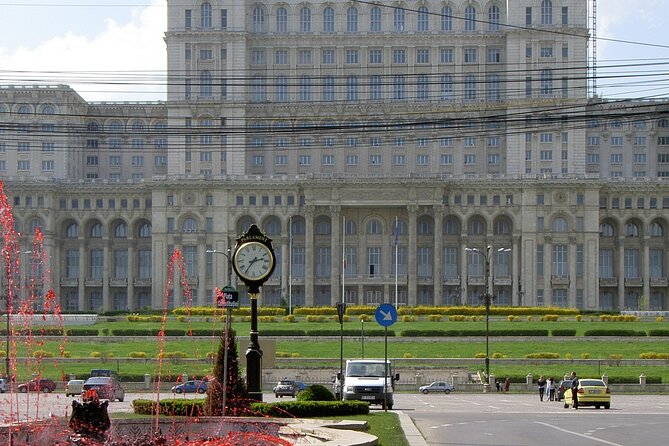
Where You Meet (and Which Entrance Matters): Izvor vs Calea 13 Septembrie
This tour lives or dies on the meeting point. The Palace is surrounded by entrances that don’t always behave like normal attractions—on weekdays you use one set of access routes, while on weekends you use another.
Weekdays (Monday to Friday): Constantin Brancusi Hall route
You meet a CT&T representative wearing a badge inside the building at the coffee shop area. To reach the meeting area, you go through security using the A3S2 entrance, then follow access into the Constantin Brancusi Hall.
Access to that area is from 2–4 Izvor street, next to Izvor Park.
Weekends (Saturday and Sunday): Romanian Senate side
On Saturdays and Sundays, access is from Calea 13 Septembrie to A1 entrance at the Romanian Senate.
If that sounds too picky, that’s because the place forces it. Several unhappy experiences happened simply because people arrived at the wrong entrance side and the tour had already started.
Practical move: on the day, take a moment and confirm you’re aiming at the correct entrance name and street. If your directions get confusing, park yourself near a recognizable landmark and walk with purpose rather than guessing the shortcut.
Security Check Like an Airport: Pack Light and Move Smart
This isn’t “show a ticket and stroll in.” The entry process is airport-style: there’s security screening, and it’s strict.
Here’s what you must plan for:
- Passport or EU ID is mandatory for entry
- Copies or a driving licence are not accepted
- Big luggage may not be allowed
- Dangerous objects are prohibited
- Bottled liquids are prohibited
So pack like you’re going to transit security. That means no heavy bag, and keep essentials easy to access. If you show up with a suitcase, expect friction.
Also expect waiting. Even with the skip-the-line ticket, you’re still going through the building’s security process. The “skip” part usually helps with the main admission flow, but you should still plan for queue time.
One more tip: bring your ID early in the process. Don’t be hunting for a passport while the group is already rolling forward.
You can also read our reviews of more tours and experiences in Bucharest
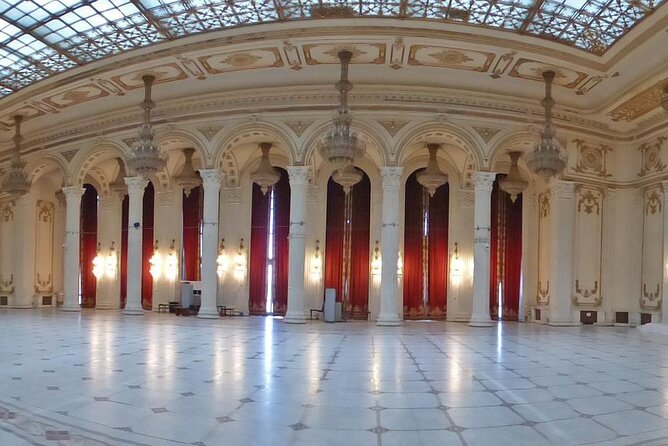
Inside the Palace: Staircases, Conference Halls, and Grand Galleries
Once you’re through screening, the tour becomes a guided walk through the building’s most impressive “public-facing” spaces. You’ll pass by the most important rooms, and the guide points out details you might otherwise miss.
The kinds of spaces you’ll see
You should expect:
- Main staircases with a ceremonial feel
- Large hallways and impressive galleries
- Conference halls and rooms where the building’s institutional role shows up in the design
- A balcony view of the main square is part of the concept, though it may be unavailable at the moment
That balcony detail is a great example of why expectations matter. The building is famous for the idea of panoramic overlooks, but access depends on timing and security rules.
What makes the interiors feel special
The wow factor isn’t just size. It’s materials and craft:
- marble
- crystal
- carpets and curtains
- stucco
- work by local craftsmen
You get a chance to see how these elements were combined into an official, theatrical look. Even if you don’t care about Communist architecture, it’s hard not to notice the effort that went into making power look permanent.
And if you’re the kind of traveler who likes photo-worthy geometry: the staircases, columns, and wide indoor corridors provide clean angles for pictures—especially once you’re not fighting a long admission line.
The Communist Story Behind the Concrete: Earthquake-Safe Power
The Palace of Parliament is built as much for symbolism as function. The facts you’ll hear on the tour matter because they show how the planners thought: control, permanence, and survival.
Key points you can carry with you:
- It started being built in 1984
- It was placed on the safest part of the city for earthquake risk
- The building has twelve stores
- There are four underground levels, including a nuclear bunker
- It was known under earlier names tied to Communist power, including Casa Republicii and the House of the People—a promise that history makes complicated
When a guide explains these choices, it changes how you read the space. You start noticing the building not as a random “big palace,” but as an engineered statement: someone really did plan for continuity, even under worst-case conditions.
I also like that the best guides address the human impact, not only the architecture. If your guide leans into this angle, you’ll likely come away with a clearer sense of how a monument like this reshaped the city around it.
Photo Opportunities and the Balcony Reality
Yes, you’ll take photos. This is one of those tours where you see enough interiors to build a mini photo set: wide rooms, staircases, and decorative details.
But here’s the honest side of it: the balcony may not always be accessible. The tour concept includes a balcony perspective toward the main square, yet it has been reported as unavailable at times.
So plan your photos as if you might not get the balcony view. The good news is you still get plenty of interior scale shots. Large halls and galleries give you that “how is this real?” feeling without relying on one single viewpoint.
If you’re a super-visual traveler, come prepared to shoot quickly and keep moving. Security timing and group pacing matter inside a working, controlled building.
Skip-the-Line and the Value Question: Is $28.91 a Good Deal?
For $28.91 per person and about one hour, this tour is priced like a “smart access” product: you’re paying for a guided entry process and a curated slice of the building’s most important rooms.
So is it good value? For the right traveler, yes—because the Palace is hard to experience correctly without this kind of structured access. You’re getting:
- admission ticket included
- a guide to make sense of what you see
- a fast route through major spaces
- a smoother entry flow compared to trying to figure it out on your own
But value depends on expectations. Some people are disappointed because they want the whole building—basements, technical areas, and private sections are not part of what this type of visit can offer. The experience is about selected areas, not a full roam.
To judge value for yourself, ask:
- Do you want one hour of high-impact interiors and context?
- Do you prefer a guided route over the frustration of chasing entrances?
- Are you okay with limits, security checks, and the possibility of fewer spaces on a given day?
If those answers are yes, you’re likely to feel like you got your money’s worth.
Who This Tour Suits Best (and Who Might Feel Frustrated)
This is a great fit if you:
- want a first-time, efficient look at Bucharest’s most famous Communist-era building
- like architecture with a story attached
- can handle a security process that feels like going through an airport
- are fine with seeing a selected set of rooms rather than every floor
It may feel less satisfying if you:
- expect unlimited access to every part of the palace
- are traveling with young kids who struggle with long security lines (the pace can be unforgiving)
- hate strict entrance rules and need a lot of help finding the exact meeting area
Also note the tour calls for moderate physical fitness. You’ll be walking inside controlled areas and moving with the group. It’s not described as a heavy hike, but it’s not a couch-and-cocktail experience either.
Booking Smart: What to Do to Avoid the Common Headaches
Based on past visitor patterns, the biggest problems aren’t usually about the building. They’re about timing and meeting the correct side.
Here’s how you prevent the most common issues:
- Arrive early enough to handle security without stress
- Bring your passport or EU ID (no exceptions)
- Use the correct entrance side for the day: Izvor/A3S2 weekdays, Calea 13 Septembrie/A1 weekends
- Follow the meeting details precisely, including the hall and entrance name
- Keep luggage minimal so screening is quick
If you’re going on a weekend, stay alert. There have been instances where tours were canceled due to unstable political situations. You can’t control that, but you can control your plan flexibility and your willingness to double-check updates.
Final Take: Should You Book This Skip-the-Line Tour?
I’d book this tour if you want a one-hour, high-impact introduction to the Palace of Parliament with a guide who can explain the Communist story clearly. The best part isn’t just the grandeur—it’s the combination of curated access, meaningful context, and interior craftsmanship you can actually see up close.
Skip it (or at least think twice) if you’re expecting the whole complex, unlimited areas, or a low-security experience. The palace is famous, but access is controlled, and security checks are unavoidable.
If you’re a first-time visitor to Bucharest and you want to understand what you’re looking at, this is a strong way to do it—fast, structured, and built around the parts of the building that make the strongest impression.
FAQ
How long is the Palace of Parliament skip-the-line tour?
The tour lasts about 1 hour.
What’s the price per person?
The price is $28.91 per person.
Is pickup offered?
Yes, pickup is offered, but it’s limited to the meeting approach described for the tour (not from other locations).
What language is the tour in?
The tour is offered in English.
Where do I meet the guide on weekdays?
On weekdays (Monday to Friday), you meet the representative inside the building at the coffee shop area after passing security through A3S2 entrance to the Constantin Brancusi Hall (access from 2–4 Izvor street, next to Izvor Park).
Where do I meet on weekends?
On Saturday and Sunday, access is from Calea 13 Septembrie to the A1 entrance at the Romanian Senate.
What ID do I need, and what can’t I bring?
You must bring a passport or EU ID. Copies or a driving licence aren’t accepted. The building has strict security rules, and big luggage, dangerous objects, and bottle liquids are prohibited.
If you’d like, tell me your travel dates (weekday or weekend) and I’ll help you plan the exact entrance and timing so you arrive at the right spot without stress.