REVIEW · BUCHAREST
Bucharest: Small Group History, Art & Secrets Tour
Book on GetYourGuide →Operated by ArtistaTours · Bookable on GetYourGuide
Bucharest has plot twists on every corner. This small-group tour strings together the city’s major sights with an art-first storytelling style, so you’re not just looking at buildings, you’re learning how Bucharest got its mood.
I especially like the start at the Ateneul Român, where the building’s Romanian Athenaeum grandeur sets the tone for everything that follows. A second favorite is the way the route mixes famous landmarks with lesser-seen street scenes, like Umbrellas Street and the old passages, without turning the walk into a slog. The main trade-off: you’ll cover a lot of ground in just 3 hours, so expect short stops and fast photo moments.
In This Review
- Key reasons this tour works
- Start at the Romanian Athenaeum: where Bucharest sets the tempo
- Royal Palace to Revolution Square: power, reshaped in the city blocks
- Kretzulescu Church and the old-meets-new contrast you can feel
- Pasajul Englez, Umbrellas Street, and Odeon Theatre: Bucharest loves a side entrance
- National Military Circle: a short stop with big context
- The local café break: a smart pause inside a fast 3-hour loop
- Macca–Vilacrosse Passage and the National Bank of Romania: art behind the counters
- Stavropoleos Monastery: the calm moment that adds depth
- Caru’ cu bere and CEC Palace: the “wow” finishes for old-town energy
- National Museum of Romanian History and Manuc’s Inn: where stories meet streets
- Antim Monastery and the Palace of Parliament: the ending that changes your perspective
- Price and timing: $22 for a lot of street-reading
- What to bring (and how to make the most of it)
- Who this tour fits best
- Should you book this Bucharest small-group tour?
- FAQ
- Where is the meeting point?
- How long is the tour?
- How much does it cost?
- What languages are available?
- Is there a break during the tour?
- Are entrance fees included?
- What should I bring?
- Is the tour wheelchair accessible?
- FAQ
- Can I bring luggage or large bags?
- Is free cancellation available?
Key reasons this tour works
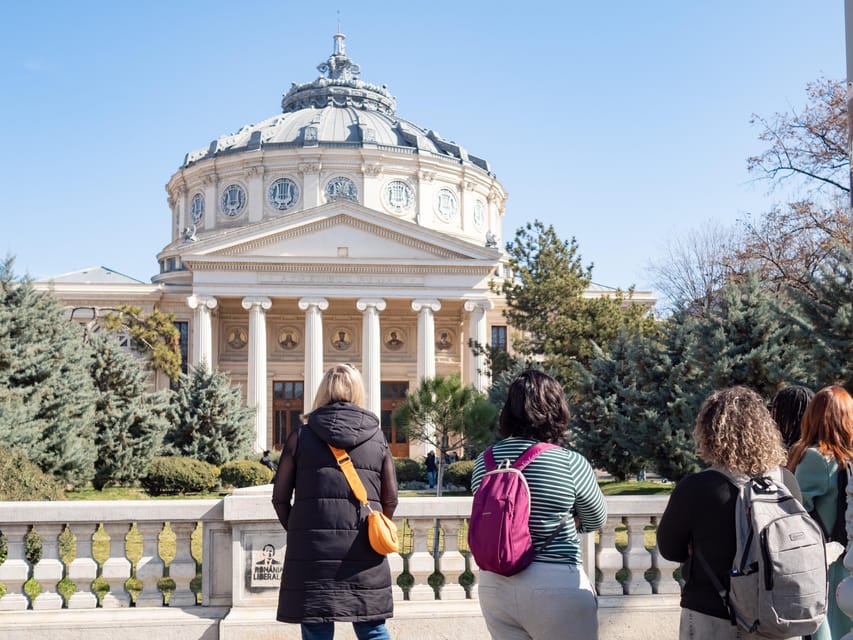
- Ateneul Român meets George Enescu context right at the start, so the tour has a cultural anchor
- Palace of the Parliament explained clearly, including why it’s so controversial
- Street-level texture: churches, passages, and painted details like Umbrellas Street
- A café reset during the walk, with coffee or tea included time to regroup
- Small-group energy with an artist guide who can answer follow-up questions in real time
Start at the Romanian Athenaeum: where Bucharest sets the tempo
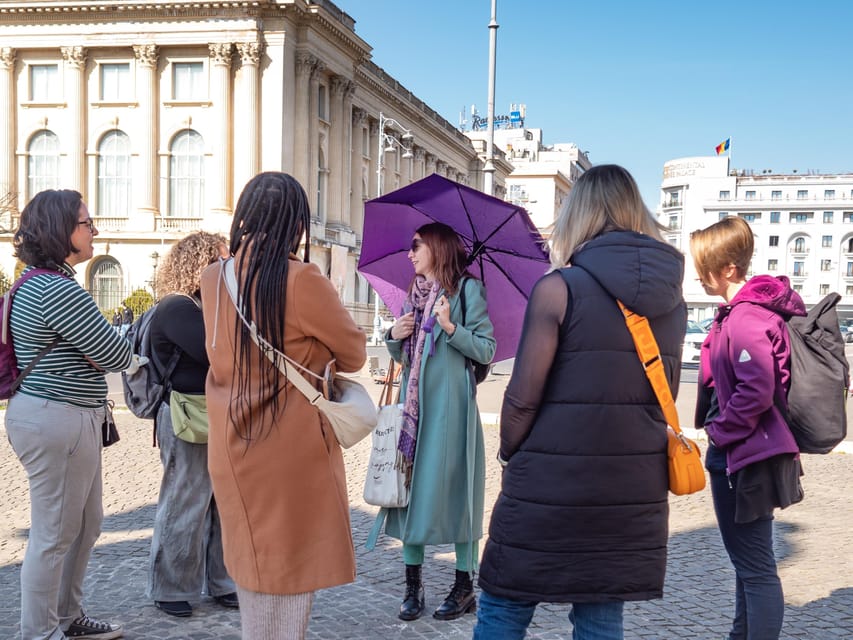
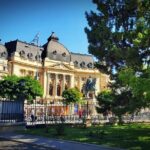
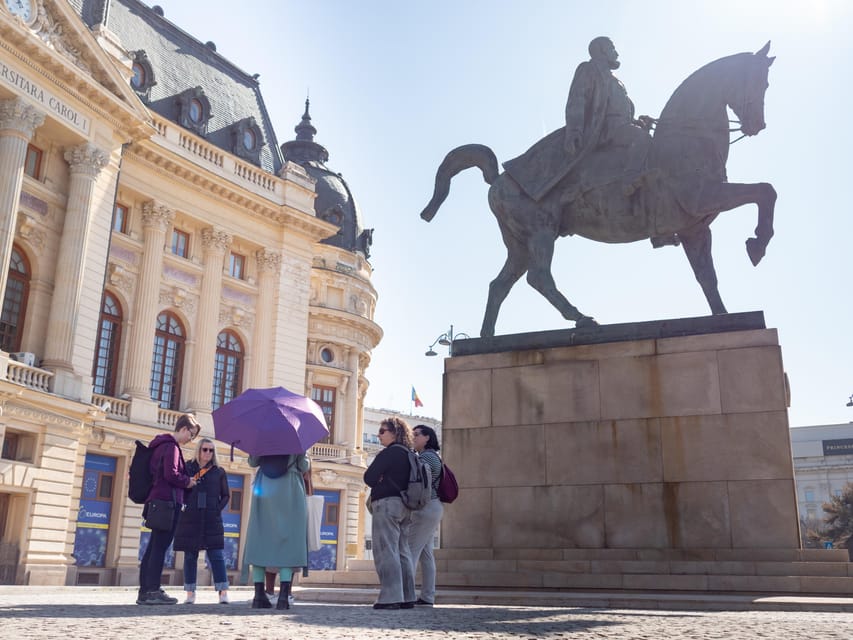
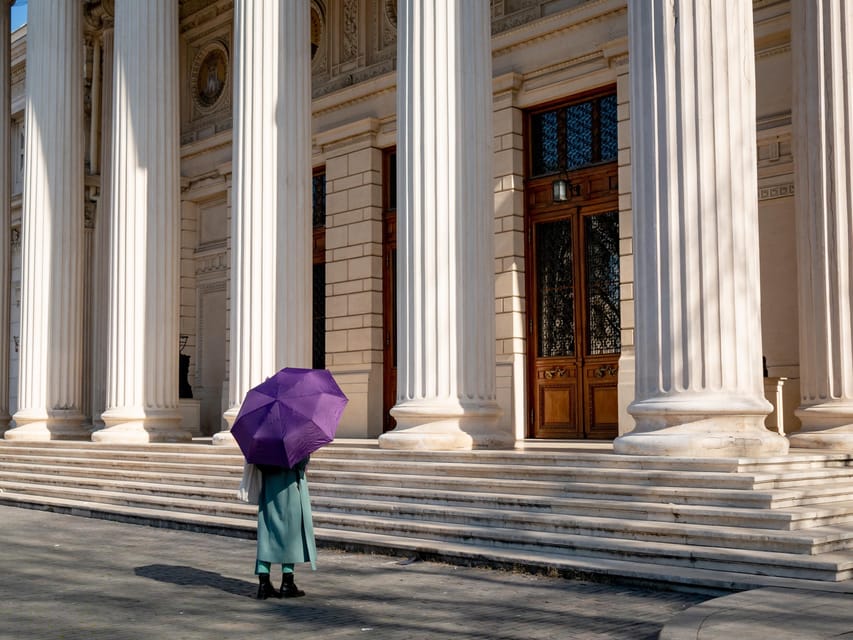
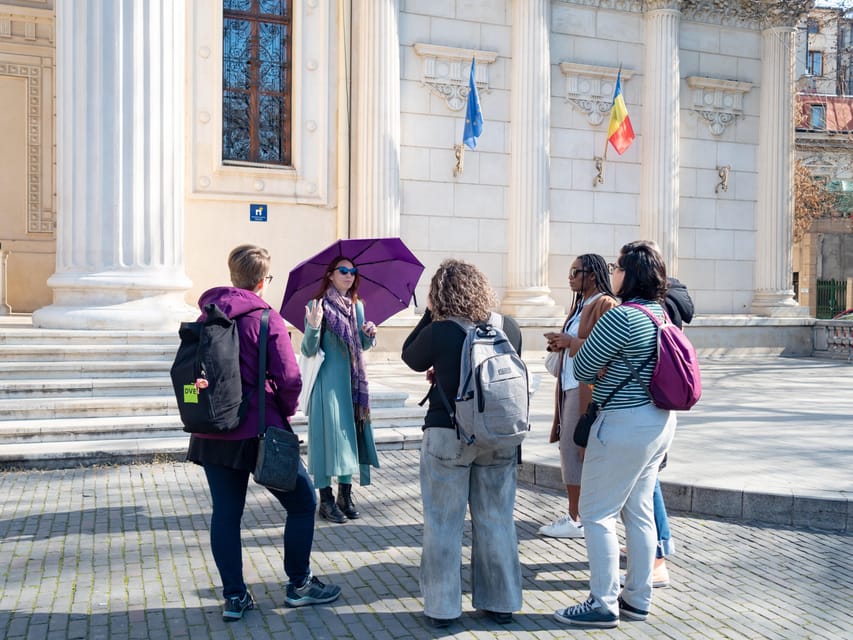
Meet at the Romanian Atheneum, standing by the columns with the purple umbrella. The building is a perfect opener because it’s all about scale and intent: grand neoclassical architecture in the heart of the city, plus the fact that it’s associated with the George Enescu Philharmonic Orchestra. Even if you only catch the exterior at the start, that “main character” feel matters—your guide can use it to frame what comes next: ambition, power, and changing eras.
I like how this first moment keeps the tour grounded in culture, not trivia. It’s the kind of scene where you can quickly orient yourself, then start noticing details you might otherwise miss, like symmetry, proportions, and how public buildings project confidence.
You can also read our reviews of more historical tours in Bucharest
Royal Palace to Revolution Square: power, reshaped in the city blocks
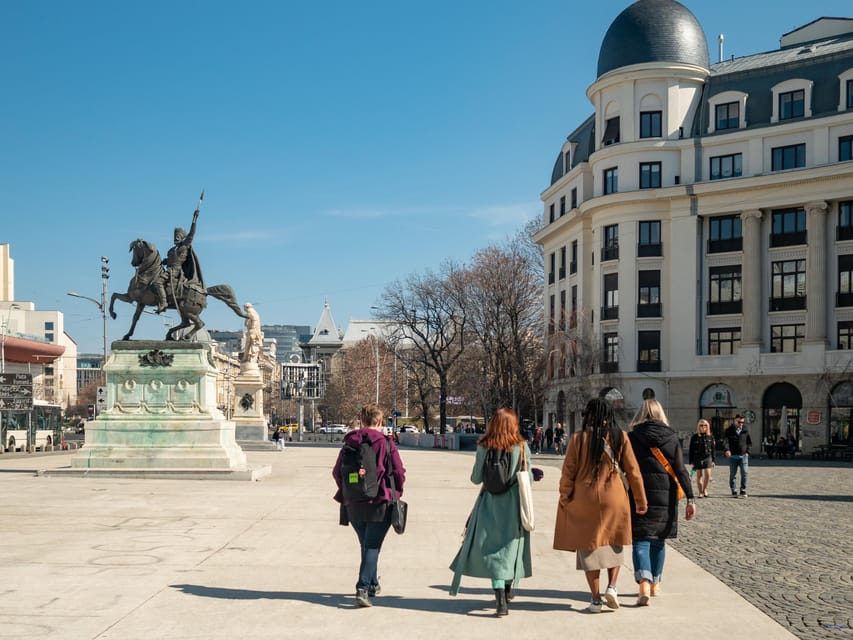
Right after the Ateneum, the walk turns toward the Royal Palace of Bucharest area. You get a photo stop and a guided look—short, but useful—so you understand why this part of the city matters. Think of it as a quick map lesson: where authority once stood, and how the city’s main spaces evolved around it.
Then comes Revolution Square, another photo stop with guided context. This is where your guide’s stories do real work. Bucharest has a way of layering regimes, and Revolution Square is one of those places that helps you connect the dots between architecture and politics. The tour’s format keeps it moving, but the explanations help the streets feel less random.
Kretzulescu Church and the old-meets-new contrast you can feel
Next you’ll reach Kretzulescu Church, another photo stop with guided sightseeing. Churches in Bucharest are often like punctuation marks—small compared to the big civic structures, but loaded with meaning. Even if your time there is brief, the guide’s commentary helps you read what you see: the blend of local tradition and the city’s habit of remixing styles over time.
This stop also helps with pacing. Between larger plazas and massive buildings, a church is a visual breather. Your eyes shift from monument to texture—facades, details, and the human scale that makes older Bucharest feel close even at street level.
Pasajul Englez, Umbrellas Street, and Odeon Theatre: Bucharest loves a side entrance
One of the best parts of this tour is how it treats Bucharest like a walking story, not a checklist. Pasajul Englez is one of those spots where you slow down without realizing you’re slowing down. It’s a passage you can actually imagine people using for everyday life—shopping, pausing, passing through—while your guide fills in what it represents historically.
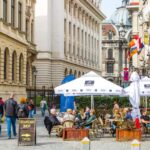
Then you hit Umbrellas Street, which is exactly the kind of colorful detail that makes a city feel lived-in rather than museum-quiet. It’s also a quick win for photos: you’ll want your camera ready, because this is the place where the visuals do a lot of talking.
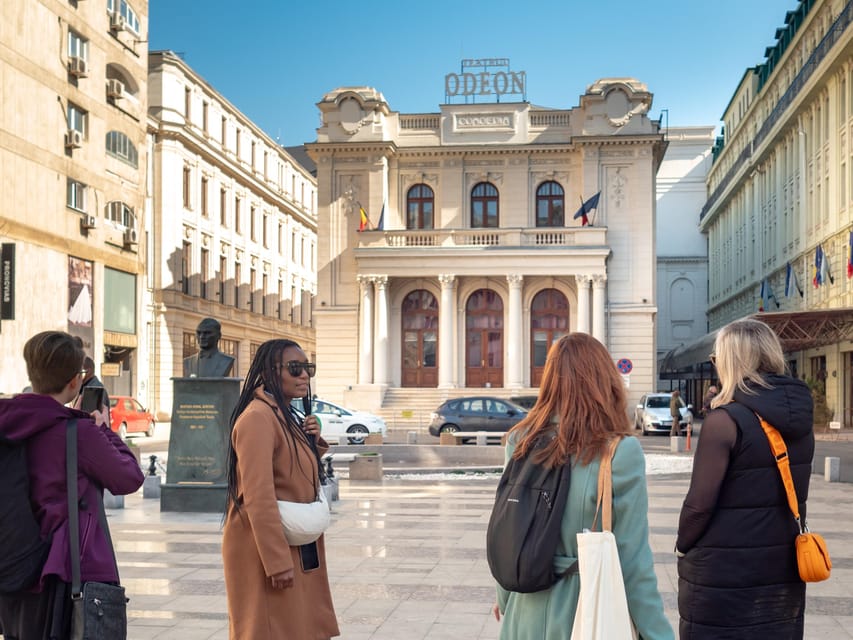
After that, Odeon Theatre enters the frame. The theater stops are a reminder that Bucharest’s story isn’t only political; it’s artistic too. You’re seeing how public spaces were designed for audiences and ideas, not only for power.
National Military Circle: a short stop with big context
The National Military Circle stop is another quick photo-and-sightseeing moment, but it’s the kind of stop where the guide’s narrative matters more than the minutes. Military architecture and civic identity often share the same grammar—order, formality, symbolism—so even a brief exterior view can make sense when you know why it exists.
If you’re the type who likes history, this is where your guide can connect the city’s buildings to the era that produced them. If you’re not, it still works because you’ll understand the vibe: authority, structure, and status, all baked into stone.

The local café break: a smart pause inside a fast 3-hour loop
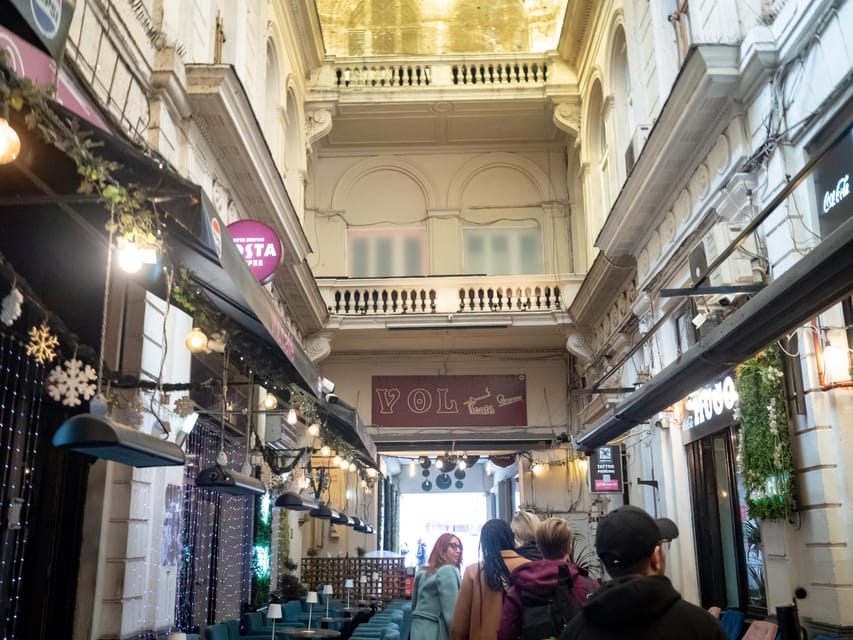
Mid-tour, there’s a local café break for coffee or tea, about 25 minutes. This isn’t just a “sit down” moment—it’s where you can catch your breath, sip something warm (or cool, depending on the day), and reset your feet.
This is also a good time to ask the guide practical follow-ups for the rest of your stay. In at least one booking, Helen/Elena encouraged the group toward an In House pastrami option afterward—and those kinds of real-world suggestions can save you time when you’re hungry and a little tired.
Macca–Vilacrosse Passage and the National Bank of Romania: art behind the counters
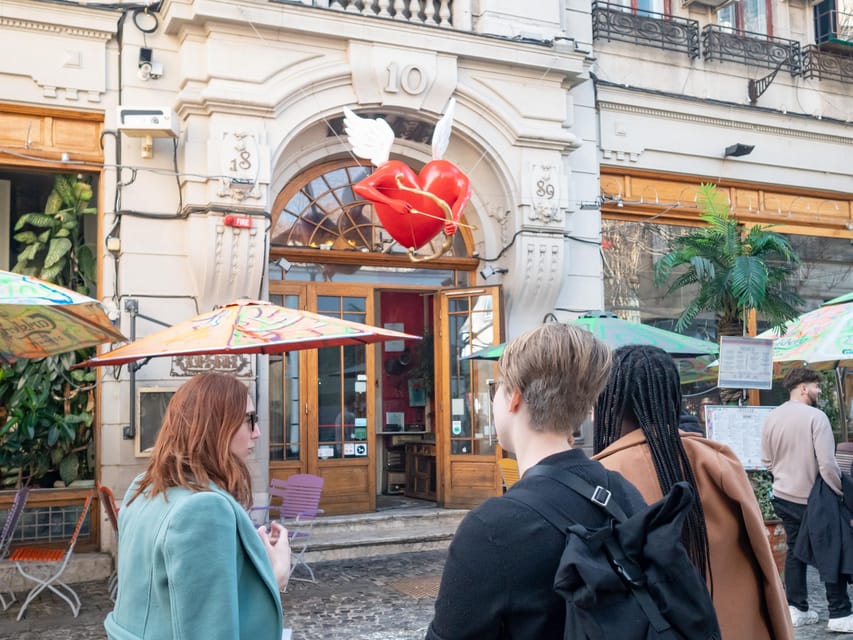
After the café break, the route continues to Macca–Vilacrosse Passage. Passages like this are small worlds. Even without long exploration time, you’ll appreciate the vibe: a covered, older-style corridor that feels made for strolling and lingering. Your guide’s job here is to help you see it as more than scenery, connecting it to how Bucharest used to function socially and economically.
Next up is the National Bank of Romania photo stop with guided explanation. Financial buildings often act like city statements: they show what a government wanted people to believe—stability, legitimacy, permanence. The tour doesn’t force you to study every detail; instead, you get the key “why” so the façade doesn’t feel random.
Stavropoleos Monastery: the calm moment that adds depth
Then you’ll reach Stavropoleos Monastery, another photo stop with guided sightseeing. This is a nice contrast to the banking and civic-heavy stretches. Monasteries tend to slow the experience, even if your stop is short, because they’re visually about stillness and continuity.
What I like here is that it rounds out the tour’s balance. You’re not only learning about governments and big construction; you’re also seeing the places that shaped everyday spiritual life.
Caru’ cu bere and CEC Palace: the “wow” finishes for old-town energy
The route continues to Caru’ cu bere, again a photo stop with guided sightseeing. This is one of those stops that feels like Bucharest showing off. The big challenge with these famous old-city spots is time—people rush through. Here, the guide helps you slow down just enough to notice the details that make it worth a second look later.
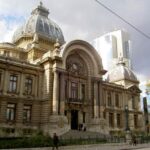
Next comes CEC Palace. The tour treats it like more than a pretty building: your guide can connect the palace to what you’ve been learning about civic presence and architecture. The contrast between ornate commercial/restaurant energy and an official-looking façade makes the city’s character feel more complete.
National Museum of Romanian History and Manuc’s Inn: where stories meet streets
A key stop is the National Museum of Romanian History. Even though entrances aren’t included, the guided exterior context helps you decide if you want to come back later on your own. If you like museums, this stop will make the idea feel less intimidating and more targeted: you’ll know what themes to look for.
Then you’ll reach Manuc’s Inn, which includes a break/photo stop. Inns are a brilliant way to understand a city because they connect strangers, trade, food, and movement. Even in a short visit, it gives you that practical sense of Bucharest as a hub, not just a set of monuments.
Antim Monastery and the Palace of Parliament: the ending that changes your perspective
You’ll finish with Antim Monastery, another photo-and-sightseeing moment with guided context. This is a good way to end the older-street chapter of the walk: another reminder that Bucharest’s identity isn’t only built in palaces.
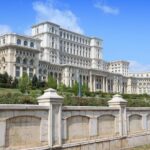
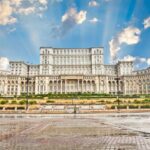
Finally, the tour leads to the Palace of the Parliament. You’ll get a longer photo stop here—about 15 minutes—with guided sightseeing. This building is famous for a reason: it’s the second-largest administrative building in the world, and it carries controversy alongside its sheer scale. Your guide’s job is to help you interpret what you’re looking at—why it dominates the skyline, and why it remains so politically charged.
This is the moment where the whole walk clicks. The earlier stops explain the city’s shifts in power, style, and public life. The Palace feels like the culmination: a structure so large it can’t help but symbolize an era—and its consequences.
Price and timing: $22 for a lot of street-reading
At $22 per person for about 3 hours, this tour is strong value if you want fast, guided orientation. You’re paying for the guide’s ability to turn architecture into meaning—especially around high-impact places like the Palace of the Parliament and Revolution Square.
The big reason it’s good value is the variety in stops: Ateneul Român, major civic spaces, religious sites, passages, and old-town streets. Even when each location is brief, you’re guided through a connected storyline rather than watching the city blur by.
Just be realistic about the format. The pace is brisk, and you won’t get long interior time at any single site. If you want slow museum wandering, you’ll still want to build independent time after this.
What to bring (and how to make the most of it)
Bring comfortable shoes and water. The route is clearly built for walking, with repeated short photo stops and quick sight segments. Also, avoid packing like you’re moving house—luggage or large bags aren’t allowed, so travel light.
A camera helps, especially for Umbrellas Street and the more ornate façades. And if you’re the type who likes asking questions, this is a tour where that pays off—art guides tend to connect visuals to stories in a way that’s easy to follow.
Who this tour fits best
This works best for:
- First-time visitors who want a guided “Bucharest brain” in one afternoon
- People who like architecture plus story, not just facts
- Travelers who enjoy a mix of famous landmarks and street-level surprises
It may be less ideal if:
- You need long seated breaks or very slow walking
- You want long interior visits rather than exterior viewing and context
- You have mobility limitations—there’s wheelchair accessibility listed, but the activity also notes it may not suit mobility impairments, and the walking portion is still a factor
Should you book this Bucharest small-group tour?
I think it’s a smart booking if your time is tight and you want your first hours in Bucharest to feel guided and meaningful. The price-to-time ratio is good, and the tour’s strengths—especially the artist-guide storytelling and the mix of major landmarks with street-level details—make it more than a “take photos here” loop.
Book it if you like getting your bearings fast, learning why buildings matter, and ending with the Palace of the Parliament after you’ve already built context. Skip it (or plan other options) if you prefer long museum time or need a more relaxed pace. Otherwise, this is a solid way to understand Bucharest without getting lost in logistics or language.
FAQ
Where is the meeting point?
Your guide will be waiting in front of the Romanian Atheneum by the columns with a purple umbrella.
How long is the tour?
The tour lasts about 3 hours.
How much does it cost?
The price is listed as $22 per person.
What languages are available?
The live guide is available in Italian, Spanish, French, and English.
Is there a break during the tour?
Yes. There’s a scheduled café break with coffee or tea included time.
Are entrance fees included?
No. Entrance fees to attractions are not included.
What should I bring?
Wear comfortable shoes and bring water.
Is the tour wheelchair accessible?
Wheelchair accessibility is listed, but the activity also notes it may not be suitable for people with mobility impairments due to the nature of the walking route.
FAQ
Can I bring luggage or large bags?
No. Luggage or large bags are not allowed.
Is free cancellation available?
Yes, you can cancel up to 24 hours in advance for a full refund.