REVIEW · BUCHAREST
4h Bucharest City Tour – Group Trip Maximum 5 Persons – The Taste of Bucharest
Book on Viator →Operated by Nicolas Experience Tours · Bookable on Viator
Bucharest gets real fast. This compact city trip ties together two sides of the Romanian capital, from the scale of People’s House and the legacy of communism to the homes and streets that shaped everyday life. You’ll move efficiently by air-conditioned van, and you’ll spend most of your time actually looking at major places, not just transferring.
I especially like the small group size (max 5), which makes it easy to ask questions and keep the pace comfortable. I also like how the guiding leans into clarity and connection, with guides such as Nicolas and Alex mentioned as professional, fun, and strong in English, and one guide noted for speaking French well.
One consideration: this is not a light-and-lovely tour. The People’s House stop is intentionally heavy in theme, and you’ll also need to budget for at least one paid admission, since the Village Museum entry ticket is not included.
In This Review
- Key highlights to look for
- First Impressions: a four-hour city tour with room to breathe
- People’s House and the “scale shock” of totalitarian power
- National Village Museum (Dimitrie Gusti): Romanian traditions in one walking universe
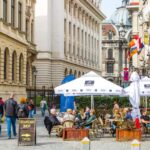
- Calea Victoriei: Royal grandeur, communist power, and everyday Bucharest
- Revolution Square: December 1989 and the turning point you can feel
- Old Town: Hanul Lui Manuc and the cosmopolitan layers of Bucharest
- Price and Logistics: does $162.56 make sense for this route?
- What you should wear, bring, and expect during the walk-heavy parts
- Who this tour fits best (and who might want something else)
- Should you book 4h Bucharest City Tour: The Taste of Bucharest?
- FAQ
- How long is the Bucharest city tour?
- What does it cost?
- Is pickup included?
- How many people are in the group?
- What language is the tour offered in?
- What’s included in the price?
- What’s not included?
- Do I need to pay for any entrance tickets during the tour?
- Is there a mobile ticket and can I cancel for free?
Key highlights to look for
- Max 5 travelers means fewer awkward pauses and more direct conversation with your guide
- People’s House / Palace of Parliament gives you a real sense of how power and propaganda can reshape a city
- National Village Museum (Dimitrie Gusti) focuses on traditional Romanian life in one place, with houses and symbols from across the country
- Calea Victoriei mixes royal-era landmarks with communist-era sites along one famous avenue
- Revolution Square and the December 1989 story show how quickly history can turn
- Old Town time includes Hanul Lui Manuc, plus churches and small places to browse
First Impressions: a four-hour city tour with room to breathe
This tour is built for people who want structure without getting stuck on a full-day schedule. You’re looking at about 3 hours 50 minutes to 4 hours 30 minutes, which is long enough to hit the biggest “Bucharest chapters,” but short enough that you can still plan an evening meal or a second neighborhood on your own.
The logistics are also designed to be easy. Pickup is offered, and you’ll wait in the lobby or on the sidewalk if the meeting point is an address. The van is air-conditioned, and there’s WiFi on board, plus the fuel and parking are covered. That means you start the day focused on seeing the city, not calculating transit costs.
The small group matters more than it sounds. With a maximum of 5 persons, you’re less likely to get herded around or rushed through photo stops. It also helps the guide tailor explanations if you have questions, and it’s exactly the kind of setup where good guiding really shows.
You can also read our reviews of more city tours in Bucharest



People’s House and the “scale shock” of totalitarian power
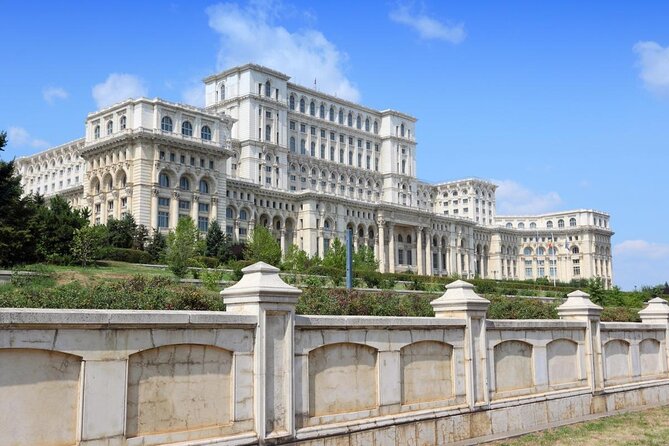
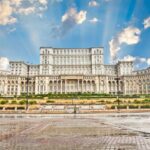
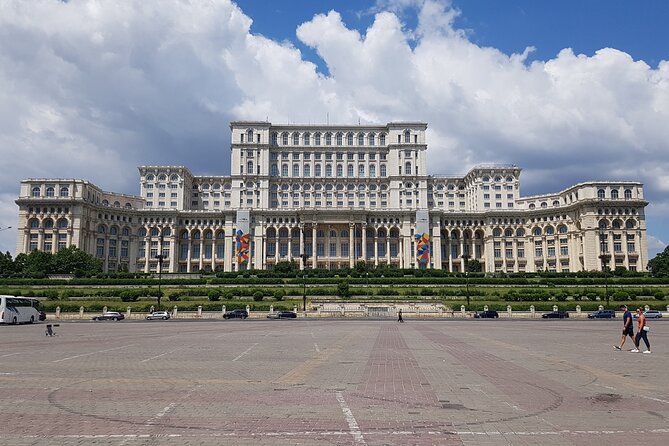
The tour’s biggest statement begins at the Palace of Parliament, sometimes also called People’s House. The theme here is explicit: you’ll learn how dangerous and damaging a totalitarian regime can be for a nation, and you’ll feel that lesson through the building itself.
This is one of those places where size does the teaching. The palace is described as the second-largest administrative building on the planet after the Pentagon, and that fact gives you a clue about what to expect. Even if you’ve seen other monumental buildings in Europe, this one tends to land with a different kind of impact because it’s tied to the kind of opulence and megalomania a dictator tried to project.
If you prefer your sightseeing mostly scenic and fun, you might find this stop emotionally heavy. But if you’re the type who likes context and can handle serious history, it’s a strong anchor for the whole day. The guide’s job here isn’t just to point; it’s to connect the architecture to what people lived with under that system.
Practical tip: wear comfortable shoes and plan to stand and look up at angles you might not be ready for. You’ll want your camera, but don’t spend the whole time shooting. Let a few minutes pass where you just take in the scale.
National Village Museum (Dimitrie Gusti): Romanian traditions in one walking universe
After the political weight, the itinerary shifts to something calmer: the National Village Museum Dimitrie Gusti. Think of it as a slow reset. The visit is described as a chance to see Romanian traditions gathered into one place, showing what village life looked like and how people built homes and community in a more sustainable way.
You’ll also get a tour through traditional Romanian houses, using materials like wood and adobe (and sometimes stone, depending on the structure), pulled from different parts of the country. That variety matters, because Romania is not just one single “type” of countryside life. The museum tries to give you that broader picture without requiring a road trip.
There are also national symbols to watch for, including things like mills and a wooden church. These are the details that help the museum feel more than educational posters. You start noticing what people needed for daily life and what they valued spiritually and socially.
Timing note: this stop is listed at 1 hour, and it’s the only one clearly marked as having admission you’ll need to pay separately. If you’re budgeting tightly, factor in entrance fees for this part, since it’s explicitly not included.
Why I think this works so well: the museum complements People’s House. One stop shows how power can distort a country. The other shows how ordinary culture can hold a nation together over time, even without invading neighbors or grabbing attention through megastructures.
Calea Victoriei: Royal grandeur, communist power, and everyday Bucharest
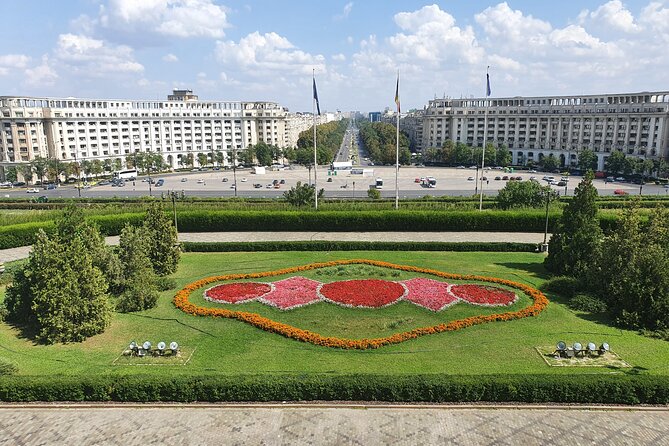
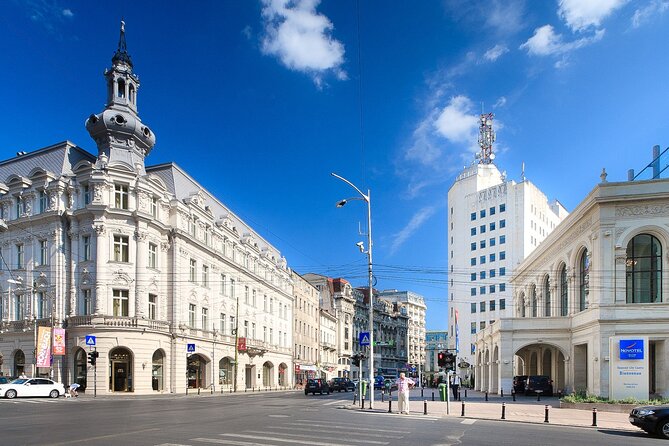
Next comes Calea Victoriei (Victory Avenue), a famous corridor where the city’s contradictions line up side-by-side. On one side you get royal-era presence, and on the other you have communist-era power structures, plus Revolution Square nearby.
This is a great segment because it’s not only about the big buildings. The description includes old Orthodox churches, a music store, casinos, bohemian restaurants, museums, theatres, tea shops, retail spots, and gift shops. It’s the kind of street where you can imagine different eras living at the same time.
Your guide is what turns this into something more than a list of landmarks. With the right commentary, you start noticing patterns: where old religious sites sit beside political buildings, where a palace address meets a party headquarters vibe, and how the city redevelops its meaning after regime change.
Calea Victoriei is also a good place to pace yourself. This stop is listed at 45 minutes, which is enough to walk, point, photograph, and still hear the explanation without getting bored. If you want a memory you can talk about later, this is the stop where you’ll likely gather the most “how can the same city hold this?” moments.
Practical tip: if you plan to buy anything, set expectations. Souvenirs and shops are part of the street’s atmosphere, but this is not presented as a shopping tour. Browse quickly, then get back to your guide’s route.
Revolution Square: December 1989 and the turning point you can feel
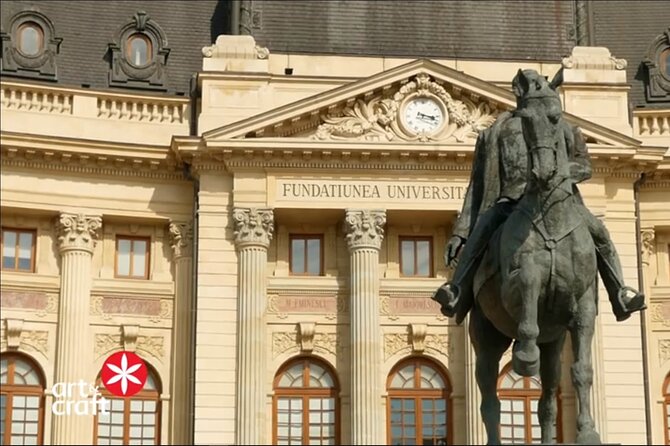
At Revolution Square, the tour shifts into the December 1989 story: Nicolae Ceaușescu being ousted and the aftermath with controversies about the state security service and his offshore accounts. That’s a lot to fit into one stop, but the time block is set at about 30 minutes.
This segment also ties into what you saw in the previous parts. People’s House explains the system’s scale. The Village Museum shows long-term cultural staying power. Revolution Square shows how violently the system ended in practice, with human force and sacrifice described as part of how power changed.
One of the most useful things here is how the guide connects the landscape to the specific event: the building near the Senate Palace area is described as where the Central Committee of the Romanian Communist Party used to be, and it’s also presented as a starting place for the Revolution of December 1989.
If you don’t like political history, this can still be worth it because it explains why Bucharest looks the way it does. People sometimes miss that a city’s streets are partly a record of what people fought about.
Practical tip: bring a notebook or save a note on your phone. This stop may be the densest in dates and names. Writing just a couple key points will make the whole day click later.

Old Town: Hanul Lui Manuc and the cosmopolitan layers of Bucharest
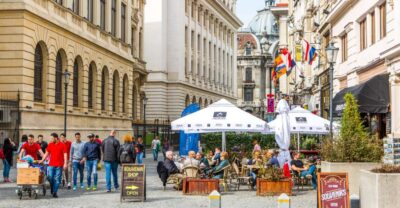
The final stop is the Old Town, and it’s a nice change in mood. The route is described as a walk through the Historical City Centre with mystery and contrasts, starting with Hanul Lui Manuc.
Hanul Lui Manuc is an enormous fortified inn built around 1806 by Manuc Bei, one of the wealthiest landowners in the Balkans. You’ll hear why it mattered: merchants passing through Bucharest gathered here, turning it into a kind of cultural and economic hub.
This is one of those places where the building itself tells the story. Inns like this were about more than lodging. They were where money, news, and travelers met. That’s why the Old Town segment feels “cosmopolitan” compared with the heavy politics you saw earlier.
During the 45-minute Old Town time, you’ll also pass things like museums, old and spectacular churches, and an experiential library where you can buy books and other items such as music and souvenirs.
Why I think this stop is a smart closer: you end with something you can actually enjoy at your own pace. You don’t just leave with facts. You leave with a neighborhood you can keep exploring for dinner, a relaxed walk, or a second look at a church or museum you didn’t have time for.
Price and Logistics: does $162.56 make sense for this route?
The price listed is $162.56 per person, and it’s for a small-group tour with guiding, transportation, and overhead (fuel, parking, and taxes). Entrance tickets and food and drinks are not included.
So the real value question is: what are you paying for? In this case, you’re paying for (1) a knowledgeable guide who can explain the why behind each stop, (2) an efficient route that hits several major areas in a single half-day, and (3) the convenience of pickup plus an air-conditioned vehicle.
Admission costs can change your final spend. Based on what’s provided, the National Village Museum admission ticket is not included, while other parts in the itinerary are described as free. That means you should plan to add at least the Village Museum entry when you budget. If you’re the type who likes to see everything fully, that additional cost is usually worth it because the museum is a major time commitment on its own.
Also, the duration is tight but not rushed. If the tour is running at the full 4 hours 30 minutes, you’ll have enough time to absorb the context without feeling like you’re sprinting between stops.
One more practical point: mobile ticket is included. That saves you from printing and keeps check-in smoother.
What you should wear, bring, and expect during the walk-heavy parts
Even though you use a van, you still do real city walking in Old Town and on Calea Victoriei. Wear comfortable shoes. I’d also keep a light layer handy, since indoor-outdoor transitions happen across museums and squares.
Bring your phone charger if you like maps. WiFi is on board, but it’s still nice to have offline maps ready in case you hit low signal in some areas.
If you care about hearing history clearly, sit so you can face the guide during van transfers when possible. This tour includes a lot of explanation per stop, and small tweaks like that help you catch more details.
Who this tour fits best (and who might want something else)
This tour is a strong match if you want a structured introduction to Bucharest with both big landmarks and street-level atmosphere. It’s also a good fit for people who like guides who can be practical and conversational. In the reviews you provided, guides including Nicolas and Alex are described as fun, helpful, and professional, with English called out as excellent. Other mentions note charm and fluency, plus punctuality.
You might consider a different option if:
- You want a purely scenic, low-emotion city walk. The People’s House segment is designed to confront the harm of communism.
- You prefer to control pacing at every stop. This is a guided route with set time blocks.
Should you book 4h Bucharest City Tour: The Taste of Bucharest?
I’d book it if you’re trying to get your bearings fast and you want a full “story arc” in one go. The mix makes sense: monumental political architecture first, then cultural roots, then the street where eras overlap, then a key historical turning point, and finally Old Town with real places to keep exploring after the tour ends.
The biggest reason to book is the small group size and the fact that the guiding quality seems consistently strong, with names like Nicolas and Alexandru Stroe showing up in positive feedback. Add in pickup, WiFi, and an air-conditioned vehicle, and it’s a convenient way to spend a half day without feeling stuck.
If the museum admission cost is a concern, just plan for it. And if you know you get overwhelmed by heavy historical themes, make sure this theme-focused route is your kind of sightseeing.
If you want my quick decision rule: if you like context and you’re okay with history that isn’t fluffy, this is a smart way to spend your first hours in Bucharest.
FAQ
How long is the Bucharest city tour?
It runs for about 3 hours 50 minutes to 4 hours 30 minutes.
What does it cost?
The price is $162.56 per person.
Is pickup included?
Yes. Pickup is offered, and you should wait in the lobby or on the sidewalk if your meeting point is an address.
How many people are in the group?
It’s a group trip with a maximum of 5 travelers.
What language is the tour offered in?
The tour is offered in English.
What’s included in the price?
You get an air-conditioned vehicle, WiFi on board, fuel, parking fee, and all fees and taxes.
What’s not included?
Entrance tickets and food and drinks are not included.
Do I need to pay for any entrance tickets during the tour?
The National Village Museum (Dimitrie Gusti) stop notes that the admission ticket is not included. Other listed stops show admission ticket free in the itinerary.
Is there a mobile ticket and can I cancel for free?
The tour offers a mobile ticket. It also includes free cancellation up to 24 hours in advance for a full refund.