REVIEW · BUCHAREST
Bucharest Old Centre Tour
Book on Viator →Operated by Claires Bucharest Guided Tours · Bookable on Viator
Bucharest’s Old Centre tells stories fast. In this 1-hour walk, you get oriented on foot and hear how the past connects to what you see today, from the Princely Old Court area to Stavropoleos Monastery. I especially like the way the guide ties together names and buildings you’d otherwise just pass by, and I like the hotel pickup/drop-off that keeps your time from getting eaten by logistics.
For me, the biggest win is the focus: this isn’t a car tour where you only glance out the window. It’s a compact route through the Princely old Court, inns along Strada Lipscani, St Anton Church, and the monastery built in 1724, with enough time at each stop to understand what you’re looking at.
One drawback to consider: the route is on historic streets and flagstones, so bring sturdy shoes, and go only when weather is good since the tour requires it.
In This Review
- Key highlights at a glance
- A one-hour Old Centre primer built for busy days
- Walking through Princely Old Court, inns, and St Anton Church
- National History Museum and the old Post Office building
- Old Princely Palace ruins and the Vlad the Impaler connection
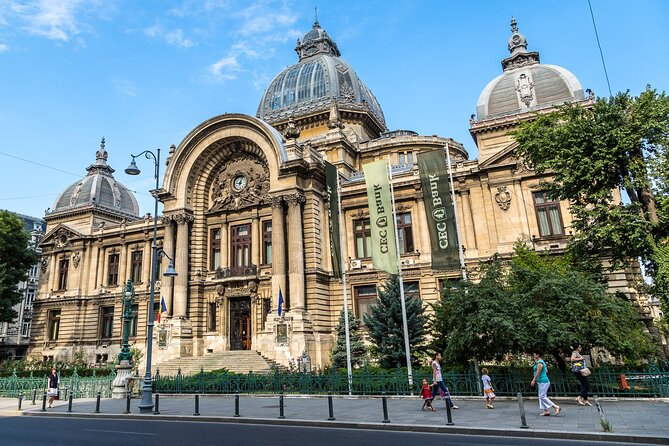
- Strada Lipscani and the National Bank area
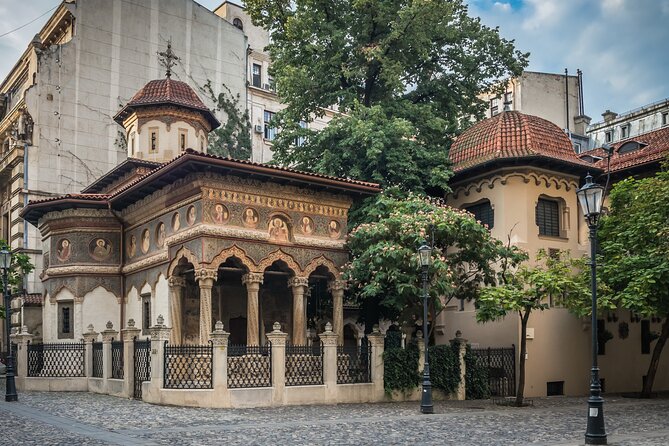
- Stavropoleos Monastery (built 1724) to close the loop
- Price, pickup value, and who this tour fits
- Should you book this tour in Bucharest?
- FAQ
- How long is the Bucharest Old Centre Tour?
- What is the price per person?
- Is hotel pickup included?
- Where does the tour start?
- Is this a private tour?
- What’s included in the tour price?
- Can I choose a departure time?
- What about cancellations and weather?
- Are kids allowed?
Key highlights at a glance
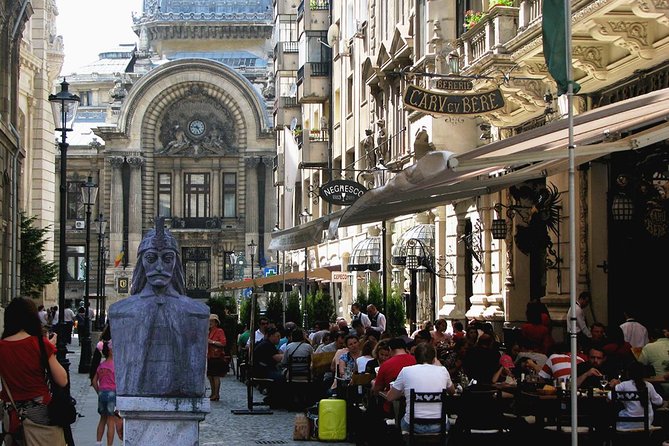
- A tight 1-hour loop through Bucharest’s Old Centre, so you can fit it into any schedule
- Princely Old Court and old inn stories that make the area feel real, not just scenic
- St Anton Orthodox Church and its link to Wallachian rulers
- Strada Lipscani as the old centre’s main street you’ll actually walk
- Stavropoleos Monastery (built 1724) to end with a strong sense of place
- Pickup from selected central hotels, plus mobile ticket convenience
A one-hour Old Centre primer built for busy days
If Bucharest is new to you, you can do the self-guided thing and still feel like you’re speed-walking through a photo album. This tour is built for the opposite problem: you arrive, start at a clear meeting point, and follow a local guide at a pace that makes you pay attention.
The route is short—about an hour—so you’re not stuck on a half-day mission. Instead, you get the kind of orientation that helps you later when you wander on your own. You’ll see big-name landmarks (like St Anton Orthodox Church and the National Bank area) and also the smaller, story-heavy stops: old inns, ruins, and street corners tied to famous figures.
Another practical plus is the format. It’s a private tour/activity, meaning only your group is involved, not a giant moving crowd. That usually makes it easier to ask questions and get the background you actually care about instead of rushing to the next photo spot.
You can also read our reviews of more tours and experiences in Bucharest.



Walking through Princely Old Court, inns, and St Anton Church
The walk kicks off right where things begin to feel old: the Old Centre, an area tied to more than 500 years of story. Your guide brings context to the names you’ll hear and the buildings you’ll see around the Princely Old Court, including the Old Coffee House and several historic inns such as Gabroveni Inn and the Linden Tree Inn.
What I like about this stretch is that the guide explains why these places mattered in daily life, not just who built them. You get a sense of Bucharest as a place where hospitality and commerce ran through the same streets as power and religion. There are also ruins mentioned along the way, including the Șerban Voda Inn ruins—handy for understanding how the city’s layers overlap instead of cleanly separating by era.
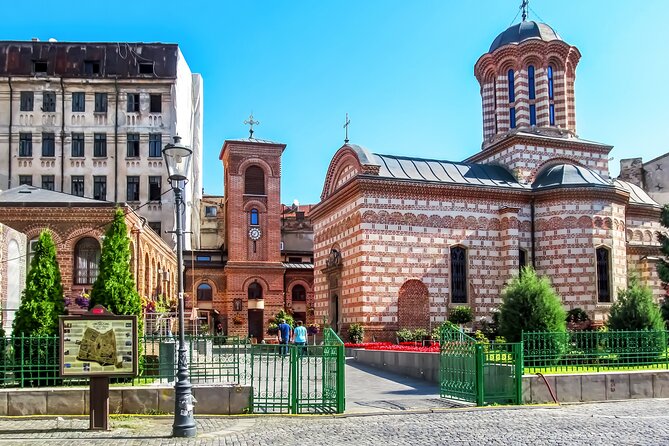
Then the tour moves toward St Anton Orthodox Church, described as being in the heart of Bucharest and associated with Wallachian rulers. The church stop is one of the anchors of the walk, and it works well because you’re not just looking at architecture—you’re hearing how the church fits into the bigger picture of who held influence in the region.
A tip from real-world experience: this is a walking tour with old-street surfaces. If you’ve got beat-up shoes, you’ll feel it. I strongly suggest you wear shoes with solid grip and a bit of cushioning.
National History Museum and the old Post Office building
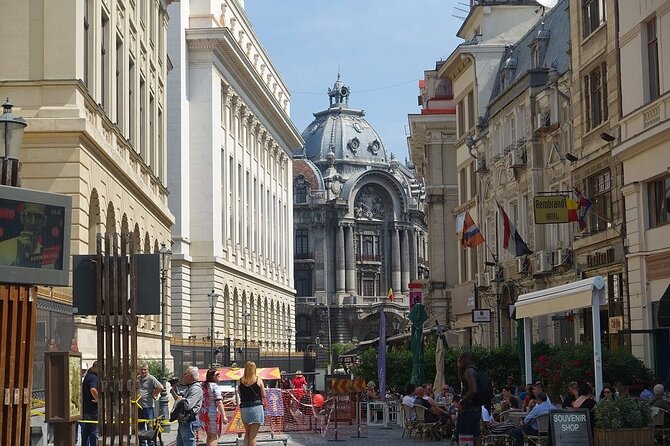
Next up, you’ll hear history tied to the National History Museum of Bucharest, along with the former Post Office building nearby. This is the kind of stop that can feel boring on its own—museum exterior, old civic building, done—but in a guided format, it becomes a quick lesson in how Bucharest organized information and identity.
Think of it like this: museums and post offices are about what a city chooses to preserve and distribute. Even without going inside, you’ll get the guide’s framing so the structures don’t look like random landmarks. You’ll start noticing details you might otherwise skip, and you’ll understand why the buildings belong to the same storyline as the Old Centre streets.
This segment also helps you pace the tour. After the religious and princely-area stops, the museum/post-office portion feels like a bridge into more formal state history. It’s a good moment to catch your breath, look around, and mentally map what you’ve already learned.
Old Princely Palace ruins and the Vlad the Impaler connection
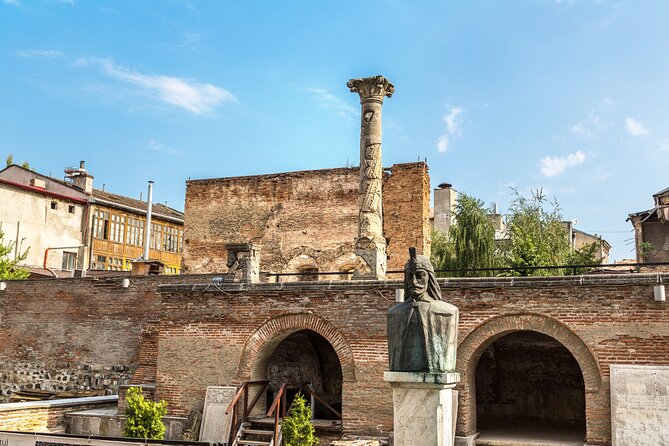
One of the most striking parts of this walking route is the stop for the ruins of the Old Princely Palace. You don’t just hear that it existed—you learn that it was one of the oldest buildings in Bucharest and that it once served as a residence of Vlad the Impaler.
That connection is the reason this stop hits. Ruins can feel like nothing but broken stone, but when you know there was a power center here, the empty space starts to make sense. You can picture where decisions were made and why the surrounding streets mattered.
Also, this is exactly the kind of “context stop” that’s hard to replicate without a guide. If you visit ruins alone, you often get headlines but not the local meaning. With a guide, you hear how the palace connects to the area around it—how the Old Centre functioned as a stage for rulers and the systems that supported them.
If you’re a fan of the Dracula-era atmosphere, this is where it becomes more than a marketing label. Even if you’re not, it’s still a good way to understand the city’s layers, because the guide grounds the story in the physical space you’re standing in.
Strada Lipscani and the National Bank area
After the palace ruins, you’ll walk to Strada Lipscani, described as the heart of the Old Centre. This is one of those street names you’ll hear again and again around Bucharest, and the guided format helps you understand why it became central. You’re not just seeing a street—you’re seeing the focus of older activity patterns that shaped how the city grew.
From there, the route moves near the National Bank, where you’ll see the grandeur of the building and hear about its history. This is another useful contrast stop: you’ve been dealing with older, softer edges—churches, inns, and ruins—and then you get a more formal, monumental presence that signals national power.
The guide also connects the National Bank area to nearby ruins of the former Șerban Voda Inn. That repeating thread matters because it reinforces the idea that Bucharest wasn’t built once and finished. Places changed. Inns fell. Buildings were replaced. The city’s older functions didn’t disappear—they got layered, shifted, and repurposed over time.
If you want great photos, this is usually where you’ll naturally slow down. Take a few seconds to look both ways on the street: the buildings can read differently depending on your angle, especially around historic cores.


Stavropoleos Monastery (built 1724) to close the loop
The tour ends at Stavropoleos Monastery, built in 1724. That date gives the stop a strong finish point: after moving through palaces, inns, and civic buildings, you end with a site that stands for continuity, belief, and craftsmanship.
This is a smart wrap because the monastery connects themes from earlier in the walk. You’ve already seen St Anton Orthodox Church and learned how churches relate to local rulers. Now you’ll see a different style and a different era marker, and the guide helps you compare what that means in real terms—who supported religious life, how places of worship survived into the modern city, and how they shape the atmosphere of the Old Centre.
The pacing works well here, too. By the time you reach the final stop, you’ve learned enough to notice details without needing a full museum visit. If you want something to sit with after the tour, this is it.
Price, pickup value, and who this tour fits
At $16.77 per person for about 1 hour, the cost is less about “seeing everything” and more about buying orientation plus interpretation. In a walking tour like this, a guide’s value isn’t just facts—it’s the order you learn them in. That order is what turns a scatter of landmarks into a coherent picture.
You’ll also get hotel pickup and drop-off from selected central hotels, which matters in Bucharest because saving those little travel minutes can make a short tour feel longer and more relaxed. The tour also uses a mobile ticket, so you’re not juggling paper. You can choose a morning or afternoon departure, which is helpful if you’re trying to line up with other plans in the city.
This is a private tour/activity, too, so it’s a good fit if you prefer your time in a smaller group and don’t want to compete for attention.
Who should book it?
- First-time visitors who want a fast sense of place
- People who like walking routes with meaningful stops
- Anyone who finds city history easier when a local guide ties the landmarks together
Who might skip it?
- If you hate walking and already have a strong self-guided plan, you may prefer a longer format with more time per stop
Should you book this tour in Bucharest?
Yes, if your goal is to understand the Old Centre quickly. For the time and price, you get exactly what most self-led wandering doesn’t: a clear storyline that connects the Princely Old Court, inns, St Anton Orthodox Church, palace ruins tied to Vlad the Impaler, Strada Lipscani, and finally Stavropoleos Monastery (1724).
Also, the guide quality seems to be a real strength. One guide name you may hear is Alina, and she’s praised for being funny, passionate, and strong at explaining multiple eras in a way that makes you reconsider what you thought you knew. If you like guides who make history feel personal instead of textbook-like, this tour is a safe bet.
Just don’t underestimate footwear. Bring sturdy shoes, and keep an eye on weather since the tour requires good conditions.
FAQ
How long is the Bucharest Old Centre Tour?
The tour is about 1 hour.
What is the price per person?
It costs $16.77 per person.
Is hotel pickup included?
Yes, hotel pickup and drop-off are included from selected central hotels.
Where does the tour start?
The meeting point is the National Museum of Romanian History, Calea Victoriei 12, București 030026, Romania.
Is this a private tour?
Yes, it’s a private tour/activity, so only your group participates.
What’s included in the tour price?
A local/professional guide is included, along with hotel pickup and drop-off (selected hotels only).
Can I choose a departure time?
You can choose between morning or afternoon departure.
What about cancellations and weather?
You can cancel for a full refund up to 24 hours in advance. The experience requires good weather, and if it’s canceled due to poor weather you’ll be offered a different date or a full refund.
Are kids allowed?
Children must be accompanied by an adult.