REVIEW · BUCHAREST
Bucharest: Communism, Revolution & City Highlights Tour
Book on GetYourGuide →Operated by Unveil Romania Travel Planner · Bookable on GetYourGuide
Communism walks with you in Bucharest. This private tour uses the city itself like a living timeline, linking Revolution Square and the final days of Ceaușescu with street-level contrasts you can see with your own eyes. One trade-off: you stay outside most major sites, including the Palace of Parliament, since the tour doesn’t include interior visits.
I especially like how the tour is built around contrasts. You move between restored 19th-century splendor (the old Bucharest many people call the Little Paris) and the cold, Soviet-flavored communist redesign that changed the city’s bones—fast enough to keep it lively, slow enough to ask questions.
You’ll want to pick the right day for your pace. It’s a walking tour, but the total distance is under 2 miles (about 3 km), and it’s designed to be slow-paced with lots of photo stops and breaks.
In This Review
- Key points worth your attention
- Why this Bucharest communism walk feels different than a museum
- Revolution Square and Victory Avenue: where history changed, block by block
- Romanian Athenaeum, Royal Palace, and Memorial of Rebirth: the “before” that matters
- University Square: life under surveillance and why students mattered
- Old Town versus the Communist Civic Center: you’ll feel the shift
- Palace of Parliament exterior: seeing the world’s heaviest building and what it displaced
- Logistics, walking pace, and whether $90 makes sense
- Who this tour suits best (and who might want a different style)
- Should you book this tour?
- FAQ
- How long is the tour?
- Is this tour mostly walking, and how far do you cover?
- Do you enter the Palace of Parliament or other buildings?
- Can you get into the Palace of Parliament at all?
- Is hotel pickup included, and where does the guide meet you?
- What languages is the guide speaking, and is it private?
Key points worth your attention
- Revolution Square, Ceaușescu’s final speech location, in real public space
- Old Town cobblestones next to the former Communist Civic Center (you’ll feel the contrast immediately)
- Belle Époque landmarks used as “before” photos for communism’s “after”
- Victory Avenue and University Square stories about oppression, surveillance, and student uprisings
- Palace of Parliament exterior views plus what it cost the city in people and neighborhoods
- Private pacing with a licensed guide named Mihai in many bookings
Why this Bucharest communism walk feels different than a museum
Bucharest can be confusing if you arrive expecting one kind of city. This tour helps you read the capital like a story: first the elegant architecture, then the brutal reshaping, then the revolution that cut the chapter short.
What makes it work is that you’re not just hearing facts. You’re seeing two eras side by side. The walk is short enough to stay practical, but the stops are placed so the themes keep stacking up: WWII and Stalin’s “liberation” of Eastern Europe, decades of control, then the 1989 uprising, and finally the city’s phoenix-like rebound.
And yes, you’ll get photo opportunities at big-name spots along the way. You’ll also have time to ask follow-up questions without that bus-tour rush.
You can also read our reviews of more city tours in Bucharest

Revolution Square and Victory Avenue: where history changed, block by block
The energy of the tour really starts near Revolution Square. This is the place associated with Romania’s 1989 revolution, and it’s where Nicolae Ceaușescu delivered his final speech. Standing there helps you understand why this square matters beyond textbooks. It’s not abstract. It’s a real urban room where people gathered and decisions were made.
From there, you head into the story of the postwar city. Victory Avenue—once tied to aristocratic Bucharest—now runs lined with embassies and elegant palaces. But it also includes communist-era buildings, so you can literally point and say: this part is old pride, that part is the new order.
That approach is one of the tour’s best values. Instead of separating history into neat chapters, you watch the city blend them in the street grid. It’s easier to remember, and it makes Bucharest feel less like a diagram and more like a place.
Romanian Athenaeum, Royal Palace, and Memorial of Rebirth: the “before” that matters
A smart tour doesn’t start with the horror. It starts with context. Early stops give you a quick sense of what Bucharest looked like when it was being celebrated for its 19th-century architecture.
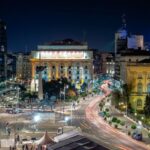
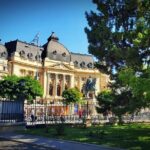
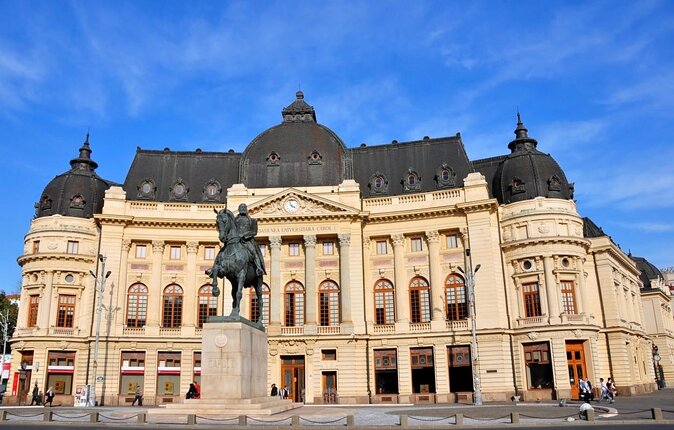
You’ll make photo stops at the Romanian Athenaeum, plus the Royal Palace of Bucharest, and you’ll also see the Memorial of Rebirth. Even if you don’t go inside, these stops help you anchor the story in design and mood. Think of them as visual proof of what communism tried to override, replace, or control.
The Athenaeum and Royal Palace stops are also practical: they help you orient yourself. You’re not wandering blindly later when the tour shifts into revolution and governance. You’ll walk with a mental map.
University Square: life under surveillance and why students mattered
One of the more memorable parts of the day is University Square. This stop isn’t just another landmark—it’s a gateway to the human side of political control.
Here, your guide connects the dots between Cold War oppression and the way surveillance shaped daily life. You also hear about student uprisings, which matters because revolutions rarely start only with elite decisions. They often start when young people refuse to accept the system as normal.
This is also where a good private guide earns their keep. You can steer the conversation: ask how propaganda worked here, what austerity looked like in practice, or how people lived with fear without always knowing when it would break.
Old Town versus the Communist Civic Center: you’ll feel the shift
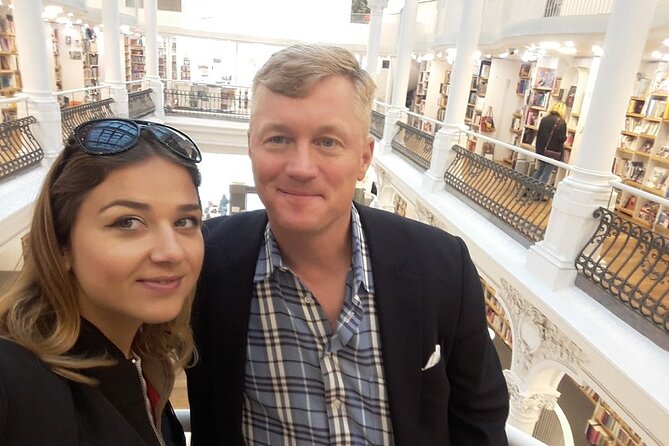
The tour’s core contrast happens in the most useful order possible: you go from restored charm into the cold architecture of the communist plan.
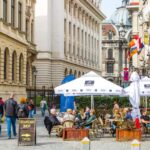
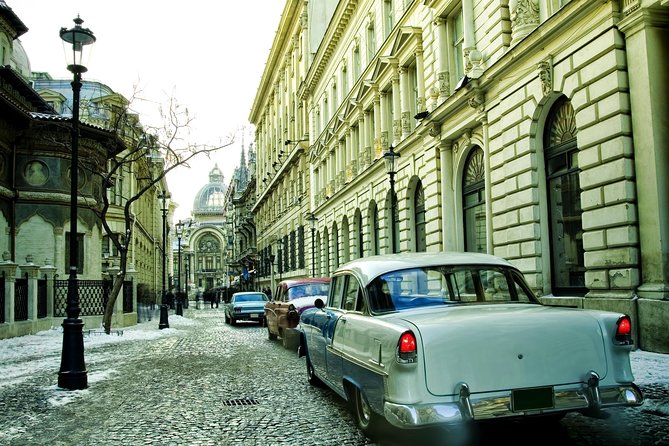
First, you spend time in Old Town, with breaks for photos and a guided walk through cobblestone streets and restored mansions. This is the part that makes Bucharest feel like a real city you could wander on your own—cafés, side streets, and the kind of texture that doesn’t exist in generic city centers.
Then the story turns. You step toward the former Communist Civic Center, described as grand in vision but often “cold” in atmosphere. That word comes from the design itself: huge space, heavy geometry, the feeling that people are small in the system.
This is where the tour explains Ceaușescu’s arc in a grounded way: early reforms and defying the Soviet Union, followed by austerity and tighter control. You’ll also hear about food rationing, propaganda, and human rights abuses—the pressures that fueled the 1989 revolution. The tour does a good job connecting cause and effect instead of listing events like dates on a wall.
If you like understanding why people eventually said enough, this section is the heart of the experience.
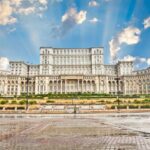

Palace of Parliament exterior: seeing the world’s heaviest building and what it displaced
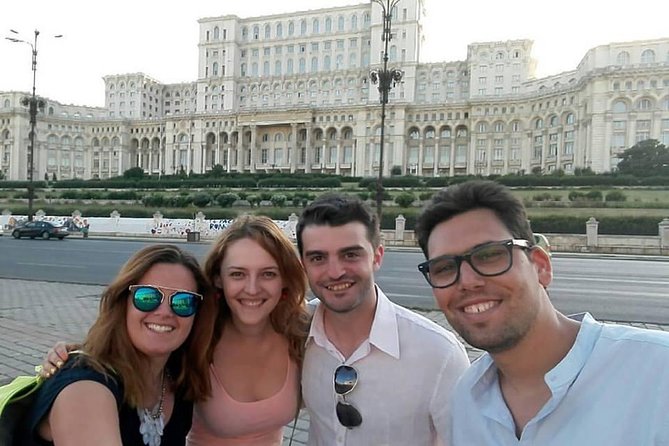
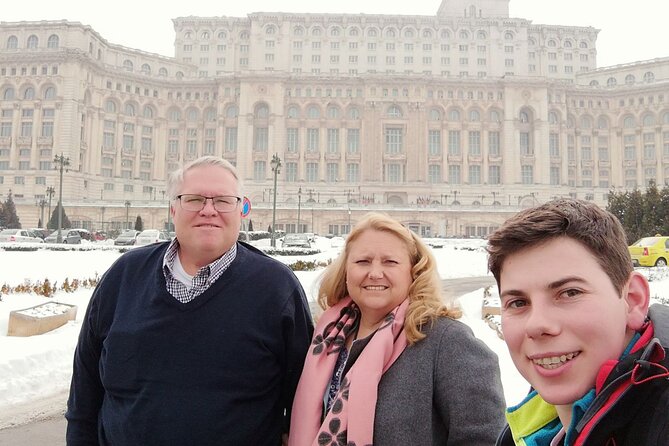
The final big headline is the Palace of Parliament—not inside, but outside. Your tour gives you a photo stop and the history behind it.
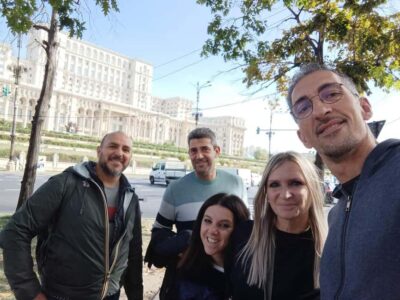
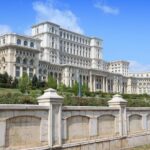
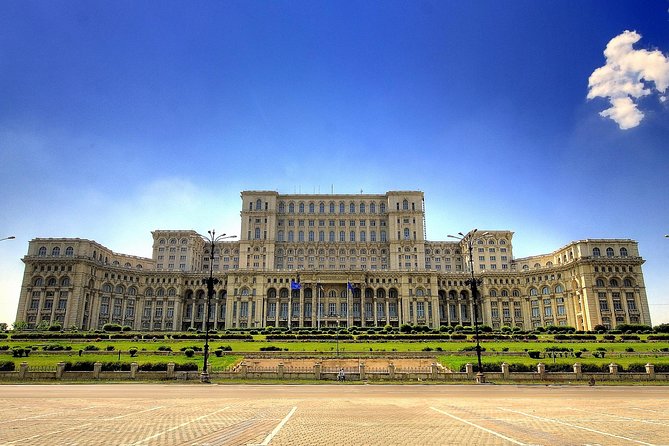
This building is described as the world’s heaviest building, and it’s colossal in the literal sense: you can’t fully register its scale until you’re standing near it. Even with only an exterior view, it lands as a symbol. It’s architecture used as power.
The guide also connects the structure to its cost. The communist plan displaced around 40,000 residents, erased neighborhoods, and left the area as a kind of social scar. That detail matters because it reframes what you’re looking at. It’s not just a big tourist photo. It’s a monument to a particular political method: reshape the city, reshape the people.
If you’re curious about a closer look inside, note that the tour does not include access. Entry to the Parliament is described as being possible only through a phone reservation one day prior, with limited availability and occasional closures due to conferences. If you want that option, you can ask the guide for help making the reservation.
Logistics, walking pace, and whether $90 makes sense
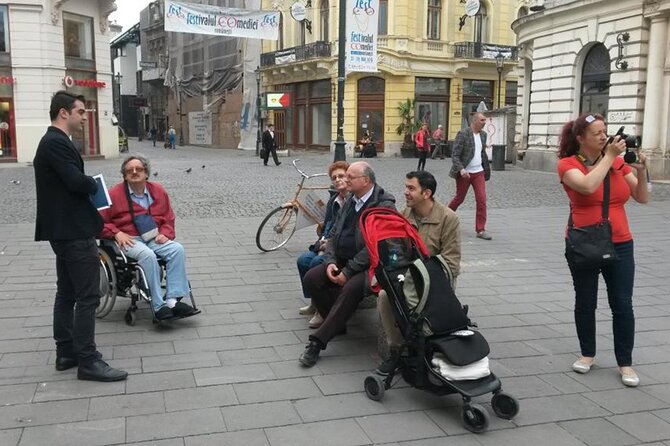
At $90 per person for a 4-hour private walking tour, you’re paying for three things: a licensed guide, hotel pickup, and a route designed for contrasts—not a generic highlight circuit.
It’s not a long hike. Total walking is less than 2 miles (3 km). The pace is slow, with multiple photo stops and time to rest or grab refreshments if you need them. That’s a big deal in Bucharest, where weather can swing.
Hotel pickup is included, and your guide meets you in the lobby by reception. If your hotel doesn’t have a lobby, they wait downstairs in front of the building. The tour is also wheelchair accessible, which is helpful if mobility is a concern.
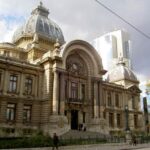
One more practical note: meals and snacks aren’t included. Plan accordingly. Even with breaks, you’ll likely want water in your bag and something simple to eat afterward in Old Town, since that’s where the tour ends—at the Palace of the Deposits and Consignments, in the city-center area.
Who this tour suits best (and who might want a different style)
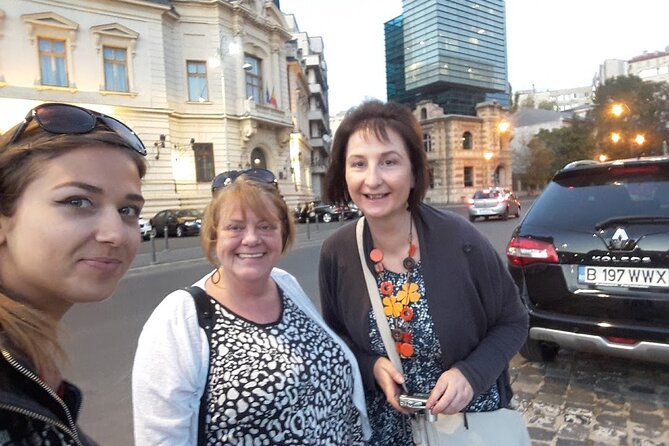
This is ideal if you want Bucharest to make sense fast. It’s especially good for first-time visitors who feel overwhelmed by the mix of elegant old buildings and heavy communist design.
It’s also a strong fit if you’re the type who likes asking why things look the way they do. The tour doesn’t treat communism as a distant subject. It connects policies to daily life—rationing, propaganda, surveillance, and fear—and then ties that to the 1989 revolution.
You might consider another tour if you’re primarily looking for lots of interior museum time. This one keeps you outside public or government buildings, including the Parliament and other major institutions. You’ll learn the history and see the exterior scale, but you won’t spend your time inside.
Should you book this tour?
Yes—if you want the most efficient way to understand modern Bucharest’s big lesson: architecture is political, and streets can explain a regime.
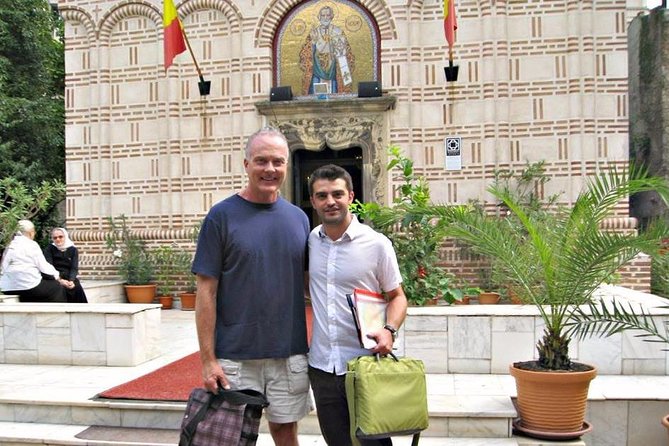
Book it if you like contrast walks, clear storytelling, and a guide who can answer your follow-up questions in a private setting. Many bookings highlight Mihai as a guide who keeps the day engaging and adapts smoothly even when conditions get tough—one example was heavy snowfall—so you don’t feel stuck waiting for the weather to behave.
Don’t book it if interior access is your top priority, especially for the Palace of Parliament. Since the tour is designed around exterior views and walking, you’ll get the meaning of the building, not a ticketed interior visit.
If you’re aiming for a first taste of Bucharest that goes beyond postcards, this tour is a solid choice.
FAQ
How long is the tour?
The tour runs for 4 hours.
Is this tour mostly walking, and how far do you cover?
It is a walking tour with a moderate amount of walking. Total distance is under 2 miles (3 km) and the pace is slow with stops for photos and breaks.
Do you enter the Palace of Parliament or other buildings?
No. The tour does not include visits inside public or government buildings, including the Palace of Parliament and museums or universities. You’ll learn the history and see the exterior.
Can you get into the Palace of Parliament at all?
Access to the Palace of Parliament is described as possible only with a phone reservation one day prior, with limited availability. The guide can assist if you want to try to reserve.
Is hotel pickup included, and where does the guide meet you?
Yes. The guide includes free hotel pickup and meets you in the hotel lobby next to reception. If your hotel has no lobby, they meet you downstairs in front of the building.
What languages is the guide speaking, and is it private?
The tour is private and the guide speaks English and Romanian. It is also described as wheelchair accessible.