REVIEW · BUCHAREST
Bulgaria -Private Tour- Basarbovo, Arbanasi, Veliko Tarnovo
Book on Viator →Operated by Supplier · Bookable on Viator
Bulgaria in a single long day. This private route packs medieval faith and stone-era street life into one smooth hotel-to-hotel day, with an English-speaking guide handling the hard parts. You’ll start with a rock-hewn Orthodox monastery, then shift gears to Ottoman-era architecture and a fortress that still dominates the skyline.
I especially love two things here: first, the way the day connects religion and legend at St. Dimitrii of Basarbovo (a cave monastery tied to plague stories). Second, you get both the big “wow” at Tsarevets Fortress and the softer, human scale of Arbanasi and Samovodska Charshiya—so it doesn’t feel like a checklist.
The main consideration is simple: it’s about 11 hours on the go, with a substantial drive and time in vehicles. If you’re the type who hates long days, you may want to add this as part of a slower Romania plan instead of a last-minute squeeze.
In This Review
- Key highlights worth your time
- Bucharest to Veliko Tarnovo: Why This Private Route Works
- St. Dimitrii of Basarbovo Monastery: Faith Carved Into the Cliff
- Arbanasi and Konstantsalieva House: Revival Homes With Fortress Habits
- Tsarevets Fortress and Veliko Tarnovo: The Second Bulgarian Empire in View and Stone
- Samovodska Charshiya: Souvenirs, Crafts, and an Evening-Friendly Stroll
- Price and Fees: What You’re Really Paying For
- Guide Quality and Comfort: The Difference Between Getting There and Having Fun
- Best Fit: Who Should Book This One-Day Bulgaria Tour
- Should You Book This Tour?
- FAQ
- How long is the private tour?
- What stops are included in the day?
- Is lunch included?
- Are entrance fees included?
- Do you get picked up and dropped off in Bucharest?
- Is the guide available in English?
Key highlights worth your time
- Hotel pickup and round-trip transport from Bucharest, so you’re not juggling bus schedules or border logistics
- Rock-hewn St. Dimitrii of Basarbovo Monastery, Bulgaria’s only active rock monastery, with a strong legend and visible caves
- Arbanasi National Revival architecture plus a visit to Konstantsalieva House, including fortified design details
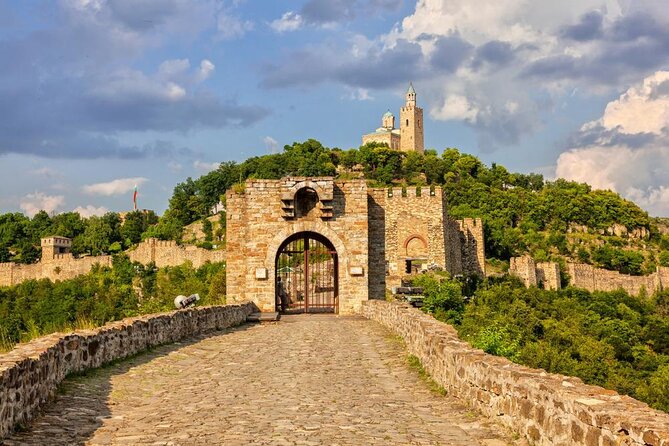
- Tsarevets Fortress on Tsarevets Hill with major ruins like the royal palace area and grand defensive walls
- Samovodska Charshiya artisan street, a craft-focused district where you can browse and slow down for a while
Bucharest to Veliko Tarnovo: Why This Private Route Works
This is one of those trips that makes sense even if you’ve only got a day. You’ll leave Bucharest with a professional English-speaking guide and an air-conditioned car, then trade Romanian city time for northern Bulgaria’s medieval center—without needing to figure out language, signage, or transit.
The driving is the price you pay for seeing another country in one day. Expect a long day, but the structure helps: fixed stops, time on foot at the key sights, and fewer “where do we go next?” moments. It’s also private, meaning your schedule can be paced to your group rather than forced into mass-tour timing.
If you’re trying to make the most of limited time in Romania, this is a very efficient way to do it—especially because Veliko Tarnovo isn’t a quick stop. It’s a full historical stage, and the day gives it room.
You can also read our reviews of more private tours in Bucharest

St. Dimitrii of Basarbovo Monastery: Faith Carved Into the Cliff
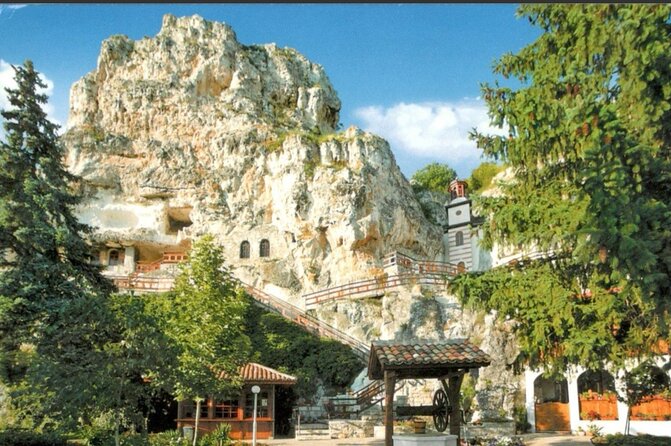
Your day starts at St. Dimitrii of Basarbovo Monastery, a rock-hewn Orthodox monastery near Basarbovo. This is the kind of place where the setting does half the storytelling: the caves and cliffside structure make the history feel physical, not distant.
The monastery’s origins connect to the Second Bulgarian Empire era (12th–14th centuries), and its first documented mention shows up in an Ottoman tax register from 1431. The monastery is also tied to St. Dimitrii of Basarbovo, born in 1685 near the site, who lived an ascetic life in these caves. His relics were later transferred to Bucharest during the Russo-Turkish War (1768–1774) and are enshrined in the Church of Sts. Constantine and Helena, which adds a neat Romanian connection to your Bulgaria day.
You’ll want about an hour here. That’s enough time to see the caves, take in the devotional atmosphere, and let the legend and dates land. One practical note: the monastery is a religious site. Dress respectfully and keep your pace calm—this stop is about atmosphere as much as photos.
If you’re into architecture, this is also a standout because it’s one of those places where “how it was built” matters as much as “what it represents.”
Arbanasi and Konstantsalieva House: Revival Homes With Fortress Habits
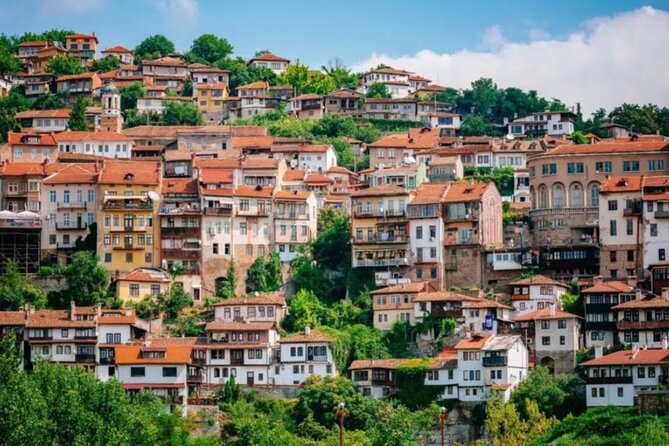
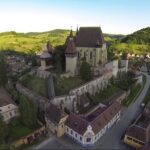
After Basarbovo, the trip shifts to Arbanasi, a village near Veliko Tarnovo known for its preserved architecture. The setting matters: Arbanasi sits on a high plateau between the Tsarevets and Trapezitsa hills, so you get that sense that the town was built to be protected and seen.
Arbanasi’s story runs from early settlement ideas in the 13th century to flourishing trade in the 16th and 17th centuries. The architecture reflects that prosperity—and the reality of raids. Many houses have fortress-style traits: high stone walls, narrow windows, and heavy wooden gates designed for defense.
One of the best moments in this part of the day is visiting Konstantsalieva House, a well-preserved example of Bulgarian National Revival architecture from the 17th to 18th centuries. You’ll spend about an hour inside, focusing on:
- Fortified design (stone and wood, small openings, protective features)
- Carved wooden ceilings and furniture
- Interior displays connected to everyday life, including traditional textiles and household items
This stop doesn’t just show “old houses.” It helps you read the mindset behind the design. Once you notice the defensive elements, Arbanasi stops looking like a pretty village and starts looking like an actual community with priorities.
The one thing to watch: it’s easy to underestimate this village because it’s calmer than the fortress. Keep your attention on details. Small windows, gate styles, and room layouts are where the payoff is.
Tsarevets Fortress and Veliko Tarnovo: The Second Bulgarian Empire in View and Stone
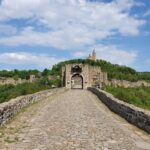
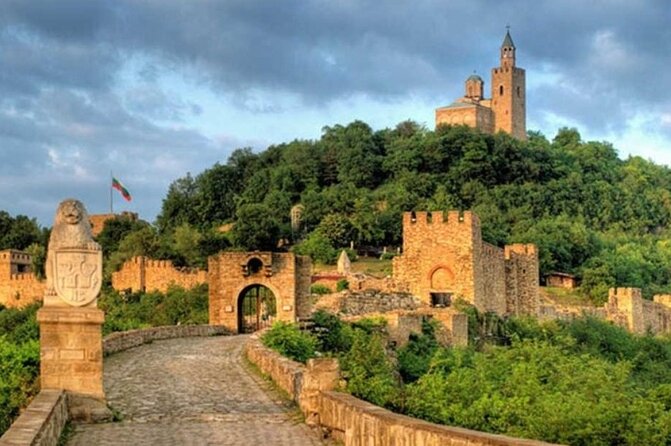
Tsarevets Fortress is the day’s biggest medieval moment, and it’s positioned for maximum drama. You’ll go up to Tsarevets Hill, surrounded on three sides by the Yantra River, which naturally strengthens the fortress and creates views that explain why people built here in the first place.
At Tsarevets, you’ll see why this place was the primary fortress and royal residence of the Second Bulgarian Empire (1185–1396). The outer walls are around 3 meters thick, and the fortress enclosed a large area with over 400 residential and administrative buildings, churches, and towers. That scale is hard to visualize until you’re standing in it.
A few highlights you’ll specifically want to clock:
- Baldwin’s Tower, a reconstructed watchtower named after Baldwin I of Constantinople, connected to the Battle of Adrianople (1205)
- The Royal Palace ruins at the highest point, including the throne hall, royal church, and royal chambers
The tour also gives you a dedicated block for Veliko Tarnovo itself. You’ll get time to connect the fortress to the city around it, including Veliko Tarnovo’s reputation as the medieval capital on three hills (Tsarevets, Trapezitsa, and Sveta Gora) overlooking the Yantra River. It’s also strongly linked to Orthodox Christianity and literature, which is why it’s sometimes associated with the idea of a “Third Rome.”
You’ll spend about 2 hours at Tsarevets, plus around an hour for the city overview. That timing works. Too little and the fortress becomes scattered; too much and you’ll feel it after so many steps and viewpoints. Here, it lands in a good middle.
If you want photos, this is the point to plan for them—especially for the river and hill views. Wear comfortable shoes. The walking is manageable, but the terrain is real.
Samovodska Charshiya: Souvenirs, Crafts, and an Evening-Friendly Stroll
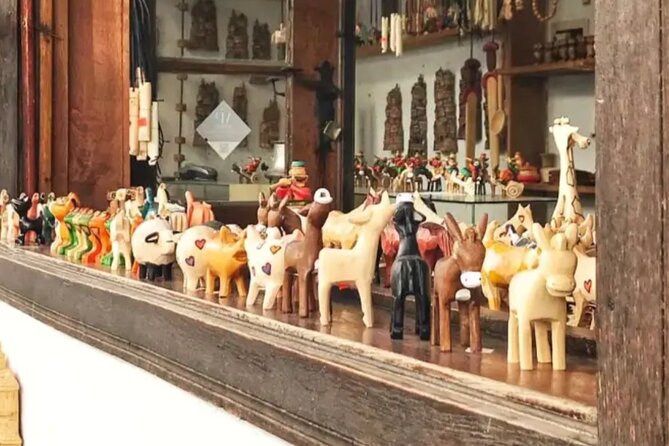
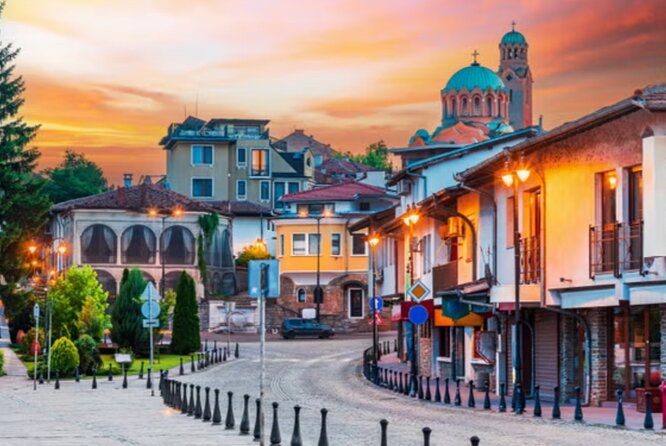
After the fortress, the day slows down in a good way at Samovodska Charshiya. This artisan district is known for preserved 19th-century architecture and a street that’s lined with workshops and craft-focused shops.
You’ll see two narrow cobblestone streets framed by Revival-style houses, inns, and artisan spaces. It’s not a “big museum” stop. It’s more like walking through how the city used to trade, but with modern crafts. The name comes from the nearby village of Samovodene, where women historically spread produce on colorful rugs in the market—a tradition reflected in the craft culture of the area today.
This is also where the day becomes personal. If you like small local items—textiles, crafts, and souvenirs—this is where you’ll probably actually enjoy browsing instead of feeling like you’re trapped in souvenir rows.
The tour gives about an hour here. That’s perfect for a relaxed walk and stopping when something catches your eye. If your group wants coffee or a final snack before heading back to Bucharest, this stop is usually the easiest place to do it calmly.

Price and Fees: What You’re Really Paying For
The listed price is $170.16 per person for an 11-hour private day trip. On paper, it’s a lot—until you compare it to what you get: round-trip transport from your Bucharest hotel, an air-conditioned car, and a professional guide in English, all for a route that crosses into Bulgaria and hits major sites that take time.
Entrance fees are separate. Based on what’s included in your plan:
- Tsarevets Fortress: €5.00 per person (not included)
- St. Dimitrii of Basarbovo Monastery: €2.00 per person (not included)
- Konstantsalieva House: €5.00 per person (not included)
That means you should budget roughly €12 total in entrance fees for the sites that charge. Lunch is not included either, so you’ll want to plan for a meal cost in Veliko Tarnovo.
The real value is the “friction removal.” Instead of spending your day figuring out timing, language barriers, and where to park or wait, you can focus on the sights. A long drive still means a long day—but you’re not adding extra mental work on top.
Guide Quality and Comfort: The Difference Between Getting There and Having Fun
In private tours, the guide is the experience. The strongest praise on this route consistently points to guides who keep the day clear, paced, and meaningful. People highlight English that’s easy to follow, strong explanations at each stop, and a friendly style that makes the long hours feel reasonable.
You may meet guides like Sebastian or Bogdan (names commonly reported), and in multiple cases the day’s pacing is described as well judged—not rushed, with time to absorb what you’re seeing. One person even noted their guide customized the day with a winery visit in the Veliko Tarnovo area when possible, which tells you there’s some flexibility if your timing allows it.
Comfort also matters on a route this long. Several reports mention clean, newer vehicles and smooth handling of the practical stuff like borders. That’s not a small thing. It’s the difference between relaxing into the day versus arriving frazzled.
If you have a question at any stop—why this building looks like that, what the dates mean, or how different eras connect—this is where you’ll benefit. The route is packed; a good guide helps you connect the dots quickly so the day feels coherent.
Best Fit: Who Should Book This One-Day Bulgaria Tour
This tour fits best if you:
- Want to see Bulgaria while using limited time in Romania
- Like a mix of religious sites, medieval fortifications, and traditional architecture
- Prefer private timing over group herding
- Enjoy learning context while walking, especially at places tied to stories (like St. Dimitrii)
It’s also a solid choice for couples and small families, since private transport means your group stays together. And because the route includes both a major fortress and quieter streets at Samovodska Charshiya, it’s not only about climbing and stairs.
If you hate long drives, plan for the early part of the day to feel like “getting there.” The reward comes later, especially at Tsarevets and the calm browsing in the artisan district.
Should You Book This Tour?
I think this is a strong booking if your goal is efficient northern Bulgaria in one day with minimal stress. The mix works: Basarbovo’s rock monastery, Arbanasi’s Revival architecture, the scale of Tsarevets, and then the lighter, craft-focused end at Samovodska Charshiya.
I’d only skip it if you’re hoping for a slow, no-pressure day or you’re sensitive to long travel. Otherwise, this is exactly the kind of itinerary that turns a “maybe we’ll do Bulgaria” idea into a real, memorable day.
FAQ
How long is the private tour?
It runs about 11 hours.
What stops are included in the day?
You’ll visit St. Dimitrii of Basarbovo Monastery, Arbanasi (including Konstantsalieva House), Tsarevets Fortress and Veliko Tarnovo, and end with Samovodska Charshiya before returning to Bucharest.
Is lunch included?
No. Lunch is not included.
Are entrance fees included?
No. Entrance fees are not included for Tsarevets Fortress (€5.00), St. Dimitrii of Basarbovo Monastery (€2.00), and Konstantsalieva House (€5.00).
Do you get picked up and dropped off in Bucharest?
Yes. The tour includes hotel pickup and drop-off in Bucharest.
Is the guide available in English?
Yes. The tour is offered in English, with a professional English-speaking guide.