REVIEW · BUCHAREST
Bucharest: Communism, Revolution & City Highlights Tour
Book on Viator →Operated by Unveil Romania · Bookable on Viator
Communism still shows in Bucharest’s streets. This private walking tour pulls together the city’s older elegance and the blunt architecture of the communist era, with a licensed English guide who explains what changed and why it mattered. It’s a story you can see, not just a slideshow.
I especially like the free hotel pickup (you meet your guide right in the lobby) and the tight, sequential route through the key places from WWII Soviet takeover to the 1989 collapse. One thing to consider: there are no refreshments included, so you’ll want to plan water or a café break during the Old Town stretch.
In This Review
- Key highlights worth your attention
- Start at the Romanian Athenaeum: Bucharest before the controls
- Revolution Square and Ceaușescu’s final speech
- University Square: where the 1989 uprising turned violent
- Old Town restoration walk: the city mends its scars
- Constitution Square and the Palace of Parliament’s underground scale
- Private guide experience: how it stays personal and not scripted
- Price and value: why $93.46 can make sense
- Pacing, walking comfort, and small practical moves
- Who this communist-and-revolution tour is best for
- Should you book this Bucharest communism walk?
- FAQ
- How long is the tour in Bucharest?
- Is this a private tour?
- Does the tour include hotel pickup?
- What language is the tour offered in?
- How much walking is involved?
- Are entrance tickets included?
- Are refreshments included?
- What is the cancellation option?
- Where does the tour start and where does it end?
Key highlights worth your attention
- Hotel pickup anywhere in Bucharest means less hassle and more time walking
- Revolution Square + University Square connect propaganda, fear, and the moment it broke
- Old Town restoration lets you spot scars in buildings that got rebuilt after violence
- Constitution Square and the Palace of Parliament show the scale of the regime in one view
- Guides who tell it with context (Andra, Bogdan, Michael, Emma, Mircea, Tudor, Mihai are names that come up)
Start at the Romanian Athenaeum: Bucharest before the controls
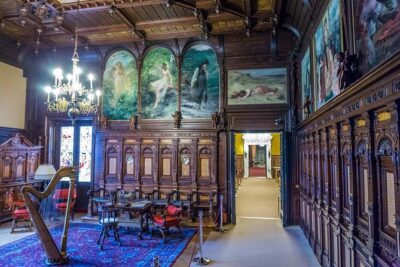
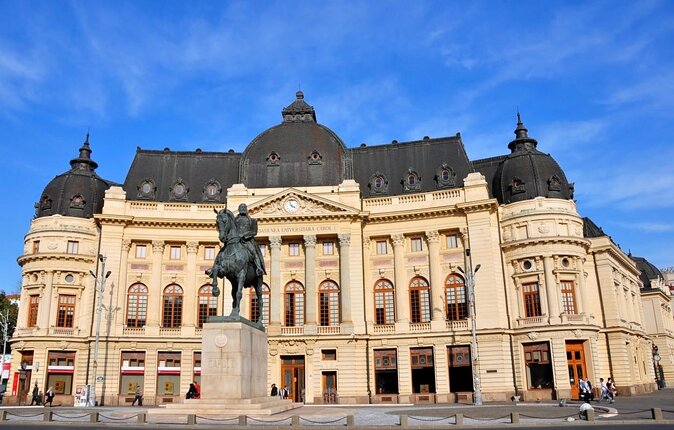
You begin at the Romanian Athenaeum, a grand symbol of Bucharest’s pre-communist identity—once nicknamed Little Paris for its elegance. From here, the guide sets the baseline: what Bucharest looked like when culture, private life, and public expression had room to breathe. Then you pivot to how the regime took that space away after WWII, when Stalin’s grip tightened over Eastern Europe.
This stop is built for meaning, not just photos. Your guide lays out the machinery of control: terror carried out through the KGB secret police, mass deportations to Siberia, and the systematic destruction of a free press, private property, and culture. Even if you’ve read about communism before, seeing how a beautiful civic landmark sits next to later state power makes the timeline feel real.
The stop runs about 30 minutes, and the admission ticket is free. That makes it a low-stress start where you can get oriented without worrying about paperwork. If you like history with clear cause-and-effect, this first segment is a strong fit.
You can also read our reviews of more city tours in Bucharest


Revolution Square and Ceaușescu’s final speech
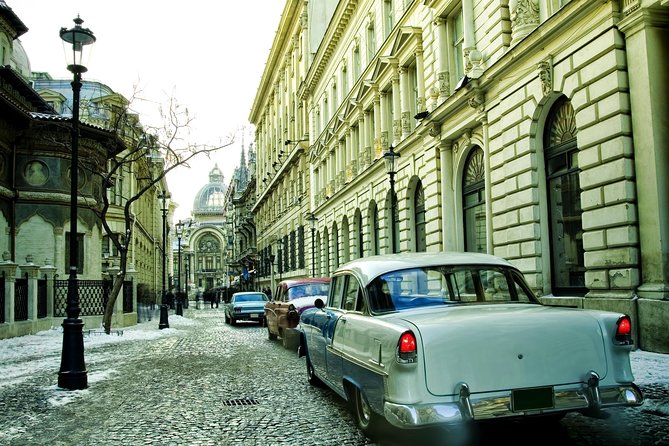
Next comes Revolution Square, the stage for one of Romania’s most dramatic turning points. It’s where Nicolae Ceaușescu delivered his final speech—before the country’s script flipped. This is a place for big history, but your guide keeps it grounded by focusing on what regimes do in public: using propaganda to shape the story people believe, and using oppression to make resistance too risky.
You’ll also connect Revolution Square to earlier changes under Soviet occupation—how communist rule arrived and then evolved, including the shift from early leadership to Ceaușescu tightening his grip. The interesting part is how the tour frames his rise: once hailed as a promising young leader, then later turning into an absolute controller. When you walk through a square like this, you can almost see how power wanted to look inevitable.
This stop is another 30 minutes and is free entry. It’s also a good pause point to ask questions if your guide invites them—because the subject gets intense, and you’ll likely want clarity on terms and dates.
University Square: where the 1989 uprising turned violent
University Square is where Bucharest’s story gets sharper and darker. This is described as the heart of the 1989 Revolution, where protesters risked everything and violence broke out. You’ll stand where bullets tore through crowds, and where Ceaușescu’s collapse accelerated.
What I like here is the way the guide handles the messiness of revolutions. It’s not just a clean good-versus-bad story. Your guide brings up the tension between popular will and forces operating in the background—basically, how much was spontaneous, and how much had hidden structure. That keeps the conversation honest, instead of forcing one simple answer.
This segment is about 30 minutes with free entry. It’s also where you’ll feel the tour’s tone shift toward urgency. If you prefer gentle travel stories, you might find this stop emotionally heavy. Still, it’s one of the most important pieces for understanding what the communist years ultimately did to people—and how power finally stopped holding.
Old Town restoration walk: the city mends its scars
After three history-heavy stops, the tour moves into Old Town, and it’s a welcome change of pace. This area isn’t just pretty on purpose. The walk is designed to show how the city shrank and reshaped after communism—and how restoration tried to repair damage, including scars that lingered long after the fall.
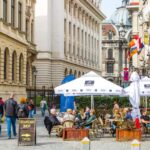
As you stroll, you’ll see a mix of 19th-century palaces, Byzantine churches, and bohemian cafés. Your guide points out traces of history that survived, plus the rebuilds that came later—so you’re not only hearing about the past, you’re noticing it in stonework and street layout. Many buildings were restored to address bullet holes and other marks from the era’s violence, which turns architecture into evidence.
This is your longest stop at about 1 hour with free entry. It’s also the best moment to slow down for photos, catch your breath, or grab a quick café break—especially since refreshments are not included on the tour overall. If you enjoy wandering with a purpose, this is where the walking feels most relaxed.
One practical note: because the route is story-based, the guide may stop often for context. That’s part of the value, but it can also mean you’ll take longer to cover ground than you might on your own.
Constitution Square and the Palace of Parliament’s underground scale

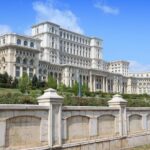
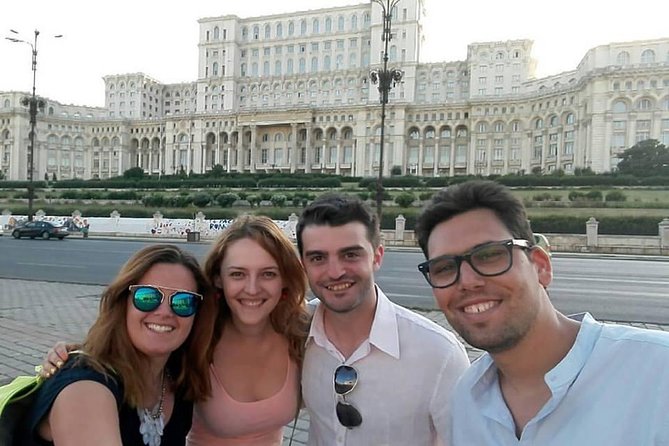
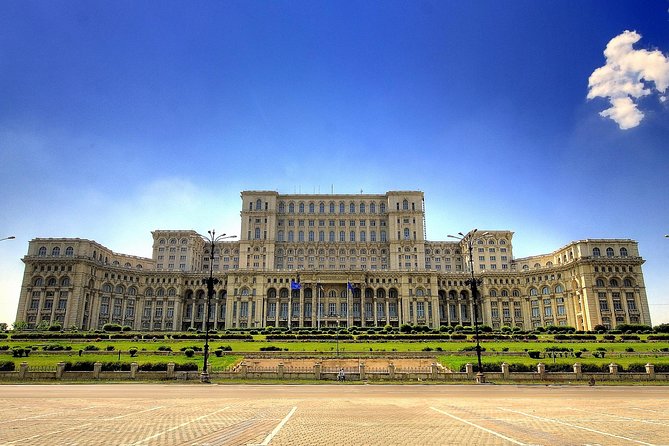
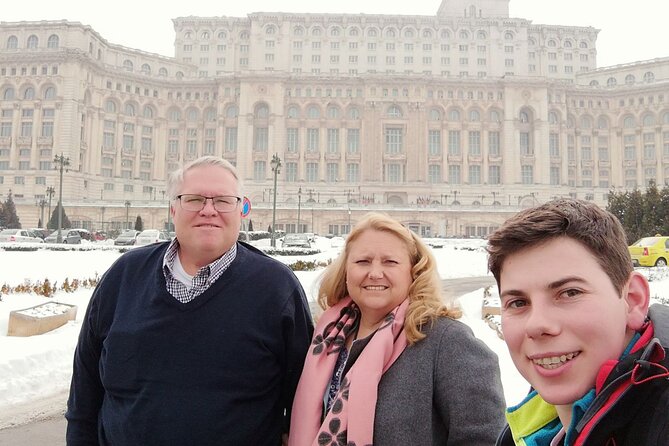
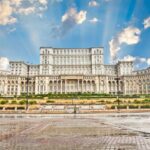
Your final main stop centers on Constitution Square, the former Communist Civic Center, and the dominant presence in the area: the Palace of Parliament. This building is described as the world’s second-largest after the Pentagon, and even from the outside you can feel why the regime loved grand, intimidating architecture.
Your guide connects the dots between symbolism and control. The palace isn’t just big because someone liked big buildings. It’s big because the system wanted to broadcast permanence and power. Then the tour adds the details that make it feel almost unreal: the palace has seven underground floors, including atomic bunkers and a network of secret tunnels.
This is roughly 30 minutes, and your visit focuses on the exterior. Afterward, your guide walks you back toward the Old Town, where the tour concludes. That ending works well because you finish near restaurants, museums, and bars rather than out in transit-wait land.
The one drawback to consider is simple: if you’re expecting a full interior visit of the palace, the tour as described emphasizes taking in the outside and related context. You’ll still learn a lot, but plan your expectations if you want to go inside during your trip.

Private guide experience: how it stays personal and not scripted
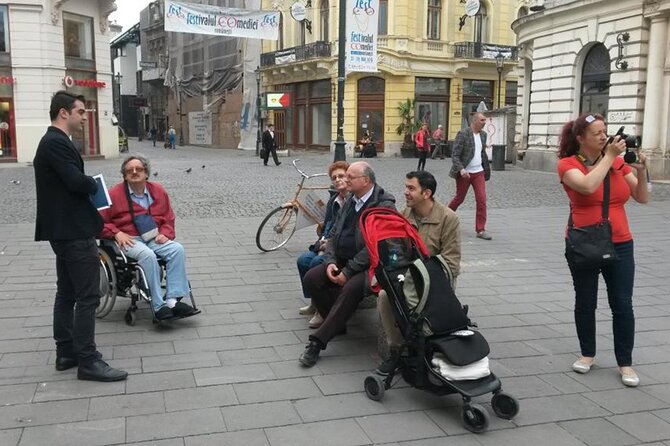
This tour is private, meaning it’s only your group and you get a licensed English-speaking guide. That format matters in Bucharest, because many visitors see the buildings but miss the timeline. A good guide fills in what each location signaled to the people living there—how the government shaped daily life, and how public space became a tool.
I also like that the experience uses a slow paced approach with stops for photos and rests. The total walking is listed as up to 3 km (under 2 miles), and the pacing is explicitly meant to be manageable. That’s a meaningful quality-of-life detail, especially for older travelers or anyone who wants to stay engaged without feeling rushed.
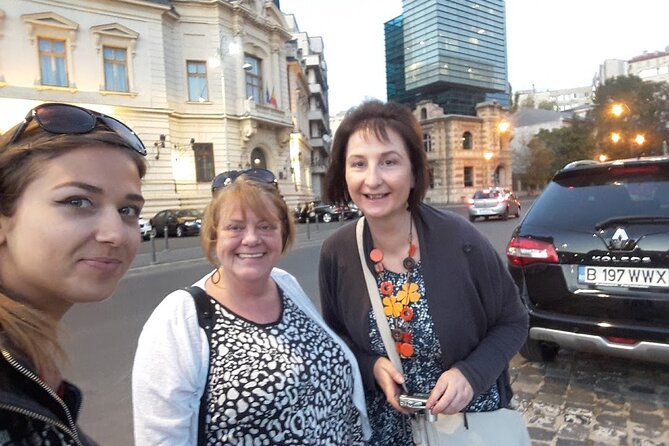
From the names of guides that come up, the style seems consistent: clear structure, strong narrative, and willingness to adapt. Andra, for example, is highlighted for meeting guests at the hotel lobby and sharing personal family experiences that make the story feel lived-in. Bogdan and Michael are repeatedly praised for being on time and for explaining complex events in a compelling way. Emma and Mircea are noted for structuring the story and giving insight into the communist impact on real people. Tudor is mentioned as patient and thorough, including answers to questions. Mihai is especially memorable in accounts because he improvised when winter conditions made parts of the plan harder, and he also brought old photos and magazines to help you visualize what Bucharest looked like before severe demolitions.
You should still remember: guide access and timing can change based on what’s open that day. But the fact that your guide can adjust is a real advantage on a history-heavy walk.
Price and value: why $93.46 can make sense
At $93.46 per person for about 4 hours, this isn’t a budget crawl. The value comes from what’s included: free hotel pickup, a licensed English guide, and a private format, plus free admission for the stops listed. For many visitors, that combination is where the money goes—from convenience and expert interpretation, not entry fees.
I think this price is most worth it if you:
- care about understanding how the political story ties to the street scene
- want a guide who can answer questions as you go
- prefer starting from your hotel instead of navigating meeting points on your own
It can also be a good deal if your group is willing to split the cost of a private tour. The tour description notes group discounts, so if you’re traveling with friends or family, check how pricing behaves for your party size. If you’re solo and comparing to self-guided routes, you’re paying for time savings and a narrative thread that keeps the places from feeling like unrelated monuments.
On the other hand, if you mostly want casual sightseeing with minimal discussion, you might prefer a cheaper walking option. This experience is clearly built for history learning and interpretation.
Pacing, walking comfort, and small practical moves
You’ll cover up to about 3 km total, and it’s described as slow paced with several stops. That means you don’t need to be a power-walker, but you do need basic comfort for uneven sidewalks and frequent stopping. I’d still pack comfortable shoes as if you’re doing a normal city day, because delays aren’t the tour’s focus—attention is.
Since refreshments aren’t included, plan for your own water and snacks. The Old Town portion is the easiest place to find a café break without getting off-course. Also, the stops are timed—around 30 minutes each for the major squares, then a longer 1-hour Old Town segment—so you’ll want to use those rests rather than trying to squeeze extra stops.
The tour uses a mobile ticket, and it runs in English with a licensed guide. It’s also noted to be near public transportation, so if pickup doesn’t work for you, you’re not stranded.
Finally, know where you start and where you end. You meet at Strada Benjamin Franklin 1 in Bucharest (030167), and you finish in the Old Town area in front of Palatul CEC—the Palace of Deposits and Consignments—on Calea Victoriei 13 (030022). Finishing in the center is a smart way to keep your evening flexible.
Who this communist-and-revolution tour is best for
If you like city walking tours that explain what you’re seeing and why it changed, you’ll probably enjoy this one. It’s also a great early-trip tour if you’re trying to understand Bucharest’s layers quickly—especially the way communist-era power left physical marks on public space.
This tour also suits couples and small groups who value a guide’s ability to answer questions on the spot. The private format helps, because you can steer the conversation toward what you care about most—architecture, propaganda, the timeline of rule, or the revolution story.
I think it’s less ideal if you:
- want mostly indoor time and museum roaming
- prefer a lighter, entertainment-first approach
- don’t want to spend a few stops in heavy political territory
Should you book this Bucharest communism walk?
Yes, if you want a structured, private tour that connects Bucharest’s iconic buildings to the communist period and the 1989 Revolution. The hotel pickup alone is a big quality-of-life win, and the free-entry stops plus the guide interpretation help you get far more out of the street scene than you would on your own.
Book it with realistic expectations: you’ll learn a lot through walking and storytelling, and the palace time is focused on exterior context rather than a full interior visit. If that matches your style, you’ll leave with the city’s story in your head—and the ability to look at architecture and read it like a timeline.
FAQ
How long is the tour in Bucharest?
The tour lasts about 4 hours.
Is this a private tour?
Yes. Only your group participates.
Does the tour include hotel pickup?
Yes. Free pickup is offered anywhere in Bucharest, and your guide meets you in your hotel lobby next to the reception desk.
What language is the tour offered in?
The tour is offered in English.
How much walking is involved?
There is a moderate amount of walking, up to 3 km in total (less than 2 miles), with a slow pace and multiple photo/rest stops.
Are entrance tickets included?
Admission tickets are listed as free for the stops during the tour.
Are refreshments included?
No. Refreshments are not included.
What is the cancellation option?
Free cancellation is available. You can cancel up to 24 hours in advance for a full refund.
Where does the tour start and where does it end?
It starts at Strada Benjamin Franklin 1, București 030167, Romania, and ends in the Old Town in front of the Palace of Deposits and Consignments (Palatul CEC), on Calea Victoriei 13.