REVIEW · BUCHAREST
Bucharest Ghosts Stories and Mythology
Book on Viator →Operated by Bucharest by Foot Tours · Bookable on Viator
A night in Bucharest can feel like a storybook. This 2.5-hour ghosts and mythology walk turns street corners into legends, with an English guide leading you through stops that connect local history, superstition, and death rituals. Two things I especially like: the small-group size (max 12) for a more personal pace, and the mix of spookiness with cultural context, so you’re not just hunting for jump scares.
One possible drawback to keep in mind: the tour leans heavily into storytelling, and a couple of departures may feel more talk-heavy than some people expect. Also, if you’re hoping for a fully costumed guide every time, don’t plan on it as a sure thing.
In This Review
- Key things to know before you go
- A 7 pm walk that uses the dark for better storytelling
- Small-group pacing: why max 12 matters at night
- Stop-by-stop: Bucharest’s spookiest landmarks, in order
- Stop 1: National Theatre Ion Luca Caragiale (Teatrul Nakional Ion Luca Caragiale)
- Stop 2: The Central School
- Stop 3: Parcul Ion Voicu for strigoi stories
- Stop 4: Gradina Icoanei and the old pond-and-witches legend
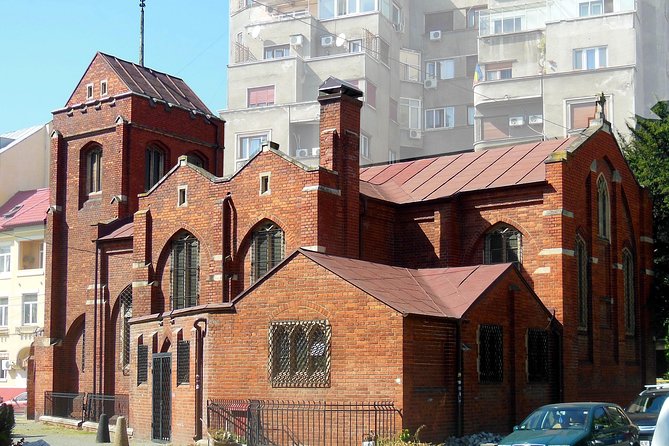
- Stop 5: Anglican Church of the Resurrection and tales of exorcism
- Guides and storytelling style: what people praise most
- Night views and city mood: the tour is also a lighting lesson
- Comfort checklist: what will make the experience better
- Price and value: what $33.88 really buys you
- Who should book this ghost tour?
- Quick practical details to help you plan
- Should you book Bucharest Ghosts Stories and Mythology?
- FAQ
- What time does the tour start?
- How long is the Bucharest Ghosts Stories and Mythology tour?
- How much does it cost?
- Is the tour offered in English?
- Where do I meet the guide?
- Where does the tour end?
- Do I need to buy tickets for the stops?
- Is there a mobile ticket?
- Is free cancellation available?
Key things to know before you go
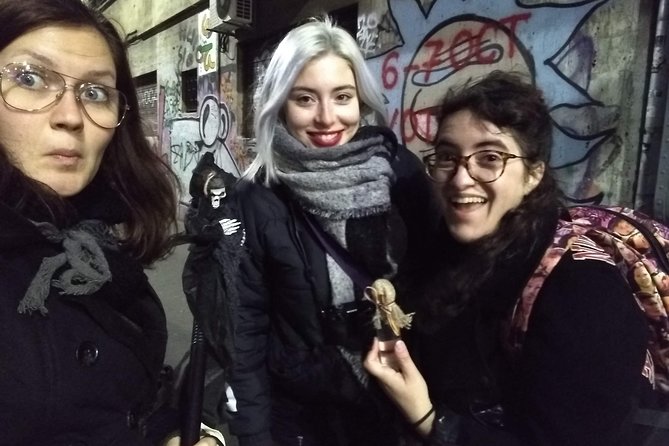
- 7:00 pm start: built for evening atmosphere and fewer daytime crowds
- Max 12 travelers: easier questions and a tighter group feel
- Free-entry stops: the National Theatre and Central School stops are listed with free admission
- Strigoi stories in a park: you’ll pause in Parcul Ion Voicu to hear the supernatural take
- Witch-ritual whispers at Gradina Icoanei: a park tied to old legends involving a pond
- Exorcism accounts at an Anglican church: the tour ends with church-front stories of real exorcisms
A 7 pm walk that uses the dark for better storytelling
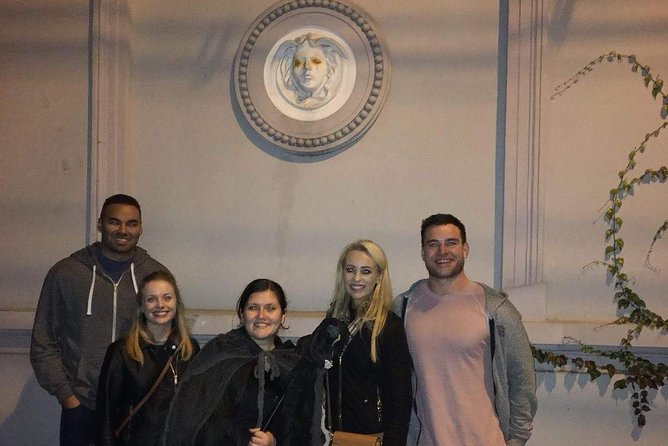
Starting at 7:00 pm, this tour is designed for the time when Bucharest’s mood changes. Daytime makes buildings readable; night makes them mysterious. You’ll be moving at a walking pace through central areas, with multiple short stops that keep the energy up without turning into an all-night marathon.
At $33.88 for about 2 hours 30 minutes, the value is less about “scariness” and more about access: you get an English-speaking guide, plus multiple planned stops where entry is listed as free for key locations. For a guided evening walk, that’s a fair deal, especially if you like myths that tie back to real places rather than generic folklore.
You can also read our reviews of more tours and experiences in Bucharest.
Small-group pacing: why max 12 matters at night
With a maximum of 12 travelers, the tour feels like a real conversation with the city instead of a lecture line. That matters in ghost tours, because the best bits are the ones you can ask about: why people believed something, how the superstition worked, and what it says about how communities deal with fear and death.
The other practical upside: a small group moves together without losing people at every corner. Stops are short (often 10 to 15 minutes), so you’re not stuck watching a crowd while a guide tries to be heard over traffic. It also makes it easier for your guide to bring in small details and personal angles from Romanian cultural traditions, which shows up in the way different guides are praised for storytelling style.
Stop-by-stop: Bucharest’s spookiest landmarks, in order
This route is built around a handful of well-chosen places. Some are famous buildings you’d probably pass in daylight; at night, they feel like props in a local legend.
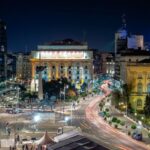
Stop 1: National Theatre Ion Luca Caragiale (Teatrul Nakional Ion Luca Caragiale)
You meet next to the Ion Luca Caragiale National Theatre at Bulevardul Nicolae Bălcescu 2. The stop is about 10 minutes, with free admission listed.
Why this opening works: it gives you instant historical footing. Starting at a major landmark helps the guide set the tone, then everything else you see later feels connected instead of random. The theatre also helps visually anchor the walk, since you’ll likely spot it again later as you move around central Bucharest.
What to expect: a quick orientation and the first batch of legends, often the kind that explains where fear stories come from and how they spread through generations.
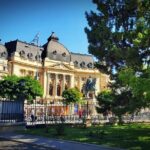
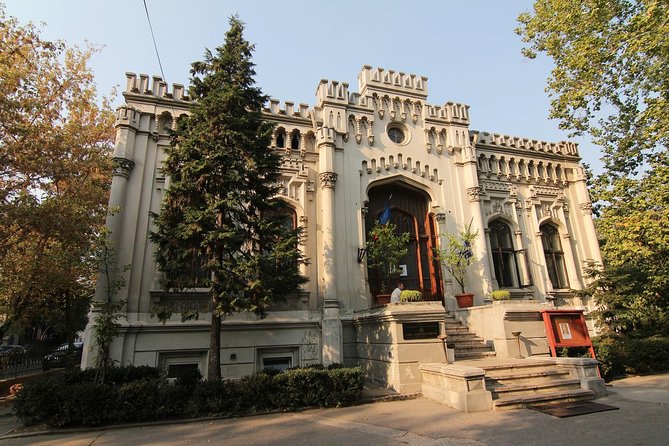
Stop 2: The Central School
Next comes The Central School, another 15-minute stop with free admission listed.
This is one of the most “Bucharest” moments because schools show up in folklore differently than castles do. They’re places of discipline, routine, and growing up. In Romanian superstition, that contrast can make a site feel extra eerie, and this tour uses that idea to frame a haunted-school style legend.
Practical note: schools are easier to read from the outside than inside. If you’re hoping for big cinematic visuals, focus more on what the guide explains than on expecting a filmed-in horror scene.


Stop 3: Parcul Ion Voicu for strigoi stories
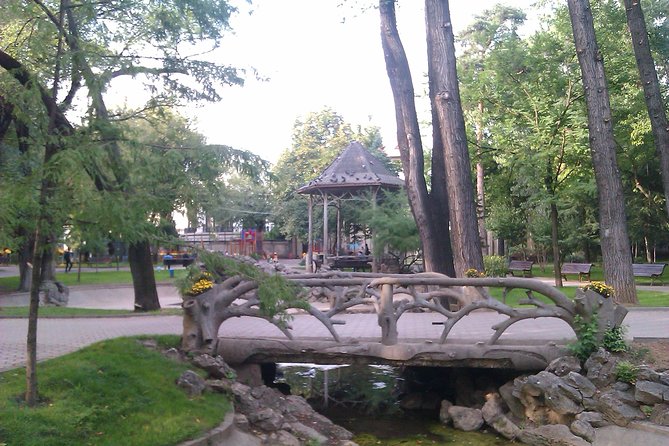
After the buildings, you get a breather at Parcul Ion Voicu, about 15 minutes. This is where the tour shifts toward atmosphere: park paths, night air, and time for quieter stories about strigoi.
Why it’s a smart mid-tour change: a park resets your senses. Ghost tours can become repetitive if every stop is just another façade. Here, you’re forced to slow down, listen, and let your imagination do some work. This is also where some guides’ storytelling style gets extra room, since the group can sit or regroup briefly and stay calm enough to follow the details.
What to watch for: parks can be slippery or uneven after dark. Wear shoes you trust.
Stop 4: Gradina Icoanei and the old pond-and-witches legend
The next 10-minute stop is Gradina Icoanei. This park is tied to a past that included a pond used by witches for rituals.
This stop is shorter, but it’s the kind that often sticks with people. A legend like this works because it’s specific: it’s not just “witches exist,” it’s “witches did something in a particular place.” That specificity gives the stories weight and helps you picture the superstition as something tied to geography, not fantasy.
If you get cold easily, this is a good place to adjust layers. A quick stop doesn’t mean a quick chill.
Stop 5: Anglican Church of the Resurrection and tales of exorcism
The final stop is in front of the Anglican Church of the Resurrection, about 10 minutes. Here you’ll uncover stories of real exorcism.
This ending is intentional. After witches, ghosts, and funeral-related cultural ideas, the tour closes with religion and how people interpret evil, fear, and protection. It’s a reminder that in Romanian belief systems, the supernatural doesn’t live in a separate world. It often overlaps with faith, ritual, and family memory.
Tone-wise, this is usually where the stories feel serious rather than purely spooky. If you like the cultural side of mythology—how people explain misfortune, death, and the unseen—this stop is a strong finish.
Guides and storytelling style: what people praise most
Different guides are mentioned by name in the feedback: Tudor, Bogdan, Rareș, Gabriela, Ali, and Gabi show up across the strongest notes. The pattern is clear: people love guides who blend Romanian cultural context with myth in a way that feels lived-in, not copied from a pamphlet.
Two stand-out strengths you can plan around:
- Background on Romanian funeral traditions and death culture: the tour doesn’t just say ghosts exist; it explains why communities talk about death the way they do.
- Spooky-but-clear narrative pacing: guides are repeatedly praised for how they tell stories, with a “caught-you-by-the-seat-of-your-pants” feel.
There’s also a clear theme in the myth content. Along the way, you may hear about well-known supernatural ideas like vampires and real-world superstition, plus some of the creepy “house” legends (examples like Devil’s house, Poltergeist house, and Cat’s House show up in the feedback). Even if these details aren’t the main focus of every departure, the tour’s overall direction is consistent: Romanian mythology plus cultural practice.
Night views and city mood: the tour is also a lighting lesson
One of the tour highlights is capturing views of the city’s spookiest spots after dark. That’s not just marketing. Bucharest’s streets around the central areas look different in evening light. You’ll likely notice more texture in façades and more depth in shadows than you would at noon.
Bring a phone camera you’re comfortable with, and don’t expect every stop to be photo-ready from the same angle. The route is built for listening, not for a photo shoot. If you want better shots, pause for a few seconds after the guide speaks, so you’re not blocking others while they listen.
Comfort checklist: what will make the experience better
This is an evening walking tour and it’s weather-dependent. Here’s what to plan for based on how tours like this run in real life and what’s explicitly noted for this one:
- Warm layers: it’s a 7 pm tour that often runs after work hours, when temperatures can drop fast.
- Good shoes: you’re moving through parks and across city pavement.
- A rain plan: the tour requires good weather, so if you’re traveling in cooler or wet months, an umbrella or rain shell can save your mood.
- Mobile ticket ready: you’ll have a mobile ticket, so have your phone access simple and quick.
- Start early enough to meet smoothly: you don’t want to rush when the tour is waiting for your group.
Price and value: what $33.88 really buys you
At $33.88 per person for roughly 2.5 hours, you’re paying for an evening guide, English narration, and a set route that includes multiple free-entry stops (like the theatre and the central school) plus parks and a church-front finale.
Here’s how I’d judge the value if you’re on the fence:
- If you want mythology with cultural meaning (funeral traditions, death rituals, superstition), this tour offers more than pure entertainment.
- If you mainly want action, loud theatrics, and constant movement, you may feel it’s too story-led for your taste.
The best fit is someone who enjoys hearing a local guide connect myths to actual Romanian practices and places. That’s where the tour shines.
Who should book this ghost tour?
Book it if:
- You like Romanian folklore that explains superstition and death rituals, not only scary legends
- You want a guided night walk that avoids the daytime crowd feel
- You enjoy small groups where you can ask questions and keep the pace comfortable
- You’re okay with an evening tour that depends on weather
You might skip or adjust expectations if:
- You want a costume-and-horror performance as the main event
- You prefer long stops with heavy site viewing rather than short “story moments”
- You get impatient with tours where most of the time is guided storytelling
Quick practical details to help you plan
You meet at the Ion Luca Caragiale National Theatre (Bulevardul Nicolae Bălcescu 2) and finish at University House (Strada Dionisie Lupu 46), listed as close to Piata Romana. The tour is offered in English, and an English-speaking guide is included.
The group has minimum numbers and can be canceled if the minimum isn’t met, but you’re offered an alternative date or a full refund if that happens. Service animals are allowed, and the tour is near public transportation.
Should you book Bucharest Ghosts Stories and Mythology?
Yes, if you want a smart, culturally grounded ghost walk with real place-based legends and a small-group feel. The strongest reason to book is the balance: scary themes are there, but the tour keeps pulling them back to Romanian traditions around fear, death, religion, and superstition. That combination is what people consistently love.
If you’re expecting a constant fright-fest with nonstop spectacle, you may find it more thoughtful than theatrical. Go in for the stories, dress for evening weather, and you’ll likely have a memorable night walk through Bucharest’s darker side.
FAQ
What time does the tour start?
The tour starts at 7:00 pm.
How long is the Bucharest Ghosts Stories and Mythology tour?
It lasts about 2 hours 30 minutes.
How much does it cost?
The price is $33.88 per person.
Is the tour offered in English?
Yes. The tour is offered in English, and an English-speaking guide is included.
Where do I meet the guide?
You meet at the Ion Luca Caragiale National Theatre on Bulevardul Nicolae Bălcescu 2, București 010051, Romania.
Where does the tour end?
The tour ends at University House on Strada Dionisie Lupu 46, București 010455, Romania, near Piata Romana.
Do I need to buy tickets for the stops?
The National Theatre Ion Luca Caragiale stop lists free admission, and the Central School stop also lists free admission. The other stops are parks or in front of a church.
Is there a mobile ticket?
Yes, the tour provides a mobile ticket.
Is free cancellation available?
Yes. You can cancel up to 24 hours in advance for a full refund.