REVIEW · BUCHAREST
Guided Walking Tour of Historical Bucharest
Book on Viator →Operated by Claires Bucharest Guided Tours · Bookable on Viator
Bucharest history is written on sidewalks. This guided walking tour strings together the city’s key squares, churches, palaces, and 20th-century turning points, with a guide (often Alina) who makes the story click. I love the architecture-focused walk and how you learn to read what you’re seeing, not just look at it. I also love the Ceaușescu and Cold War context, tied directly to the grand buildings and the scars they left behind.
One thing to plan for: you’ll do a lot of walking over 3 hours, and the route makes sense only if you’re comfortable with city pace and some hills/uneven sidewalks.
In This Review
- Key highlights you can expect
- Where the walk starts: Manuc’s Inn and getting your bearings
- The old-center warmup: the Inn, St Anton, and Old Princely Court ruins
- Piața Unirii and Unirii Boulevard: fountains, slogans, and the city’s center of gravity
- Palace of Parliament and Piața Constituției: the communist-era wall you can’t miss
- Churches and palaces in the midsection: the 1724 church, the CEC Palace, and Victoria Avenue
- The 500-year old center and Passage Macca: Bucharest’s indoor street
- National Bank and University Square: how Bucharest turned institutions into landmarks
- Suțu Palace and Colțea Hospital and Church: museum prestige and medical history
- National Theatre and churches like Biserica Kretzulescu: cultural swings over centuries
- Revolution of 1989 start point: the memorial map of a turning day
- Memorial of Rebirth and Military Circle with Sărindar fountains: closing on memory and gardens
- Price value: why $30.77 for 3 hours can make sense here
- Who this tour is best for (and who might want to choose differently)
- Should you book this Guided Walking Tour of Historical Bucharest?
- FAQ
- FAQ
- How long is the Guided Walking Tour of Historical Bucharest?
- Where does the tour start?
- Is pickup and drop-off included?
- Is the tour private?
- What language is the tour offered in?
- How much walking is involved?
- Are there any free admission stops during the tour?
- Can children join?
- Are service animals allowed?
- What happens if the weather is bad?
Key highlights you can expect
- Manuc’s Inn (Hanul lui Manuc) as a classic starting point for Old Bucharest
- University Square and Palace of Parliament as the big visual bookends of modern city planning
- Revolution of 1989 sites, including the Memorial of Rebirth and the balcony area for Ceaușescu’s final speech
- Photo-rich plazas and fountains, especially around Piața Unirii and the Unirii Boulevard corridor
- Passages and palaces you’ll miss on your own, like Passage Macca and Villacrosse and Suțu Palace
- A guide experience shaped by personal local perspective, with time for questions (and lots of stories)
Where the walk starts: Manuc’s Inn and getting your bearings
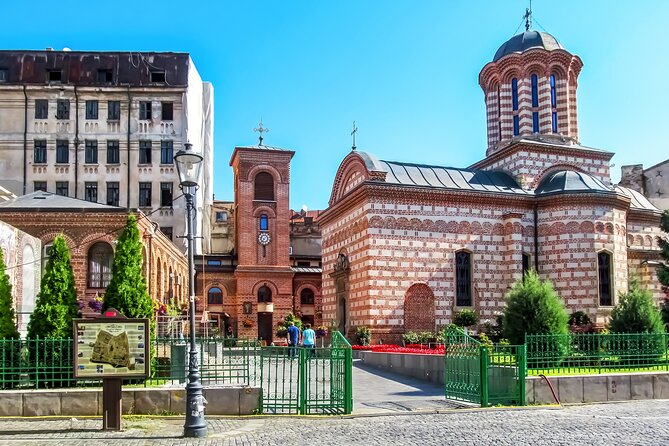
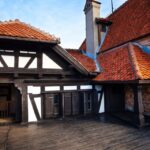
You begin at Hanul lui Manuc (Manuc’s Inn), right in the Old Centre. It’s a smart meeting point because it’s historic itself and it anchors you before the route starts moving through squares and monuments. You’ll usually meet at the main entrance on Strada Franceză (pickup is offered outside the main entrance, and drop-off returns you back to the meeting point).
I like starting here because it helps you understand Bucharest as a layered city. You’re not just marching from one landmark to the next. The tour quietly sets you up to notice how different eras left their mark—Wallachian-era remnants, Ottoman-era echoes, communist planning, and post-1989 memory all in the same walk.
You can also read our reviews of more walking tours in Bucharest


The old-center warmup: the Inn, St Anton, and Old Princely Court ruins
From the start, the focus is on understanding what Bucharest used to be. You’ll first learn the history of Manuc’s Inn, which is more than a pretty landmark. It’s part of the city’s “tradespeople and travelers” story—exactly the kind of detail that turns a building into a place.
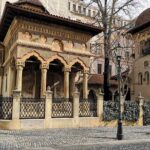
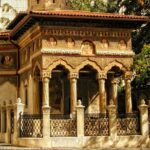
Next, you’ll head toward St Anton Orthodox Church, described as the former coronation church of Wallachian rulers. Even if you only catch it from the outside, it’s a powerful idea: this is Bucharest at the center of political ritual, not just tourism.
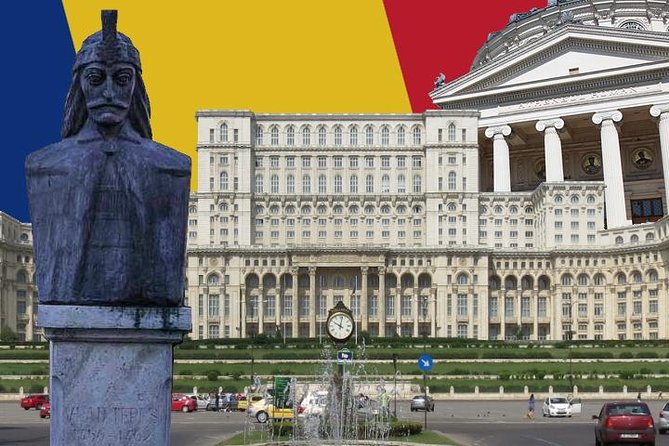
Then comes Old Princely Court, where you see ruins of the Old Princely Palace of Wallachian rulers, tied to Vlad the Impaler. This stop is short, but that’s the point. You get a real sense of continuity—how Bucharest’s importance as a seat of power stretches far back. The itinerary lists free admission for this stop, so it’s a low-risk way to add depth without feeling like you spent your day in ticket lines.
Piața Unirii and Unirii Boulevard: fountains, slogans, and the city’s center of gravity
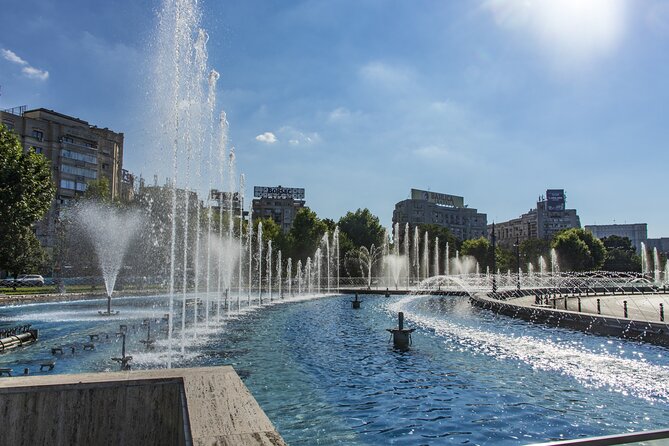
Once you step into the core, Piața Unirii hits fast. You’ll be there for quick photos and a guided read of what makes this area feel like the heart of Bucharest. The fountains are front-and-center, and they’re also a reminder that the city kept redesigning its public spaces as regimes changed.
A short hop brings you to Bulevardul Unirii, described as the former Boulevard of Socialist Victory—often compared to Romania’s Champs-Élysées. That label matters. It tells you to pay attention to symbolism. Wide avenues like this were designed to project power and unity, and Bucharest still carries that visual language in how the center opens up.
This section is where the guide’s story pacing really matters. If you like “why this looks like this,” you’ll enjoy it. If you’re only after quick snapshots, you might find yourself wanting a bit more time at each plaza—but the schedule keeps the tour moving toward the biggest set pieces.
Palace of Parliament and Piața Constituției: the communist-era wall you can’t miss
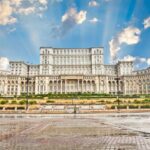
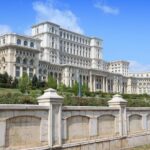
Then you reach the showstopper area: the Palace of Parliament and its surrounding viewpoints, including Piața Constituției. The Palace of Parliament is the kind of building that changes the mood of a city block. Even from a distance, it feels heavy and intentional—like it was built to dwarf everything around it.
This tour is good at connecting that scale to history. You’ll learn how Ceaușescu’s dictatorship and the broader Cold War context affected Bucharest, and you’ll also hear how that era shaped the city’s layout and symbolism. You’ll be given excellent photo opportunities here, which makes sense. This is one of the few moments where the view is the point, and the guide helps you know what you’re looking at before you raise your phone.
One practical note: this is a very open, very visible zone. If it’s sunny or hot, you’ll want water and sun protection.
Churches and palaces in the midsection: the 1724 church, the CEC Palace, and Victoria Avenue
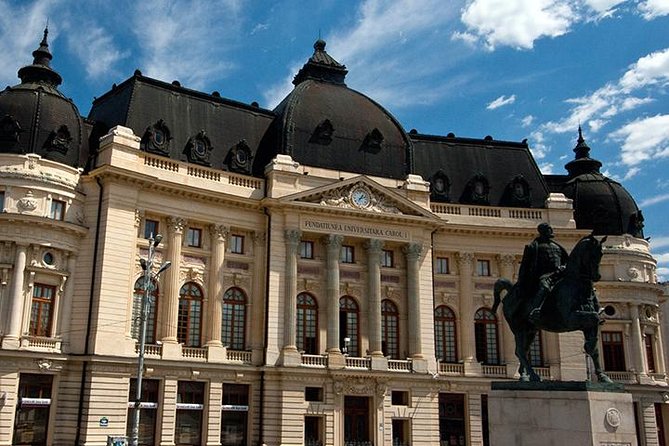
Between big monuments, the tour adds texture—religious buildings and civic architecture that explain daily life and institutional power.
You’ll see a church built in 1724, with a fascinating backstory as part of the walk. That’s a key mid-route strategy: the guide pulls you out of the 20th-century spotlight long enough to remember that Bucharest existed long before the revolution era.
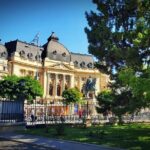
Next up is the CEC Palace. You’ll hear the history of the building, framed as a major Bucharest institution. Even if you’re not a museum person, these kinds of stops help you understand what cities were built around: finance, governance, and services.
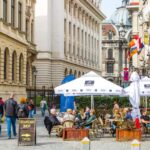
Then there’s Victoria Avenue, lined with shops. It’s a change of pace. You get a sense of what the city feels like to live in today, not only what it looked like to watch from a distance.
You can also read our reviews of more guided tours in Bucharest

The 500-year old center and Passage Macca: Bucharest’s indoor street
One of my favorite kinds of city walks is where you find a small corridor and realize it existed for a long time. Here, the tour takes you into the old centre, described as a culture-rich area dating back over 500 years.
You’ll also enter passage Macca and Villacrosse, which is exactly the kind of spot that makes a guided walk worth it. Passageways like this are easy to miss, and on your own you might just walk past without understanding why it matters. In a short time, you learn the past of the passage, and you start seeing the city as a network—not just a set of monuments.
These steps are especially good if you like history that feels human-scale. The tour still includes big buildings, but the passage and old-center segments help everything feel connected.
National Bank and University Square: how Bucharest turned institutions into landmarks
As the walk climbs into major civic space, you’ll see the National Bank of Romania—the tour frames it as having an interesting history. The building matters because it shows how institutions in Bucharest became architecture. Not just money mattered; the city made sure you could feel authority in stone.
Then comes University Square, where you’ll see the oldest and largest university in Bucharest. The itinerary notes it was built by Alexandru Ioan Cuza and founded in 1864. This isn’t trivia-dumping; it’s a chance to see how education became public identity.
If you want to understand why Bucharest looks the way it does, this section helps. Squares like this are about power, yes—but also about legitimacy and future planning.
Suțu Palace and Colțea Hospital and Church: museum prestige and medical history
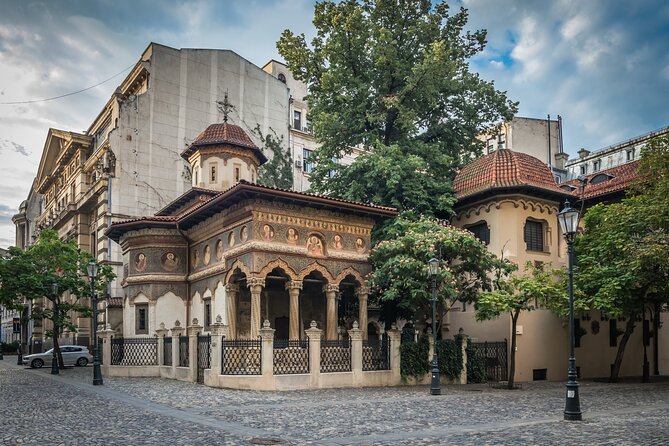
Next you’ll visit Suțu Palace, described as the history museum of Bucharest and the former residence of Costache Suțu. Even if you don’t spend a long time inside, this kind of stop gives you a break from pure exterior viewing. It also reinforces a theme: Bucharest repeatedly re-purposed elite residences and civic buildings as public story-tellers.
Then you’ll see Colțea Hospital and church, an iconic center-of-town building built in 1888. A hospital isn’t the first thing most visitors think to prioritize, but it’s a great reminder that cities run on institutions of care and care systems evolve over time. It adds depth without turning the whole tour into one long lecture.
National Theatre and churches like Biserica Kretzulescu: cultural swings over centuries
As you pass National Theatre of Bucharest, you’ll hear it’s an iconic building with many changes to its design in a short history. That short note is important. Bucharest culture has always been in motion. The theatre becomes a stand-in for broader artistic and political shifts.
You’ll also stop at Biserica Kretzulescu, noted as a beautiful church with an interesting history. Church architecture in Bucharest can feel like an architectural language of its own—an ongoing conversation between eras.
This portion works well if you like variety. After the big open plazas and the Parliament-area impact, these stops bring things back to details you can study at human walking speed.
Revolution of 1989 start point: the memorial map of a turning day
This is the emotionally heavy section, even if you keep your expectations practical. You’ll learn about the area where the famous revolution of 1989 started, plus memorials tied to the events.
The itinerary specifically mentions:
- the balcony where Nicolae Ceaușescu made his final speech
- the former headquarters of the Communist party
- the Monument of National Rebirth
- King Carol I’s equestrian statue
- the University library
- and more memorial markers
You’ll get excellent photo opportunities, but the value here is what the guide helps you connect: how quickly a regime can fall and how a city decides what to remember—and where to place memory in public space.
It’s also where a personal-guide style can matter. The tour is clearly built to explain politics and history in context, and if you prefer history stripped of personal commentary, you might want to set your preference early.
Memorial of Rebirth and Military Circle with Sărindar fountains: closing on memory and gardens
After the revolution sites, you’ll reach Memorial of Rebirth, a 25-meter-high memorial commemorating the struggles and victims of the Romanian Revolution of Christmas 1989. This is a quick stop, but it lands because it gives your walk a defined endpoint in the city’s memory landscape.
Then the tour moves to the Military Circle and Sărindar Fountains. The itinerary describes the Military Circle as built for the people of Bucharest by the people of Bucharest over 100 years ago, with beautiful gardens and a stunning historical building. It’s a good final visual contrast: after heavy political memory, you end with a calmer, garden-like atmosphere and a classic urban fountain setting.
When the walk ends, you return to the meeting point at Manuc’s Inn.
Price value: why $30.77 for 3 hours can make sense here
At $30.77 per person for about 3 hours, this walk can be good value if you want a guided story, not just a route. You’re paying for two things that are hard to replicate alone:
1) Interpretation: the way the guide ties architecture to political eras, especially the effects of the dictatorship and Cold War.
2) Time efficiency: you cover a tight circle of major sites without having to figure out how they connect.
Because the tour is private (only your group participates), the per-person value can also feel better if you’re traveling as a couple or a small family who wants questions answered without competing for attention.
Also, many stops are listed with free admission ticket or are quick viewing/photo segments, so you’re not likely to feel stuck paying again and again to see the highlights.
Who this tour is best for (and who might want to choose differently)
You’ll love this tour if:
- you want an overview of Bucharest’s center with clear historical context
- you enjoy architecture and want to learn how different eras changed what you see
- you like walking tours that move at a steady city pace but don’t require marathon endurance
You might choose something else if:
- you dislike politics as a topic, even when it’s tied to buildings and public memory
- you want a slower, longer museum-style day with extended indoor time at fewer sites
- your comfort level with walking is low, since the route is long enough that shoes and water matter
Should you book this Guided Walking Tour of Historical Bucharest?
I’d book it if you’re arriving in Bucharest for the first time and want to get your bearings fast. The route hits the city’s most important story areas: old power (princely ruins), central public space (Piața Unirii and Unirii Boulevard), major political architecture (Palace of Parliament area), and the memory of 1989 (balcony, memorials, and Memorial of Rebirth).
I’d think twice only if you know you hate heavy political framing. This walk is built around that context, and your enjoyment will track whether you’re comfortable with it. If you are, it’s one of the best ways to understand why Bucharest feels the way it does—by walking through the evidence.
FAQ
FAQ
How long is the Guided Walking Tour of Historical Bucharest?
It runs for about 3 hours.
Where does the tour start?
The start point is Hanul lui Manuc (Manuc’s Inn), Str. Franceză 62, Bucharest, with pickup offered outside the main entrance.
Is pickup and drop-off included?
Yes. Pickup is offered at the meeting point area, and the tour ends back at the same place.
Is the tour private?
Yes. It’s a private tour/activity, and only your group participates.
What language is the tour offered in?
The tour is offered in English.
How much walking is involved?
It involves walking throughout the central areas, and the route requires moderate physical fitness.
Are there any free admission stops during the tour?
The itinerary lists free admission for some stops, including Old Princely Court, and it also marks several plazas and photo stops as admission ticket free.
Can children join?
Children must be accompanied by an adult.
Are service animals allowed?
Yes, service animals are allowed.
What happens if the weather is bad?
This experience requires good weather. If it’s canceled due to poor weather, you’ll be offered a different date or a full refund.