Bucharest teaches you where to look. This 3-hour walk trades museum lines for neighborhood history you can see on the street, and I especially liked the stop-by-stop mix of churches plus the story-rich old homes. You’ll also get a real taste of local street food with the included covrig snack, explained in its own historical context. The one catch: it’s mostly outdoors and you’ll be walking, so hot sun and long sidewalks matter.
If you hate walking or you’re coming expecting lots of indoor time, you might find the pace a little more “gentle stroll + stories” than “deep site sightseeing.” And since the tour ends back at the start, plan your next stop on foot from the National Theatre area.
Key Points to Know Before You Go
- Small group (max 12): better chances for questions and a guide who can keep the pace human.
- Mahala route with meaning: you’re not just moving across town; you’re learning how Bucharest neighborhoods formed around churches and communities.
- A standout contrast of faith and design: from an 18th-century stone church to an early 20th-century Armenian Orthodox church modeled on one in Ecmiazin.
- Casa Melik’s “oldest home” angle: high cellar, glass-covered veranda, art collection stories, and even a tunnel legend.
- Included covrig snack: a Romanian pretzel-like street snack with a backstory worth hearing.
- Culture payoff at the end: Mantuleasa Street and a finish near Ioanid block and Icoanei mahalla, with Mircea Eliade woven into the walk.
In This Review
- Entering Bucharest’s Mahalas From the National Theatre Stairs
- Batistei’s Old Church: Why Neighborhoods Grow Around Faith
- Armenian Bucharest and an Orthodox Church Replica in Ecmiazin
- Casa Melik: Bucharest’s Oldest Home and Its Real-World Details
- The Covrig Stop: A Romanian Street Snack With a History Angle
- Mantuleasa Street and Mircea Eliade’s Bucharest Favorite Walk
- Ioanid Block and Icoanei Mahalla: Finishing With Beauty and Context
- Guides Make or Break It: Elena, Andrei, and Livia’s Style
- Price and Value: Is $45 Worth a 3-Hour Walk?
- Who This Tour Suits Best (and Who Might Prefer Something Else)
- Should You Book This Bucharest Walking Tour?
- FAQ
- Where do I meet for the tour?
- How long is the tour?
- Is the tour offered in English?
- What’s included in the price?
- How big is the group?
- Can children join?
- What should I bring?
- Does it have free cancellation or flexible booking?
Entering Bucharest’s Mahalas From the National Theatre Stairs
Most Bucharest tours start with a monument. This one starts with your bearings. You meet on the stairs of the National Theatre, in front of the main entrance (and yes, you end there too). That matters because you start with a central landmark, then spend your morning threading through the city’s older neighborhoods on foot.
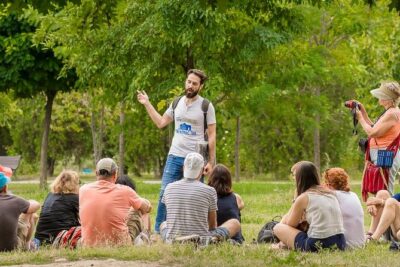
The basic format is simple: a local, English-speaking guide (small group size, max 12) walks you through several distinct areas—Batistei, the Armenian neighborhood, Mantuleasa Street, and the finish around Ioanid block and Icoanei mahalla—while explaining how Bucharest got its look. It’s a smart way to get oriented early in a trip, especially if you’re the type who likes to understand what you’re seeing instead of just photographing it.
Bring comfortable shoes and plan for sun. The guidance is clear: sunscreen and something to cover your head are worth it, particularly in summer. This route feels easy on paper—just a gentle stroll—but you’ll still want your legs ready.
Batistei’s Old Church: Why Neighborhoods Grow Around Faith
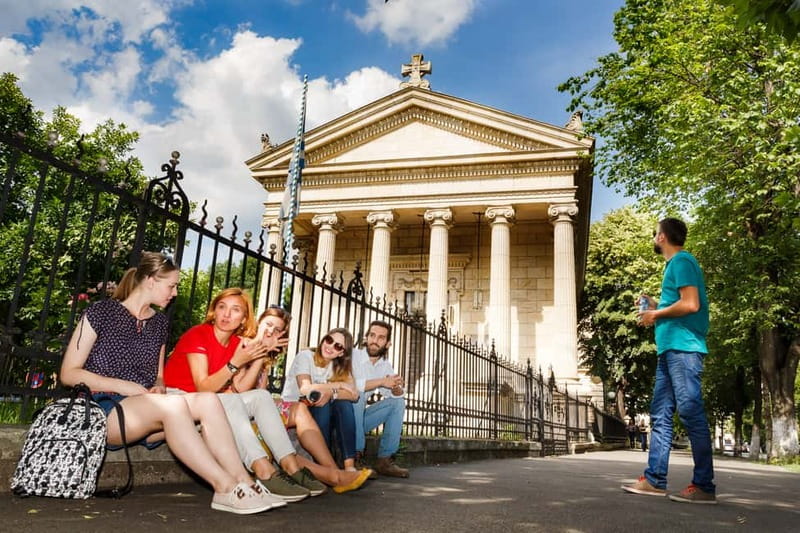
The tour kicks off with a walk toward Batistei, one of Bucharest’s well-known mahala neighborhoods. Here’s the key idea the guide shares: mahalas often formed around religious buildings and gathered people by shared identity—ethnic, social, or religious groups. Then Bucharest went through modernization, earthquakes, wars, and Nicolae Ceaușescu-era demolition projects, which reshaped entire areas.
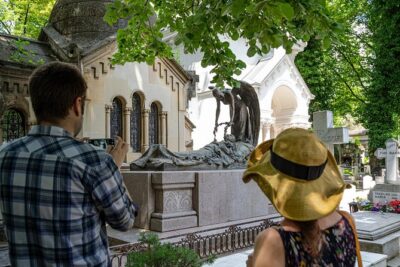
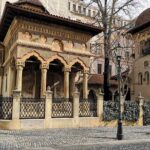
In Batistei, you’ll see an 18th-century stone church, listed as a historic monument by Romania’s Ministry of Culture and Religious Affairs. The stop isn’t just about admiring the building. You’re meant to imagine daily life here before the Communist regime’s changes. That framing changes how you look at the streets nearby. Even if you’re not religious, you start noticing how much community architecture holds.
One more thing I liked: this section sets the tone for the rest of the walk. Your guide treats the neighborhood like a storybook—slow enough to follow, detailed enough to stick.
You can also read our reviews of more walking tours in Bucharest


Armenian Bucharest and an Orthodox Church Replica in Ecmiazin
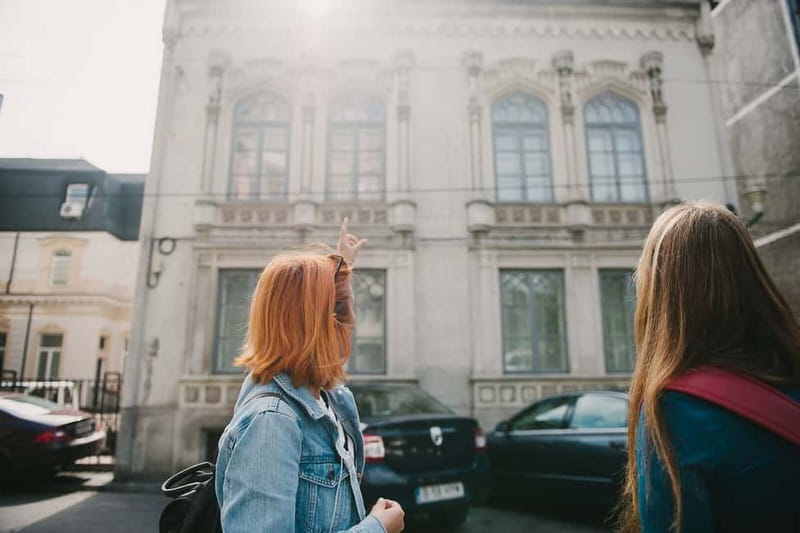
After Batistei, the route turns toward the Armenian neighborhood, where you’ll visit an Orthodox church built in the early 20th century for the city’s then-growing Armenian population. This is one of those stops that feels “specific” in the best way, because you’re given a concrete design connection: the church is described as an exact replica of a cathedral in the Armenian city of Ecmiazin.
That detail matters for two reasons. First, it shows how communities transplanted their identities—even their sacred architecture—into Bucharest. Second, it gives you a clear comparison point: this isn’t just “a church,” it’s a building with a deliberate link across borders and time.
The tour’s approach works well here. You’re not rushing through five sites; you’re building a mental map of why each neighborhood looks the way it does.
Casa Melik: Bucharest’s Oldest Home and Its Real-World Details
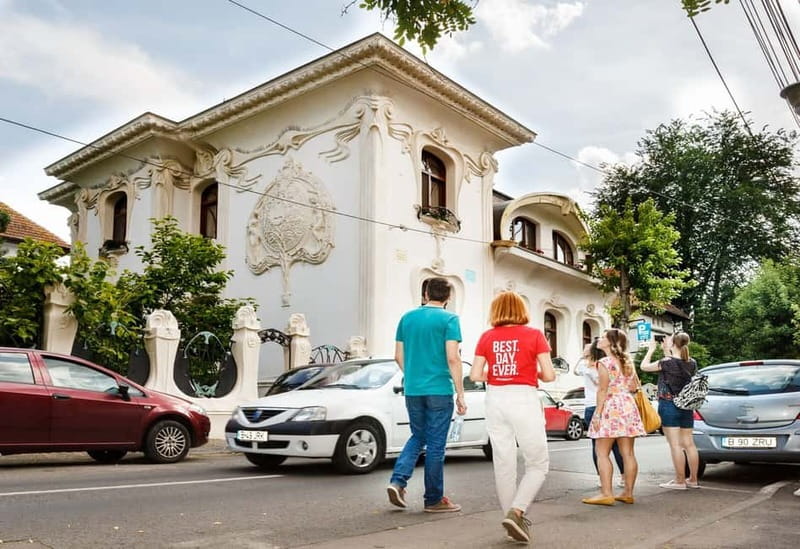
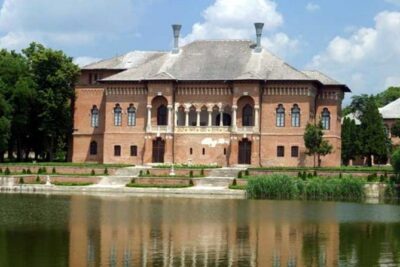
Then you’ll reach Casa Melik, described as the city’s oldest home. This is a different kind of stop: less about street scenery, more about domestic architecture and secrets.
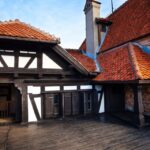
You’re shown a traditional Wallachian peasant house style, including a high cellar and a glass-covered veranda. Those features are the type of thing you’d never notice quickly on your own, because they don’t always jump out from the street. But once you understand the house layout, it makes more sense why the area felt lived-in and practical rather than “historic for show.”
The story layer is where the guide makes it fun. Casa Melik is said to hide a mass of secrets, including a striking art collection. There’s also a legend about underground tunnels connecting the house with local masonic lodges. Whether you treat that as literal or purely folklore, the effect is the same: Bucharest stops feeling like a set of buildings and starts feeling like a place with hidden chapters.
If you like architecture that has human scale—cellars, verandas, spaces designed for how people actually lived—you’ll probably feel your attention sharpen during this segment.
The Covrig Stop: A Romanian Street Snack With a History Angle
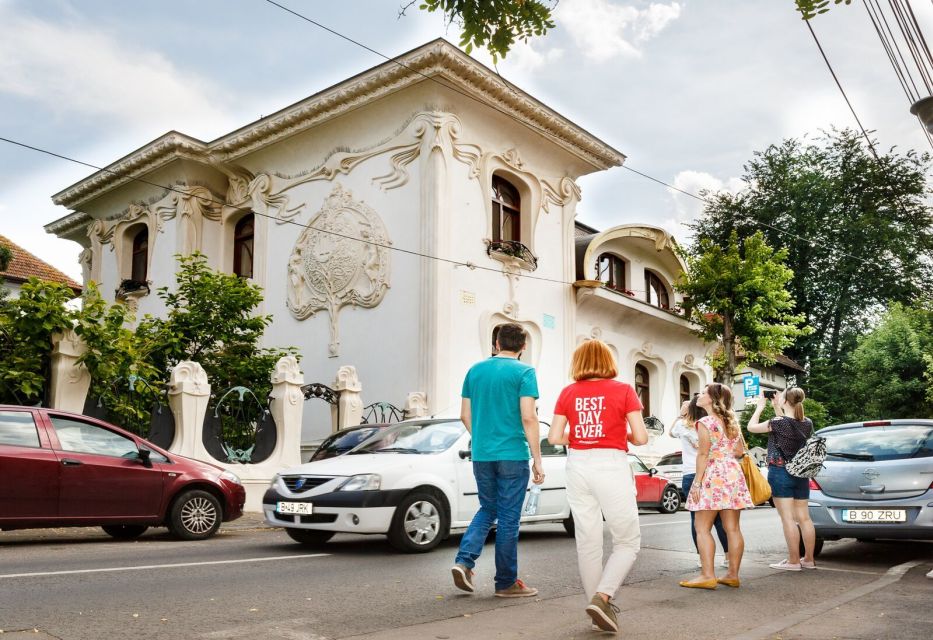
At snack time, you get an included covrig—one of Romania’s favorite street food snacks. It’s described as a salty snack similar to a pretzel, which makes it easy to recognize and easy to eat while still walking.
The interesting part is the story. One theory says Greek merchants introduced covrig in the 19th century to encourage increased wine consumption. But the fact that it resembles German pretzels suggests Romanians may have eaten versions long before that. You get to see how food histories often overlap instead of lining up neatly.
Practical note: only the covrig is included. Additional food and drinks aren’t part of the tour. If you’re traveling with a big appetite, plan a post-walk meal in the same area or ask your guide for recommendations at the end.
Also, this is the kind of stop that keeps the tour’s energy up. It breaks the walking rhythm without turning the morning into a long restaurant detour.
Mantuleasa Street and Mircea Eliade’s Bucharest Favorite Walk
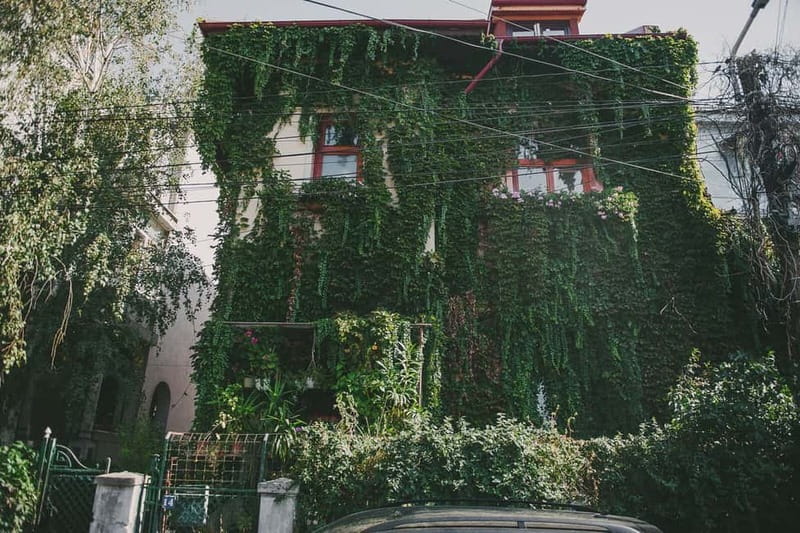
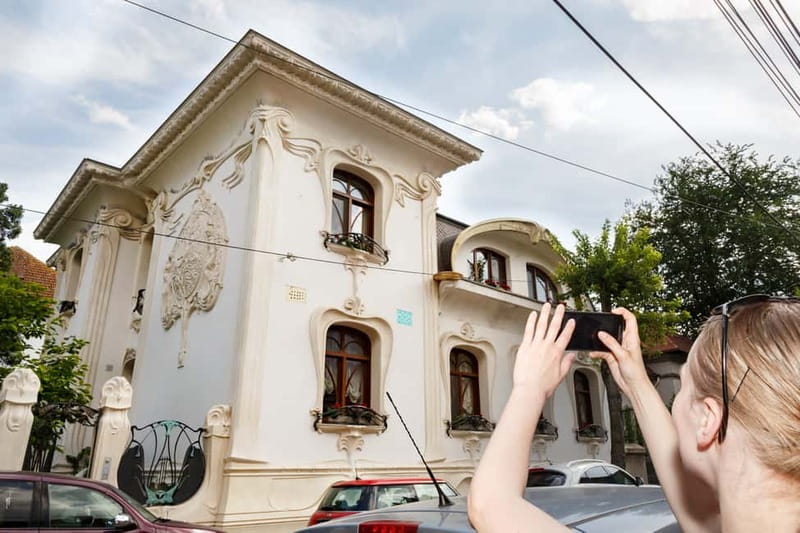
Next comes Mantuleasa Street, described as one of Bucharest’s prettiest areas. It used to be a mahala for rich merchants, which shows in the mix of architectural styles you’ll notice: neoclassical, Romanian, and modernist touches all layered together.
This part of the walk also includes a cultural thread tied to Mircea Eliade. The guide explains that Eliade’s favorite part of the city was here, and you’ll hear about his life and work as well. He’s presented as Romania’s most revered writer and philosopher, and the tour notes he was a professor at the University of Chicago until his death in 1986.
That detail—his U.S. connection—helps the story land even if you don’t already know his work. You start thinking of Bucharest not as a closed-off capital, but as a city that produced ideas that traveled.




Ioanid Block and Icoanei Mahalla: Finishing With Beauty and Context
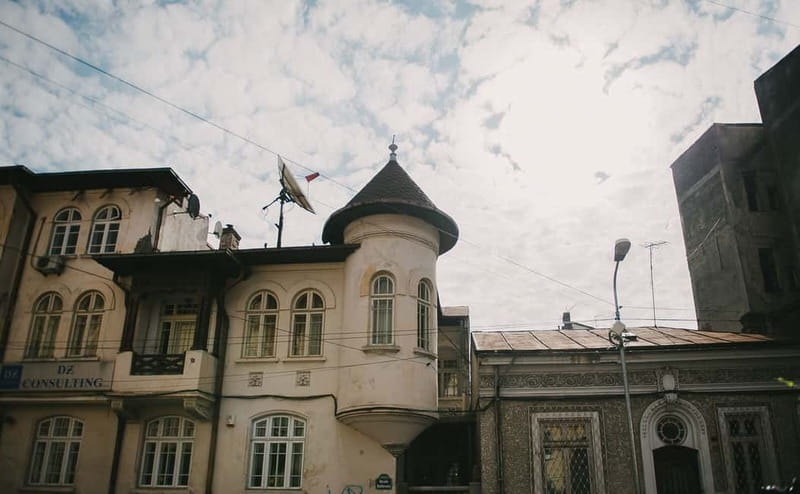
Your tour ends with a visit to the Ioanid block and the surrounding Icoanei mahalla area. The description is straightforward and positive: it’s presented as breathtakingly beautiful. The practical value here is that the finish keeps your walk anchored in visual reward, not just paperwork and names.
More importantly, the end ties together the tour’s big theme: Bucharest’s identity comes from neighborhood evolution. You’ve seen churches built for specific communities, an old home shaped by traditional living, and a street where architecture reflects wealth and changing tastes. By the time you reach Ioanid block and Icoanei mahalla, it feels like the city’s layers click into place.
You’ll return to the National Theatre meeting point, so it’s a good time to transition into a longer, self-guided wander. If you want to keep going, you can use your guide’s guidance for where to eat and drink next—your guide’s job doesn’t stop when the walking does.
Guides Make or Break It: Elena, Andrei, and Livia’s Style
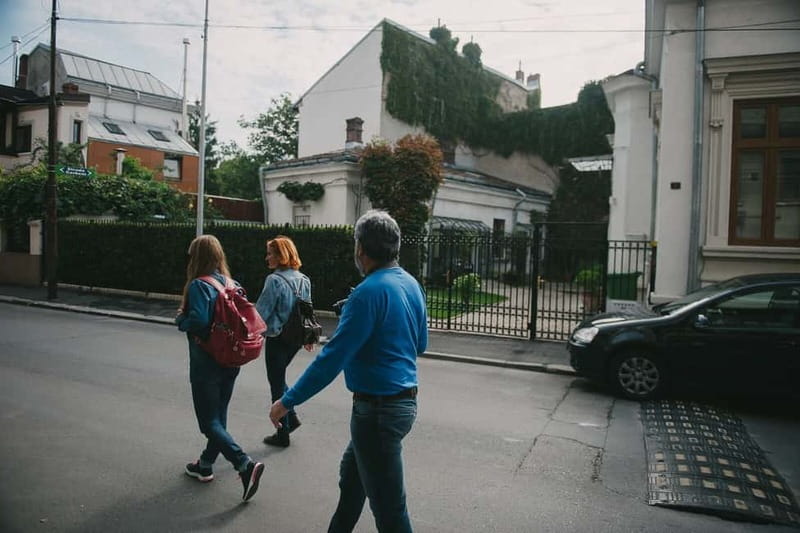
The strongest parts of this experience aren’t just the sites. They’re the people walking you through them.
Elena gets called out for being very informative and fun, with enthusiasm that made the places feel new even when the city itself looks familiar from a distance. Andrei is praised for caring attention and a warm start—one review notes he greeted the group with freshly baked bagels and a bottle of drinking water—and then for giving clear, practical directions about where to go at the end.
Livia is also mentioned as friendly and enthusiastic, with strong English and even a thoughtful extra step after the tour: an email with links to videos and pictures referenced during the walk.
That kind of guidance is exactly what you want from a walking tour. It turns history into something you can remember, and it helps you spend the rest of your day in Bucharest more confidently.
Price and Value: Is $45 Worth a 3-Hour Walk?
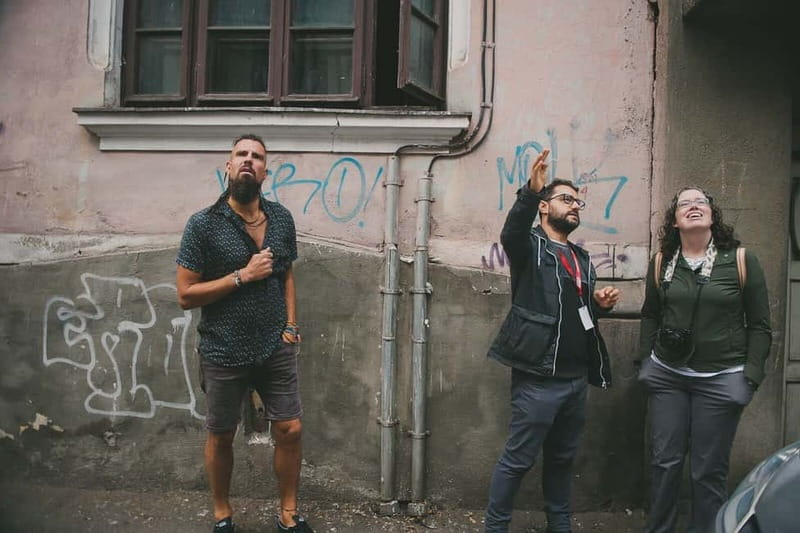
At $45 per person for about 3 hours, you’re paying for three things: a local English-speaking guide, a curated route across neighborhoods, and the included covrig snack.
Compared to bigger, ticket-heavy activities, this is often a smart value if you’re early in your trip and you want context fast. You’re not just passing by sights—you’re getting an explanation of why Batistei exists, what the Armenian church replica represents, and how Casa Melik’s details connect to Wallachian home design.
Could it feel pricey if you’re picky about walking? Yes. You should enjoy outdoor city time and you should like stories that build understanding. But if you want a guided framework for Bucharest’s neighborhoods, this price-to-time ratio works well, especially in a small group of 12.
Who This Tour Suits Best (and Who Might Prefer Something Else)
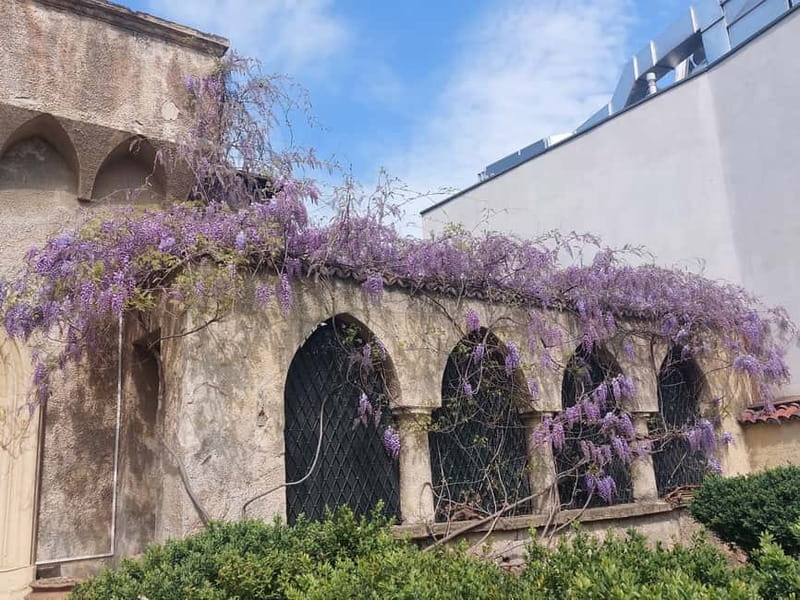
This is a strong pick if you:
- want a first-day orientation without piling into a museum schedule
- enjoy neighborhood history, churches, architecture, and “why this place exists” stories
- like small group walking with time to ask questions
- don’t mind an outdoor route and can handle sun
It might be less ideal if you:
- want a long indoor experience or lots of ticketed attractions
- dislike walking for three hours, even at a gentle pace
- are only looking for photo highlights and already know this city deeply
Should You Book This Bucharest Walking Tour?
I think you should book it if you want Bucharest to make sense quickly. The route connects major neighborhood ideas—mahalas forming around churches, communities shaping architecture, and families living through political and urban change—without turning the day into an exhausting sprint.
The biggest plus is the balance. You get religious heritage, traditional domestic architecture, literary culture tied to Mircea Eliade, and a snack stop that’s included and explained. If you’re traveling with kids, it’s also explicitly child-friendly: ages 6 to 11 can join at the listed child rate, and children under 6 can join free if you inform the operator when booking.
If you’re in a hurry and want a purely “see everything” day, you may feel like you’re moving slowly. But if you want to understand what you’re seeing—and to leave with a map in your head—this tour is a solid, practical choice.
FAQ
Where do I meet for the tour?
Meet on the stairs of the National Theatre, in front of the main entrance.
How long is the tour?
The tour is listed as about 3 hours.
Is the tour offered in English?
Yes. The tour includes a live English-speaking guide.
What’s included in the price?
The guide is included, and you also get one included covrig street snack. Additional food and drinks are not included.
How big is the group?
It’s a small group with a maximum of 12 people.
Can children join?
Yes. Children ages 6 to 11 can join at the child rate. Children under 6 can join free of charge, as long as you inform at booking.
What should I bring?
Bring comfortable shoes, sunscreen, and something to cover your head, since the sun can be intense in summer.
Does it have free cancellation or flexible booking?
Free cancellation is available up to 24 hours in advance for a full refund, and you can reserve now and pay later to keep plans flexible.