REVIEW · BUCHAREST
Bucharest: Guided Walking Tour with Romanian Snack
Book on GetYourGuide →Operated by MARA’S TOURS & TRAVEL · Bookable on GetYourGuide
Bucharest is better when someone points things out. This small-group 3-hour walking tour gives you a guided, inside look at central Bucharest—over 500 years of Romanian history—and you finish with time to talk politics and modern change, plus 1 famous Romanian snack.
I especially like the start at Unirii Square, where the view of the colossal Palace of the Parliament sets the tone fast, and the guide frames what you’re seeing instead of just listing landmarks.
I also like how the route jumps through eras in a way that’s easy to follow: religious landmarks like St. Anthony’s Church, classic downtown scenes, and then the “Little Paris” look on Calea Victoriei. One thing to consider: it’s a real walking tour. If you’re hoping for lots of museum-style time or long indoor stops, plan to add extra time—because the Romanian Athenaeum entrance is optional.
In This Review
- Key highlights to watch for
- Start at One Sip Cafe, Then Let Unirii Square Do the Talking
- Palace of the Parliament From Unirii Square: Big Building, Clear Context
- St. Anthony’s Church and the Royal Court Ruins: Where Old Bucharest Still Breathes
- Into Old Town Bucharest: From Medieval Core to Today’s Downtown
- A Quick Break at Cărturești Carusel (Then Back to the Story)
- Calea Victoriei and the Little Paris Moment You’ll Want to See
- Revolution Square to Carol I: Politics Explained Without the Lecture Tone
- End at the Romanian Athenaeum: Optional Ticket, Good Photo Opportunity
- What the Small Group Size Actually Does for You
- Price and Value: $45 for a Guided Timeline Through Central Bucharest
- Should You Book This Bucharest Walk?
- FAQ
- Where does the tour meet?
- How long is the walking tour?
- What’s included in the price?
- What group size is it?
- Does the tour include the Romanian Athenaeum entrance?
- What languages is the tour offered in?
- Is free cancellation available?
- Is there a reserve now, pay later option?
Key highlights to watch for
- Unirii Square Palace views: a big-history opening that snaps the city into focus
- St. Anthony’s Church stop: built into the route because it’s the oldest church in the city
- Monastery + Old Town layering: you see how Bucharest shifted from older cores into today’s center
- Calea Victoriei’s French-style stretch: the guide connects architecture to the nickname Little Paris
- Revolution Square discussion time: you get context for what Communist rule meant and what changed after 1989
Start at One Sip Cafe, Then Let Unirii Square Do the Talking
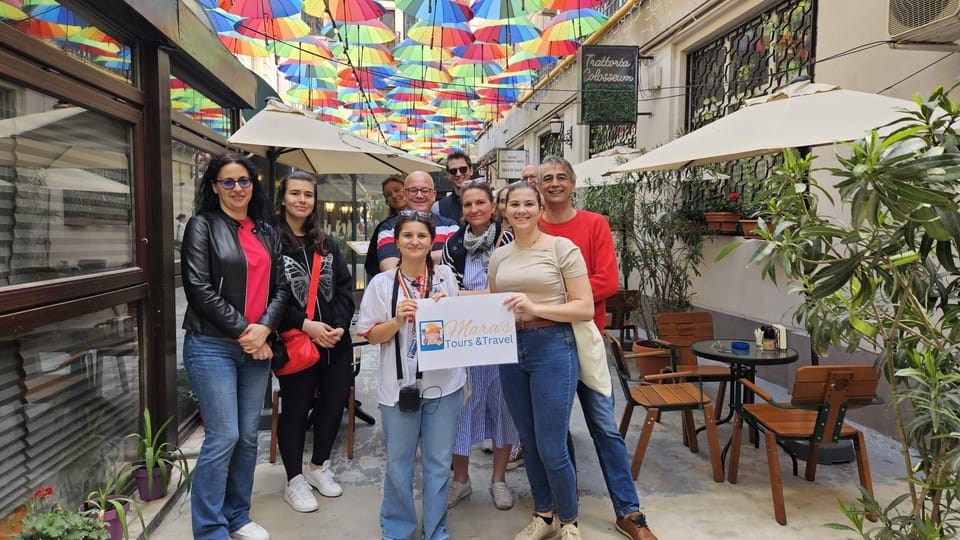
Your tour meets in front of One Sip cafe on Unirii Boulevard. If you’re using public transport, the closest metro station is Piata Unirii, and that matters because it makes the meeting point easy to reach without stress.
Once you’re grouped up (it’s limited to 10 participants), the guide sets expectations quickly: you’re walking through central Bucharest with stops that cover the city’s major eras. It’s not just “look at this building,” either. The best part is that the guide explains what you’re looking at—how one period’s choices still show up in the next.
Then you get the first real payoff: a guided look at Piața Unirii, timed so you can take in the surroundings and get oriented before you move. It’s a smart order. If you’ve ever wandered a city center with no narrative, you know how easy it is to feel lost. This one starts with the biggest, most memorable anchor.
You can also read our reviews of more walking tours in Bucharest


Palace of the Parliament From Unirii Square: Big Building, Clear Context
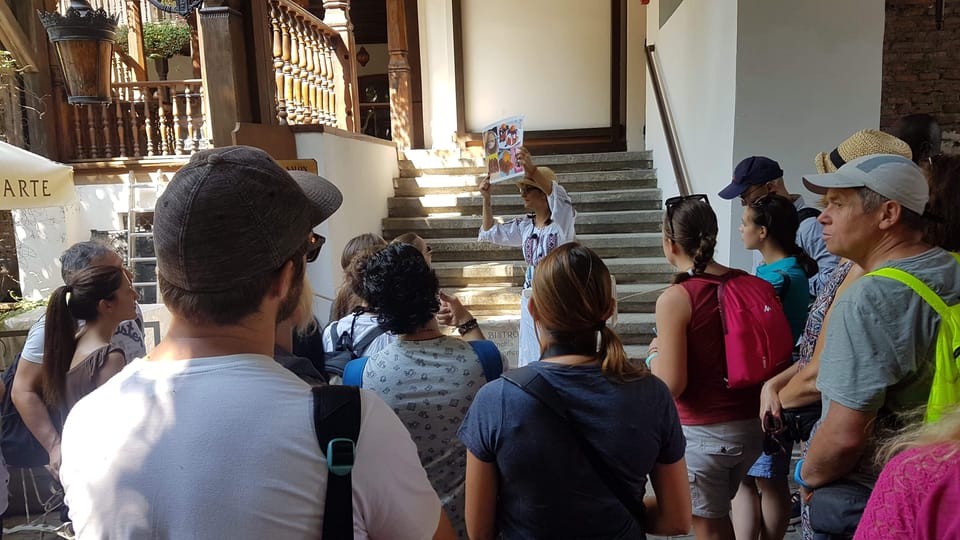
Right at the start, the view from Piața Unirii is all about scale: the Palace of the Parliament, described as the second-largest building in the world. Even if you’ve seen photos, it lands differently in person—because the setting is so central that it feels woven into daily life, not parked off in some distant landmark zone.
What I like here is that the guide doesn’t stop at the wow factor. You get the kind of framing that helps you understand why that building is such a political and cultural symbol, not just a large structure. That context matters because Bucharest’s later history—especially the post-1989 shift—becomes easier to follow once you’ve got this point in your head.
This is also a practical moment. You’ll be standing, looking, and listening before your route settles into walking. It’s a good way to pace your energy early, especially if you’re arriving from a long travel day.
St. Anthony’s Church and the Royal Court Ruins: Where Old Bucharest Still Breathes
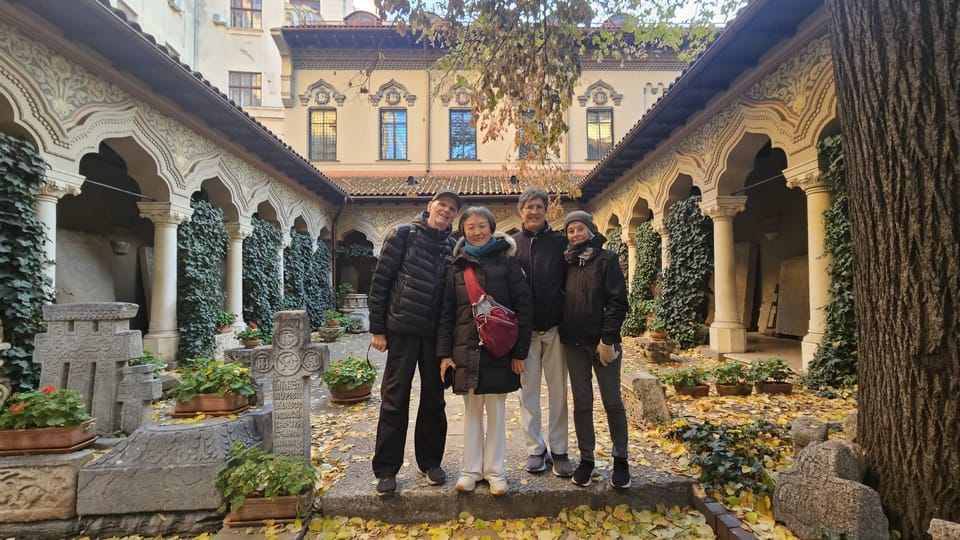
After Unirii Square, the tour moves to Hanu’ lui Manuc for a short guided stop, then continues to Biserica Sfantul Anton (St. Anthony’s Church). This one is built into the route for a clear reason: it’s described as the oldest church in the city. That kind of fact turns the visit from scenic to meaningful.
You’ll also pass the ruins of the former Royal Court. That’s one of those elements that’s easy to miss if you’re walking on your own, because it doesn’t always announce itself in a flashy way. With a guide, you understand why it’s there and what it signals about how power and city life used to be arranged.
One small “pro” tip from the way this tour is paced: your guide uses the walk to connect the dots between places. You’re not bouncing randomly between centuries. You’re moving forward in time, and the guide makes the transitions make sense, so the city feels like one story instead of a checklist.
Into Old Town Bucharest: From Medieval Core to Today’s Downtown
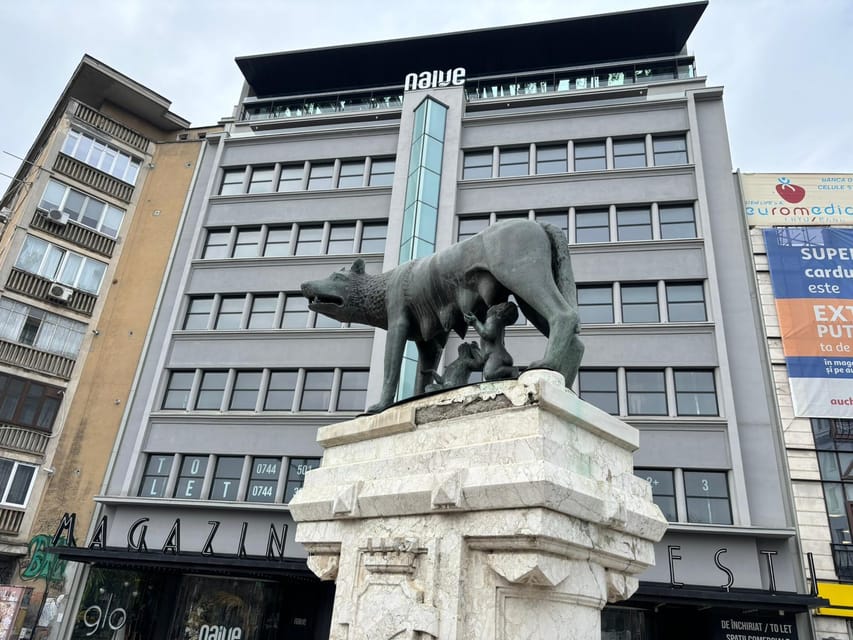
Next, you head into Old Town, Bucharest—the medieval core that’s now part of the city’s busy downtown. The guided component here is the key value. A lot of old-town streets look “charming” in photos. On the ground, what makes it click is understanding what changed as the city evolved.
I like how the route doesn’t treat Old Town as a frozen exhibit. You’re walking among the everyday energy of central Bucharest while still getting the history layer explained. That gives you a more realistic feel for what it’s actually like to live here—what survives, what was replaced, and how the city keeps reinventing its center.
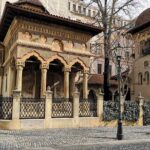
You’ll also make a stop at Stavropoleos Monastery—a proper visit rather than a quick pass. Monasteries can be passive when you’re sightseeing alone. With a guide, you tend to notice details better and take in the atmosphere with more meaning, not just photos.
A Quick Break at Cărturești Carusel (Then Back to the Story)
The route includes Cărturești Carusel for a short guided stop. This is the kind of place that works well mid-tour: you get a change of pace without losing momentum.
I see stops like this as more than a “rest.” They reset your eyes. After the older landmarks and monastery visit, a quirky, local-feeling stop helps you transition into the next part of the story—especially the architecture-heavy segment that’s coming.
If you’re the type who likes to browse as you walk, you’ll probably enjoy this moment. Even if you don’t go deep into anything, it gives you a clean photo moment and a mental breath.
You can also read our reviews of more guided tours in Bucharest


Calea Victoriei and the Little Paris Moment You’ll Want to See

Then comes one of the most memorable segments: Calea Victoriei. The guide focuses on the French-style buildings along the street—and ties it to why Bucharest was once known as Little Paris.
This is one of those times when the guide’s job really matters. If you just walk the street, you might recognize the “European vibe.” With context, you start to understand it as a deliberate period influence—how city identity gets shaped by style, money, and aspiration.
You’ll also have a guided look long enough to absorb more than one façade. And that matters, because Calea Victoriei’s impact isn’t one single view—it’s the whole corridor effect.
If you want a quick mental exercise: look for the repeating features. The guide’s commentary helps you see what designers wanted to project, and why those choices became part of Bucharest’s visual language.
Revolution Square to Carol I: Politics Explained Without the Lecture Tone
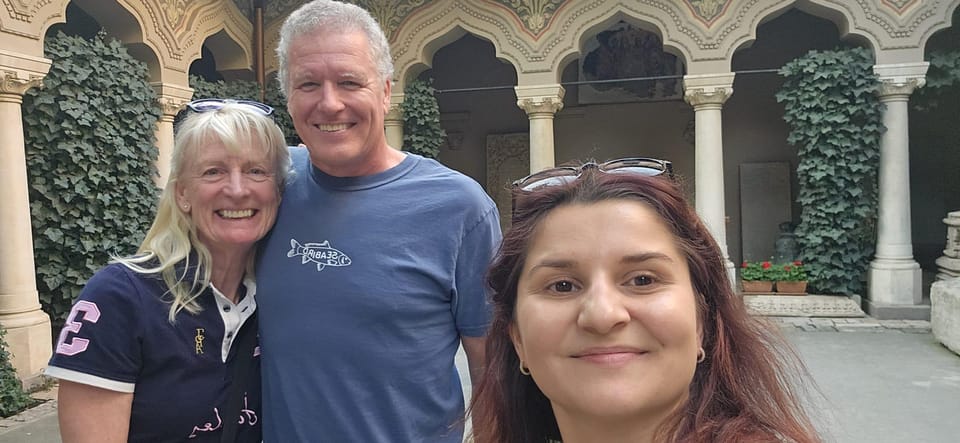
The tour ends at Revolution Square, with guided time there so you can talk with your guide about what Communist rule meant for Romania and Bucharest—and how the country changed after the 1989 revolution.
This section is often the emotional core of the walk, because you’re no longer just looking at buildings. You’re connecting the city’s physical layout and major symbols to real political change. The best guides keep it readable—clear enough to understand quickly, but not watered down.
You’ll also stop at the Equestrian Statue of Carol I before finishing near the end point. It’s a useful checkpoint. It adds another layer to the “who shaped Romania” theme, and it keeps the tour from becoming purely focused on the 20th century.
One reason this part lands well is pacing. You don’t go from “pretty architecture” straight to “big politics” without setup. The route has already trained your eyes to see Bucharest as a timeline.
End at the Romanian Athenaeum: Optional Ticket, Good Photo Opportunity
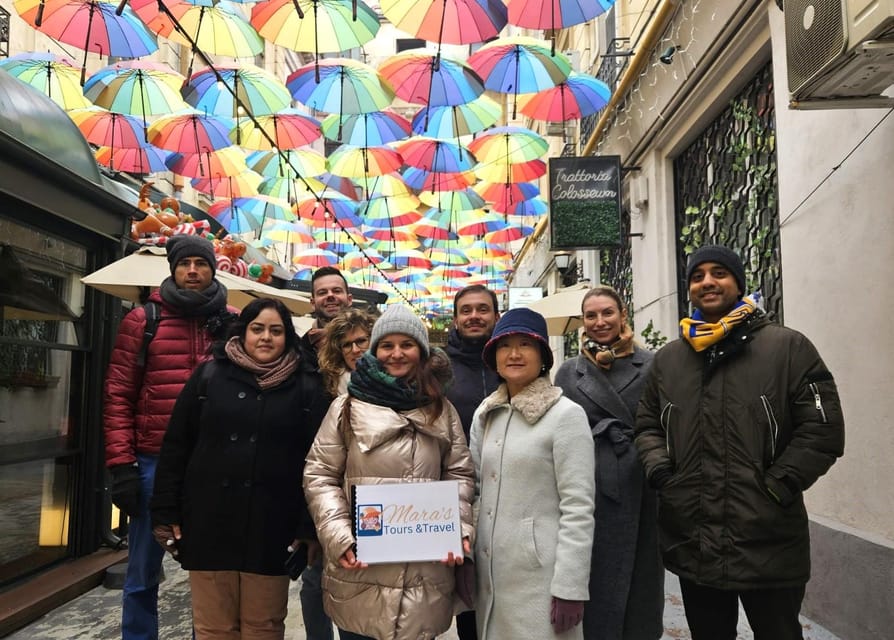
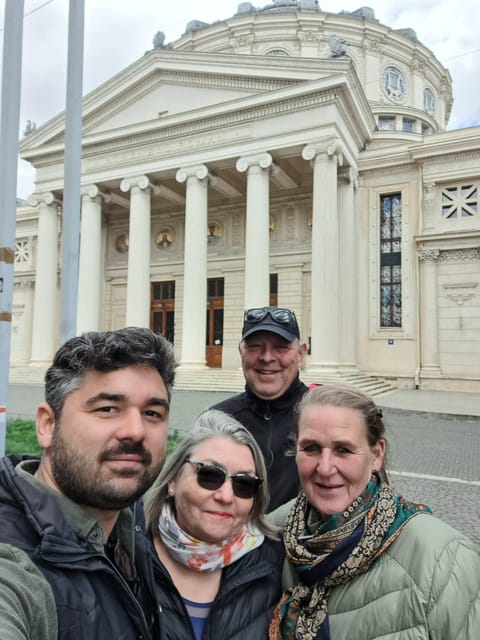
The walk finishes at the Romanian Athenaeum. There’s an optional entrance available for 15 lei (about 3 EUR), and it’s cash only. If you want to add the indoor experience, bring the cash ahead of time so you’re not hunting for an ATM at the end of your walk.
Even if you skip the entrance, you’ll likely still appreciate this finish. It functions like a “last page” moment: a cultural landmark that helps tie the tour together. Bucharest isn’t only government buildings and old cores. It also shows its identity through arts and public life.
If you’re trying to plan your day, I’d treat the Athenaeum as your flexible choice:
- If you’re tired, enjoy the exterior and save your energy.
- If you’re still curious, pay for entrance and stay longer.
What the Small Group Size Actually Does for You
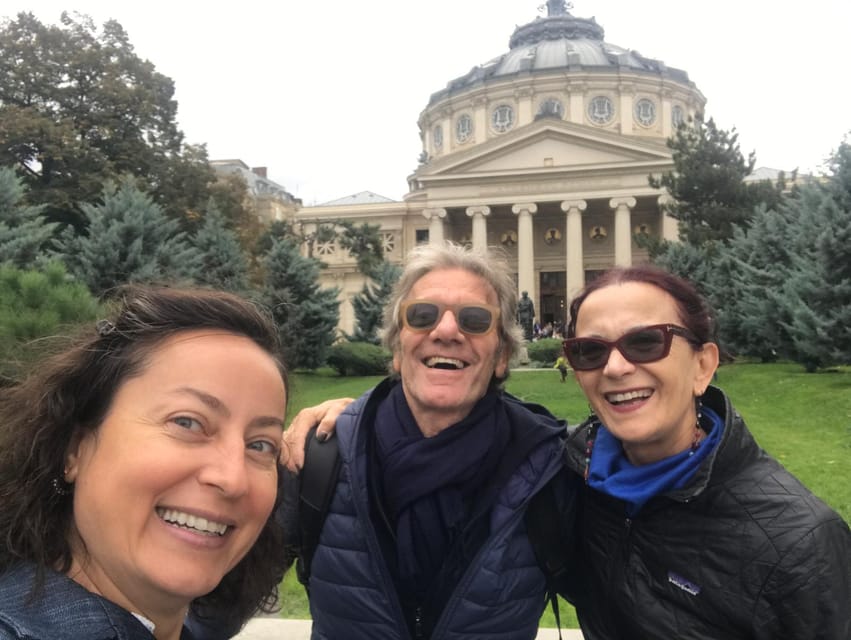
This tour caps at 10 participants, and that’s more than a number. It changes the whole experience quality. You can ask questions without feeling like you’re shouting into a crowd, and the guide can steer the pace.
It also means the walk tends to feel personal. In the real world, that’s when you get better answers—especially for the parts that are political and nuanced, like the discussion at Revolution Square.
Also, pay attention to timing. The tour runs for 3 hours, and starting later in the day can help you avoid some of the worst heat. If your schedule allows it, choose a time slot that feels comfortable for walking.
Price and Value: $45 for a Guided Timeline Through Central Bucharest
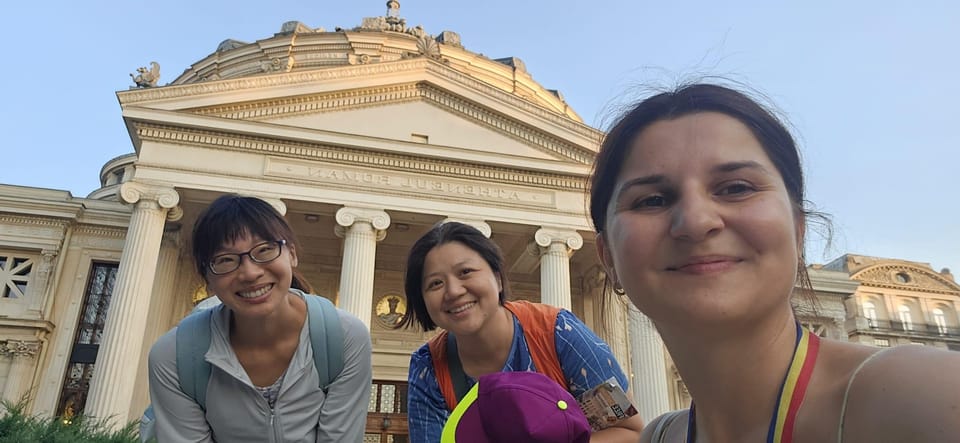
At $45 per person, this tour sits in the mid-range for Bucharest walking tours, but the value comes from how it packages three things: a local guide, major sights, and one Romanian snack.
Here’s why that matters. In a city like Bucharest, seeing the big landmarks without context can feel flat. This tour gives you a guided thread through churches, architecture, and political change. And it does it in a short window, so you don’t spend your limited time bouncing between scattered attractions.
The snack inclusion is also a practical win. It’s easy to underestimate how helpful it is to have a planned bite during a 3-hour walk. It keeps the tour from turning into a “we’ll eat later” situation.
So, if you want a fast orientation shot—plus actual understanding—this price is reasonable.
Should You Book This Bucharest Walk?
Book it if you:
- Want a guided overview of central Bucharest in just 3 hours
- Like history that connects buildings to events, especially the shift from Communist rule to the post-1989 era
- Appreciate a small group where questions are welcome and the pace doesn’t feel rushed
- Want your day to include one Romanian snack without planning it yourself
Skip it (or plan extra time) if you:
- Prefer slow, museum-heavy days over walking and storytelling
- Want guaranteed long indoor time, since the Athenaeum entrance is optional
If you’re visiting Bucharest for the first time, I’d treat this as a smart early step. It helps you see the city’s “why” before you start picking where to wander next.
FAQ
Where does the tour meet?
Meet your guide in front of One Sip cafe at the Unirii Boulevard. The closest metro station is Piata Unirii.
How long is the walking tour?
The duration is 3 hours.
What’s included in the price?
You get an English speaking guide and 1 famous Romanian snack.
What group size is it?
It’s a small group limited to 10 participants.
Does the tour include the Romanian Athenaeum entrance?
Entrance to the Romanian Athenaeum is optional. It costs 15 lei (3 EUR) and is cash only.
What languages is the tour offered in?
The live tour guide runs in English (also listed for Italian).
Is free cancellation available?
Yes. You can cancel up to 24 hours in advance for a full refund.
Is there a reserve now, pay later option?
Yes. You can reserve now and pay later to keep plans flexible.