REVIEW · BUCHAREST
Bucharest Highlights Walking Tour
Book on Viator →Operated by Bike the City · Bookable on Viator
This walk turns Bucharest into a story map. I love the fast orientation you get in about 2.5 hours, and I also love the way a local guide connects buildings to the city’s big turns in history. The one real gotcha: if you go in winter, plan for cold standing time.
For the price of $21.77, you’re paying for guided interpretation, not just sightseeing. You’ll hit major landmarks and a few older, more character-filled spots too, with a small group capped at 25 and a mobile ticket for an easier start.
In This Review
- Key Things I Found Most Useful
- Price and Time: What $21.77 Actually Buys You
- Starting at Piaţa Sfântul Anton: Easy Meet-Up, Clear Direction
- Manuc’s Inn: Bucharest’s Oldest Building Feeling Like a Time Machine
- Hanul Gabroveni: How Caravan-Serais Explained Trading
- BNR Palace and the Financial District: A Century of Banking in One Area
- Stavropoleos Monastery: Orthodox Heritage You Can See in the Details
- Palatul CEC: Old Architecture and the Surprise About “Old” Buildings
- Macca Villacrosse Passage: Where Finances Meet Shopping Streets
- Palatul Regal / Royal Palace: From Monarchy to Communism to Democracy
- Sala Palatului: Stalin-Era Style Without Needing a Lecture
- Cismigiu Park: The City’s Oldest Park Break
- Palace of Parliament Finish: Big Scale, Big Reality
- How the Guides Make It Worth It (Dan, Alex, Ed, Andrei, Lucia, Eduard)
- What’s Included vs. Not Included: Don’t Get Surprised
- Weather and Comfort: One Practical Reminder Before You Go
- Who This Tour Is Best For
- Should You Book This Bucharest Highlights Walking Tour?
Key Things I Found Most Useful
- A tight 2.5-hour loop: Great when you have limited time but still want a “what am I looking at?” answer.
- Architecture-first storytelling: Old inns, religious buildings, passages, and state monuments all get explained in context.
- English guidance that stays interactive: From jokes to question time, the tour is set up to keep you engaged.
- Many stops with free entry: Several highlights are free to see, with only a few exceptions.
- Finish near the Parliament area: You end where it’s easiest to continue exploring on your own.
Price and Time: What $21.77 Actually Buys You
Let’s be practical. A walk tour at $21.77 for roughly 2 hours 30 minutes is good value in cities where self-guided wandering can leave you scratching your head. Here, the price is mainly paying for interpretation: a guide helps you read the city’s layers instead of just passing by them.
This is also booked fairly often in advance, and it runs for a group size up to 25. That matters because big groups can feel like you’re being herded. With a smaller cap, you’re more likely to get real conversation and time to ask questions.
You can also read our reviews of more walking tours in Bucharest

Starting at Piaţa Sfântul Anton: Easy Meet-Up, Clear Direction
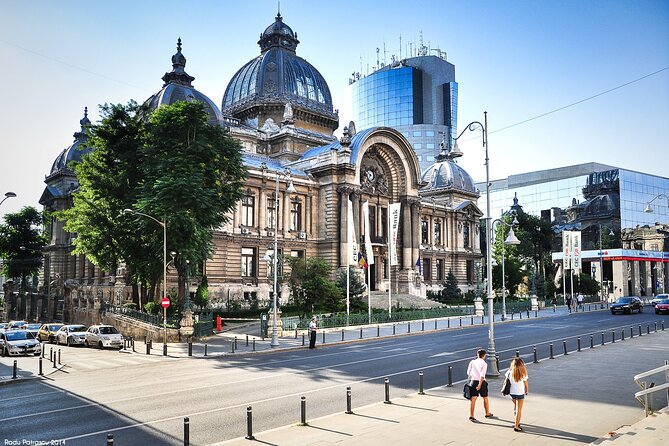
You’ll start at Piaţa Sfântul Anton 64 in central Bucharest. The meeting point is easy to reach using public transport, and the tour ends near Piaţa Constituției, with the walk finishing in front of the Palace of Parliament.
I like tours that start with enough structure that you don’t waste your first hour figuring things out. In Bucharest, where neighborhoods and eras can feel like they “change gears,” that structure is a gift.
Manuc’s Inn: Bucharest’s Oldest Building Feeling Like a Time Machine
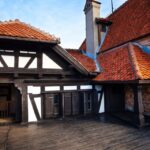
Your first stop is Manuc’s Inn (Hanul lui Manuc). This is where the tour begins to explain Bucharest’s beginnings through some of the oldest buildings in the city.
Why this stop works: an inn isn’t only about travel—it’s about commerce, migration, and everyday city life long before modern streets and storefronts. When you see a surviving old complex like this early, the rest of the walk makes more sense because you understand what kind of city you’re stepping into.
Hanul Gabroveni: How Caravan-Serais Explained Trading
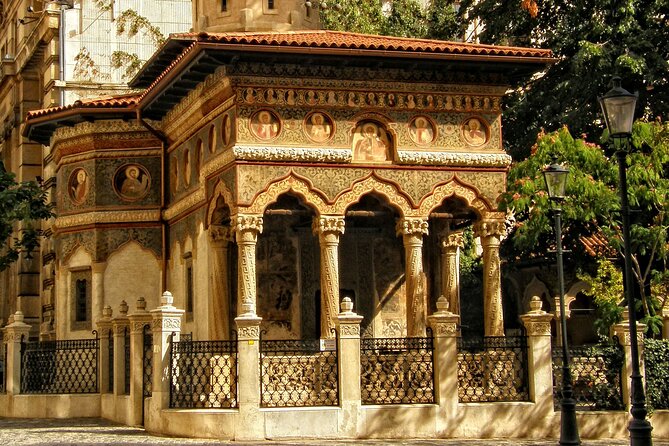
Next up is Hanul Gabroveni. Bucharest’s roots include a strong trading background, and the tour highlights the caravan-serai system—large inns built for merchants and travelers.
You get the idea quickly: where people stored goods and met business partners, cities grew. What’s interesting is the survival story. The old town once had many of these, but only a few remain today, and this is one of them. That’s why it’s worth paying attention even if you think you’re “just walking.”
BNR Palace and the Financial District: A Century of Banking in One Area
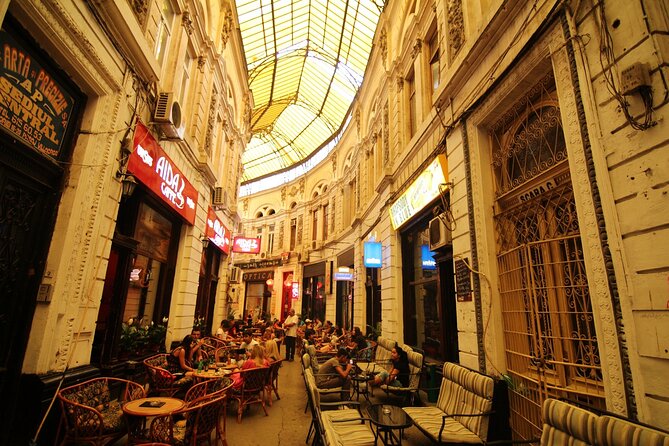
Then the walk shifts to the BNR Palace area. A century ago, this was Bucharest’s financial district, and you’ll be surrounded by institutions tied to banking and commerce—things like the National Bank and nearby historic financial buildings.
This stop is more than an exterior photo moment. You learn how political power and money power shaped the city’s plan. When you stand here, it’s easier to understand why later architecture choices (and later remakes) didn’t happen in a vacuum.

Stavropoleos Monastery: Orthodox Heritage You Can See in the Details
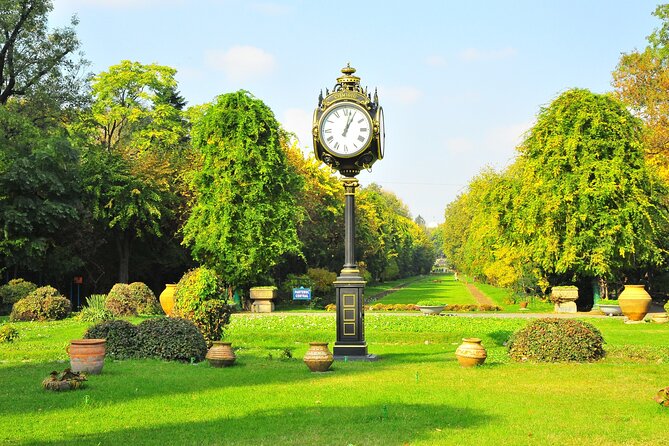
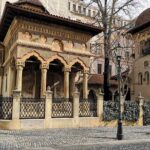
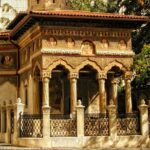
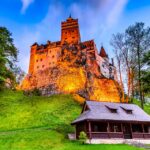
At Stavropoleos Monastery, you’ll slow down for a different kind of architecture. Bucharest is strongly shaped by Romanian Orthodox traditions, and this monastery is an iconic example of that heritage and style.
Why I like this moment in the route: religious buildings often preserve older ideas of proportion, ornament, and community importance. Even if your background is limited, the guide’s explanation helps you spot what makes it distinct rather than just calling it pretty.
Palatul CEC: Old Architecture and the Surprise About “Old” Buildings
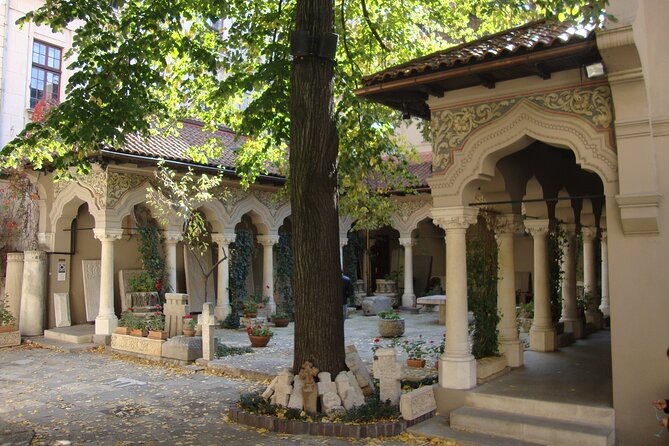
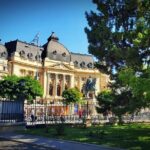
Another key stop is Palatul CEC. You’ll be in front of what’s considered some of the best old architecture in Bucharest, and the guide connects it to how the city was remodeled over about 600 years.
Here’s the takeaway I’d want you to carry into the rest of your trip: Bucharest can feel older than it is, but not always in the straightforward way you’d expect. The architecture tells part of the story, but so do the remakes and the way the city kept reinventing itself. That’s the value of a guide here—your eyes start working better.
Note: admission here is not included.
Macca Villacrosse Passage: Where Finances Meet Shopping Streets
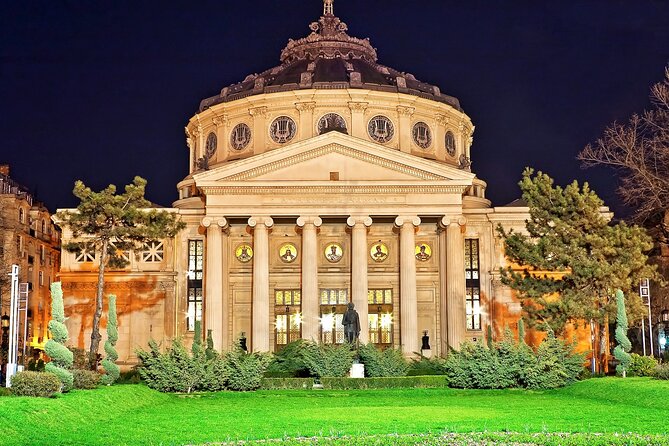
Then you’ll pass through the Macca Villacrosse Passage. This is still part of the financial district mindset—when money concentrates, people build spaces for spending too.
Passages like this tend to be underrated because they don’t scream like big monuments. But they teach you how Bucharest’s everyday life used to work: the city’s architecture didn’t only live on grand boulevards. It lived in corridors, storefront rhythms, and walk-through spaces.
Admission is free for this stop.
Palatul Regal / Royal Palace: From Monarchy to Communism to Democracy
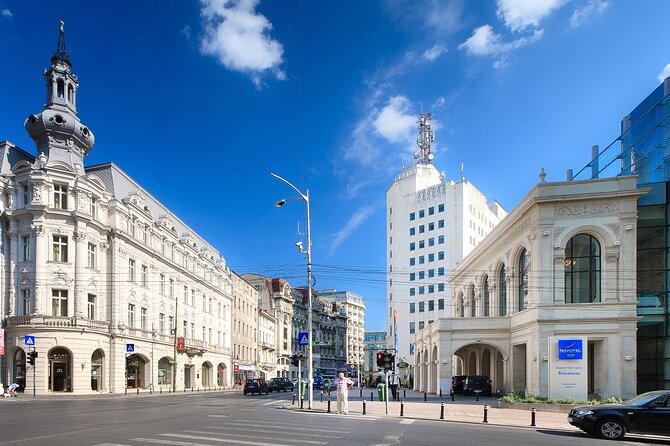
A big history pivot comes at Palatul Regal (Royal Palace). The guide frames it as a location tied to Romania’s modern transitions—monarchy, then communism, then democracy.
This stop is powerful if you care about cause-and-effect history. It shows how power changes leave marks on cities: the same space can become symbolic in different ways depending on who’s holding authority.
Admission here is not included.
Sala Palatului: Stalin-Era Style Without Needing a Lecture
Next is Sala Palatului. From an architectural perspective, the tour points to the strong “Stalin era” influence in the setting.
This is a good stop for first-timers because you don’t need deep design knowledge to get what’s going on. The guide helps you read the style as a message—scale, symmetry, and the feeling of officialdom.
Admission is free here.
Cismigiu Park: The City’s Oldest Park Break
After the heavier buildings, you’ll get to Cismigiu Parc, described as Bucharest’s oldest park. This is where the tour gives your legs and brain a reset.
Parks matter on walking tours because they’re part of how cities breathe. Even a short stop gives you context for Bucharest’s “in-between” space—where people would pause, meet, and recover from city life.
Admission is free.
Palace of Parliament Finish: Big Scale, Big Reality
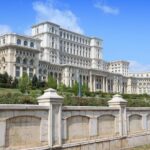
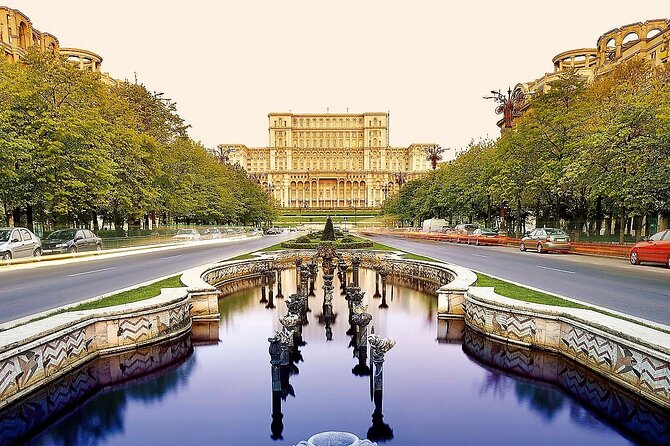
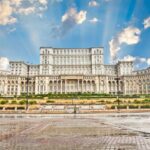
Finally, the walk heads to the Palace of Parliament, one of Bucharest’s most dominant sights. The tour explains it as the second-largest administrative building in the world after the Pentagon, and notes it’s heavier.
This ending is smart. You don’t want your final hour spent far away from where you’ll want to keep exploring. Finishing near the Palace of Parliament means you can either stay for views or connect to other parts of the city with less hassle.
Admission is not included for this stop.
How the Guides Make It Worth It (Dan, Alex, Ed, Andrei, Lucia, Eduard)
The biggest praise in the tour experience is the guide factor. Names that come up include Dan, Alex, Ed, Andrei, Lucia, and Eduard. Across these guides, the common thread is strong storytelling and comfort answering questions.
I’d expect the tour tone to be more than a monotone lecture. Many comments point to humor and frequent Q&A, plus the feeling that the guide keeps the group together without rushing. That’s exactly what you want on a walking tour—movement with control, not sprinting.
What’s Included vs. Not Included: Don’t Get Surprised
You get a local guide and a fun, informative walk that helps you make your first steps in Bucharest. The tour includes an orientation-focused route and uses a mobile ticket.
Not included: certain entrance fees and admissions. Based on the tour outline, Palatul CEC, Palatul Regal, and the Palace of Parliament have admission not included, so you’ll want to decide on the spot whether you want to pay for entry.
Everything else listed as free entry on the route means you can usually see the key exteriors and accessible interiors without extra costs.
Weather and Comfort: One Practical Reminder Before You Go
This experience depends on good weather. Bucharest can feel surprisingly cold in winter, and multiple guide comments suggest people often feel the chill during the standing portions. If you’re traveling in cooler months, dress for it—even if you think you can “tough it out.”
Who This Tour Is Best For
This walk is ideal if:
- You’re in Bucharest for a short time and want a clear overview.
- You like history told through buildings, not through dates only.
- You want an easy way to map the city and plan what to do next.
- You enjoy architecture, Orthodox monuments, and big state landmarks.
It’s also a strong choice for first-time visitors because the route touches major themes: trade origins, religion, finance, monarchic-to-modern transitions, and the communist-era monumental look.
If you already know the city well and you want only deep specialty sites, you might find some stops more “intro level.” But as a foundation walk, it’s built for you.
Should You Book This Bucharest Highlights Walking Tour?
Yes—if you want your first Bucharest day to make sense fast. For $21.77 and about 2.5 hours, you get a structured route that mixes older urban remnants (like inns and caravan-serai remains) with major landmark architecture and a calm pause at Cismigiu Park.
I’d skip or reconsider if you hate walking in cold weather or if you’re only interested in paid, ticketed interiors. Since a few big attractions have admission not included, you’ll need to choose what you pay for.
If your goal is simple—learn what you’re looking at and leave with a better sense of Bucharest—this tour is a very solid first booking.