REVIEW · BUCHAREST
Bucharest Highlights Bike Tour
Book on Viator →Operated by Bike the City · Bookable on Viator
Bucharest history moves at bike speed. On this highlights-focused ride, you cover major stops tied to early, communist, and modern Bucharest, with fast, efficient touring that cuts down on tiring transfers. The trade-off: the route isn’t a quiet bike path the whole way, so you should be comfortable riding with cars and pedestrians around busy corners.
I like how the tour keeps things simple and practical: you meet at Strada Operetei 12 and return there, you get a helmet and bike, and the guide handles the story so you’re not flipping through a guidebook. You’ll hear the history explained in English, and guides such as Alex and Ed come up often for mixing facts with fun (and for answering questions on the spot).
In This Review
- Key highlights at a glance
- Why biking is the best way to see Bucharest’s layers
- Price and timing: what $33.86 gets you (and what to plan for)
- Getting set up at Strada Operetei 12 (and how the tour group feels)
- Stop by stop: how the “Bucharest highlights” route tells its story
- Bike The City: first impressions, the National Bank, and an old monastery
- Hanul Gabroveni: the old city photo gallery and “oriental” Bucharest
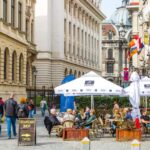
- Manuc’s Inn (Hanul lui Manuc): architecture plus Romanian food influences
- Catedrala Patriarhala: where the first Romanian Parliament enters the conversation
- Manastirea Antim: translated buildings and how structures change over time
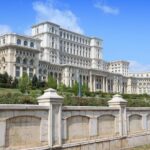
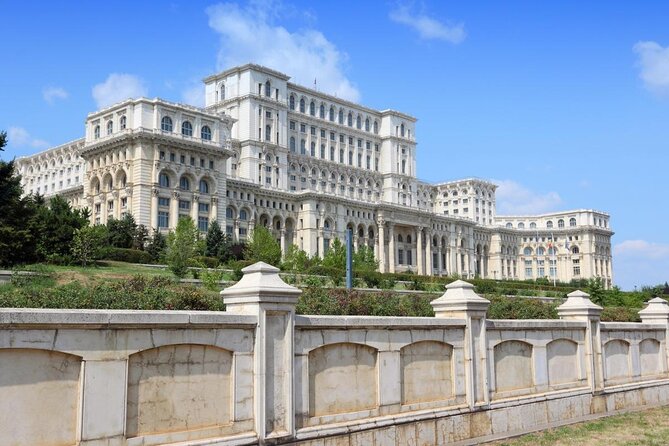
- Palace of Parliament: the last megalomaniac communist project
- Old boulevard moments and a first park reference
- Piaka Revolukiei: Ceaușescu’s last speech
- Guides make or break the history (and this one gets high marks)
- Safety and comfort: the realistic part of riding in Bucharest
- What you’ll like most (and when it won’t be the right fit)
- Should you book the Bucharest Highlights Bike Tour?
- FAQ
- How long is the Bucharest Highlights Bike Tour?
- What’s included in the price?
- Where do I meet the tour?
- Is food or hotel pickup included?
- Is the tour offered in English?
- Does the tour run in bad weather?
Key highlights at a glance
- Calea Victoriei views without the long walk
- Palace of Parliament and the communist city plan, told stop by stop
- Manuc’s Inn (Hanul lui Manuc) and how it connects to traditional food influences
- Revolution Square (Piaka Revolukiei) tied to Ceaușescu’s last speech
- Newer-feeling bikes with real safety gear like helmets, plus lights and bells
Why biking is the best way to see Bucharest’s layers
Bucharest can feel huge fast. The city jumps between time periods: grand boulevards and older neighborhoods sit next to the heavy mark of communist planning. Walking can work, but it forces you to pick and choose, then crisscross again later. This bike tour keeps you moving in a straight line of thinking—history, then a visible place, then the next place—without burning half your day repositioning.
What I especially like is that the tour is built around clear “era moments.” You start with early roots and key institutions, then you glide into the communist-era reshape of the city, and finally you close with the revolution-era stage-set that still defines how people talk about Bucharest. You’re not just seeing buildings; you’re seeing how those buildings are connected by a story.
If you’re the type who likes to understand what you’re looking at—why this street exists, why this square mattered, why that monument isn’t just decorative—this format helps a lot. The bike gets you between stops, and the guide keeps the timeline from getting jumbled.
You can also read our reviews of more cycling tours in Bucharest
Price and timing: what $33.86 gets you (and what to plan for)
At $33.86 per person for about 2 hours, this tour is priced for value over “big-ticket attractions.” You’re paying for the guide’s work and the convenience of covering a lot of ground quickly with a provided bike and helmet. It’s not a food tour, and it’s not a museum-ticket crawl. Think of it as an on-the-street history lesson with mobility.
Timing matters here. The schedule is listed as roughly 2 hours, but some guides and pacing can push it closer to 3 hours. Either way, you’ll still feel like you used your afternoon well. It starts at 3:00 pm and ends back at the meeting point, which makes it easy to plan dinner afterward without needing a new ride or hotel transfer.
One more practical note: the tour is weather-dependent. Bucharest can swing from calm to rainy, and cycling in light rain is one thing, but heavy rain changes the experience. If conditions aren’t good, the operator should offer a different date or a refund.
Getting set up at Strada Operetei 12 (and how the tour group feels)
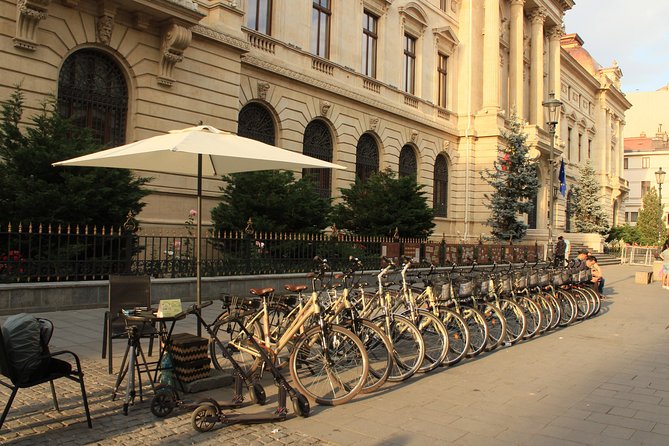
You’ll meet at Strada Operetei 12, București 030167. That central location is helpful because it keeps the tour from feeling like a long commute before you even start seeing things. The tour ends back at the meeting point too, so you’re not left figuring out a return plan.
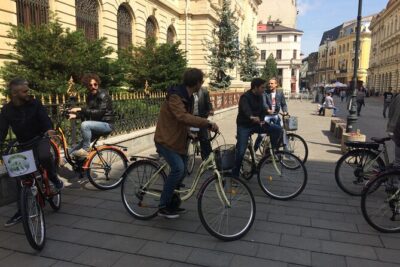
The setup is straightforward: you’re given use of a bike and a helmet. Reviews also mention bikes in good condition and a setup that includes practical add-ons like locks, lights, and bells, which matters more than people expect. In a city where you mix with cars and pedestrians, you want equipment that works and that you can rely on.
Group size is capped at 30. That’s big enough to feel like a real tour group, but small enough that the guide can still keep an eye on everyone’s pace and comfort. Also, the tour is offered in English, and the experience is described as suitable for most travelers. Children can go, but they must be accompanied by an adult.
Stop by stop: how the “Bucharest highlights” route tells its story
Below is what you can expect as the tour moves through different eras. I’m using the stop themes the tour focuses on, so you know what each segment is trying to teach you—not just what you’ll pass by.
Bike The City: first impressions, the National Bank, and an old monastery
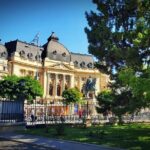
You start with Bike The City and a quick orientation. From there, the route leans into the theme of early Bucharest—institutions and religious history that point to how the city built legitimacy and identity long before communist planning took over.
You’ll pass the first National Bank, which is the kind of stop that helps you “read” a city. Instead of only looking at architecture, you’re learning what the building represents: the growth of finance, administration, and modern power structures. After that, you’ll get to one of the oldest monasteries in Bucharest, which pulls the story backward to spiritual and cultural continuity. Monasteries often feel like quiet pauses on tours, but on this route they’re used as timeline anchors.
The main drawback of this opening stretch: it sets the tone fast. If you’re hoping for a super-slow start, you might find the early pace a bit energetic. Still, it’s a good way to get oriented early while you’re still fresh.

Hanul Gabroveni: the old city photo gallery and “oriental” Bucharest
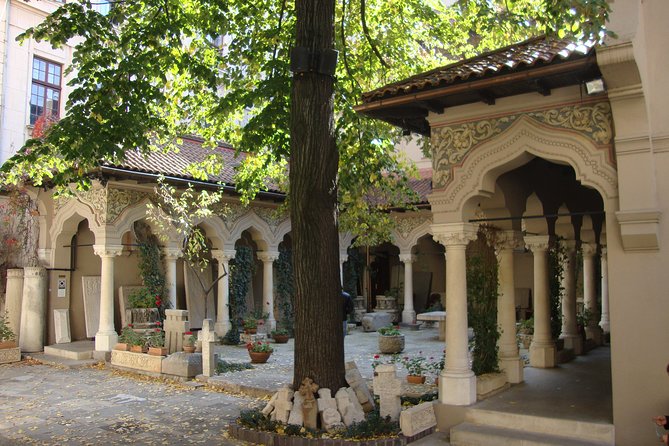
Next is Hanul Gabroveni, with a stop tied to an old city photo gallery and the idea of an “oriental Bucharest.” This is one of those segments that feels fun because it reminds you that Bucharest had a personality before later political eras re-framed it.
Why I like this part: it broadens the story beyond big monuments. Inns, marketplaces, and old urban culture spots show how daily life shaped the city. Even if you don’t remember every detail, the stop helps you understand that Bucharest isn’t only about power buildings.
This is also a relief zone in the route. Compared to some of the heavier communist-era stops later, this segment feels lighter and more about character.
Manuc’s Inn (Hanul lui Manuc): architecture plus Romanian food influences
At Manuc’s Inn (Hanul lui Manuc), the tour focuses on influences connected to Romanian traditional food. This matters because food isn’t a random add-on here. It’s presented as part of how places traded, hosted, and mixed cultures.
You’ll also connect this stop to the tour’s bigger emphasis on Calea Victoriei and central Bucharest. Manuc’s Inn works as a transition point: from older commercial and cultural life into the more official, planned city story that comes after.
One thing to watch: inns and older structures can be visually impressive, but they don’t always explain themselves quickly. If you’re the type who likes context, this is a good place to lean in and ask questions—guides who do a great job here can make the food and hospitality story click fast.
Catedrala Patriarhala: where the first Romanian Parliament enters the conversation
Then comes Catedrala Patriarhala, tied to the theme of the first Romanian Parliament in the tour narrative. Cathedrals and churches can sometimes feel like “just another church” on a quick itinerary, but in this case the guide’s job is to connect the site to an important civic moment.
This is the kind of stop that gives you a mental map of how Bucharest’s authority evolved. Religious buildings often sit at crossroads of culture, education, and public life. Here, the tour uses that idea to show how church space overlaps with state-making.
A consideration: if you prefer purely exterior sightseeing, you might find this stop a bit more “story-oriented.” Still, the stop is short and designed to fit the flow of the ride.
Manastirea Antim: translated buildings and how structures change over time
Manastirea Antim comes next, with the stop described around translated buildings. That phrase is a hint at the tour’s method: it’s not just naming places; it’s pointing you to how buildings shift in meaning and form across eras.
Antim Monastery is used here as a reminder that Bucharest isn’t frozen in one architectural style. Even when you’re riding through planned areas later, you still see layers that predate the era of standardization.
The benefit for you: these smaller stops are often where your understanding improves the most. You begin to notice patterns. The drawback: because they’re shorter, you need to stay attentive. If you zone out, the point can be lost.
Palace of Parliament: the last megalomaniac communist project
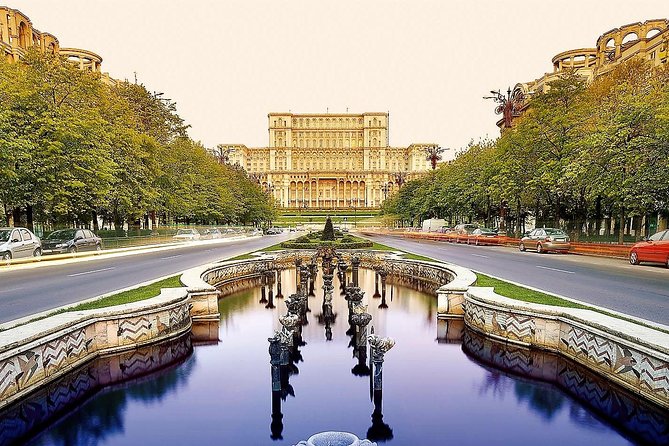
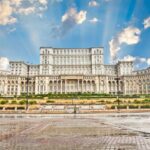
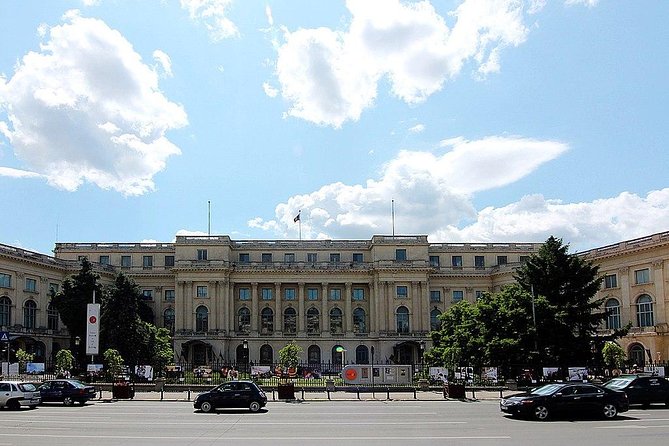
Now you hit the big one: the Palace of Parliament. The tour frames it as the last megalomaniac communist project, and you’ll feel why that wording fits as soon as you’re close to the building. This is the stop where the communist story shifts from theory to physical scale.
Why this works on a bike tour: you can approach the Palace area from the right angle and keep moving, so you don’t get stuck watching from one spot. The route also sets up contrasts—older boulevards, newer civic planning, and the kind of monumental architecture that was meant to change how people experienced the city.
You’ll also cover segments tied to purely communist architecture and the idea of the new civic center, described as a communist alternative for the old city center. That contrast is the heart of the “communist Bucharest” story.
Old boulevard moments and a first park reference
As the tour continues, there’s time tied to the main old boulevard of the city and a stop for the first park in Bucharest. These aren’t filler. They help you connect street planning to daily life and show that the communist-era project wasn’t only about buildings—it was also about how people were supposed to move through space.
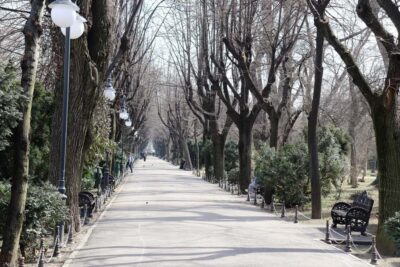
The “first park” stop is especially helpful for readers who worry that communist architecture is all gray and heavy. Parks and boulevard lines bring back a human scale, even if the overall planning is grand and intentional.
Piaka Revolukiei: Ceaușescu’s last speech
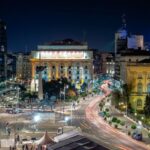
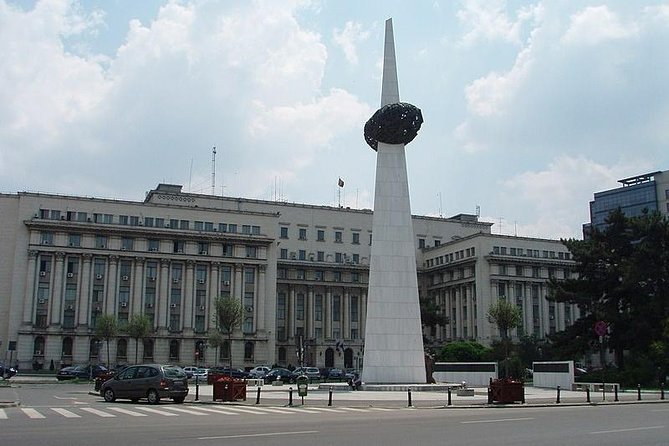
Finally, you end at Piaka Revolukiei (Revolution Square), tied to Ceaușescu’s last speech. This is where the tour lands emotionally. The point isn’t just that history happened; it’s that the location still feels like a stage. Even if you don’t study politics, you can understand why people return here to remember.
This ending also makes sense in a bike-tour format. You start with early institutional roots, then you pass through layers of built power, then you arrive at the moment when power collapsed. It’s a clean narrative arc for a short ride.
Guides make or break the history (and this one gets high marks)
A huge part of why this tour earns a near-perfect rating is how guides communicate. Names that show up strongly include Alex, Ed, Dan, Horia, Ciprian, Lucia, and Alexandru. Across those examples, one pattern repeats: guides pack strong Romanian history context into each stop, while also keeping it fun and easy to follow.
If you’re used to history lectures that drag, this tour can feel like a breath of fresh air. The best moments come when the guide connects a building to daily life—like hospitality and food at Manuc’s Inn, or scale and control at the Palace of Parliament. Guides also tend to handle questions well, including from kids, which is a real test of clarity.
There’s also a practical side to the guidance. Reviews mention safe cruising through areas with pedestrians and cars, plus quick pivots when rain hits. That flexibility matters because Bucharest weather can change fast, and being stuck outside without a plan would ruin the afternoon.
Safety and comfort: the realistic part of riding in Bucharest
Here’s the honest take: cycling in Bucharest means mixing with traffic and pedestrians. Even if the route tries to keep you off the worst stretches, you’ll still be near moving vehicles and people stepping into your path.
That’s why I recommend you bring a calm, confident riding style. You don’t need to be a cyclist racer, but you should be comfortable stopping quickly, signaling naturally, and scanning constantly. Reviews also mention narrow streets and busy sidewalks, so your situational awareness matters.
On the good side, you get a helmet and a bike with helpful features like locks and lights. Guides also look out for comfort, especially with families and first-time riders. If you’re choosing between this and a walking-only tour, biking here is usually worth it because it saves your legs—just don’t treat it like a car-free trail.
What you’ll like most (and when it won’t be the right fit)
You should love this tour if:
- You want a short way to see big Bucharest highlights without walking all day
- You like history that connects to specific buildings and streets
- You want an English-guided overview that still leaves room to explore later on your own
It might be less ideal if:
- You strongly prefer quiet, separated bike paths
- You dislike riding near cars and crowded sidewalks
- You only want “pure sights” with minimal context and storytelling
Also keep in mind it’s more about the main eras and landmarks than it is about hidden side streets or markets.
Should you book the Bucharest Highlights Bike Tour?
Yes, if you want an efficient, story-driven snapshot of Bucharest and you’re comfortable riding in real city conditions. The price is reasonable for what you get: bike + helmet, a guided route that moves through early, communist, and revolution-era Bucharest, and a chance to hit major landmarks like Manuc’s Inn, Calea Victoriei, Catedrala Patriarhala, and the Palace of Parliament without wasting hours on transit and re-walking.
I’d book it early in your trip. It gives you a framework for what you see later—so when you go back on your own, you’ll recognize the city’s timeline instead of just collecting photos.
FAQ
How long is the Bucharest Highlights Bike Tour?
It’s listed at about 2 hours. Some tours may take closer to 3 hours depending on pace and conditions.
What’s included in the price?
The price includes a driver/guide, local guide, use of a bicycle, and a helmet.
Where do I meet the tour?
You meet at Strada Operetei 12, București 030167, Romania. The tour ends back at the meeting point.
Is food or hotel pickup included?
No. Food and drinks aren’t included, and hotel pickup and drop-off are not included.
Is the tour offered in English?
Yes, the tour is offered in English.
Does the tour run in bad weather?
The experience requires good weather. If it’s canceled due to poor weather, you’ll be offered a different date or a full refund.