REVIEW · BUCHAREST
Bucharest Private Tour, Parliament Palace, Ceausescu House Visit
Book on Viator →Operated by Romania Tours and Trips · Bookable on Viator
One tour, two symbols of Romania’s hard years. I love how this private setup lets your guide connect the buildings to Ceaușescu’s rise and fall, and I also like the comfort of an air-conditioned ride with pickup and drop-off. The main thing to plan for: photo rules can be strict, and ticket handling at the Parliament can feel a little confusing.
You’ll spend about an hour at each stop, which keeps the day focused: the scale of the Palace of Parliament on one side, and the carefully designed family life of the Ceaușescu Mansion on the other. Guides like Radu, Catalin, Bogdan, and Valerica are repeatedly praised for turning big history into clear, human stories.
If you want a quick highlight reel, you’ll get that. If you want to linger and ask lots of questions, private pacing helps.
In This Review
- Key things to know before you go
- Private Comfort in Bucharest: pickup, timing, and how the day flows
- Entering the Palace of Parliament: weight, power, and what to notice
- A note on tickets and on-the-day surprises
- Ceaușescu Mansion (Spring Palace): luxury as a political statement
- Photos: plan for restrictions
- Guides make the story click: Radu, Catalin, Bogdan, Valerica
- Price and logistics: is $138.55 a fair value?
- What you get for your time
- Who should book this Parliament + Ceaușescu Mansion tour?
- Should you book this Bucharest private duo?
- FAQ
- Is the tour in English?
- What does the tour include?
- Do you pick me up from my hotel?
- How long is the tour?
- Is this a private tour?
- Are mobile tickets provided?
- What if the weather is bad or I need to cancel?
Key things to know before you go
- Private English guide: You get a real conversation, not just headsets and a stamp of approval.
- Hotel pickup and drop-off in Bucharest: Less hassle, more time on your feet where it counts.
- Two major sites, tight timing: Plan around roughly two hours inside, plus driving time.
- Entrance tickets are part of the deal: You should still verify how Parliament entry is processed on the day.
- Photo rules may limit you: Bring patience, and don’t count on unrestricted shooting.
- Air-conditioned vehicle: A smart comfort upgrade in summer heat.
Private Comfort in Bucharest: pickup, timing, and how the day flows
This tour is built for a simple idea: you shouldn’t waste half your day figuring out transport. You’ll be picked up and dropped off in the Bucharest area, and you can send your pickup and drop-off location ahead of time. That matters, because central Bucharest can be tricky—especially if you’re juggling multiple destinations.
The duration is listed as 1 to 5 hours, with the two main stops scheduled at about an hour each. In practice, expect the day to feel like a focused outing rather than a marathon. You’ll drive between the sites, then spend time walking the interiors with your guide. The pacing is one reason this works well for first-time visitors: you get a full story arc without feeling rushed from museum to museum.
You’ll travel in an air-conditioned vehicle, which is genuinely helpful when Bucharest weather is doing its thing. And since this is a private tour/activity, it’s just your group. That means you can ask small questions—why a room looks the way it does, what a symbol meant, or what life was like under the regime—without holding up a crowd.
You’ll also get a mobile ticket. That’s a small detail, but in real life it saves time and reduces stress at check-in.
You can also read our reviews of more private tours in Bucharest

Entering the Palace of Parliament: weight, power, and what to notice
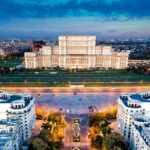
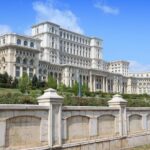
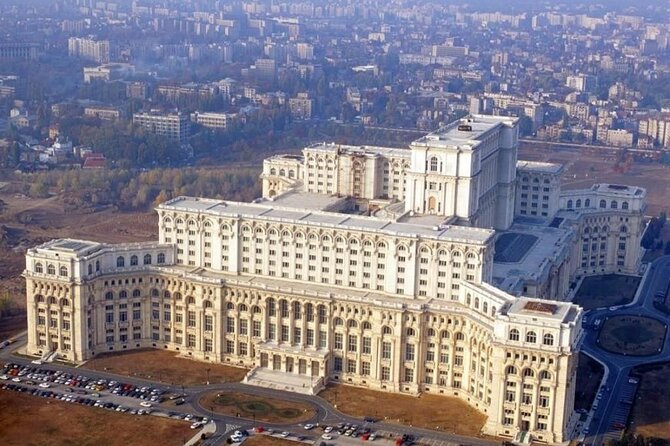
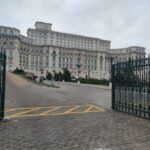
The Palace of Parliament is one of the strangest buildings you’ll ever see—massive, intentional, and impossible to ignore. You’re walking inside a place tied to state power, built on the orders of Nicolae Ceaușescu during a period of heavy personality cult and political worship around him and his family.
A few facts give you the scale, and they’re worth holding in your mind as you look around:
- The building is often cited as weighing about 4,098,500,000 kilograms (roughly 4.10 million tons).
- It took 13 years to build, from 1984 to 1997.
- It was designed under the supervision of chief architect Anca Petrescu, with a team of around 700 architects.
Architecturally, it’s described as modernist Neoclassical forms mixed with socialist realism in mind. That combo is part of the message. It’s not trying to be subtle. It’s built to feel permanent and untouchable.
When I think about why this stop is so effective, it’s because your guide can point out the difference between how a building looks and what it was meant to do. The Palace’s size isn’t just an engineering flex—it’s political theater. It signals control, permanence, and dominance, right down to the way rooms and corridors direct your attention.
Tip to make the most of this visit: slow down your thinking. Don’t just admire the scale. Ask yourself what the building is trying to communicate to the people inside it. Your guide’s job is to translate that symbolism into clear, grounded history.
A note on tickets and on-the-day surprises
Most of the time, the entrance ticket is included for the Palace as part of the tour. Still, there has been at least one case where extra payment was required. The operator’s explanation in that situation was that the Palace is a government building and ticket handling can work differently than a regular museum. So if you’re trying to keep everything perfectly budgeted, ask the day-of confirmation what payment steps you should expect for Parliament entry.
Ceaușescu Mansion (Spring Palace): luxury as a political statement
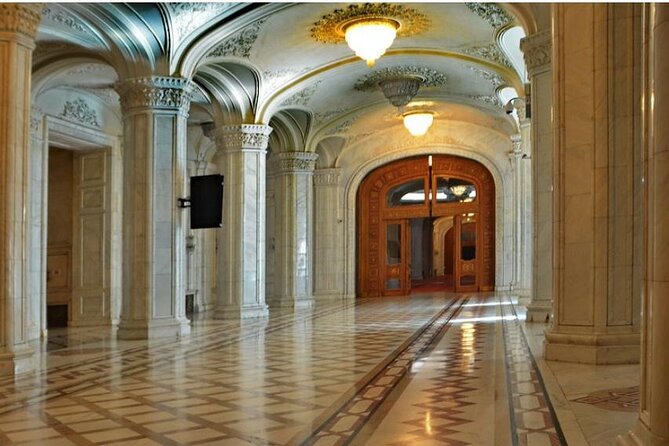
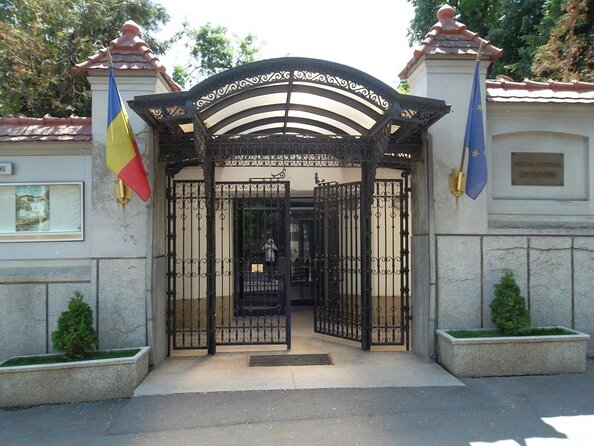
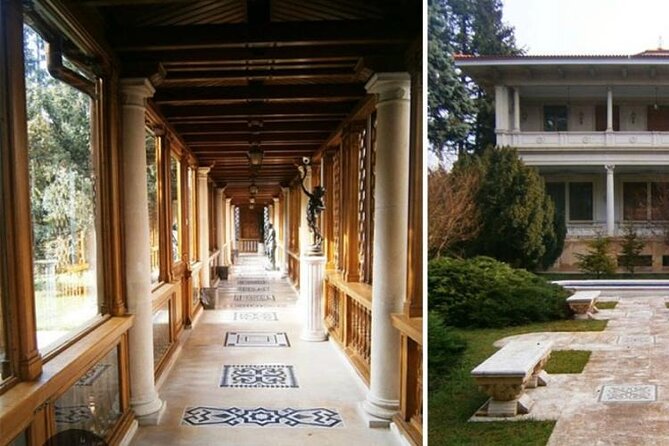
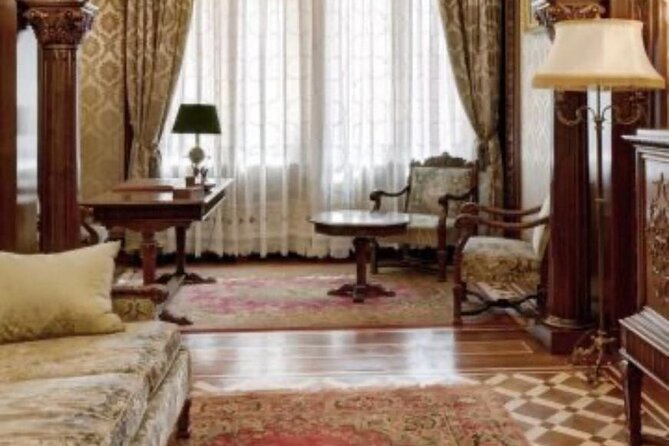
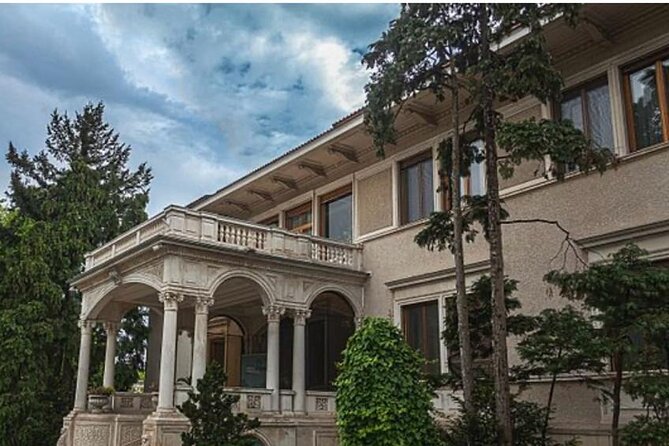
Then you shift from government monument to private residence. The “Ceaușescu Mansion” was the home of Nicolae and Elena Ceaușescu for about a quarter of a century, from 1965 to 1989, along with their children.
At the time it was known as the Spring Palace, and it started in the mid-1960s. The mansion was later enlarged between 1970 and 1972. That timeline matters: it helps you see how a home became more than a home. It became a stage for power, comfort, and controlled image.
The design is associated with Aron Grimberg-Solari. The grounds and outdoor areas were conceived by Robert Woll, who also had a role in furniture design. Even the interior is credited to architects Robert Woll and Agrippa Popescu—so you’re not just looking at rooms. You’re looking at a carefully planned environment, down to how furniture and space relate.
What makes this stop especially interesting is the contrast. The Palace is about the state speaking loudly. The Mansion is about the regime living comfortably while the country endured hardship. Put those two visits together and you get a sharper understanding of how power operated at every level.
Photos: plan for restrictions
One practical consideration: photo rules can be tighter here than you might expect. I’d treat this as a place where you may have limits on taking pictures, so don’t design your visit around getting a full camera album.
Instead, use your eyes first. Let the rooms hit you, then take a few shots only if they’re allowed. Your guide can also show you what details to pay attention to, which feels better than hunting for a single perfect angle.
Guides make the story click: Radu, Catalin, Bogdan, Valerica
This tour lives or dies on your guide’s ability to connect details to meaning. And the guides attached to this experience have a strong track record for exactly that.
Names that have come up include Radu, Catalin, Bogdan, and Valerica. You’ll feel the difference in the way they handle context. Instead of listing dates like a textbook, they tend to explain the revolution and the regime with specific, grounded stories—so it becomes easier to understand how Romania changed and why these places matter.
A good guide also makes the buildings feel less like random stops and more like linked scenes in a single drama:
- At the Palace, they explain the why behind the scale.
- At the Mansion, they explain what luxury meant in the regime’s world.
If you’re the type who likes asking small questions, the private format is a big win. You can stop your guide and get clarification without the awkward time pressure that comes with larger group tours.
Price and logistics: is $138.55 a fair value?
At $138.55 per person, you’re paying for more than just two entry tickets. You’re also paying for:
- a private guided experience,
- an air-conditioned vehicle,
- hotel pickup and drop-off,
- and English-language interpretation.
So the value depends on how you travel. If you hate negotiating transport, dealing with ticket lines on your own, or trying to coordinate multiple sites across the city, this price can feel fair fast. The cost also becomes easier to justify if you’re traveling as a pair or small group where private transport is actually cheaper than you’d expect after you price taxis and separate guide bookings.
That said, there’s one budget caution. While entry tickets are listed as included, you should still be aware that Parliament ticket handling can create extra charges in some situations. If you want to avoid surprises, confirm what you’ll pay for at the Palace specifically when you get your booking details.
What you get for your time
The schedule is efficient: two major sites, about an hour at each. It’s not a half-day of window shopping. It’s a structured route through two of Bucharest’s most politically charged buildings, with just enough time to understand the contrast.
Who should book this Parliament + Ceaușescu Mansion tour?
I think this fits best if you:
- are doing Bucharest as a first-time stop and want two must-see historical anchors,
- like history that’s explained in plain language, with human context,
- prefer private pacing over crowds,
- and appreciate architecture when it has a story attached.
It’s also a strong choice if you want an efficient day without losing time to transit chaos. The pickup and air-conditioned vehicle alone are a practical win.
If you’re the type who wants a relaxed museum stroll with lots of free time for wandering on your own, you might find the structure a bit tight. This tour is guided and focused, built to interpret two heavy sites in a short window.
Should you book this Bucharest private duo?
Yes—if you want a clear, guided connection between Bucharest’s political monuments and the personal side of the Ceaușescu era. I’d book it if your priority is understanding what these places meant, not just seeing them from the outside.
I’d hesitate only if you’re extremely photo-focused or you’re on a super tight budget where any extra fee at Parliament would be a deal-breaker. In that case, confirm Parliament entry details in advance so you know exactly what’s included on your day.
Either way, treat this like a lesson with a strong visual component: you’ll come away with a more grounded sense of how power looked when it tried to control both the public square and private life.
FAQ
Is the tour in English?
Yes. The tour is offered with an English-speaking tour guide.
What does the tour include?
It includes an air-conditioned vehicle, an English-speaking guide, and entrance tickets for both the Palace of Parliament and the Ceaușescu Mansion.
Do you pick me up from my hotel?
Yes. Pickup and drop-off are included in the Bucharest area, and you can send your pickup and drop-off location.
How long is the tour?
The duration is listed as 1 to 5 hours (approx.), with the two main stops scheduled at about 1 hour each.
Is this a private tour?
Yes. It’s a private tour/activity, so only your group participates.
Are mobile tickets provided?
Yes. The tour includes a mobile ticket.
What if the weather is bad or I need to cancel?
Cancellation is free up to 24 hours in advance for a full refund. The tour also requires good weather; if it’s canceled due to poor weather, you’ll be offered a different date or a full refund.