REVIEW · BUCHAREST
Bucharest: Tour of Old Town, Calea Victoriei & Communism
Book on GetYourGuide →Operated by Btrip Bucharest Tours · Bookable on GetYourGuide
Bucharest’s past walks beside you. This small-group-style walking tour (though group size isn’t listed) pairs big architecture with blunt history, moving from the Romanian Athenaeum to Revolution Square and the cobblestones of the Old Town. It’s a compact way to understand why this city feels so full of contradictions.
What I like most is the mix of sights and stories. First, I love how you get an easy “orientation loop” through downtown highlights, from King Carol-era grandeur to communist power centers. Second, I really appreciate that the guide ties the streets to real people and events, including the life story of Nicolae Ceaușescu and what Romania’s communist oppression looked like.
One thing to consider: you’ll be walking in real city conditions—comfortable shoes matter, and it runs rain or shine.
In This Review
- Key things you’ll remember from this Bucharest Old Town and Communism walk
- Starting at the Romanian Athenaeum: your city compass
- Revolution Square and the Ceaușescu story you can’t unsee
- Calea Victoriei: French-style glamour meets political reality
- Old Town cobblestones: medieval grit and 19th-century trade
- Macca–Vilacrosse Passage: a short detour with big character
- Stavropoleos Church: the calm break inside the city’s center
- Manuc’s Inn as the Old Town finish point
- Price and what $21 buys you in real value
- Who this tour is best for (and who should skip it)
- Should you book this Bucharest Old Town, Calea Victoriei & Communism tour?
- FAQ
- Where does the tour start?
- How long is the tour?
- What languages are offered?
- Is the tour wheelchair accessible?
- What should I bring?
- Does the tour run rain or shine?
- What are the main stops on the route?
- How long do you spend at the big sites?
- Is food or drinks included?
- Can I pay later or cancel?
- Does the tour end at the start point?
Key things you’ll remember from this Bucharest Old Town and Communism walk
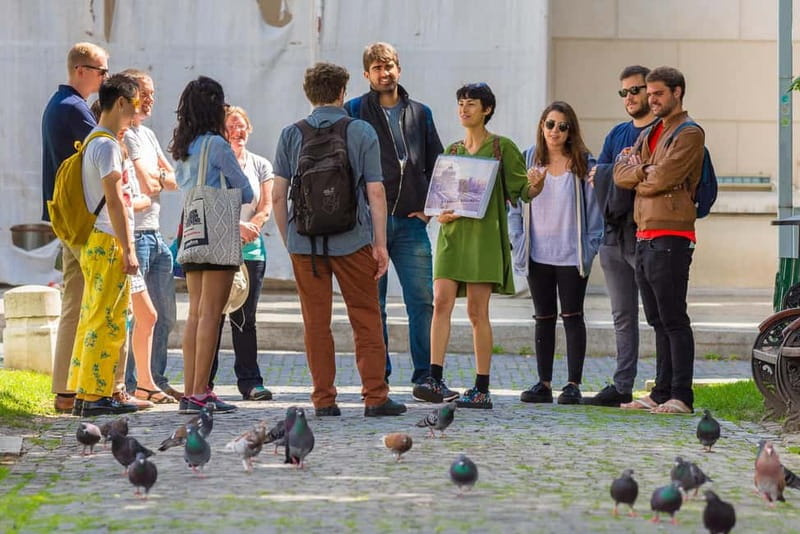
- Romanian Athenaeum start: a grand neoclassical launch point that helps you read the city right away
- Revolution Square focus: the former Communist Party headquarters and the Ceaușescu story
- Calea Victoriei’s contrast: Belle Époque hotels and Art Deco details next to harder truths
- Old Town cobblestones: medieval-leaning streets, 19th-century merchant houses, and photo-worthy corners
- Stavropoleos Church: the calm pause of the only active monastery in central Bucharest
- A guide who teaches history clearly: guides like Laura are praised for being professional and sharing Romanian history in a friendly way
Starting at the Romanian Athenaeum: your city compass
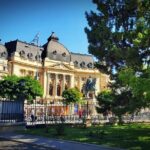
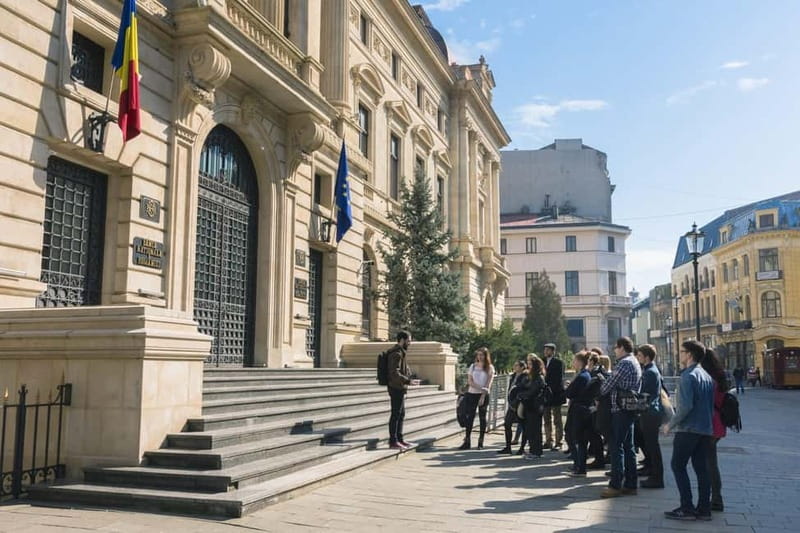
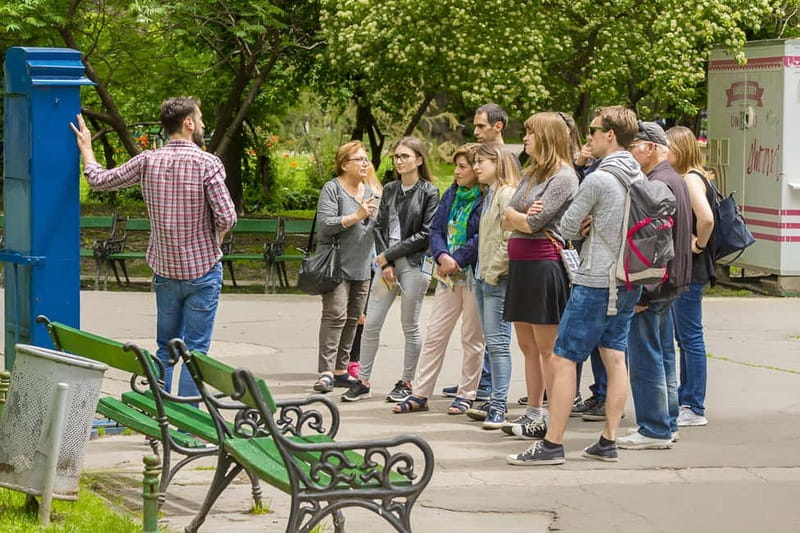
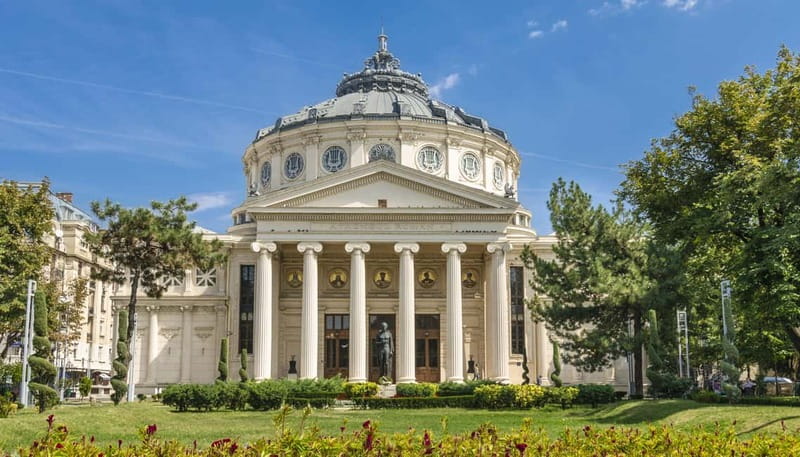
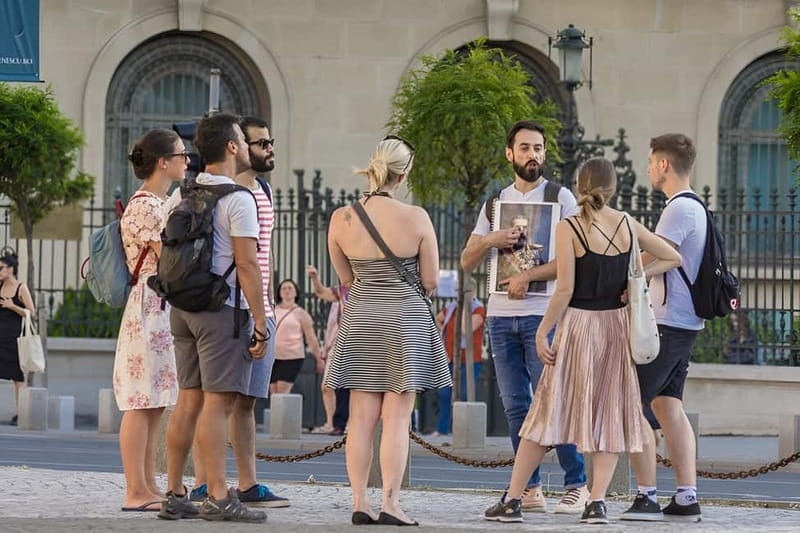
The tour begins right in front of the Romanian Athenaeum, on the steps by the columns, with the guide waiting there and wearing a name tag. This matters more than you might think. Bucharest’s center can feel spread out, but starting at a landmark this recognizable helps you orient fast—what you’re seeing and why it’s in this specific place.
The building itself is a major “wow” moment: a marvelous neoclassical concert hall, surrounded by other impressive French-inspired constructions. In this first stretch, the guide sets the tone with stories about kings, world wars, and the power shifts that shaped Bucharest. It’s not just architecture for photos—it’s the backdrop for the political drama that comes next.
If you’re short on time, I like that you’re not wasting your first hour on random stops. You’re using the Athenaeum area as a way to build context before you move into the streets.
You can also read our reviews of more tours and experiences in Bucharest.
Revolution Square and the Ceaușescu story you can’t unsee
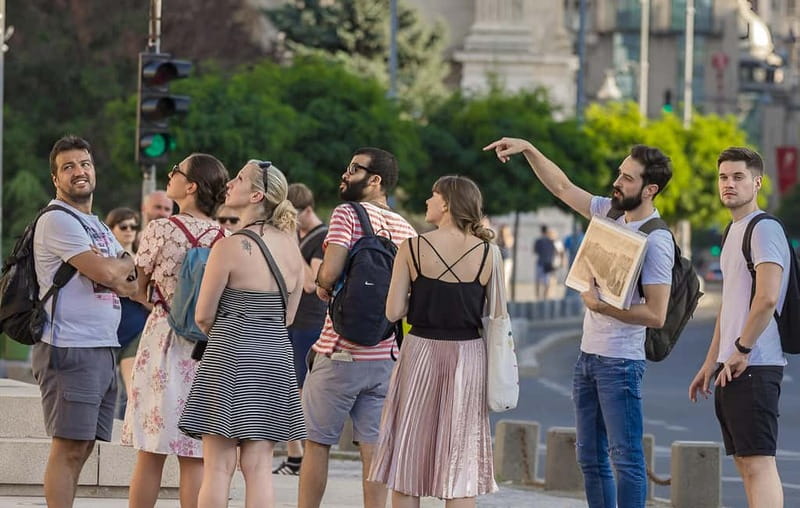
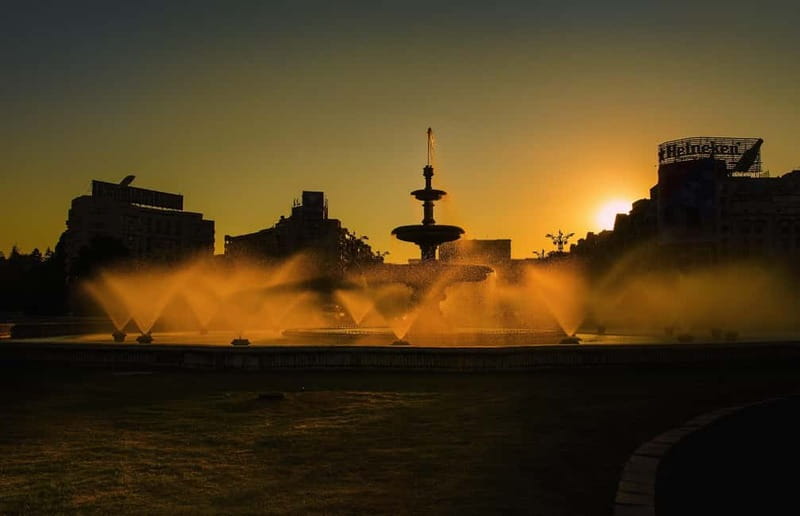
Next comes Revolution Square, where the tour spends about 30 minutes walking and being guided. This is the pivot point of the whole experience: from royal-era presence to communist control.
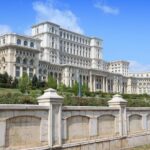
Here, you’re pointed to the former headquarters of the Communist Party—described as the place where important decisions were made from roughly 1950 to 1989. The tone shifts clearly. The guide focuses on the life story of Nicolae Ceaușescu, and also gives you a glimpse into the oppression system in Romania.
One especially striking detail the guide covers is the revolution broadcast on TV as described in the tour materials. Whether you’re a history nut or just want the emotional truth of what happened, this is the kind of stop where you’ll feel the weight behind the buildings. The setting is public and visible, so the story isn’t stuck behind a museum door.
Practical note: this is also where the tour’s “serious history” pace sets in. If you’re the type who wants breaks, you’ll want to keep an eye on your energy level here, because the tour keeps rolling afterward.
Calea Victoriei: French-style glamour meets political reality
After Revolution Square, you walk toward Calea Victoriei, the city’s most famous and extravagant street, with about 1 hour of guided time. This is the “how Bucharest looked when it wanted to impress” portion of the day.
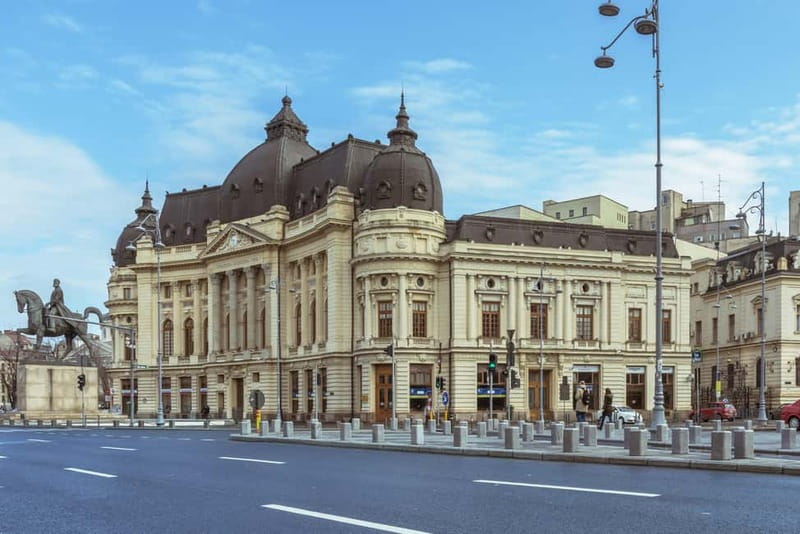
Expect to see interwar and bourgeois life imagery: Belle Époque hotels and Art Deco wonders, including landmarks named in the tour route like the Grand Hotel Continental, the Telephone Palace, and the Military Club. The guide uses these facades to explain the mood of different periods—how prosperity and cultural branding played out in stone and street-level detail.
I like this stop because it prevents the day from becoming one-note. After the communist pressure of Revolution Square, Calea Victoriei shows another side of Bucharest: ambition, style, and public life. You start noticing how power can be expressed through architecture—sometimes politely, sometimes brutally.
You’ll also get more out of this section if you slow down and look upward. The tour is walking-focused, but the street rewards attention to angles, ornament, and symmetry, especially when the guide points out what to notice.
Old Town cobblestones: medieval grit and 19th-century trade
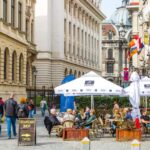
Then the tour shifts into the Old Town feel, where you’ll explore cobblestone streets and spend time in the heart of the area’s story. The goal here is not just to say you saw Old Town—it’s to help you read it like a time machine.
As you walk, expect a mix of:
- medieval-leaning street energy,
- medieval Oriental-style inns referenced in the description,
- smaller 19th-century merchant houses,
- and imposing palaces.
The Old Town portion also includes essential sights. If you enjoy architecture that shows wear, patchwork rebuilding, and different eras sitting side-by-side, this is where Bucharest starts to feel personal. You’re walking through spaces that don’t feel like a single curated theme park.
A key drawback here (and it’s not a dealbreaker): cobblestones can be rough underfoot. If you have any foot issues, prioritize comfort and stability when choosing shoes. This is one of those days where the “tour is only 2.5 hours” doesn’t mean “it’s easy.”
Macca–Vilacrosse Passage: a short detour with big character
One of the most interesting quick stops is Macca – Vilacrosse Passage, with about 15 minutes for visit and guided explanation. Passages like this can feel easy to miss if you’re just wandering, but the guide brings attention to the purpose of these tucked-away corridors—spaces that connect streets, offer sheltered movement, and often reflect older commercial life.
This is the kind of stop I love on walking tours: short, specific, and atmospheric. Even if you take only a couple of photos, you’ll still come away understanding why this alley-like space belongs in the story of Bucharest’s evolution.
If you’re traveling with someone who likes photos, this passage also tends to deliver visual variety without requiring a long detour.

Stavropoleos Church: the calm break inside the city’s center
Next is Stavropoleos Church, described as the only active monastery in the center of Bucharest, with about 30 minutes for visit and guided time. This is your emotional palate cleanser after the heavier communist history.
The building is highlighted as splendid and colorful, and the description frames it as a corner of tranquility. Even if you’re not specifically seeking religious architecture, you’ll likely appreciate the contrast: a calmer pocket right in the middle of intense urban storytelling.
I find these “breathing stops” important on a tour like this. They stop the day from feeling like only politics and buildings. Here, you’ll get to reset your attention and see how faith and community life shape the city’s identity across regimes.
Manuc’s Inn as the Old Town finish point
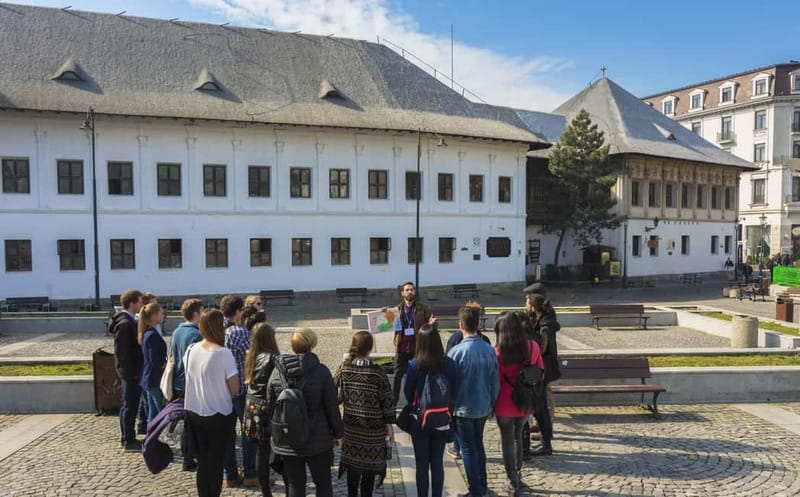
The tour then includes Manuc’s Inn, with a photo stop, visit, and about 15 minutes of guided time. Manuc’s Inn is one of those Bucharest addresses that seems to serve as a bridge between old trade life and the modern tourist gaze.
You’ll spend time here not just for photos, but as a final anchor for the Old Town walk. The tour materials list Manuc’s Inn as a finish point. At the same time, the meeting-point note says the tour ends back at the meeting point. If you like clarity, just remember that the last segment includes Manuc’s Inn, and the guide should confirm exactly where you’ll wrap up with you on the day.
Either way, this ending makes sense: you finish where the Old Town story feels “most Bucharest”—not just historic, but lived-in, walkable, and full of visual texture.
Price and what $21 buys you in real value
The price is listed as $21 per person for about 2.5 hours. For Bucharest, that’s a strong value if what you want is a guided narrative, not just a self-guided checklist.
Here’s what you actually get for your money:
- a professional local guide (in English and Spanish),
- a map of Bucharest,
- guided walking time through major downtown sights plus Old Town streets,
- and a structured story that connects royal-era culture, war-era context, and communist power.
To me, the value isn’t only that the sights are famous. It’s that the guide is meant to help you connect those places. If you show up without a story, Revolution Square and the buildings along Calea Victoriei can blur together. With guidance, they click into a timeline.
Also, you’re not paying for transport—this is a walk, and you get a sequence of stops without needing buses or taxis.
One practical note: food and drinks aren’t included. So if you plan to eat afterward (you will probably want to), budget for it and bring water if it’s warm.
Who this tour is best for (and who should skip it)
This is a great fit if you:
- want a compact introduction to central Bucharest in a short time,
- like architecture but also want the human story behind it,
- are specifically interested in how communism shaped Romania’s public life,
- enjoy guided walking tours where you stop often enough to ask questions.
It’s less ideal if you:
- dislike history-heavy content and political narratives,
- need a very low-walking day (since you’ll be moving between multiple stops),
- or prefer a strict focus on only one theme like churches or only royal-era sights.
If you’re somewhere in the middle, it’s still workable. The tour’s structure naturally shifts moods: royal grandeur to communist oppression to elegant interwar street life to Old Town atmosphere.
Should you book this Bucharest Old Town, Calea Victoriei & Communism tour?
I’d book it if you want a meaningful hit of Bucharest in 2.5 hours, with a guide who connects streets to events rather than just naming buildings. The combination of Revolution Square, Calea Victoriei, and the Old Town cobblestones gives you variety, and the inclusion of Stavropoleos Church prevents the day from feeling like only politics.
Skip it only if you’re not interested in the communist-era story at all. In this tour, that part isn’t a small side note—it’s a major chapter.
If you can, plan for comfortable walking shoes and bring patience for weather. You’ll be out there rain or shine, and that’s the trade for getting the real street feeling.
FAQ
Where does the tour start?
The guide meets you in front of the Romanian Athenaeum, waiting right in front of the columns on the steps. The guide will have a name tag.
How long is the tour?
It lasts about 2.5 hours.
What languages are offered?
The live guide speaks English and Spanish.
Is the tour wheelchair accessible?
Yes, the tour is listed as wheelchair accessible.
What should I bring?
Comfortable shoes. The tour is walking-focused and covers cobblestone streets.
Does the tour run rain or shine?
Yes, the tour takes place rain or shine.
What are the main stops on the route?
The tour includes Revolution Square, Calea Victoriei, Macca – Vilacrosse Passage, Stavropoleos Church, and Manuc’s Inn, with the tour starting at the Romanian Athenaeum.
How long do you spend at the big sites?
Revolution Square is listed as about 30 minutes, Calea Victoriei about 1 hour, Macca – Vilacrosse Passage about 15 minutes, Stavropoleos Church about 30 minutes, and Manuc’s Inn about 15 minutes.
Is food or drinks included?
No. Food and drinks are not included.
Can I pay later or cancel?
The tour offers reserve now & pay later, and it also lists free cancellation up to 24 hours in advance for a full refund.
Does the tour end at the start point?
It’s described as ending back at the meeting point, and the itinerary also lists Manuc’s Inn as the finish. The guide should confirm the exact wrap-up point during the tour.