REVIEW · BUCHAREST
Darkside Tour of Bucharest – small group
Book on Viator →Operated by Interesting Times Bureau · Bookable on Viator
Bucharest has a darker walking route. I like the dark-history storytelling that brings the city’s past into sharp focus, and I love how the tour pairs big moments with Bellu Cemetery’s human, haunting details. The trade-off is that the themes are heavy, and the walking includes uneven cemetery paths, so you’ll want a bit of stamina and a calm stomach.
This is a maximum of 12 people guided in English, with a street snack and subway transport built in. It starts at 3:00 pm at the Ion Luca Caragiale National Theatre area and finishes at Revolution Square, in front of the Ministry of Internal Affairs—perfect if you want a focused evening dose of Romanian history rather than another generic city stroll.
In This Review
- Key highlights to look for
- A 3-hour dark-history walk in small-group Bucharest
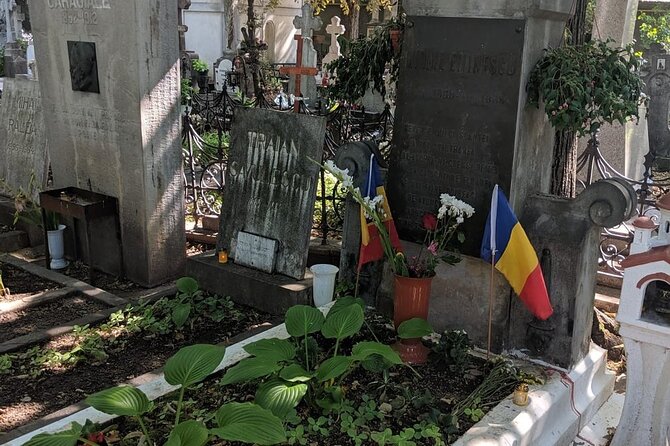
- Bellu Cemetery: crypts, tombstones, and love stories that linger
- University Square: how protests shaped recent Romania
- Calea Victoriei: early-20th-century scandal on a famous boulevard
- Piaka Revolukiei: standing in the emotional end of Communism
- Price and logistics: where your $48.39 goes
- Guides and storytelling style: why the tour feels personal
- What to bring, where to stand, and how to make it easy
- Best fit: who will enjoy this tour the most
- Should you book the Darkside Tour of Bucharest?
- FAQ
- How long is the Darkside Tour of Bucharest?
- What is the price per person?
- Is the tour offered in English, and how large is the group?
- Where do I meet, and where does the tour end?
- Is Bellu Cemetery admission included?
- What’s the cancellation policy?
Key highlights to look for
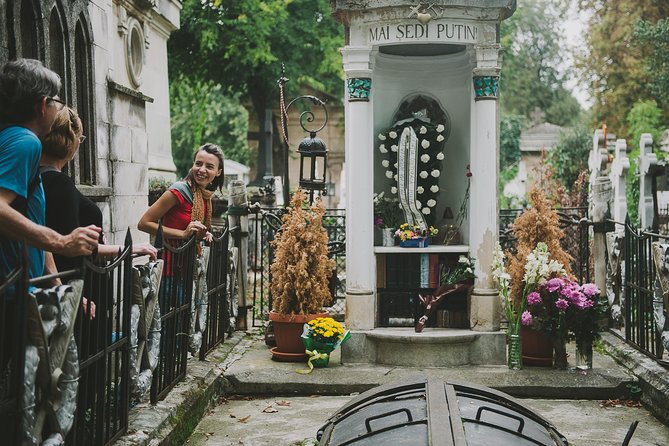
- Bellu Cemetery: crypts, tombstones, and stories about love, architecture, and unanswered mysteries
- Revolution-era Bucharest: the places tied to 1989 protests and what happened on 22 December 1989
- Calea Victoriei street history: a pre-Communist glimpse into scandals and 1920s nightlife
- A small group feel: quick questions and a guide who can pace the mood
- Built-in street practicality: subway transfer plus a small snack, so you’re not stuck guessing
A 3-hour dark-history walk in small-group Bucharest
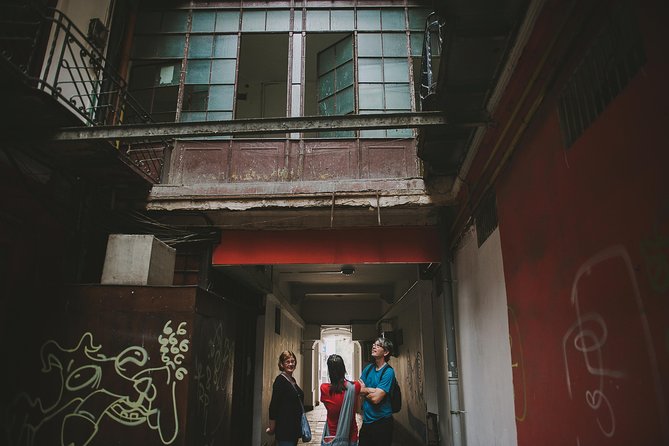
If Bucharest is on your list, you’ll quickly notice two cities living side by side: the one that looks glamorous on postcards, and the one that shaped itself through propaganda, fear, revolutions, and moral survival. This tour leans hard into the second one, with stories you typically won’t hear on standard “highlights of Bucharest” routes.
The pacing is built for short attention and real street detail. In about three hours, you move from a major cemetery world to city squares tied to unrest, then end at Revolution Square—the emotional endpoint of the Communist era in Romania. Along the way, you’re on foot enough to spot textures: old façades, street-level atmosphere, and how these places sit inside the modern city.
Two practical things make it feel smooth. First, group size is limited to 12, which keeps the guide’s explanations from turning into a lecture with zero interaction. Second, the tour uses public transit (including the subway) so you’re not fighting long distances on a tight schedule.
If you hate bleak topics, you’ll feel it here. But if you want context—how people lived, why they resisted, and what stories got erased—this format gives you that “oh, that’s why” feeling without dragging on for a whole day.
You can also read our reviews of more tours and experiences in Bucharest.


Bellu Cemetery: crypts, tombstones, and love stories that linger
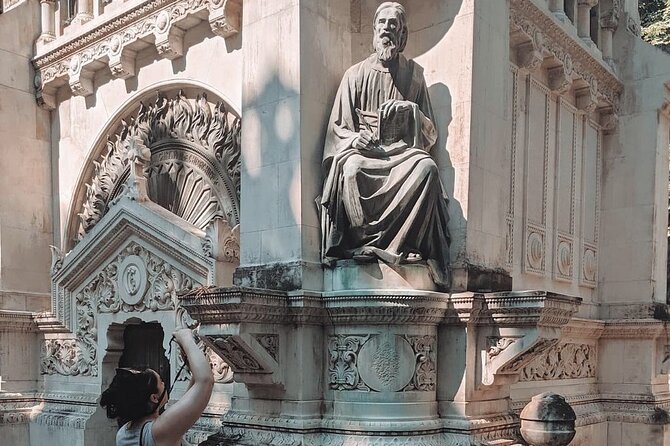
The heart of this experience is Bellu Cemetery, and it’s not just because it’s scenic. It’s because the guide treats monuments like documents—tiny biographies in stone.
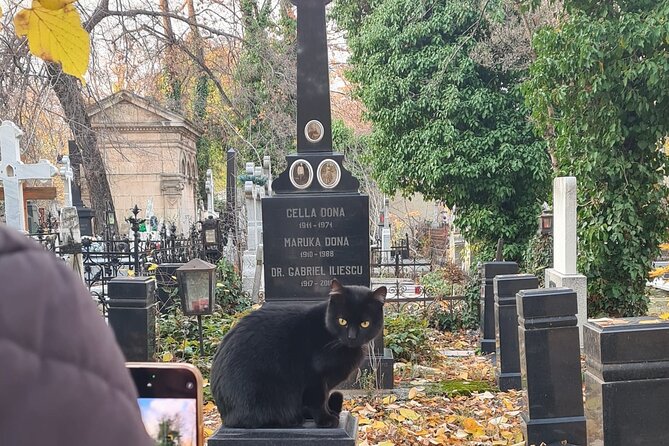
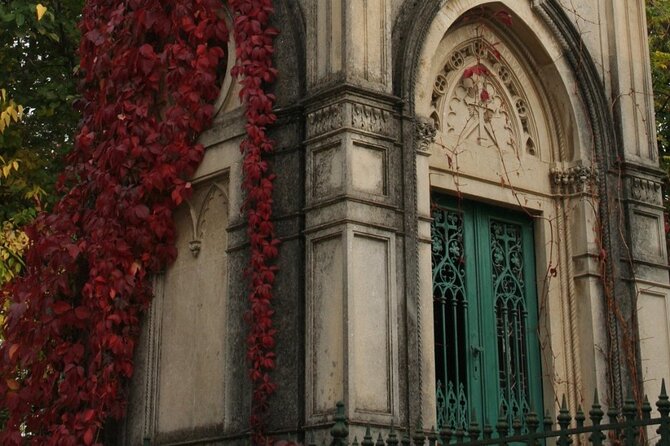
Bellu is known as the first modern graveyard in Bucharest, and the stories move beyond names and dates. Expect talk of love stories, unique architectural styles, and even mysteries people still try to solve. This is the kind of place where the details matter: what the memorials look like, how family stories are reflected in design, and how the cemetery’s tone shifts from romantic to eerie depending on where you’re standing.
This stop is also where you’ll understand why the tour’s title fits. “Dark” here doesn’t mean jump scares. It means Bucharest preserved its private griefs in public spaces—and that says a lot about the city’s history.
Practical note: the time you spend there is about an hour. That’s long enough to feel present, but not so long that you’ll lose the narrative thread. Still, cemetery ground can be uneven and walking can feel slower than you expect—wear shoes you trust.
If you’re deciding whether to book based on one location, I’d make it Bellu. The cemetery alone is the reason this tour earns near-universal praise, including comments about how beautiful it is and how much more you learn when a guide connects each monument to a story.
University Square: how protests shaped recent Romania
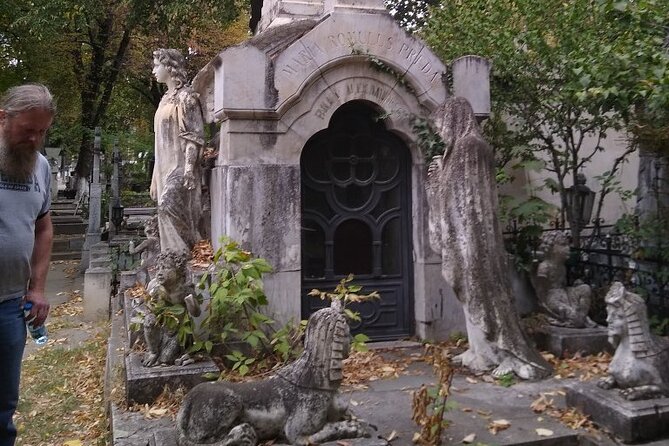
After the cemetery’s quiet gravity, the tour shifts to a very public kind of history: protests and the people who stood up for change.
University Square is described as a starting point for major protests in recent Romanian history. The guide connects it to the Revolution of 1989, including victims who fought bravely and people who believed in an occidental future. The story doesn’t stop there either—it also references the miners in the ’90s and later anticorruption battles, showing how civic anger can travel forward through time.
Why this matters for you, practically: when you stand in a modern city square, it’s easy to treat it like scenery. This tour turns the square into a timeline. You’re not just looking at buildings; you’re learning how the same kind of pressure—economic hardship, political repression, public demand—keeps returning, just under new names.
The stop is short (around 20 minutes), so don’t expect long museum-style narration here. Instead, you get enough background to understand why Romanians associate this location with emotion, risk, and change.
If you like “cause-and-effect” history—how one movement leads to another—this is one of the best parts of the route.
Calea Victoriei: early-20th-century scandal on a famous boulevard
Next comes Calea Victoriei, a major avenue that you can easily walk past on your own. The tour makes it more than a street.
Here, the theme is scandalous times in Bucharest before the Communist regime took power. The key story centers on 1927, when around 12,000 prostitutes and escorts were working in Romania. The guide adds color with named figures from the era, including a gypsy dancer named Zaraza.
This is the part of the tour that surprised me in a good way, because it reminds you that history isn’t only revolutions and dictators. Cities also have economies, reputations, and social worlds that clash with official morality. When you connect a famous boulevard with these stories, you see how layers of life sit under the surface.
Time-wise, it’s about 40 minutes, so you’ll have enough walking to notice surroundings while still keeping the pace tight. Since there’s no admission ticket at this stop, you’re free to focus on the guide’s explanation and the feeling of moving through another era’s street life.
One consideration: if you’re uncomfortable with sexual-history details, be aware this section includes that topic. The tone is historical, not graphic, but it’s still part of the narrative.
Piaka Revolukiei: standing in the emotional end of Communism
Revolution Square is where the tour turns from “history lesson” into something close to a living memory.
This stop focuses on the Romanian gulag, the cruel dictator Nicolae Ceausescu, and the difficult reality of life in the ’80s for many locals. Then the story locks onto 22 December 1989, when shootings took place and many innocent people died facing Securitatea—the secret police.
This is the moment that gives goosebumps, and not because the guide adds theatrics. It’s because the explanation is anchored to a specific place tied to a specific date. You don’t just hear that “the regime ended.” You hear what led up to it, what people feared, and what the day itself represented.
The stop is about 20 minutes, so you won’t get lost in facts. Instead, you walk away with a clear emotional map: this square is symbolic because it marks an ending that people felt in their bodies.
If you want a tour that helps you understand how Bucharest became what it is today, this is the section that ties it together.


Price and logistics: where your $48.39 goes
At about $48.39 per person for roughly three hours, this tour sits in the “value” category for Bucharest. Why? Because you’re getting more than sightseeing.
Included in the price:
- a local guide
- a street snack
- subway transportation
And the tour is designed so you’re not paying separate admissions along the way. Bellu Cemetery admission is listed as free for this experience, which is a big practical win if you’re comparing it to other ticketed attractions.
Not included:
- food and drinks unless specified
- hotel pickup and drop-off
So I’d treat this as a history-focused outing, not a meal tour. If you’re hungry, grab something before you meet. The street snack helps, but it’s not a substitute for dinner.
Another value point is the small-group format (up to 12). In a city like Bucharest, a thoughtful guide can change your entire understanding. Multiple guides leading the experience are praised for making the past feel human and understandable, with clear English and an ability to handle heavy themes without turning them into a dry list of dates.
Guides and storytelling style: why the tour feels personal
One of the most consistently praised parts of this experience is the guide. Names you’ll see attached to top ratings include Vlad, Andra, Alex, Elena, Bogdan, and Irina.
What’s common across those strong comments is not just facts—it’s the way stories are told. The guide’s job here is hard: you’re balancing dark history, political violence, social scandals, and a cemetery full of emotion without losing the thread. The best guides do that by using anecdotes and humor in small doses, keeping the conversation lively even when the subject turns serious.
You’ll also notice how questions seem to fit the pace. With max 12 people, you’re more likely to get answers that actually address what you care about—Communism, the Revolution, what life felt like, or how the city’s reputation was built.
A small but meaningful detail: some guides are praised for being attentive to people’s comfort, including stepping in with practical care during hot conditions. It’s the kind of thing you don’t want to think about—until you’re out on foot in a real city.
What to bring, where to stand, and how to make it easy
This is a walking tour with a moderate physical fitness level. That means you should expect uneven ground in the cemetery and some steady time on your feet.
Wear:
- comfortable walking shoes you’ve broken in
- layers, since weather can shift in Bucharest
- a light rain layer if storms roll through
Bring:
- water, if you tend to get thirsty quickly
- a camera, but also some patience for the moments when you’ll want to look rather than shoot
Know the flow:
- you start at 3:00 pm at the Ion Luca Caragiale National Theatre area
- you end at Revolution Square, in front of the Ministry of Internal Affairs
- there’s subway transportation during the tour, so getting slightly used to metro stairs and platforms helps
Also, this experience is not recommended for child aged 15 and under, which usually means the topics are too intense for younger teens.
Good weather matters here. If it gets canceled for weather, you’ll be offered another date or a full refund, so it’s worth checking forecasts before you go.
Best fit: who will enjoy this tour the most
This tour is for you if:
- you want Bucharest’s history beyond the surface
- you care about how the Revolution of 1989 connects to today
- you’re curious about what people believed, feared, and did in different eras
- you like cemetery architecture and story-driven monuments
- you want a small-group evening plan that feels focused
Skip it if:
- you want a carefree sightseeing day with no heavy topics
- you don’t handle stories involving secret police and shootings well
- you’re expecting a mostly indoor or fully accessible route (the cemetery walking matters)
It’s a strong first-time Bucharest history pick too. In about three hours, you’re given a mental map of key places tied to major turning points.
Should you book the Darkside Tour of Bucharest?
Yes, if you’re the type of traveler who reads plaques and then asks why those stories were written in stone. The combination of Bellu Cemetery, political protest locations, and the Revolution Square ending gives you a real sense of continuity: how fear and hope move through generations.
If you’re sensitive to dark historical topics or you want a lighter agenda, choose carefully. But if you want the version of Bucharest that explains itself, this is one of the better ways to do it without wasting time.
FAQ
How long is the Darkside Tour of Bucharest?
The tour runs for approximately 3 hours.
What is the price per person?
The price is $48.39 per person.
Is the tour offered in English, and how large is the group?
Yes, it’s offered in English. The maximum group size is 12 travelers.
Where do I meet, and where does the tour end?
You meet at the Ion Luca Caragiale National Theatre area (Bulevardul Nicolae Bălcescu 2). The tour ends at Revolution Square (Piața Revoluției), in front of the Ministry of Internal Affairs.
Is Bellu Cemetery admission included?
Yes. The Bellu Cemetery stop lists admission ticket as free for this experience.
What’s the cancellation policy?
You can cancel for a full refund if you cancel at least 24 hours before the experience start time. If you cancel less than 24 hours before, the amount paid is not refunded.