REVIEW · BUCHAREST
Footprints of Bucharest: History, Communism & Urban Tales
Book on Viator →Operated by Crafted Tours Romania · Bookable on Viator
Bucharest at night tells stories. This small-group tour strings together landmarks and side streets so the city’s modern face makes sense—then the Communism-era past jumps out at you under streetlights. You’ll get a night tour view of major sights, with a guide who turns buildings into scenes instead of just facts.
I like two things most. First, the pacing and small group size (max 8) means you’re not lost in a crowd; you can ask questions and actually hear the details. Second, the stop list covers the whole arc of Bucharest—Greek-temple grandeur, Revolution Square, royal power, and the massive Palace of the Parliament outside—without feeling like a textbook.
One thing to consider: it’s a walking-focused tour for moderate fitness, and it depends on good weather. If it’s rainy or miserable, you’ll want proper shoes and a layer, because you’ll still be moving between stops.
In This Review
- Key highlights to look for
- Entering Bucharest by Night: Why This Walk Feels Like a Story
- Where You Start and End (and Why Unirii Is a Good Finish)
- The Route: Ateneul to Revolution Square, Then Royal and University Bucharest
- Stop 1: Ateneul Roman (Romanian Athenaeum)
- Stop 2: Piața Revoluției (Revolution Square)
- Stop 3: Central University Library (Biblioteca Centrală Universitară)
- Royal Residences, Royal Architecture, and the Old-Town Core
- Stop 4: Palatul Regal / Royal Palace (winter residence)
- Stop 5: Old Town walking stretch
- Stop 6: Stavropoleos Monastery (1724)
- Parliament Outside: The Ceaușescu Era in One Monumental Wall
- Passages, Old Streets, and the Book-Lovers’ Stops
- Stop 7: Macca Villacrosse Passage
- Stop 8: Lipscani
- Stop 9: Cărturești Carusel
- Stop 10: Palatul CEC
- Museums and Buildings: What’s Included vs Not
- Included (free) quick hits
- Not included (you may pay separately)
- Guides and Real-World Experience: Why the Tour Ratings Matter
- Price and Value: Is $72.25 Worth 2 to 3 Hours?
- Practical Tips for a Smooth Night Walk in Bucharest
- Should You Book This Footprints of Bucharest Tour?
- FAQ
- How long is the tour?
- How much does it cost?
- Is the tour offered in English?
- What’s the group size limit?
- Where do I meet and where does the tour end?
- Are entrance fees included?
- Does the price include food or drinks?
- What kind of walking or fitness level should I expect?
Key highlights to look for
- Communism-focused stories at key sites like Piața Revoluției, with Revolution-day context
- Night-lit Bucharest route that makes the city feel easier to read than in daylight
- Most admissions are free, with only some museum entries not included
- Paul Gottereau and King Carol I show up in the Central University Library area
- Passages and bookshops like Macca Villacrosse and Cărturești Carusel add texture beyond monuments
- Guide personality matters: examples include Toni’s childhood anecdotes and Marius sharing tea/coffee and street food
Entering Bucharest by Night: Why This Walk Feels Like a Story
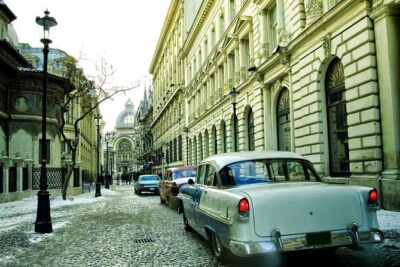
A Bucharest night tour has a simple advantage: the city’s edges sharpen. You see how wide avenues funnel your eyes, and how older streets hold onto character while new buildings sit nearby. This tour leans into that. You’re not just taking photos—you’re learning where to stand so the history lines up with what you’re seeing.
The focus is also smart. It’s not only about Communism or only about royal Bucharest. You move through both, plus the everyday texture in between: Old Town streets, covered passages, a monastery courtyard, and bookish shopping stops that feel local rather than staged.
And since the group maxes at 8, you’re more likely to get the kind of answer you’re actually curious about. In guides like Toni, Manuela, and Marius, the stand-out pattern is personal detail—small memories or local habits that make the big political story feel human. (One guide, Toni, shared childhood recollections from the communist era, including green bananas at Christmas—exactly the kind of detail that makes you remember what repression did to ordinary life.)
You can also read our reviews of more historical tours in Bucharest
Where You Start and End (and Why Unirii Is a Good Finish)
You meet at Strada Benjamin Franklin 2, București 030167. The tour ends at Piața Unirii (Union Square), close to the Old Town area.
That finish location is practical. Unirii is a major hub for getting around afterward, and you’ll be well-positioned to continue exploring on your own. If you want dinner, you’re not trekking across the city at the end of a 2–3 hour walk. You can also use the tour as a compass: after seeing the route, you’ll know which streets you want to revisit before night ends.
The booking comes with a mobile ticket, plus printed materials your guide uses during the walk. That combo helps if you’re the type who likes to follow along visually while someone explains the bigger story.
The Route: Ateneul to Revolution Square, Then Royal and University Bucharest
This tour is built like a guided “guided reading” of Bucharest. The early stops teach you how to recognize power and ideology in architecture.
Stop 1: Ateneul Roman (Romanian Athenaeum)
You’ll pause at Ateneul Roman, a standout building that echoes an ancient Greek temple. Even if you know nothing else about Bucharest, you can spot why this matters: culture, institutions, and public identity were being constructed in stone long before political regimes changed.
The visit is short (about 15 minutes) and listed as free admission. The practical takeaway is that you’re getting orientation—where this grand landmark sits and how it connects to the rest of the evening’s story.
Stop 2: Piața Revoluției (Revolution Square)
This is the emotional pivot. At Piața Revoluției, you’ll hear about the place where Nicolae Ceaușescu gave his last speech in 1989. The tour includes pictures and video presentations from Revolution days, which is important because the square can look like a normal urban space unless someone gives you the correct frame.
You spend around 45 minutes here. That longer stretch makes sense: this isn’t a quick stop for a postcard. It’s where the Communism theme stops being general and becomes specific.

Stop 3: Central University Library (Biblioteca Centrală Universitară)
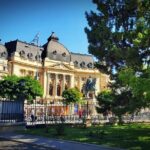
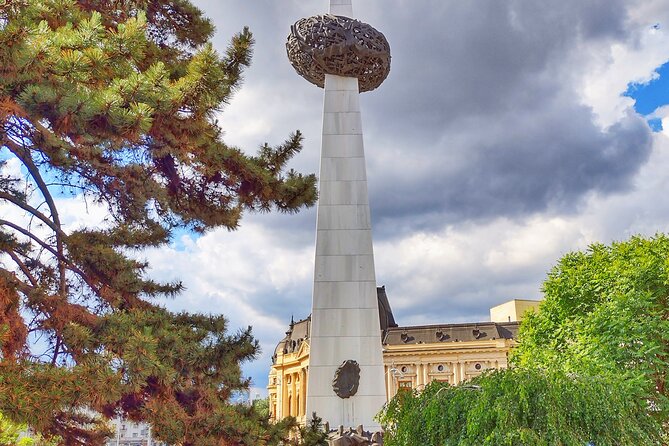
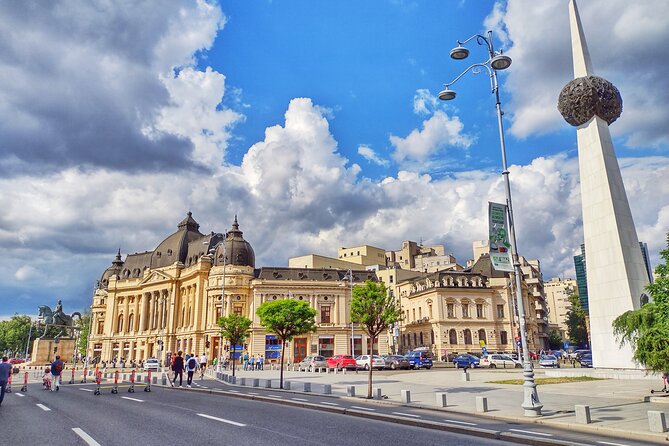
Next comes another kind of power—learning. The Central University Library was built in an eclectic style by French architect Paul Gottereau, with sponsorship tied to King Carol I. You also get the context of Carol I’s equestrian statue standing nearby.
It’s about 10 minutes, free admission, and it’s a good reminder that Bucharest’s identity wasn’t always about political control. It also involved prestige, funding, and public institutions.
Royal Residences, Royal Architecture, and the Old-Town Core
After Revolution Square, the route shifts toward monarch-era elegance and the city’s older heart.
Stop 4: Palatul Regal / Royal Palace (winter residence)
You’ll see Palatul Regal, dated 1937 as a winter residence. The palace was built under supervision connected with Queen Maria and her son King Carol II. This stop is brief (around 10 minutes) and listed with free admission.
What’s valuable here is contrast. Ceaușescu’s story looms behind you, and then the tour shows another model of legitimacy: royal spectacle and carefully supervised construction. Same city, different rulers, totally different style of messaging.
Stop 5: Old Town walking stretch
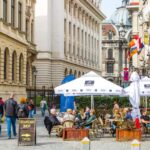
You’ll take a short walk through the center’s lively streets—cafés, pubs, restaurants, and 19th-century architecture you can still feel under your feet. The stop lasts about 15 minutes, free.
This is one of those segments where a guide’s pacing matters. With a small group, you can get the balance right: enough time to look up at façades, not so much that the tour loses its momentum.
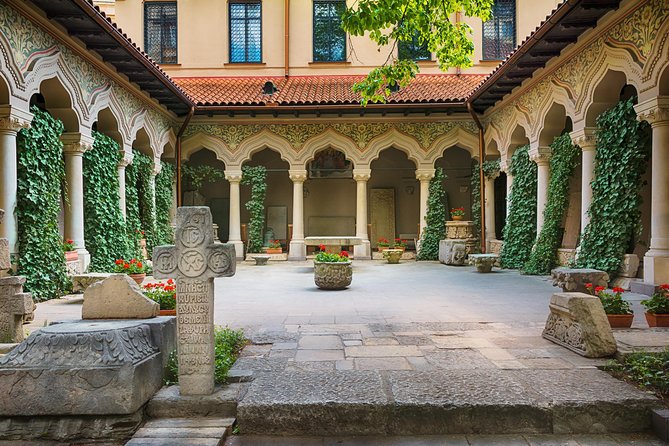
Stop 6: Stavropoleos Monastery (1724)
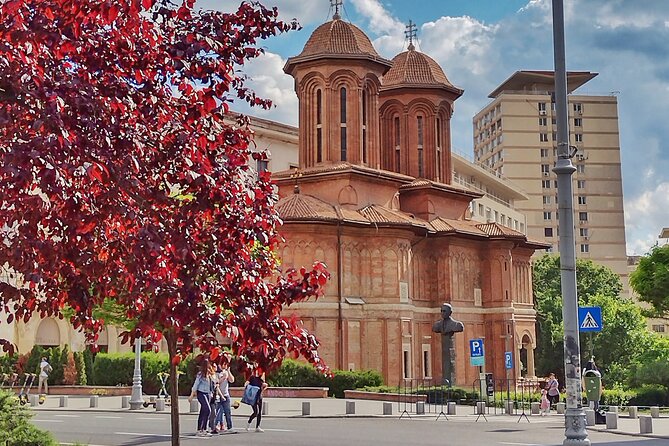
Then comes a quieter moment in the middle of Old Town: Stavropoleos Monastery, dating to 1724 and described as among the oldest churches in Bucharest. The listed time is 10 minutes, free.
This stop works because it gives your eyes a break from big avenues and official buildings. You also get a sense of how long religious life and community spaces have persisted—even when politics changed everything else.
Parliament Outside: The Ceaușescu Era in One Monumental Wall
One of the biggest reasons to book this tour is the placement of the Palace of the Parliament story.
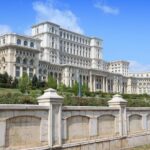
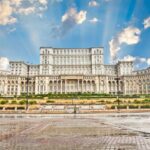
Construction of Romania’s most famous building started in 1984. You’ll admire the exterior and hear the story, with several eye-opening claims included: it’s described as the heaviest building in the world and the world’s third-largest administrative building, and it’s said the building exceeds the Great Pyramid of Giza’s volume by 2%, earning the label of a pharaonic construction.
You won’t be walking inside here based on the provided details—so think of this as architectural impact plus context. The exterior is still enough to make the point: when you see that scale next to older Bucharest streets, you understand how power can overpower the city’s human scale.
It’s the sort of stop where you’ll likely want to pause and look from different angles. With a guide, you’ll get the reasoning behind why certain structures were chosen, and what that meant culturally at the time.
Passages, Old Streets, and the Book-Lovers’ Stops
After the Parliament-focused beat, the route turns into urban texture. This is where the tour feels like Bucharest rather than a history slideshow.
Stop 7: Macca Villacrosse Passage
You’ll spend about 5 minutes at Macca Villacrosse Passage, a glass-roof-covered passage with hooka cafés. Admission is free here.
Passages like this matter because they show how Bucharest functions at street level—shopping, social life, and small businesses in narrow spaces that survive bigger redevelopment trends.
Stop 8: Lipscani
Then you stroll along Lipscani, described as an old street. It’s roughly 10 minutes, free. This stop gives you a “street-level map” of Old Town, so you can later find the areas you liked without wandering aimlessly.
Stop 9: Cărturești Carusel
You get a bookstore pause at Cărturești Carusel, a renovated bookshop filled with Romanian souvenirs and gifts. Time is about 10 minutes; admission is free.
This is a fun stop if you like travel keepsakes that don’t scream tourist trap. The tour doesn’t ask you to shop—it just gives you a place to look around and pick up something literary and local.
Stop 10: Palatul CEC
Next: Palatul CEC, a 19th-century building with magnificent statues. You’ll spend about 5 minutes and admission is free.
Even a short stop here works because the statues and façades help you “read” the city. Bucharest isn’t only about one era. You’ll see multiple layers, and this building is one of the visual clues.
Museums and Buildings: What’s Included vs Not
Most stops here are marked as free admission. Still, two museum/indoor items are listed as not included—and you’ll want to know which they are before you go.
Included (free) quick hits
You’ll have free-time stops like Muzeul Național de Artă al României (listed as the former Royal Palace) for about 5 minutes.
Not included (you may pay separately)
Two important ones:
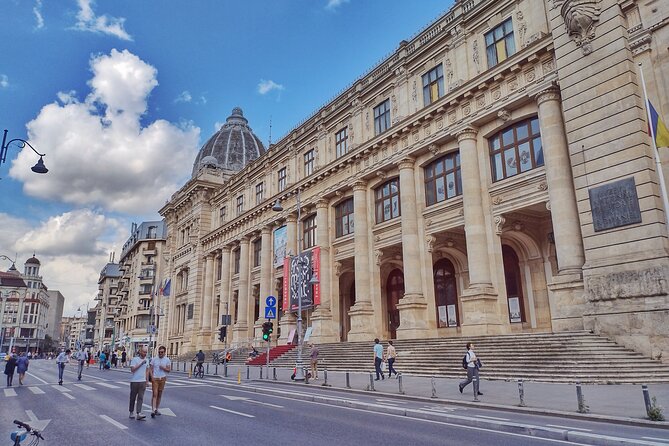
- Muzeul Național de Istorie a României (listed as the former Post Office Palace), about 5 minutes
- Biblioteca Națională a României, about 5 minutes
If you’re the type who likes to go inside every museum you pass, plan for added time and costs. If you prefer exterior views and quick context, the tour still works well because many stops are outside or quick.
Guides and Real-World Experience: Why the Tour Ratings Matter
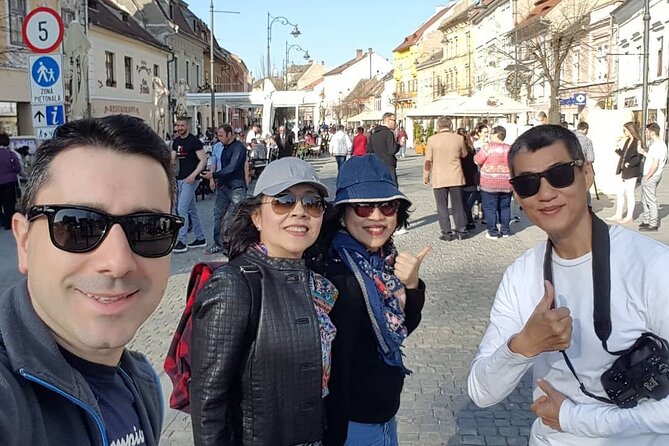
The tour is rated 4.6 with 10 reviews, and about 90% of people recommend it. That lines up with the strongest signals from the guide stories: these tours tend to be about communication, patience, and context.
A few details you should expect, based on the guide examples:
- Guides like Manuela are reported to share local eating and drink tips and answer questions well.
- Toni is praised for personal communist-era stories, including childhood memories, and for being patient with photos.
- Marius gets credit for clear communication before the meeting and for bringing a local-food touch—tea and coffee, plus street food in one described experience.
- There’s also mention of flexibility: in a small group situation with rain, one guide adjusted the experience (including use of a car), which can reduce stress when weather turns.
Even if you’re not a “history person,” that matters. You want your guide to help you connect dots: what a square means, why a palace got built, and how everyday life was shaped by the regime.
Price and Value: Is $72.25 Worth 2 to 3 Hours?
At $72.25 per person for about 2 to 3 hours, this isn’t the cheapest city walk. But it can be good value if you use it the way it’s meant to be used: as a condensed orientation plus deep context.
Here’s how I’d judge it:
- Certified guide plus printed materials: you’re paying for interpretation, not just a route.
- Small group (max 8): you’re buying attention, not just movement.
- Many stops are free: with most entries listed as free, you avoid stacking museum fees on top.
- A major exterior landmark (Parliament): even if you don’t enter, the story behind it is the point, and that’s where a guide pays off.
If your plan is to see a few monuments and then wander, you might feel like the price is high. If your plan is to learn fast—Communism, royal Bucharest, and street-level life—then this price makes more sense.
Practical Tips for a Smooth Night Walk in Bucharest
A few things will make the evening easier:
- Wear comfortable shoes. You’re on a walking route with multiple stops spread across the city center.
- Bring a layer for night air. It’s a night tour, and good weather is required.
- Keep an eye on the forecast. If the tour is canceled due to poor weather, you’ll be offered another date or a full refund, depending on what’s available.
- If you’re traveling with a service animal, it’s allowed.
- You’ll want moderate physical fitness. This isn’t framed as a long hike, but it’s still a walk with multiple transitions.
And if you’re a photo person, plan for it. Multiple guide comments point to patience with pictures and time to look around—so you won’t feel rushed every minute.
Should You Book This Footprints of Bucharest Tour?
If you want a Bucharest night tour that covers more than one era, I’d say yes. This route makes the city readable: Ateneul sets the cultural tone, Revolution Square anchors the 1989 shock, royal sites add contrast, Old Town keeps it human, and the Palace of the Parliament gives you the scale of power.
Book it if:
- you like history told with concrete details (not just dates)
- you want a guided route with a small group
- you want mostly free stops and only a couple possible extra museum choices
Maybe skip or swap plans if:
- you dislike walking at night
- you’re only interested in museum interiors, since at least some key museum access isn’t included
FAQ
How long is the tour?
The tour runs about 2 to 3 hours.
How much does it cost?
It costs $72.25 per person.
Is the tour offered in English?
Yes, the tour is offered in English.
What’s the group size limit?
The experience has a maximum of 8 travelers.
Where do I meet and where does the tour end?
You meet at Strada Benjamin Franklin 2, București 030167 and end at Piața Unirii (Union Square).
Are entrance fees included?
Most stops are marked as free admission, but Muzeul Național de Istorie a României and Biblioteca Națională a României are listed as admission not included.
Does the price include food or drinks?
No. Food or drinks are not included.
What kind of walking or fitness level should I expect?
It’s described as suitable for travelers with a moderate physical fitness level.