REVIEW · BUCHAREST
The Real tour of Communism
Book on Viator →Operated by BUSINESS TRAVEL SOLUTIONS · Bookable on Viator
Communism in Bucharest comes into focus fast. This 3-hour walking tour strings together the city’s biggest symbols, from the Palace of Parliament to Revolution Square, so you get the story behind the stone and the slogans. I like how the route is built for understanding, not just sightseeing.
I also love the mix of places tied to daily life, power, and survival. You’ll hear how people lived under communist rule, including rationing memories shared by guides, and you’ll connect that to what you see in the streets. A snack rooted in communist-era times helps the history stick in a very hands-on way.
One thing to plan for: the Palace of Parliament stop notes that the admission ticket is not included. Also, you should expect walking in all weather, so dress for cold, wind, or rain.
In This Review
- Key highlights you’ll feel on the ground
- How a 3-hour communist walk beats museum-only tours
- Price and value: what you get for $32.65
- Meeting at Patriarh Cathedral, ending at Revolution Square
- Stop 1: Patriarchal Cathedral and the Great National Assembly
- Stop 2: Palace of Parliament scale, symbolism, and the extra ticket
- Stop 3: Mihai Voda Monastery and the story of the moved churches
- Stop 4: Old Town restaurants of communist leadership
- Mid-tour coffee break and a snack with communist roots
- Stop 5: Revolution Square and the 1989 fall in context
- Guides and storytelling style: asking better questions
- Who this tour suits (and who might want something else)
- Should you book The Real tour of Communism?
- FAQ
- How long is the tour?
- Is the tour offered in English?
- Where do I meet, and where does the tour end?
- How big is the group?
- Are tickets included for all stops?
- What stops have free admission?
- Does the tour run in bad weather?
- What is included in the tour?
- Can I cancel for a full refund?
Key highlights you’ll feel on the ground
- Small group size (max 15) means the pace stays human and questions are welcome
- Stop at Revolution Square with the 1989 uprising story in context, including Ceaușescu’s last days
- Mix of architecture and everyday life links big power decisions to real personal impacts
- Several free-entry stops keep costs down, except the Palace of Parliament
- A communist-era snack turns a tough topic into something you can actually taste
- Short, structured stops help you stay focused even when the weather is awful
How a 3-hour communist walk beats museum-only tours
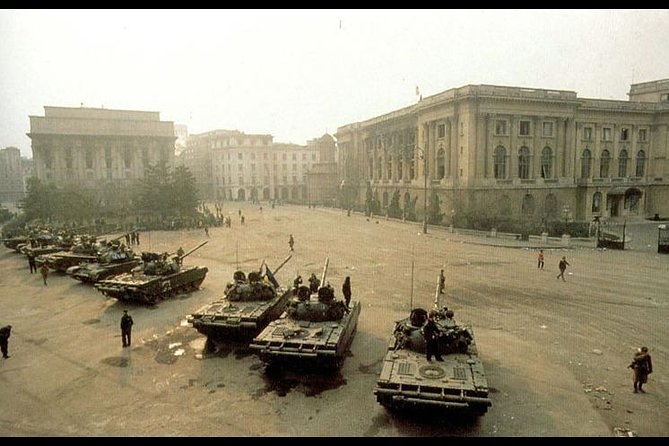
Bucharest can feel like a city that’s trying to shout over its own past. This tour uses that energy in a smart way: you walk past the power centers and the public stages where communist Romania was on display. Then you tie it back to how ordinary people actually experienced the system.
The real value is the connection. Instead of treating communism like a textbook chapter, you see how it shaped architecture, daily routines, food culture, and public space. That’s also why guides tend to tell the story with personal vignettes, not just dates.
At the same time, you’re not stuck on a long marathon. The route is about 3 hours, with multiple short stops that keep moving and keep you learning without burning out. For many people, that pacing is the difference between a tour you remember and a tour you forget.
You can also read our reviews of more tours and experiences in Bucharest.
Price and value: what you get for $32.65
At $32.65 per person, you’re not paying for luxury. You’re paying for a guided walk that covers five major points tied to communist history, plus a snack included. Most stops also have free admission, so you won’t keep adding tickets to your day.
Here’s the trade-off: the Palace of Parliament admission ticket is not included. That means your total day cost may rise if you decide you want to go inside or if you need a separate ticket for the visit. Still, even with that consideration, the mix of free-entry stops plus a dedicated guide tends to make the price feel fair for what you cover.
Another practical value point: you get an English experience with a mobile ticket. That cuts down on friction when you’re juggling a packed Bucharest itinerary.
Meeting at Patriarh Cathedral, ending at Revolution Square
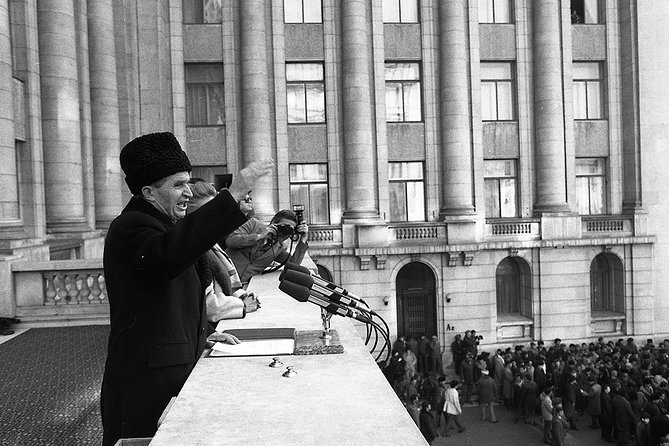
You’ll start at the Patriarchal Cathedral area (Aleea Dealul Mitropoliei 25, București) and end at Revolution Square (Piața Revoluției). The location choice matters. It anchors you in the historical geography of the city, so your last stop doesn’t feel like a random finale—it feels like the payoff.
The tour runs in all weather conditions, so you should assume you’ll be outside for most of the time. That’s why good footwear and layers are worth it. Even if it’s chilly, you’ll still get the learning benefits as long as you can comfortably handle a walking route.
Group size is capped at 15 travelers, which helps keep the tone focused. You’re less likely to feel like you’re part of a moving crowd, and more likely to hear details clearly—especially when questions come up.
Stop 1: Patriarchal Cathedral and the Great National Assembly
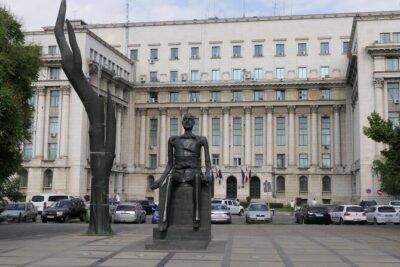
Your first stop is the Patriarchal Cathedral complex, where the focus is the former headquarters of the Great National Assembly during the communist period. This is a useful start because it frames communism as a system built on institutions—where decisions were made, where authority gathered, and where the public story was managed.
You get about 15 minutes here, and admission is listed as free. That combination is a good sign for the whole tour: you’re not paying to access the basic context, and you’re not spending so long at one site that the rest of the day loses momentum.
A smart way to approach this stop is to watch for contrasts. As you listen, look for what feels “official” and what feels like church life. That tension—between sacred space and state power—is one of the recurring themes of Bucharest under communism.
Stop 2: Palace of Parliament scale, symbolism, and the extra ticket
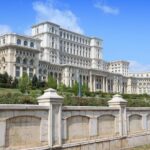
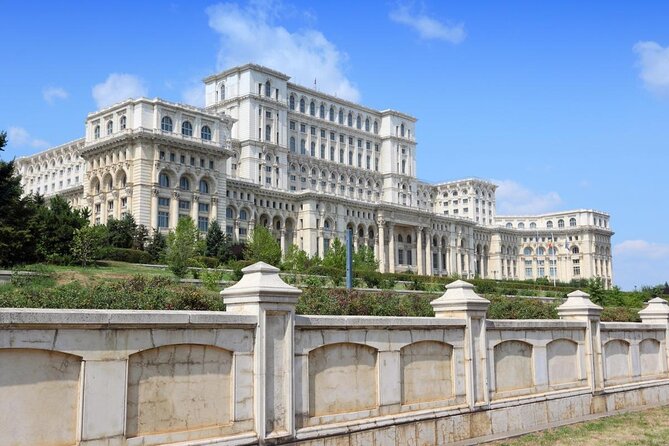
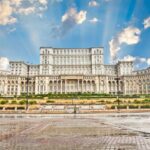
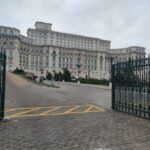
Next comes the Palace of Parliament, often described as the second largest building in the world. Even if you’re only there briefly, it’s hard to ignore the sheer scale. The tour uses that scale as a storytelling tool: you’ll learn how a building like this can signal control, ambition, and propaganda all at once.
Time here is about 15 minutes, and the note says the admission ticket is not included. Practically, that means you should not count on a full inside visit unless you arrange it separately. What you will get is the explanation and context that helps you interpret what you’re seeing.
Don’t rush this stop. Even standing and looking takes effort in Bucharest weather. Give yourself permission to absorb the size, then let the guide connect it to the political world that created it.
Stop 3: Mihai Voda Monastery and the story of the moved churches
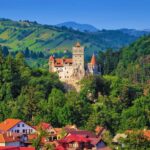
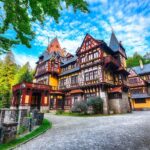
At Mihai Voda Monastery, the story shifts from big power statements to physical survival. You’ll learn how some churches from the 16th and 17th centuries were literally moved/translated rather than demolished.
That’s a powerful theme because it shows how change in communist Romania didn’t only happen on paper. It affected stone, neighborhoods, and the continuity of religious and cultural life. Also, with free admission at this stop, it’s a high-value point: you pay nothing extra to get the kind of detail that makes history feel real.
In about 15 minutes, focus on what the moving implies. People were not just governed; their heritage was rearranged. This is the type of detail that sticks because it’s visual and specific.
Stop 4: Old Town restaurants of communist leadership
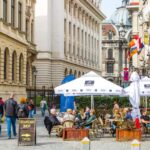
In the Old Town area, the tour zooms in on food and places linked to communist leadership. You’ll discover the story behind the restaurants that were favored by the leadership, and that angle turns a political topic into something you can picture.
This stop is also listed as free, with around 15 minutes. That makes it easy to fit into the day without feeling like you’re paying for every single moment.
What I like about this part is the practical connection. Food culture often changes when power changes. You’ll get the sense that everyday choices—where people ate, what they had access to, what was celebrated publicly—were shaped by the system.
If you’re the kind of person who remembers a city by its flavors and smells, this Old Town segment gives you a way to link Bucharest’s current vibe to its past.
Mid-tour coffee break and a snack with communist roots
You’ll have an included snack that’s described as surviving to present days from communist times. You may not get a history lecture with each bite, but the point is that you taste something linked to that era. That simple sensory anchor helps when the rest of the tour covers heavy topics.
From guides’ pacing, there’s also often a warm-up break midway. In colder months, that pause matters more than people expect. It gives you a reset so you can keep listening without feeling miserable.
I’d treat the snack break as part of the learning, not a distraction. Ask the guide what the snack represents in the era they’re describing, or use it as your cue to ask questions about rationing, daily life, and what people could realistically obtain.
Stop 5: Revolution Square and the 1989 fall in context
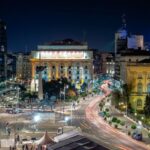
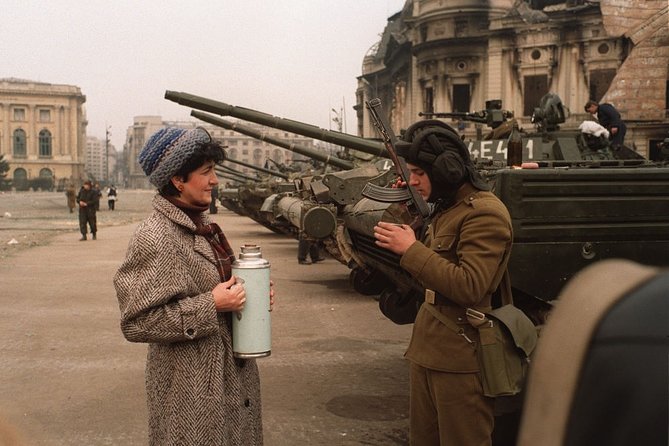
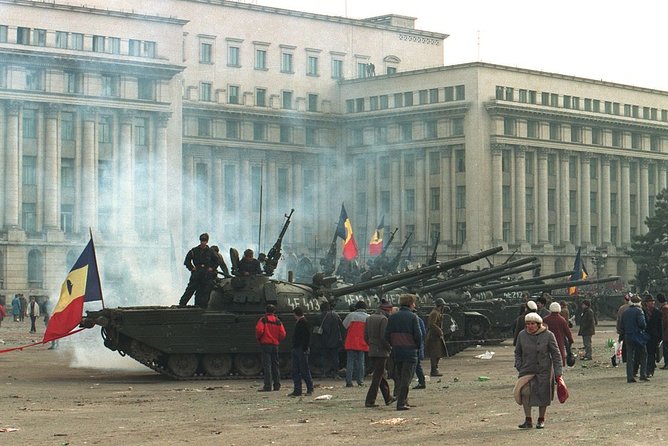
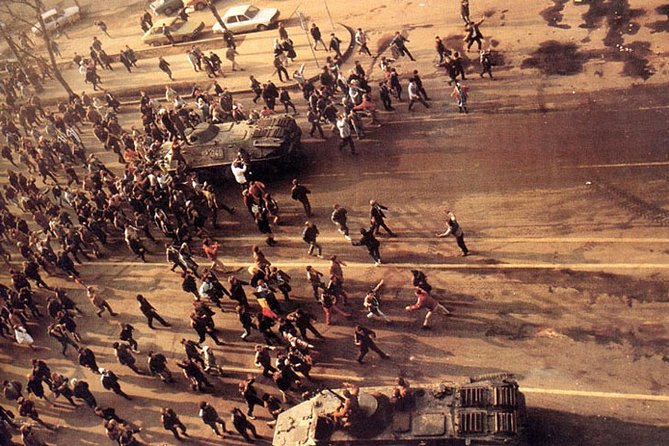
The tour’s final stop is Revolution Square, and this is where the story shifts from the machine of communism to the fracture that brought it down. The revolution against the Romanian communist party is described as the only bloody one in the former Iron Curtain, and you’ll learn about the last days of Nicolae Ceaușescu in power and the first days of freedom after 40+ years.
This end point is not just dramatic. It’s educational. When you reach Revolution Square after walking through the symbols of state power, the contrast lands harder. You can connect how a regime built on institutions and display faced a public uprising, and how that changed the meaning of the space itself.
Admission is free at this stop, and time is about 15 minutes. The trick here is to slow down. Let the guide connect what happened in 1989 to what it meant for everyday life afterward, not just the headline moment.
Ending here also makes your next move easy. You can walk off with your bearings aligned: you’ve just traced the political arc across the city’s key public rooms.
Guides and storytelling style: asking better questions
The tour’s strongest moments often come from how the guide tells the story. You might be led by instructors such as Oktavian, Daniela, John, Andrea/Andreaa, or Mihai, and the common thread is a focus on context plus human detail. Guides tend to explain not only what happened, but why it mattered to daily routines and to the way power shaped personal choices.
That approach matters because communist history is not just a list of events. It’s systems, compromises, shortages, and control of information. You can feel that in the way stops are connected: institutions and buildings show the structure, while rationing and personal memories show the cost.
My practical advice: ask questions early. If you want the tour to answer your curiosity—about architecture, food, leadership culture, or how the uprising played out—this is the time to steer it. With a group cap of 15, you’re less likely to get brushed aside.
Who this tour suits (and who might want something else)
This tour fits best if you like history that touches real life: how a regime affected food, religion, daily schedules, and public space. If you’re the kind of person who enjoys walking between landmarks and learning the story behind the stones, you’ll likely enjoy the pacing and the stop-by-stop clarity.
It also makes sense for architecture and city lovers, because the tour uses Bucharest’s communist-era constructions as evidence—not just scenery. And because most stops have free admission, it works as a value-friendly add-on to other Bucharest plans.
The main mismatch is for anyone who dislikes walking or gets uncomfortable in cold or rain. Since it runs in all weather conditions and has a moderate physical fitness level requirement, plan for uneven comfort. If you want a mostly indoor museum day, this may feel too exposed.
Should you book The Real tour of Communism?
I’d book this tour if you want a guided walk that explains communist Romania through specific Bucharest locations, not vague generalities. The combination of strong guide storytelling, a clear route (Patriarchal Cathedral to Revolution Square), and mostly free-entry stops makes it a solid value at this price.
I’d hesitate only if you’re certain you want to spend lots of time inside the Palace of Parliament. Since the admission ticket is not included, you may need to plan an add-on if interior access matters to you. Also, if you hate being outside in rough weather, adjust your expectations and dress properly.
If you’re ready to see Bucharest with sharper eyes, this is the kind of short tour that changes how you understand the city.
FAQ
How long is the tour?
The tour lasts about 3 hours.
Is the tour offered in English?
Yes, it is offered in English.
Where do I meet, and where does the tour end?
You start at the Patriarchal Cathedral on Aleea Dealul Mitropoliei 25, București, Romania, and you end at Revolution Square (Piața Revoluției, București).
How big is the group?
The tour has a maximum of 15 travelers.
Are tickets included for all stops?
No. The Palace of Parliament stop specifically notes that the admission ticket is not included. Other stops listed as free include the Patriarchal Cathedral area, Mihai Voda Monastery, Old Town, and Revolution Square.
What stops have free admission?
Catedrala Patriarhala, Mihai Voda Monastery, Old Town, and Piaka Revolukiei are listed as admission ticket free. The Palace of Parliament is not free.
Does the tour run in bad weather?
It operates in all weather conditions, and it notes that it requires good weather. If it gets canceled due to poor weather, you’ll be offered a different date or a full refund.
What is included in the tour?
Included is the 3-hour walking tour and a snack. A snack is described as surviving to present days since communist times.
Can I cancel for a full refund?
Yes. You can cancel up to 24 hours in advance for a full refund. If you cancel less than 24 hours before the start time, the amount paid is not refunded.