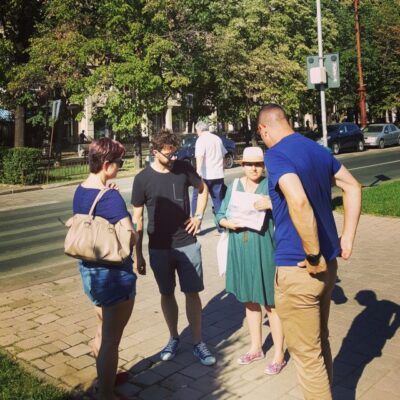
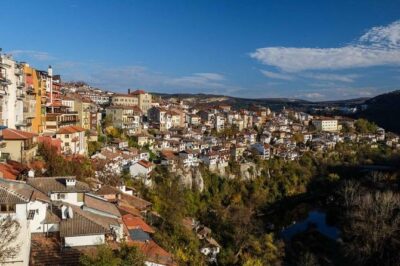
Bucharest’s quiet streets tell louder stories. This 2.5-hour English walking tour takes you into tucked-away corners and explains the city through Mahallas and Bucharest architecture with a local guide.
I especially like the balance of serious context and real-world breaks: you get refreshments in tea houses and summer gardens, not just photos of buildings. One possible drawback: it’s a walking route with moderate physical fitness needs, and you’ll want to plan meals yourself since snacks are included but food beyond that is not.
In This Review
- Key things to know before you go
- The price makes sense if you care about neighborhoods
- Meeting at the National Theatre Ion Luca Caragiale
- Strada Batiștei and the mahallas you can still feel today
- Parcul Ion Voicu: Belle Epoque mansions in a calmer pocket
- Refreshments in summer gardens and historic tea houses
- What the guide focus really means on the street
- How long it really takes and where you end up
- Walking comfort: what moderate fitness means in practice
- Who this tour is best for (and who might not love it)
- Practical tips to get the most from the Hidden Bucharest walk
- Should you book this Hidden Bucharest walking tour?
- FAQ
- How long is the Hidden Bucharest walking tour?
- What time does it start, and where do I meet?
- What does the tour cost?
- What’s included in the price?
- What isn’t included?
- Is it a walking tour, and what fitness level do I need?
- What’s the group size limit and language?
Key things to know before you go
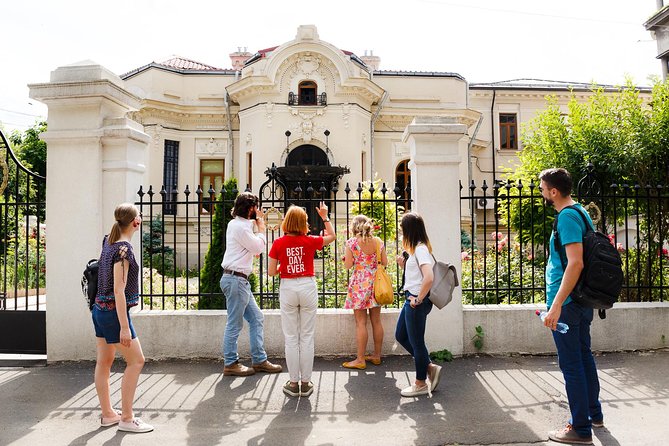
- Small group feel (max 12): you’re less likely to feel rushed, and you can ask questions as you walk.
- Free-entry stops: the main sights on the route are listed as admission ticket free, so you’re not stacking extra costs.
- Mahallas explained in plain language: you’ll understand how small neighborhood communities shaped today’s streets.
- Belle Epoque contrast at Parcul Ion Voicu: you’ll see late-1800s mansions in a calmer pocket of the city.
- Built for variety in pacing: guides may adjust the walk and access a bit, depending on what’s happening.
- Ending near Bd. Magheru: you finish at a well-known landmark area, handy for continuing on your own.
The price makes sense if you care about neighborhoods
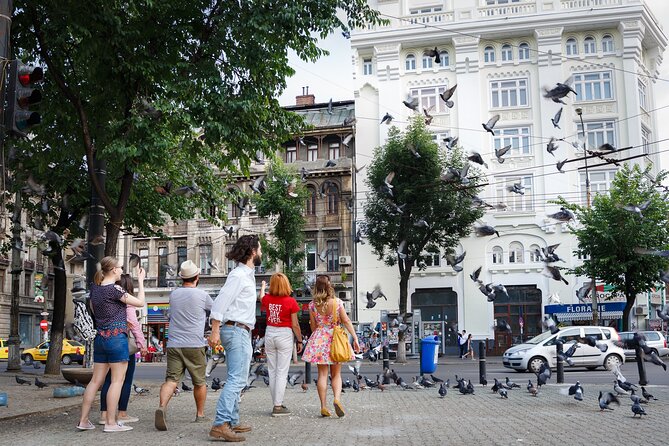
At $46.86 per person for about 2 hours 30 minutes, this isn’t a budget deal in the way that free-city tours are. But it’s good value for what you’re buying: a guided walk focused on architecture, neighborhood history, and small-city details—plus snacks and a local guide.
What helps is the way the stops are structured. The tour includes visits where admission is listed as ticket free, so your money goes toward interpretation, not ticket lines. And since it’s commonly booked about 37 days ahead, it’s worth reserving early if you want a specific day/time.
You can also read our reviews of more tours and experiences in Bucharest.


Meeting at the National Theatre Ion Luca Caragiale
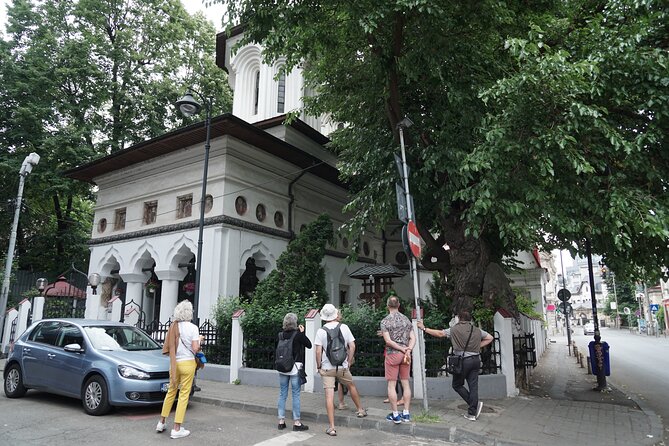
You start at the National Theatre Ion Luca Caragiale on Bulevardul Nicolae Bălcescu 2 at 10:00 am. This matters more than it sounds. Starting here anchors the day in the kind of grand architecture Bucharest is known for—then the route peels away from the big-view avenues into quieter residential streets.
The theatre stop is framed as a window into Bucharest’s complicated identity. You’ll hear how Bucharest’s development connected to the broader Ottoman sphere of influence even when the city itself wasn’t an Ottoman town in the strict sense. In practice, this gives you a theme you can carry into the walk: Bucharest is a mix-and-match city.
Time on this stop is about 30 minutes, and it’s listed as admission ticket free. That also keeps the whole morning from turning into a museum day. It’s built to be active, street-focused, and conversation-heavy.
Strada Batiștei and the mahallas you can still feel today
After the theatre, the route heads into the heart of what makes Bucharest interesting: the neighborhood logic called mahallas. These were smaller quarters that grew around religious buildings, often shaped by community identity—ethnic, social, or religious. You’re basically learning how the city’s map formed before the city’s modern branding.
Strada Batiștei is the story center here. As Bucharest grew, these smaller communities blurred into bigger neighborhoods. Then came the heavy pressure points: modernization waves, earthquakes, wars, and later the demolition projects under Nicolae Ceaușescu. You’ll connect the dots between the architecture you see now and the disruptions that left so much property in limbo—abandoned, restored, or repurposed.
This is also where the tour’s architecture focus becomes more than decoration. You get a sense of why certain streets still look layered. In one example of the kind of areas you might pass through, guides have walked people through pockets like the Armenian Quarter, Mantuleasa, and the Old Jewish quarter area often discussed alongside Batiștei. Exact streets and side stops can vary a bit with the group and the guide, but the theme stays consistent: multiple cultures side by side, and then the 20th century leaving its mark.
Time on this stretch is about 35 minutes. It’s listed as admission ticket free, which helps you keep momentum. You won’t feel like you’re paying for access; you’re paying for interpretation and direction.
Parcul Ion Voicu: Belle Epoque mansions in a calmer pocket
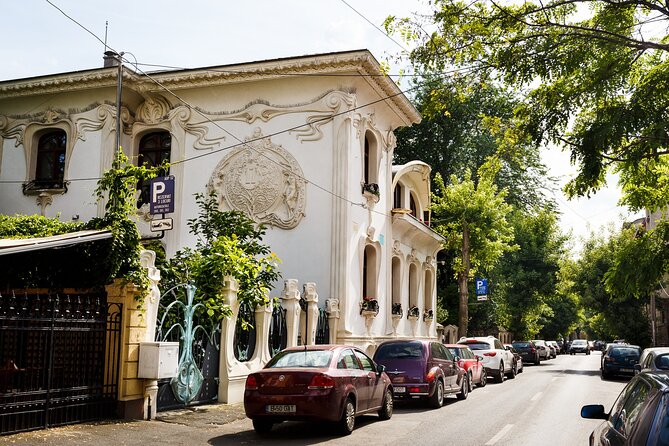
The final listed stop is Parcul Ion Voicu, with a stop time around 40 minutes. If the earlier part of the tour feels like the city’s brain—explaining how neighborhoods formed—this is where you let your eyes do the work.
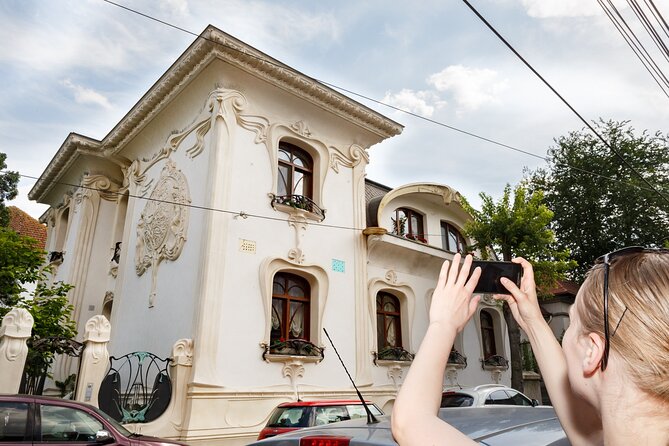
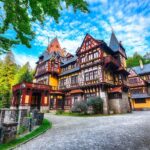
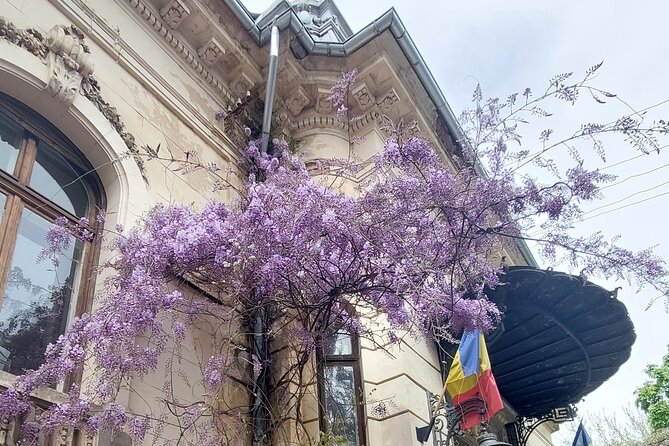
You’ll encounter a Belle Epoque area with mansions dating back to the late 19th century. This is a good counterweight to the idea that Bucharest is only about Communist-era blocks or broad, dramatic avenues. The park area reminds you that the city once projected a more European rhythm in its residential architecture.
And yes, it’s also a practical break. Even if you’re walking steadily, a park stop gives you a moment to reset: look at facades, notice details, and take photos without constantly stepping around crowds.
Refreshments in summer gardens and historic tea houses
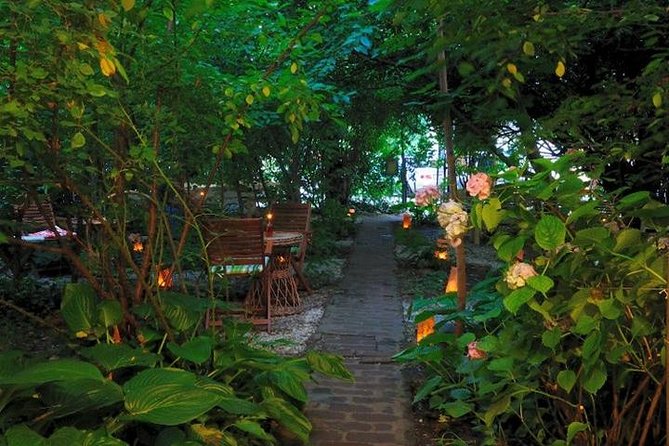
One of the nicer touches is that the tour includes snacks and sets up time for refreshments in summer gardens and historic tea houses. That sounds like a small detail until you’re out walking. A guided walk can turn tiring fast, especially if you’re the type who stops for every interesting doorway, balcony detail, and corner viewpoint.
This is also why the tour works well as a first or second day in Bucharest. You get orientation through streets and stories, but you’re also getting small pauses that feel like you’re hanging out with a local who knows where to rest.
Alcoholic drinks aren’t included, and food beyond what’s specified isn’t included either. So if you’re hungry beyond snacks, plan to eat after the tour ends.


What the guide focus really means on the street
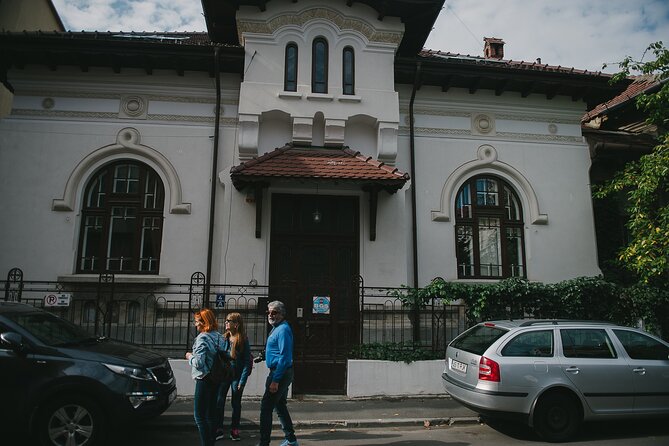
The strongest praise for this tour is how guides teach you to see. It’s not just “this building is old.” It’s how the pieces connect—architecture choices, neighborhood identity, and the push-pull of history.
You might meet guides such as Andrea/Andreea, Ioana, Mircea Constantin, Roxana, Lala, Tudor, or Elena. Names vary by date, but the style described is consistent: personable pacing, a clear explanation of what you’re looking at, and plenty of time for questions and photos.
Several guides are known for adjusting on the fly. For instance, there’s an example of a guide arranging extra help when a participant couldn’t walk the last stretch, which tells you these guides aren’t rigid robots. They’re still following the tour idea, but they can smooth the day if something unexpected happens.
Also pay attention to what people say about architecture identification. If you care about European-style details—French, German, Armenian influences, and also Communist-era scars—you’ll appreciate how guides point them out while you’re still standing in front of them.
How long it really takes and where you end up
The duration is listed as about 2 hours 30 minutes. Since it’s a walking tour with multiple stops, your real timing depends on:
- how long you pause for photos
- how many questions you ask
- whether the route includes any extra side streets based on the day
You start at the National Theatre and end at KFC, Bulevardul General Gheorghe Magheru 28–30. That end point is surprisingly helpful. Bd. Magheru is a major corridor, so after the walk you can connect easily to other parts of town.
The tour is offered in English and uses a mobile ticket. It’s also described as near public transportation, which helps if you don’t want to do a long pre-walk commute to the theatre.
Walking comfort: what moderate fitness means in practice
The tour requests moderate physical fitness. That usually means: you’ll be on your feet for the full walk, you’ll handle city sidewalks, and you’ll keep pace through multiple neighborhood blocks.
You should wear shoes that work on uneven pavement and aren’t fragile. People regularly mention comfort and footwear for this exact reason. If you have mobility limits, it’s smart to message the operator before booking to ask what adaptations might be possible.
Also keep in mind that you’re walking through real neighborhoods. That’s part of the point. But it means you should be ready for street-level travel: no long indoor buffers, no guaranteed big restrooms stops unless the day allows it.
Who this tour is best for (and who might not love it)
This tour is ideal if you want Bucharest to feel like a city with texture, not a list of landmarks. You’ll enjoy it most if you like:
- architecture details and how they change over time
- neighborhood history told through streets, not textbooks
- smaller, quieter corners away from the main avenues
It’s also a strong choice if you’re the type who loves photo stops and wants a guide to point out what to look for.
If you only want the loudest, most famous sights with big ticket museum interiors, this might feel too street-focused. And if you hate walking with limited sitting, you might prefer a shorter route or a ride-based city tour instead.
One more practical angle: it can sometimes run as a very intimate group. The tour caps at 12 travelers, and there are cases where the group ends up extremely small. That can make it feel more like a conversation walk than a lecture.
Practical tips to get the most from the Hidden Bucharest walk
Bring your curiosity. A lot of the tour is about noticing what you’d normally gloss over. I’d also plan for this reality: the tour includes snacks, but it doesn’t turn into a full meal day.
A few smart habits:
- Eat before you start, or plan lunch afterward. Snacks are included, but food isn’t automatically part of the package.
- Have comfortable shoes ready for steady walking.
- If you travel in warmer months, expect summer walking. The tour specifically mentions refreshments in summer gardens, which is a good sign the route is designed with heat in mind—but you’ll still want to dress for it.
- If you have specific photo interests (abandoned places, architectural details, doorway views), tell your guide. Many guides on this route are responsive to what people want to see.
Should you book this Hidden Bucharest walking tour?
If your goal is to understand Bucharest as a layered city—how different communities formed, how 20th-century forces changed neighborhoods, and how architecture reflects that—then yes, book it. It’s especially good value when you want a guided walk that doesn’t rely on big-ticket venues, because several stops are listed as admission ticket free and the guide work does the heavy lifting.
Book it if you’re happy walking for about 2.5 hours, and if you’ll be okay handling meals outside the tour. It’s also a good fit for your first day or your first full day, since you’ll come away with a map in your head: where the quiet streets are, why the neighborhoods look the way they do, and what to look for on your own after.
If you want a classic highlights-and-photos loop with minimal walking, you might feel more satisfied with something else. But if you like the kind of travel where the city starts talking back—through streets, facades, and stories—this one earns its reputation.
FAQ
How long is the Hidden Bucharest walking tour?
It lasts about 2 hours 30 minutes.
What time does it start, and where do I meet?
It starts at 10:00 am at the National Theatre Ion Luca Caragiale, Bulevardul Nicolae Bălcescu 2, București 010051.
What does the tour cost?
The price is $46.86 per person.
What’s included in the price?
Snacks and a local guide are included.
What isn’t included?
Alcoholic drinks are not included (available for purchase). Food and drinks are not included unless specified. Hotel pickup and drop-off aren’t included.
Is it a walking tour, and what fitness level do I need?
It’s a walking tour and the tour notes a moderate physical fitness level.
What’s the group size limit and language?
The tour has a maximum of 12 travelers and is offered in English.