REVIEW · BUCHAREST
Bucharest City Tour 2 hours – by Car with a Private Guide
Book on Viator →Operated by Nicolas Experience Tours · Bookable on Viator
Bucharest hits hard, fast, and in style. This 2-hour private car tour is a smart way to get your bearings quickly, with a licensed English-speaking guide/driver who makes the history click through stories and humor. Two things I especially like are the included ride costs (gas, parking, tolls, taxes) and the flexible route once you start. The main drawback to consider is that 2 hours is not long enough for slow, deep museum time or lots of walking.
You’ll move through the city by car, so you spend less effort on transit and more on understanding what you’re seeing. I also like that the guide can adapt the flow to your group, which matters when the weather or your interests shift. If you want food built in, you’ll need to plan that yourself since food and drinks are not included.
In This Review
- Key highlights you can count on
- A 2-hour loop by car that gets you oriented fast
- The value of a licensed English guide (and why it matters)
- People’s House and the Palace of Parliament: learning how power shapes cities
- National Village Museum: Romanian tradition you can actually picture
- Ceaușescu, the Revolution, and the buildings where it turned
- The Arc of Triumph: a symbol with exhibits you can use
- Romanian Athenaeum and the cultural core around it
- Price and what you actually get for $123.91
- Pickup, flexibility, and how to plan your timing
- Who this Bucharest city tour is best for
- Should you book this tour?
- FAQ
- FAQ
- How long is the Bucharest city tour?
- Is this a private tour or shared group?
- What language is the guide?
- Is pickup included?
- Do I have to pay extra for the car during the tour?
- What’s included in the tour price?
- What is not included?
- What ticket format do I receive?
- Can the itinerary be adjusted after the tour starts?
- What is the cancellation policy?
Key highlights you can count on
- Private car, just your group for the full 2 hours
- English guide/driver throughout so you’re not piecing things together alone
- No surprise car costs: taxes, tolls, parking, and gas are covered
- Communism-to-culture storyline across major landmarks and museums
- Flexibility after the start if you want to adjust the pace
- Mobile ticket and pickup arranged around your schedule
A 2-hour loop by car that gets you oriented fast
If Bucharest feels big or confusing at first, this style of tour helps. A driver-based route keeps you moving while your guide explains what matters, from communist power to Romanian cultural symbols. In a short window, it’s one of the easier ways to build a mental map of the city.
The tour is designed for first-time visitors and people with limited time, and the structure supports that. You get a concentrated set of stops tied together by themes, not random sightseeing. I like that the planning is tight but not rigid, thanks to the flexibility to change parts of the itinerary after it begins.
One practical note: because this is a drive-focused experience, you’ll want good photo habits. Many stops are best for viewing from the street or at the curb area, so bring a camera-ready mindset and expect shorter viewing moments between explanations.
You can also read our reviews of more guided tours in Bucharest


The value of a licensed English guide (and why it matters)
A private guide can be hit-or-miss, but this one has a clear strength: storytelling. In at least one well-rated family tour, the guide, Nicolas, was described as funny and engaging, and that kind of energy matters when you’re learning about heavy subjects like communism. He didn’t just list dates; he used humor and personal touches, including his own family life under communism, to keep the conversation alive.
That approach is useful for you because political history can turn into a lecture fast. When the guide adds a human angle, the buildings stop being abstract. You start connecting the power structures to everyday life, which makes the experience stick.
You’ll also appreciate that the guide/driver is licensed and available during the full tour. So if you want to ask a question in the moment—about a symbol, a building’s purpose, or what changed after 1989—you’re not waiting until a museum room is open.
People’s House and the Palace of Parliament: learning how power shapes cities
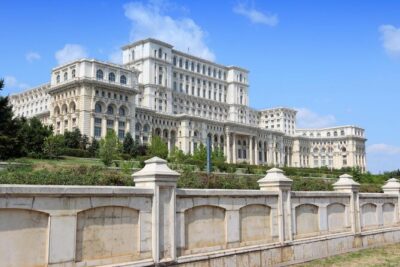
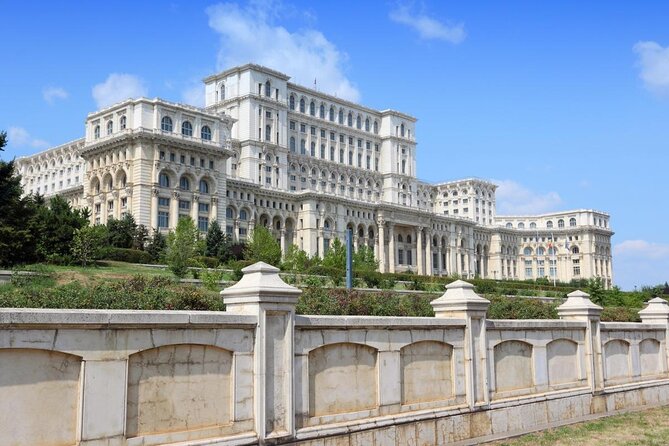
The tour’s first major theme is the architecture of control, centered on the People’s House, also known as the Palace of Parliament. This stop is where your guide frames what totalitarianism can do to a nation, and why the scale feels both impressive and damaging. You’ll spend time learning how the megalomania of a regime can turn into a physical imprint on an entire city.
What makes this stop powerful is the comparison your guide encourages you to hold in your head. The building is often discussed in terms of size and dominance, and you’re meant to feel small next to it. That emotional contrast is part of the learning here: the point isn’t only to admire, it’s to understand what the spectacle cost.
A quick consideration: this kind of stop can feel intense. If you prefer light, carefree sightseeing, build a bit of downtime after the tour. If you’re okay with serious history, you’ll likely find it one of the most memorable moments of your trip.
National Village Museum: Romanian tradition you can actually picture
Next up is the National Village Museum, which shifts the tone from political power to lived culture. The idea is simple but effective: you see an embodiment of Romanian traditions in one place, and you learn how villagers built an ecological and sustainable environment around them. It’s a reminder that most history is not just rulers and dates—it’s how ordinary people made life work.
This stop also gives you a visual map of Romanian regions. You’ll learn about traditional houses made from materials like wood and adobe, plus stone and other approaches depending on the area. The museum route is designed to help you notice differences and understand what stayed consistent, including national symbols like mills and wooden churches.
If you like museums that teach through atmosphere—how a place feels rather than just reading labels—this can be a strong choice. The caveat is time: because the tour is only about two hours, the museum will be more of a guided highlights visit than a full, slow exploration. Still, even a shorter visit can give you a clear baseline for what to look for later.
Ceaușescu, the Revolution, and the buildings where it turned
Communism in Romania isn’t only a chapter you read about—it’s anchored in specific locations, and the tour connects those dots. You’ll be transported back to the moment Nicolae Ceaușescu was ousted, and you’ll hear about the controversies around state security and offshore accounts. The goal is to explain how the regime’s power looked from the inside, and how it ended.
The Senate Palace stop matters because it ties directly to the Revolution of December 1989. Your guide will point out that this is tied to the place where the Central Committee of the Romanian Communist Party was housed, and it’s also linked to where the revolution began. It’s a location-based story, so you can connect the political turning point to the built environment.
Then there’s the Ceaușescu Mansion, the private residence of Nicolae and Elena Ceaușescu and their children from 1965 to 1989. The tour treats this as a kind of reality-check: private opulence at the top during a period marked by fear and control. You’re meant to see the mismatch between grand living and the human cost.
A consideration for you here: if you’ve got a strong preference for positive or celebratory sightseeing, this portion can feel emotionally heavy. But if you’re the type who wants context—why the city looks the way it does—these stops are essential.
You can also read our reviews of more city tours in Bucharest



The Arc of Triumph: a symbol with exhibits you can use
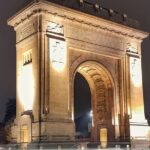
After the political story, you shift to a more symbolic and visual stop: the triumphal arch. The tour compares it to other famous arches, noting it’s about 27 meters tall, and you’ll learn how its design evolved through different phases. It’s not just a photo stop; the point is to understand how national symbols change as countries change.
If you’re lucky, the tour mentions the chance to admire four exhibits. Those are focused on key themes: the Great War for the Unification of Romania, heraldry of the Great Boyar families, the Arch of Triumph in pictures with photographs and scale models, and the Great Union of 1918. Even if you don’t spend forever in these displays, having a guided framework helps you read them instead of just passing through.
Practical tip: if any exhibit areas look open, don’t rush. A few minutes spent with the guide’s explanation can make the arch feel like a mini-history lesson rather than a standalone monument.
Romanian Athenaeum and the cultural core around it
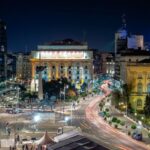
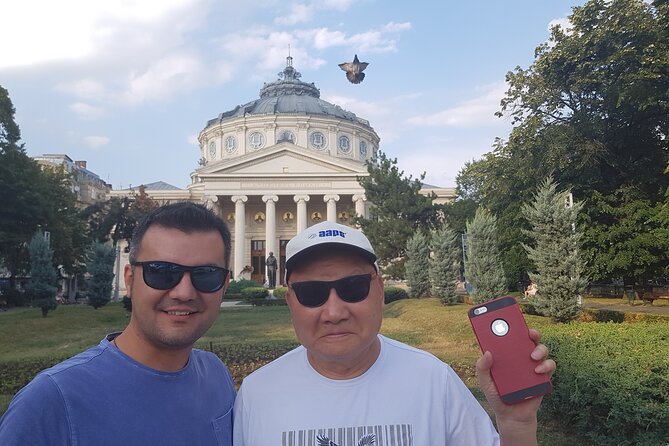
The tour ends with culture and architecture, centered around the Romanian Athenaeum. This building is presented as one of the most representative symbols of Romanian culture and often associated with Bucharest as well. It’s also part of the European Heritage list, and the tour frames that status as part of why it draws so many visitors.
From a visitor standpoint, this is a good landing point because it gives you something to admire after the heavier stops. You’ll be able to refocus on art, style, and national identity through a major landmark tied to Bucharest’s cultural reputation.
The route also covers the surrounding culture cluster: boyar houses, luxury stores, churches, restaurants, cafes, museums, state institutions, and statues. Some of the named sights you’ll encounter along this area include the Royal Palace, the Senate Palace (again, tied back to the earlier communist story), the National History Museum (formerly the Post Palace), the Lady’s Church, the CEC Palace, the Palace of the National Military Circle, Cantacuzino Palace, and the Central University Library.
One helpful way to think about this section: it’s where your brain connects the dots between “power,” “community life,” and “culture.” The city stops feeling like separate stops and starts feeling like one story.
Price and what you actually get for $123.91
At $123.91 per person for about two hours, the cost can look steep if you’re comparing it to a cheap walking tour. But the value changes when you look at what’s included.
You’re not just paying for a guide. You’re paying for a private car for your group, with gasoline, parking, and road tolls covered. Taxes are included too, and that removes one of the most annoying travel friction points: figuring out what you owe along the way.
For me, the best value argument is simple: if you’re landing in Bucharest with limited time, a concentrated route plus a guide who explains the meaning behind landmarks is often more efficient than piecing together multiple half-days on public transit. And if your group is small, the private car format can still be a reasonable way to keep everyone together.
What’s not included is food and drinks. So you’ll want to budget for at least a snack stop if you feel hungry, especially since the tour is focused on moving and explaining rather than eating.
Pickup, flexibility, and how to plan your timing
Pickup is offered, and you’ll need to provide your pickup time and address. That’s helpful if you’re staying outside the city center or want a specific pickup point near your hotel. Since the tour is private, you’re not locked into a group departure time and you can choose different tour times to fit your schedule.
The itinerary is also flexible after it starts. That’s not a minor detail. It can mean the guide can adjust pacing if you’re interested in one part more than another, or if you want to spend an extra minute taking in a viewpoint.
You’ll also get a mobile ticket, which makes it easier to show up without printing anything. Service animals are allowed, and the tour is near public transportation, which can be reassuring if you’re mixing plans.
And yes, most travelers can participate. So if you’re generally comfortable walking short distances at stops and spending most of the time seated during the car portion, this should work well.
One more practical note: because the tour is around two hours, you should avoid booking it right before something that requires you to sprint across town. Build in a buffer so you can get your bearings afterward.
Who this Bucharest city tour is best for
This works especially well if you’re:
- On a first Bucharest visit and want structure fast
- Interested in the link between communist-era power and the city’s buildings
- The type who learns best with a guided narrative, not just a list of landmarks
- Traveling with family or mixed ages who prefer comfort over long walking sessions
It may be less ideal if you want:
- A long museum day with lots of independent exploring time
- A completely casual sightseeing pace with minimal historical context
- Food included in the package
Should you book this tour?
I’d book it if you want to understand Bucharest without guessing. The private car format helps you cover a lot in just two hours, and the guide-driven storytelling keeps the stops meaningful rather than mechanical.
The best reason to choose it is the balance between heavy history and human-scale culture. You get the Palace of Parliament and Revolution-era locations, then you pivot to the National Village Museum and end at the Romanian Athenaeum area where the city’s identity shows through architecture and everyday life.
If your trip window is short, this is a smart use of time. Just plan for the fact that you’ll be sightseeing by drive, not lingering all day, and bring your own snack strategy since food and drinks aren’t included.
FAQ
FAQ
How long is the Bucharest city tour?
It runs about 2 hours.
Is this a private tour or shared group?
It’s private. Only your group participates.
What language is the guide?
The guide/driver provides the tour in English.
Is pickup included?
Pickup is offered. You’ll provide your pickup time and address.
Do I have to pay extra for the car during the tour?
No. All car expenses like gasoline, parking, and road tolls are included, along with taxes.
What’s included in the tour price?
The price includes the private car, a private licensed English-speaking guide/driver, and all car expenses and taxes.
What is not included?
Food and drinks are not included.
What ticket format do I receive?
You get a mobile ticket.
Can the itinerary be adjusted after the tour starts?
Yes, there’s great flexibility regarding changes to the daily itinerary even after the start.
What is the cancellation policy?
You can cancel for free up to 24 hours in advance for a full refund.