REVIEW · BUCHAREST
Bucharest: Alternative Sightseeing 2.5-3h-Hour Guided Tour
Book on GetYourGuide →Operated by MARA’S TOURS & TRAVEL · Bookable on GetYourGuide
Graffiti here tells real stories. This 2.5 to 3 hour walk spotlights street art and murals you will miss on a quick sightseeing day, and it’s built for great photo stops off the main routes. One caution: it’s more art-and-ideas than monuments, so if you want classic landmark photos only, this may feel oddly specific.
What makes it work is the human scale. You go in a small group (max 10), you hear how the city’s public walls connect to youth culture and activism, and the route includes real hangouts like coffee and food spaces—not just walls to look at.
In This Review
- Key highlights worth your attention
- Bucharest street art starts at Izvor Metro, not the postcard sights
- The small-group format keeps the conversation real
- Stop 1: Facultatea de Sociologie și Asistență Socială—where walls meet society
- Stop 2: The Epoque Hotel area—timing, texture, and context
- Stop 3: Beans & Dots Specialty Coffee—art culture has a daily-life side
- Stop 4: Kraft Market—small scene, big meaning
- Stop 5: Calea Victoriei—seeing street art against the main boulevard
- Stop 6: The Bram Stoker and Dracula masonic mural—symbols you can read
- Finish at Food Hood—end with something to do
- Price and value: what $47 buys for 2.5 hours
- Who should book this street art walk (and who might skip it)
- What to do before and during the tour
- Should you book Mara’s alternative Bucharest street-art tour?
- FAQ
- Where does the tour start?
- How long is the tour?
- How big is the group?
- What language is the tour in?
- What will I see during the walk?
- Is the guide included in the price?
- What should I bring?
Key highlights worth your attention
- Izvor Metro start point: easy to find, and the tour begins by training your eye right away.
- Small group of 10 max: you can ask questions and get answers instead of listening from the back.
- A focus on expression and activism: you learn how street art can act like a public voice.
- Photo-friendly mural routing: you pause where the art is meant to be seen.
- Multiple creative stops: coffee and markets help you understand the scenes behind the walls.
- Finish at Food Hood: a sensible place to keep exploring after the walk.
Bucharest street art starts at Izvor Metro, not the postcard sights
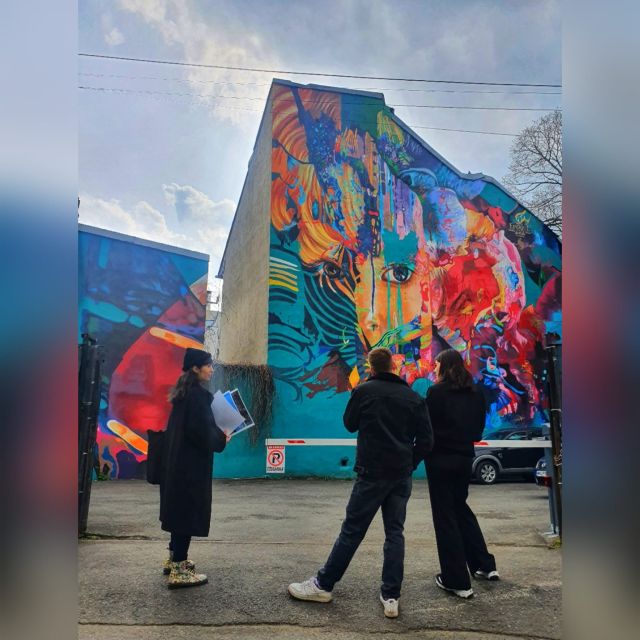
If you only skim Bucharest, the city can look like it’s all grand boulevards and formal facades. This tour flips that expectation fast. It starts right outside Izvor Metro Station, and within minutes you’re noticing the small signs of freedom of expression—not the big scripted attractions.
That first stretch matters. You learn what to look for: tiny stickers and tags, larger murals, and the way artwork changes how you read a street. By the time you hit the more colorful walls, your eyes are already calibrated.
The pacing is relaxed enough that you can take photos without sprinting, but you will still be walking. Wear comfortable shoes; one or two cobblier-like patches and uneven sidewalks in Bucharest add up.
You can also read our reviews of more guided tours in Bucharest

The small-group format keeps the conversation real
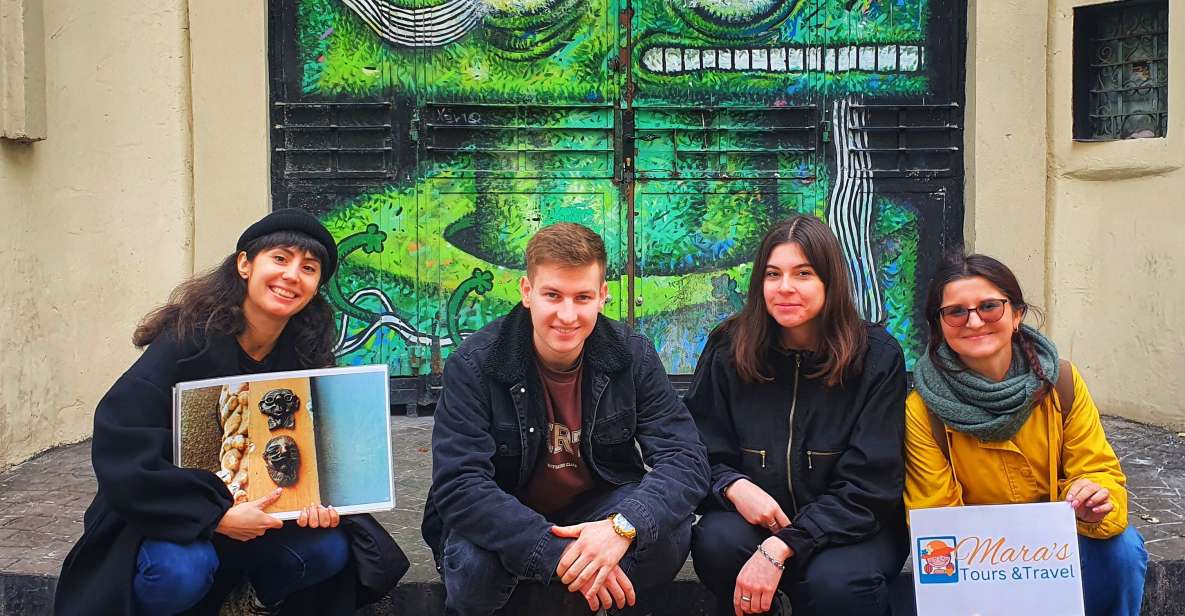
This is not a headset tour where you get the same facts as everyone else. The group is capped at 10 people, and that changes the vibe. You’re able to talk, ask, and compare interpretations as the guide explains what you’re seeing.
In the best moments, the guide doesn’t just talk at you. Some guides are known for prompting an interactive back-and-forth—inviting you to share what you think you’re seeing before the explanation lands. That style turns street art from something you either like or don’t like into something you can actually read.
You’ll also hear that guides bring different storytelling voices. Names that show up across English-speaking tours include Elena, Anca, and Helena. You may also meet guides with a distinct humor or storytelling approach, like the ones praised for making the route fun without turning it into a lecture.
Stop 1: Facultatea de Sociologie și Asistență Socială—where walls meet society
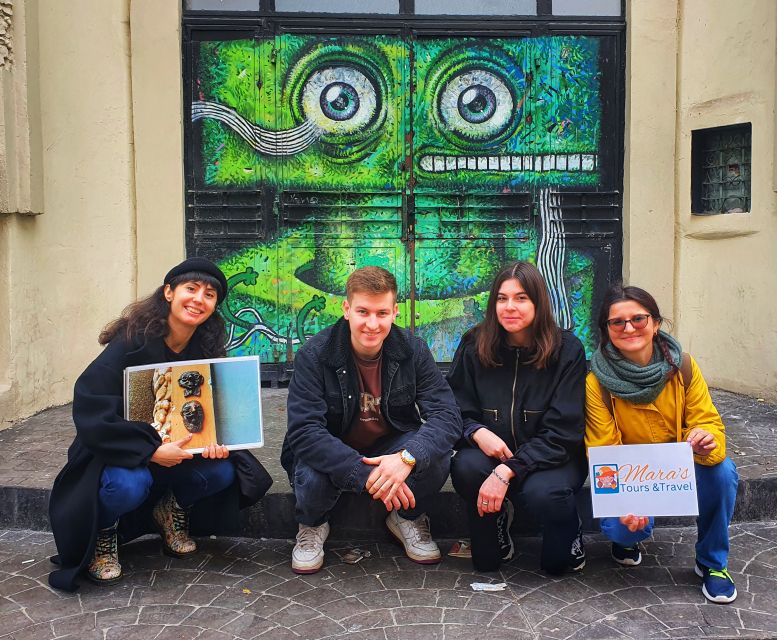
The first scheduled stop is at Facultatea de Sociologie și Asistență Socială, with a short guided segment. This is a smart choice for an alternative sightseeing theme because it anchors the day in the idea of public life: how people live together, how they disagree, and how they express it.
Even if you don’t read every symbol like a scholar, this stop teaches you a key lens: street art isn’t random decoration. It’s often a conversation about power, identity, and daily pressures. Starting near a sociology and social-assistance setting gives that concept a concrete starting point before you move into pure visuals.
What to watch for here
- How artwork relates to the surrounding public space
- Whether the street art looks like personal expression, group messaging, or commentary
A potential drawback
If you’re expecting mostly large murals immediately, the early stage may feel like setup. But it pays off later when you’re better at spotting meaning fast.
Stop 2: The Epoque Hotel area—timing, texture, and context
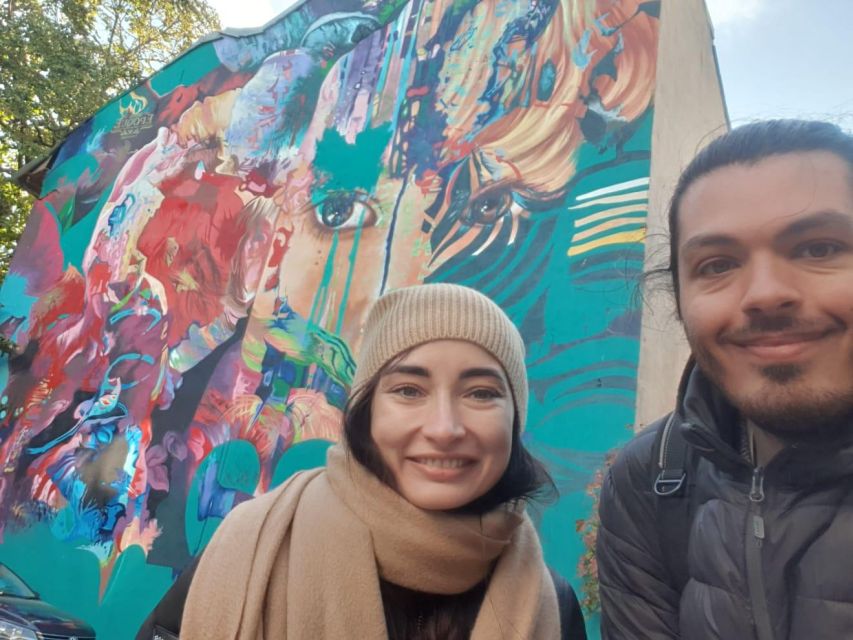
Next comes Epoque Hotel (about 20 minutes). This portion is less about a single signature artwork and more about how the city carries stories in layers. You’ll get time to look closely and then hear how the guide connects the setting to what street artists respond to.
In Bucharest, streets are not just backdrops. They’re communication channels. One of the tour’s strengths is pointing out how the same neighborhood can feel different depending on the art on the walls, and how that art shifts as the city changes.
This part is also useful if you like photography. You’re not only hunting murals; you’re learning how to include architectural texture and street geometry so your photos feel like scenes rather than snapshots.
Stop 3: Beans & Dots Specialty Coffee—art culture has a daily-life side
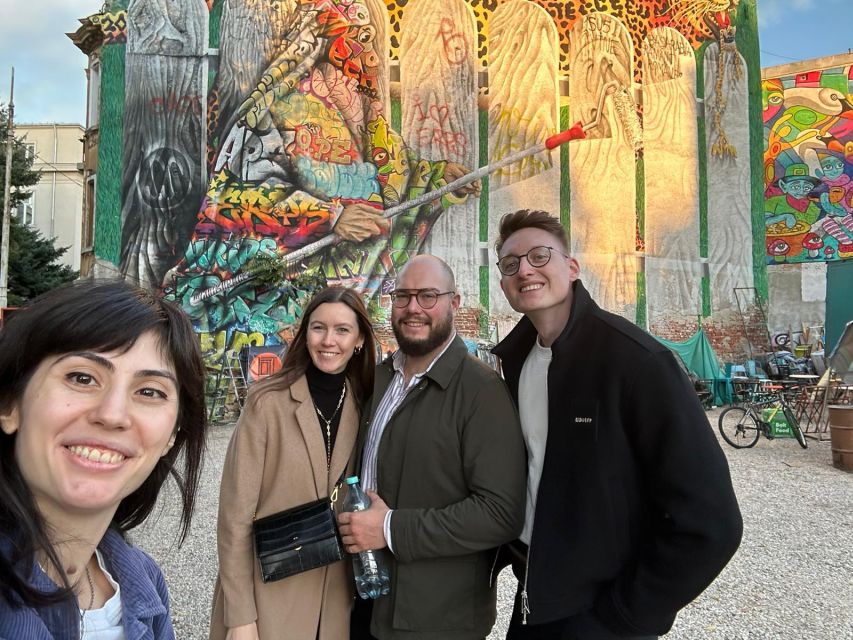
Then you hit Beans & Dots Specialty Coffee for coffee plus a guided stop (about 20 minutes). This is a practical and smart inclusion. Street art doesn’t grow in a vacuum. It grows next to hangouts where people talk, plan, and trade ideas.
Don’t expect this to be a museum-style break. The guide uses the coffee stop as an informal reset, giving you room to ask questions and bring your own reactions. If you’re the type who likes to process while walking, this stop gives you a moment to do it.
Why you’ll likely enjoy it
- You get a break without losing the thread
- You see the kind of spaces where creative communities tend to overlap
- It helps you understand Bucharest as lived-in culture, not only visual content
One note: the tour listing says a coffee stop is part of the route, but it doesn’t say a free drink is included. Plan on paying for your own coffee.
You can also read our reviews of more tours and experiences in Bucharest
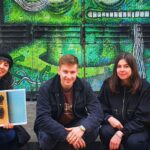

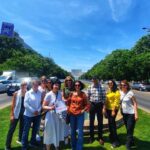
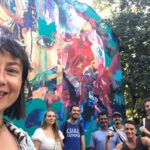
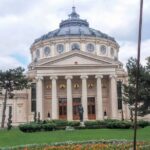
Stop 4: Kraft Market—small scene, big meaning
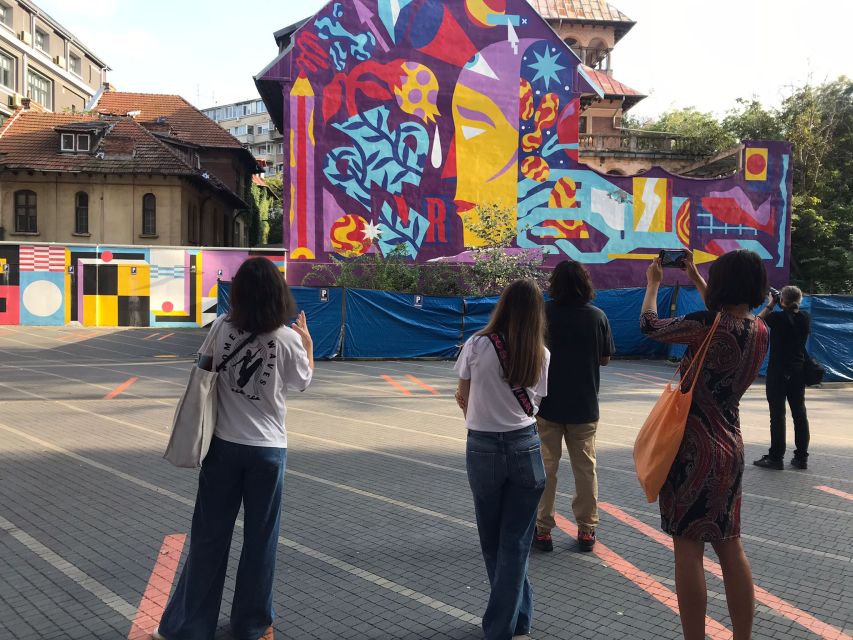
The next stop is Kraft Market for a short guided moment. Markets can seem like a quick photo pause, but here it works as a bridge between wall art and the people who move through the neighborhood.
You’re essentially learning how creative energy shows up in everyday consumption: where locals buy things, where they meet, and how a neighborhood can support the arts without needing official permission.
This stop also helps you understand why street art spreads. It’s not only about visibility. It’s about community support, visibility loops, and being part of the city’s ongoing conversation.
If you’re pressed for time once the walk ends, this stop also gives you an idea of where to return later—because the market vibe is the kind that makes you want to linger.
Stop 5: Calea Victoriei—seeing street art against the main boulevard
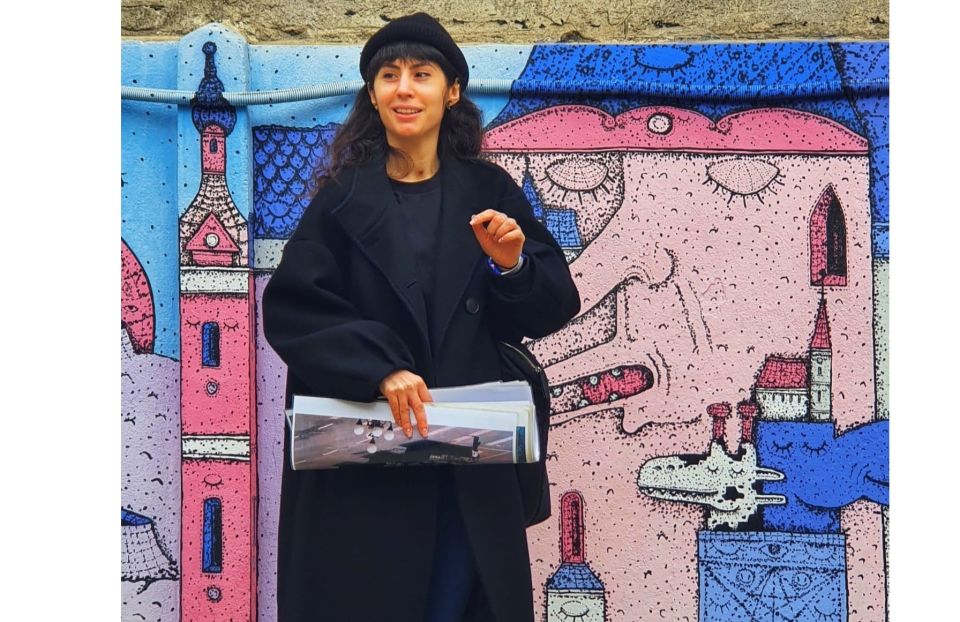
Then comes the big move: Calea Victoriei for a longer guided segment (around 30 minutes). This is a key moment for your perspective. When street art appears along a major corridor, it changes how you read both the art and the street.
On a tour focused on overlooked expression, placing street art near one of Bucharest’s more prominent thoroughfares tells you something important: the alternative scene is not always hidden in the margins. Sometimes it’s right in front of the traffic you thought you were sightseeing with.
This is also where the tour starts to feel like a real walk through public space. You’re seeing how messages compete with everyday noise—billboards, storefronts, signage—and still manage to communicate.
Photo tip
On a wide boulevard like this, watch for angles where the mural faces the street, not the sidewalk. You’ll get better compositions when the wall is readable at street level.
Stop 6: The Bram Stoker and Dracula masonic mural—symbols you can read
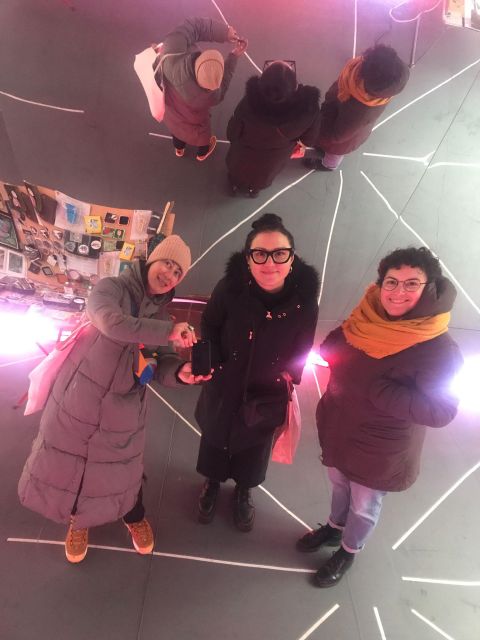
The final mural stop is Pictură murală masonică Bram Stoker și Dracula (about 15 minutes). This is the kind of artwork that makes street art fun for people who normally avoid it. It’s symbol-heavy, story-loaded, and it invites interpretation.
The guide’s job here is not to reduce it to one official meaning. It’s to show you how themes like literature, identity, and symbolism can cross over into public art. You’ll come away with a better sense of how Bucharest’s creative community borrows from past stories and reframes them for present-day audiences.
Mural art like this is also a reminder: street art can be more than slogans. Sometimes it’s mythology, sometimes it’s coded messaging, and sometimes it’s simply a way for artists to claim space.
Finish at Food Hood—end with something to do
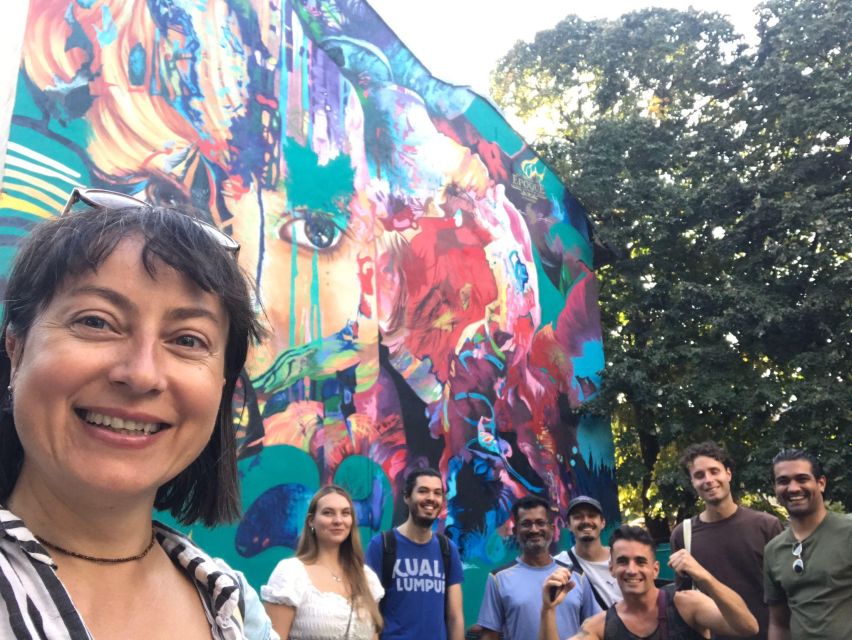
The tour ends at Food Hood. This finishing point makes sense. After walking and looking, you probably want a place that’s easy to reach again, where you can eat without planning a full second outing.
Use this as a decision moment:
- If you’re still energized, keep exploring nearby streets on your own.
- If you’re tired, grab a meal and let the tour’s ideas settle.
Either way, ending at a food-focused spot helps you keep momentum without turning the day into a checklist.
Price and value: what $47 buys for 2.5 hours
At $47 per person for roughly 2.5 hours, you’re paying mostly for three things: time with an English-speaking guide, a route curated around overlooked street art, and the benefit of learning context instead of just photographing walls.
If you’ve spent time in cities where guides rush you between big landmarks, this pricing can feel refreshingly direct: you’re not funding transportation to major monuments, and you’re not paying for “look at that” explanations. You’re paying for guided interpretation of the street-level art scene.
Also, the small-group cap (10 people max) pushes value upward. In a small group, you’re less likely to feel like you’re being coached from a distance.
The one trade-off is that you won’t get the typical top-10 sights. This tour is for the kind of traveler who wants Bucharest as a living city, not a highlight reel.
Who should book this street art walk (and who might skip it)
Book it if you:
- Like walking tours but want something that’s not just churches and palaces
- Want to understand how people express themselves in public space
- Enjoy street art enough to care about meaning, symbolism, and context
- Want a guide who can tell stories with personality and humor
Consider skipping if you:
- Only want classic Bucharest attractions
- Dislike visual art as a main focus
- Prefer shorter walks with lots of sitting (this is a walking route)
Also, if you’re the type who loves discussions, you’ll probably have a good time. A few guides are known for encouraging you to share your own reading of the artwork first, then offering their perspective.
What to do before and during the tour
Bring comfortable shoes. That’s the single most practical instruction, and it’s a good one. Bucharest streets can be uneven, and you’ll be on your feet for the whole route.
During the walk, try this approach:
- Don’t just photograph. Pause and look long enough that you notice the smaller details.
- Ask one or two questions that connect art to daily life, not just to technique.
- If the guide invites interpretations, offer yours. It makes the experience better, not harder.
If you like follow-through, keep an eye out for extra recommendations. Some guides are known for sending a follow-up email with tips after the tour, which can help you extend the street-art theme on your own.
Should you book Mara’s alternative Bucharest street-art tour?
Yes, if your idea of a great city day includes meaning as much as scenery. This route gives you a structured way to see Bucharest’s street art and graffiti while learning why it exists and what it says about people in the city now.
It’s also a smart first or early-day activity if you want to train your eyes. Once you’ve walked this kind of route, you start spotting signs of expression across Bucharest on your own.
Skip it only if you’re chasing famous landmarks and want a more conventional sightseeing format. If you’re open to a different lens—one that treats the street as a cultural document—this tour is a strong fit.
FAQ
Where does the tour start?
Meet your guide outside Izvor Metro Station.
How long is the tour?
The duration is listed as 2.5 hours (with a tour length range of about 2.5 to 3 hours).
How big is the group?
It’s a small group with a maximum of 10 participants.
What language is the tour in?
The live tour guide speaks English.
What will I see during the walk?
You’ll focus on street art and graffiti, including murals and other expressions of public creativity, plus a few stop-and-look breaks along the route.
Is the guide included in the price?
Yes. A guided tour with a live guide is included.
What should I bring?
Wear comfortable shoes, since it’s a walking tour.