REVIEW · BUCHAREST
Bucharest in a nutshell – Half Day Private Walking Tour
Book on Viator →Operated by Razvan Trancu tour designer · Bookable on Viator
Bucharest has two cities in every block. This half-day private walk in central Bucharest helps you read the city’s layers, from older street life to communist-era scars and what was rebuilt afterward. I like how the route is private (just your group) and how the guide can adjust to what you care about, including deeper threads like Jewish history. One thing to consider: it’s a solid walking session, and the tour does not include snacks or coffee.
The best part for me is the guide quality. Razvan Trancu is described as punctual with English that lands naturally, plus the kind of storytelling that connects politics, architecture, and everyday life. I also appreciate the pacing: you spend time outdoors where the meaning is visible, with longer stops at places like Revolution Square, not just photo stops.
As for a possible drawback, the tour is priced per group up to 10 people. If it’s only you or two people, the per-person cost can feel steep compared with shared tours.
In This Review
- Key things you’ll notice on this Bucharest walk
- A private half-day route built for momentum (not checklist fatigue)
- Pricing that makes sense only if you group up
- Where you start (Manuc’s Inn) and why the ending at the Athenaeum feels right
- Stop 1: Old Town and Lipscani, the two-cities idea made walkable
- Stop 2: University Square and the revolution-time meaning of education
- Stop 3: Ion Luca Caragiale National Theatre, outside views with resistance context
- Stop 4: Cercul Militar National (CCA), one of Bucharest’s eclectic showpieces
- Stop 5: Calea Victoriei, the main boulevard for almost 300 years
- Stop 6: Revolution Square (Piaka Revolukiei), the heaviest stop gets the most time
- Stop 7: Muzeul Național de Artă al României, the former royal palace context
- Stop 8: The Romanian Athenaeum, ending with music-and-arts symbolism
- How Razvan Trancu’s guiding style improves the whole walk
- Practical tips so you enjoy all 3–4 hours
- Should you book this Bucharest in a nutshell tour?
- FAQ
- How long is the Bucharest in a nutshell half-day private walking tour?
- What is the tour price, and how many people can be in the group?
- Is pickup available?
- Where do we meet and where does the tour end?
- What language is the tour offered in?
- Is this tour fully private?
- Are admission tickets included for the stops?
- Are snacks or coffee included?
- Is a mobile ticket provided?
- Is free cancellation available?
Key things you’ll notice on this Bucharest walk
- A private guide with room to tailor the route to your interests
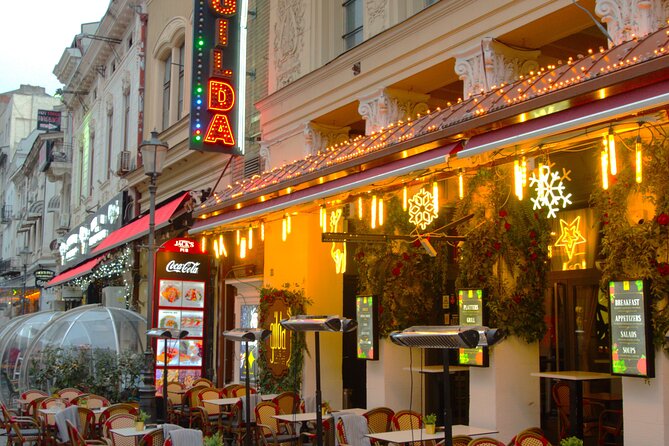
- Old Town + Lipscani to major squares in one connected loop
- Revolution Square gets the longer time for context, not rushed snapshots
- Architecture stops like Cercul Militar National (CCA) and the Athenaeum are treated as story clues
- English-language guiding with supporting materials mentioned in past experiences
- Mobile ticket + pickup option for a smoother start
A private half-day route built for momentum (not checklist fatigue)
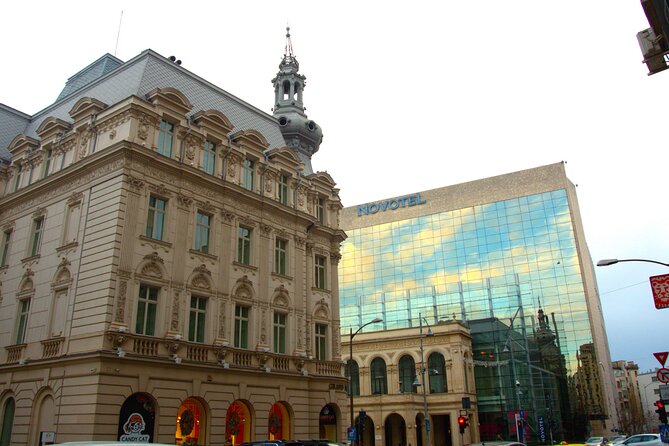
This is the kind of tour that works well when you want more than a quick hit of landmarks. You’re walking through central Bucharest with a guide who helps you connect the dots: why certain buildings look the way they do, what got destroyed, what got recreated, and what political forces shaped daily life.
You’ll typically get around 3 to 4 hours. The pace is practical: you start in the Old Town area, then move through University Square, the theater district, and on to Revolution Square before finishing at the Romanian Athenaeum. Each stop has a clear purpose, so you aren’t stuck listening while everyone waits to move on.
Also, because it’s private, the conversation can stay yours. If you’re interested in architecture, the emphasis shifts there. If you’re drawn to political history, the guide tends to spend more time on the social mechanics behind the big events. That flexibility is valuable in a city where so many layers sit on top of each other.
You can also read our reviews of more walking tours in Bucharest


Pricing that makes sense only if you group up
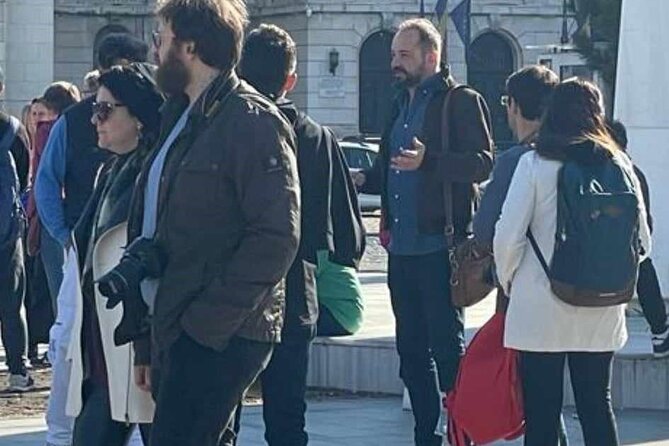
The price is $216.74 per group (up to 10). That can be great value when your group size is closer to the top end, because you’re basically paying for one guided experience that many people share.
Here’s the straightforward math:
- For 10 people, it’s about $21.67 per person.
- For 2 people, it’s about $108.37 per person.
So I’d think of this tour as a smart pick if you’re traveling with friends, or if your group wants a guide’s full attention without the noise of other language groups. If you’re solo, it can still be worth it if you really want a high-touch guide, but you should expect to pay for that one-on-one energy.
Where you start (Manuc’s Inn) and why the ending at the Athenaeum feels right
The meeting point is Hanul lui Manuc (Manuc’s Inn), on Str. Franceză 62. You’ll end at the Romanian Athenaeum, Strada Benjamin Franklin 1-3, near the National Art Gallery area (the listing notes it’s across from the National Art Gallery, next to the Intercontinental Athenee Palace Hotel).
That start-to-finish flow is more than convenient. Manuc’s Inn sits in the older pulse of the city, and finishing at the Athenaeum puts a spotlight on art and music as a kind of counterpoint to the heavier history you’ll cover earlier. It’s a satisfying emotional arc: you leave with context, then you end with a symbol of cultural identity.
Pickup is flexible and optional if you’re based downtown. If you’re staying central, that’s a real time-saver. If you’re not, you’ll likely prefer to reach the start point on your own rather than coordinating pickup far away.
Stop 1: Old Town and Lipscani, the two-cities idea made walkable
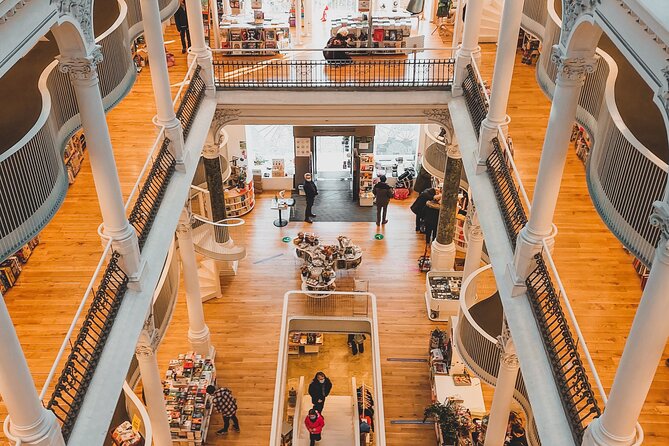
Your tour begins in Old Town, with a theme that matters in Bucharest: this is a city that grew up with a set of lives layered on top of each other—older Bucharest, rebuilt Bucharest, and the communist break that changed both the built environment and the mindset.
This is where you’ll be oriented to the “scars and reasons” behind what you see today. Expect a guided walk through major central areas like Lipscani and the Old Center, plus viewpoints toward larger arteries you’ll hit later in the tour. You’ll cover big landmarks in the central zone, and the time budget here is about an hour—enough to get orientation rather than just a quick pass.
Why this part works:
- You get the why behind the look. Bucharest’s architecture isn’t just pretty facades; it’s political and social evidence.
- Lipscani is a natural story spine. It’s one of the ways the city’s older street identity still shows through.
A note to keep in mind: the Old Town is where you’ll likely notice how Bucharest can look “rebuilt” in places. If that’s the kind of observation you like, you’ll enjoy this stop. If you prefer minimal historical context, you might find this start heavy, but the guide’s ability to adjust helps.
Stop 2: University Square and the revolution-time meaning of education
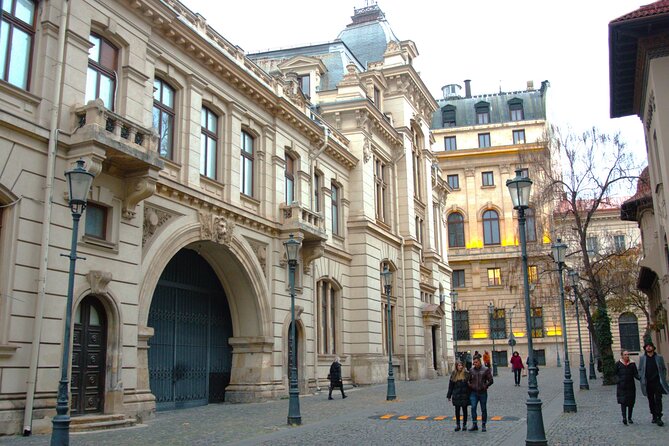
Next up is University Square. The focus here is on the anti-communist revolution and the way the education system has shaped Romania over time.
This stop is shorter (around 30 minutes), but it’s not a random photo stop. The idea is to help you understand how public institutions—especially education—become battlegrounds in political transformations. You’ll also get a sense of how major events can be interpreted through the city’s civic spaces, not just through dates in a textbook.
If you like history that connects systems to outcomes, University Square is a good match. If you’re mostly after architecture, you can still enjoy it, because civic buildings and public squares often reveal the intent behind the urban planning.
You can also read our reviews of more private tours in Bucharest



Stop 3: Ion Luca Caragiale National Theatre, outside views with resistance context
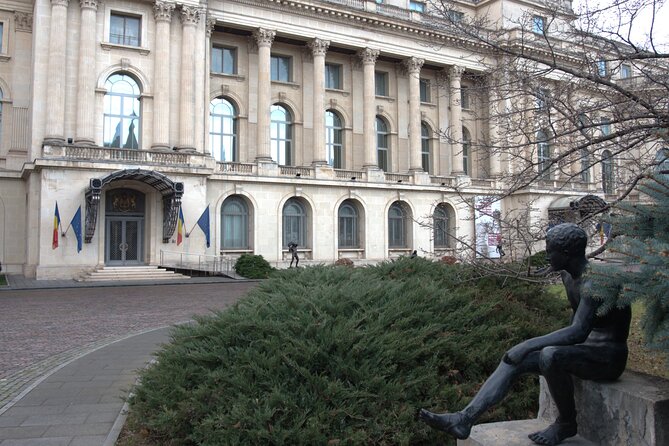
You’ll spend about 20 minutes at the Ion Luca Caragiale National Theatre area. The emphasis is on the outside view and details tied to anti-communist resistance events.
This is a smart choice for a walking tour. A theater building naturally invites questions about culture and public space, and the guide can tie those themes to the political reality of different eras. Instead of just pointing at what’s there, the context helps you see why that kind of cultural landmark matters when freedom and control are in conflict.
Drawback to consider: if you were hoping to go inside venues, this stop is described as an outside view experience. You’ll still learn, but it’s not a walkthrough of rooms.
Stop 4: Cercul Militar National (CCA), one of Bucharest’s eclectic showpieces
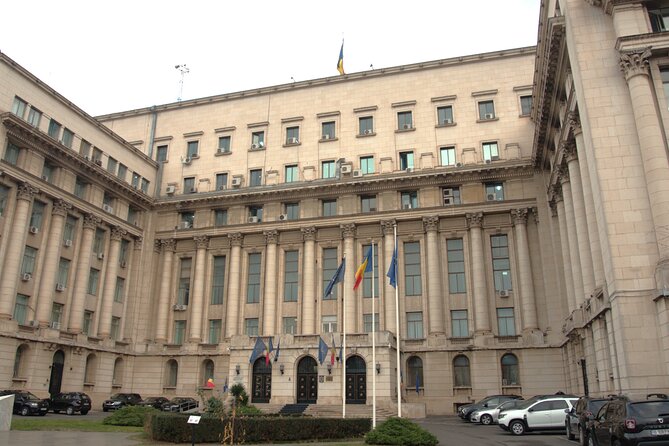
You’ll then hit Cercul Militar National (CCA) for about 10 minutes. This is a quick architecture hit: one of the beautiful eclectic buildings in the city, with an interesting story attached.
Ten minutes can sound short, but it’s the right size for a visual stop when the guide is giving you a few key facts that help you interpret details you’ll otherwise miss. In a city like Bucharest, style changes often track political and social changes. This stop sets you up for the later, more dramatic history near Revolution Square.
Stop 5: Calea Victoriei, the main boulevard for almost 300 years
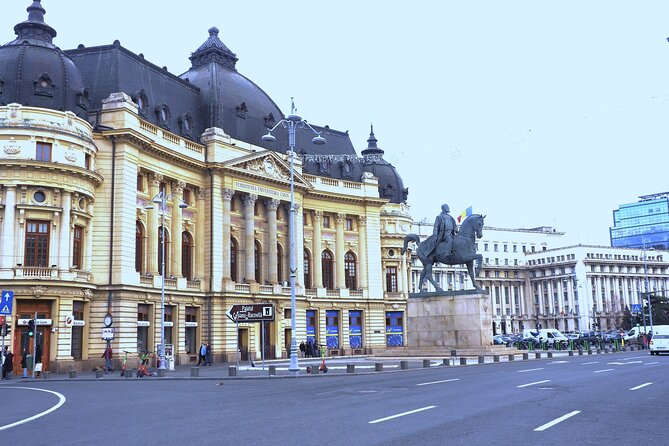
Calea Victoriei is next, with about 10 minutes set aside. This is Bucharest’s main street for around 300 years, and it comes with “secret corners hiding in plain sight.”
Here’s what you’ll probably enjoy: it’s a chance to see how the city’s main routes carry identity. Big boulevards aren’t just traffic corridors; they’re where power, trade, and public life tend to show themselves. The guide’s storytelling helps you notice transitions in style and civic purpose as you walk.
Stop 6: Revolution Square (Piaka Revolukiei), the heaviest stop gets the most time
Revolution Square is the anchor of the tour, with about 40 minutes. This is one of Bucharest’s most important landmarks, and it’s loaded with recent history.
You’ll cover the Central Committee of the Communist Party headquarters perspective, plus the role of the secret services, and the Revolution Memorial. Put simply, the guide uses this area to explain how a brutal political experiment played out on real ground, then how the city marked it afterward.
Why this stop deserves extra time:
- It’s where the city’s political story becomes physical. You’re not just learning about events; you’re looking at the setting where power operated.
- The contrast is intense. The square holds meaning that doesn’t disappear after the revolution.
One consideration: if you’re trying to keep your day light, this stop is where the emotional weight lands. It’s not a bad thing—just plan for it. Wearing comfortable shoes and keeping your head clear helps because you’ll likely want to absorb what the guide is connecting.
Stop 7: Muzeul Național de Artă al României, the former royal palace context
Next is the National Art Museum of Romania (Muzeul Național de Artă al României), about 20 minutes. The key here is that this former royal palace has a rich past and plenty of details you can catch with the right narration.
Even if you’re not planning to do a full museum visit, this stop can still work because the palace context shapes how you read the building. Palaces are political objects. They show what a state wanted to be, what it wanted to project, and how later eras reused or reinterpreted that symbolism.
A practical note: museum spaces can vary in how much you can see quickly depending on what’s open. This stop is framed as a tour moment, so treat it as a guided highlight rather than a full independent visit.
Stop 8: The Romanian Athenaeum, ending with music-and-arts symbolism
Finally, you end at the Romanian Athenaeum, also about 20 minutes. This is the temple dedicated to music and arts in the heart of the city, and it lands as a symbolic finish after the heavier political history.
What you’ll likely appreciate is the meaning of the building and how the guide ties it to Romanian identity. Finishing here works because the city’s story isn’t only about governments and regime shifts. Culture matters, and architecture like this helps you understand how Bucharest imagines itself.
If you have limited time in Bucharest, ending at the Athenaeum is also a smart way to set up your evening plans nearby. You’ll have a clear landmark in your head and a good sense of direction.
How Razvan Trancu’s guiding style improves the whole walk
A lot of walking tours give you facts. This one aims for understanding.
Razvan Trancu is repeatedly described as punctual with English that feels effortless, plus a kind, helpful manner that makes questions easy. He’s also noted for tailoring: people mention interest in Jewish history, and the guide adjusted the conversation accordingly.
One detail that stands out from past experiences is that he brings resource materials to support context. That matters because in a city like Bucharest, it’s easy to get lost in “what happened” without grasping “why it mattered.” Supporting materials help keep the story coherent while you’re standing in front of the real buildings.
The other consistent theme is emotional intelligence. That doesn’t mean the tour avoids hard topics. It means the guide handles heavy history with care, and keeps space for questions so you can absorb at your pace.
Practical tips so you enjoy all 3–4 hours
This is a walking-focused tour, with most of the value in outdoor sights and short connections between them. To make it smoother:
- Bring comfortable walking shoes for uneven pavement and longer stretches between squares.
- If you’re sensitive to the emotional weight of Revolution Square, take a slower pace and use the break moments to reset.
- Plan to manage your own snacks and water since those are not included.
- If you want museum content beyond the highlight stop, you can treat the end near the National Art Gallery and Athenaeum area as your next self-guided option.
Should you book this Bucharest in a nutshell tour?
Yes—if you want a tight, high-context overview without bouncing between far-apart areas. This is the right pick when you care about how Bucharest’s buildings connect to politics, everyday life, and cultural identity. The private format also makes it easier to ask questions, especially if you have specific interests like architecture or Jewish history.
I’d say skip it or think twice if your group is very small and you’re only looking for quick landmark photos. The per-group pricing is built for sharing value, and the tour is story-driven, not casual sightseeing.
If your ideal day is: meet at Old Town, learn what you’re seeing, then finish at the Romanian Athenaeum with a clearer sense of the city—this one is a strong match.
FAQ
How long is the Bucharest in a nutshell half-day private walking tour?
It runs about 3 to 4 hours.
What is the tour price, and how many people can be in the group?
The price is $216.74 per group, up to 10 people. It’s a private tour for only your group.
Is pickup available?
Pickup is flexible and optional if you’re based downtown. Otherwise, you can meet at the start point.
Where do we meet and where does the tour end?
Meet at Hanul lui Manuc (Manuc’s Inn), Str. Franceză 62. End at the Romanian Athenaeum, Strada Benjamin Franklin 1-3, near the National Art Gallery.
What language is the tour offered in?
The tour is offered in English.
Is this tour fully private?
Yes. It’s private, and only your group participates.
Are admission tickets included for the stops?
The stops are listed as admission ticket free. The tour does not include all fees and taxes, but the itinerary notes free admission at each stop.
Are snacks or coffee included?
No. Snacks and coffee and/or tea are not included.
Is a mobile ticket provided?
Yes, a mobile ticket is included.
Is free cancellation available?
Yes. You can cancel up to 24 hours in advance for a full refund.