Bucharest changes fast when you walk it. This past-and-present route turns big-city headlines into something you can see street by street, with stops tied to war, communism, and the Romania that came after. You’ll spend about 2 to 3 hours on foot, with a guide who keeps things organized and easy to follow.
I especially like the way the walk hits major landmarks at human speed, including University Square and Revolution Square. I also like the feel of a private group: your guide can match the pace to questions and interests, including families with kids.
One consideration: while the experience is offered in English (and guides may speak French/Italian), language comfort can vary if you’re aiming for a specific language.
In This Review
- Key things that make this Bucharest walk worth your time
- Why this walk tells Bucharest’s story better than quick photos
- Starting at the National Theatre: a clean way to get oriented
- University Square to Revolution Square: the past keeps interrupting the present
- The Royal Palace frontage and a quick pass-by that still matters
- The People’s House: seeing scale in the middle of a normal street
- A contrast stop: Stavropoleos Monastery and the quieter side of Bucharest
- Palatul CEC and Lipscani: architecture and commerce in the old streets
- Passing the National Museum of Romanian History on Victoriei Street
- Ateneul Roman: exterior today, possible interior if timing works
- What you actually get for $54.07: value check
- Pace, weather, and practical comfort on this route
- Who should book this Bucharest past-and-present walk
- Should you book? My take for most travelers
- FAQ
- How long is the Bucharest Past and Present step by step walking tour?
- What languages are the tours offered in?
- Is the tour entrance fee included?
- Can I visit the Ateneul Roman inside?
- Is this tour private or shared with other groups?
- What if the weather is bad or I need to cancel?
Key things that make this Bucharest walk worth your time
- A true private tour: only your group participates, not a mixed crowd
- Landmarks with context: Revolution-era buildings paired with Orthodox and old-town Bucharest
- Mostly free stops: lots of sights are free to view, so you spend time, not money
- A guide who adjusts: the pace and focus can shift if you want more architecture or more people-stories
- Ateneul Roman as a bonus: the exterior is included, and inside access depends on availability
Why this walk tells Bucharest’s story better than quick photos
Bucharest can feel like a city built in layers—old and new, hopeful and brutal, beautiful and unfinished. This tour uses that reality on purpose: you don’t just look at monuments, you connect them to what happened around them. The format is simple—short walks, frequent landmarks, and explanations that help you understand why each place matters.
The best part for me is how practical it is. You cover a compact area with major visual anchors like Revolution Square and the Parliament Palace, so you don’t waste your limited time chasing far-flung sites. And because it’s on foot, you can actually read the city: facades, street layouts, and the scale of communist-era construction that you’d miss from a distance.
Still, be honest about expectations. Many stops are view-only or quick pass-bys, and the Ateneul Roman inside is optional. If you want deep museum time or long interior visits, you’ll likely need to add those separately after the tour.
You can also read our reviews of more walking tours in Bucharest

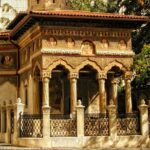

Starting at the National Theatre: a clean way to get oriented
The walk starts at the Ion Luca Caragiale National Theatre (Bulevardul Nicolae Bălcescu 2). That’s a smart starting point because it puts you right in the central action, so you can orient quickly and then keep moving with confidence.
From there, the first focus is University Square, including the National Theatre area and the Revolution Martyrs Memorial. This is where the tour gives you a baseline: Bucharest’s modern identity is tied to major political and social shifts, and the memorials help you understand that this city didn’t only change slowly—it was forced to change by events.
If you’re a first-timer, this opening works like a mental map. You’re not guessing what you’re seeing next. You know why the guide is pointing, and you’ll recognize more when the buildings start stacking up around you.
University Square to Revolution Square: the past keeps interrupting the present
Next you move to Piaka Revolukiei (Piata Revoluției / Revolution Square). This area is the tour’s big “before and after” zone, and it’s easy to see why. Revolution Square sits at the center of Bucharest’s modern political storyline, and multiple landmarks around it reflect different eras and ideologies.
You’ll get a close look at the Royal Palace area, plus the Romanian Atheneum, and you’ll also see references to the Communist Party Headquarters and the Rebirth Memorial. Even if you can’t quote every detail, the guide’s role here is to make the connections clear: what Bucharest tried to project in different decades, and how those choices shaped what stands in front of you now.
Two advantages of hitting Revolution Square on a guided walk:
- You’ll spot relationships between buildings, not just individual monuments.
- You’ll understand why the same city can feel cheerful on one corner and heavy on the next.
There’s also an important nuance: much of what you see here is best understood with people-and-politics context, not just architecture trivia. If you lean toward stories, this part is a strong match.
The Royal Palace frontage and a quick pass-by that still matters
As you move through the Revolution Square area, you’ll pass the front of the museum linked to the Royal Palace. The time at this point is brief, so you won’t get a full interior experience. But it’s still useful, because the exterior presence helps you place what you’ve just heard.
This is one of those moments where the tour quietly fixes a common problem: without context, you might walk past a building and assume it’s just another facade. With the explanation, you start to see how Bucharest uses architecture as a political statement.
If you hate being rushed, don’t worry too much. The stops stay short on purpose; they keep you moving while your guide builds the bigger picture.
The People’s House: seeing scale in the middle of a normal street
Then comes the Palace of Parliament—often called the People’s House—tied directly to the dictator’s orders. You’ll get about 15 minutes here, which is long enough to notice scale and setting even if you don’t go inside.
This is one of those Bucharest moments you can feel in your body. The size of communist-era projects isn’t just a fact; it changes how you walk, where you look up, and how the square feels around you. On a busy day, it’s also the kind of stop where the guide’s timing helps—because you can appreciate the place without turning it into a marathon.
A practical note: since the time is limited and this is mostly a viewing stop, it’s smart to treat it as an orientation experience. If you later decide you want deeper details or interior access, plan a separate visit.



A contrast stop: Stavropoleos Monastery and the quieter side of Bucharest
After the heavy scale of the Parliament Palace, you shift toward a completely different rhythm at Stavropoleos Monastery, an Orthodox monastery from 1724. The stop is short (about 10 minutes), but it’s designed to reset your perspective.
Why it works: Bucharest isn’t only big political architecture. It also has living religious spaces that represent older layers of city life. Even with a quick visit, you can feel the contrast between eras—different materials, different tone, different sense of what matters.
If you like variety in your walks, this is where the tour earns it. You go from state power to spiritual heritage without needing a long transfer.
Palatul CEC and Lipscani: architecture and commerce in the old streets
Next you see Palatul CEC, known for its eclectic architecture. This is a shorter stop (around 5 minutes), and it plays a useful role: your guide gives you a sense of how Bucharest’s commercial identity grew and changed, not just its political identity.
Then you head to Lipscani, the old merchants street. This is about atmosphere as much as it is about history. Lipscani gives you the human pace of the city—where Bucharest’s older commercial life and street culture come into focus.
One of the strengths of the walking format is that it helps you understand how a place functions. At Lipscani, you’re not stuck in a “site” bubble. You’re in the kind of street that still shapes where people go next.
If you end up wanting to explore further on your own, this is the part of the route that usually helps you decide where to wander after the tour.
Passing the National Museum of Romanian History on Victoriei Street
As you travel between the Parliament area and the tour’s old-town direction, you pass by the National Museum of Romanian History on Victoriei street. This isn’t an interior visit here, and the time is brief (about 5 minutes).
But it’s another orientation stop. It helps you connect what you’ve learned to a place you might want to return to later. If museums are your thing, you can treat this as a prompt to plan an extra visit.
Ateneul Roman: exterior today, possible interior if timing works
You’ll also see the Ateneul Roman (Romanian Atheneum). The exterior visit is included, and an inside look at the entrance lobby and concert hall may be possible if availability allows. Inside access is not guaranteed, so keep your plans flexible.
Even just from the outside, it’s a reminder that Bucharest isn’t only about power and survival. Cultural institutions matter too, and the guide’s commentary helps you place that importance in the city’s overall story.
This is also a good moment to ask questions. If you’re interested in arts, music, or how Bucharest promotes culture after political upheavals, you’ll get better value if you use the guide’s knowledge here.
What you actually get for $54.07: value check
At $54.07 per person, this tour can feel like a bargain or a splurge depending on who you travel with and how you like to experience cities.
Here’s why the price can be good value:
- You’re paying for a private, experienced English/French/Italian speaking guide, not just a self-guided route.
- Many key viewing stops are free to see from outside, including University Square, Revolution Square landmarks, the Parliament Palace exterior, the monastery area, and old-town streets.
- The tour runs about 2 to 3 hours, so you get a coherent route without burning an entire day.
It becomes even better if you’re traveling as a small group where the “private guide” cost makes sense split up across your party. If you’re solo, you may still feel the value if you want guided explanations and you dislike trying to connect these sites on your own.
One more small detail that affects value: meals and drinks are not included. Plan for a snack or water break, especially because Bucharest walking can add up faster than you expect.
Pace, weather, and practical comfort on this route
The tour is designed for most travelers to participate, and it’s near public transportation. Service animals are allowed, which is a helpful detail if you need that kind of support.
The experience does require good weather, so if rain is in the forecast, you should be ready for rescheduling. This isn’t just a comfort issue; bad weather makes outdoor viewing stops less enjoyable and harder for a guide to manage.
Also, plan for walking comfort. Even though the tour itself is fairly compact, you might add time if you choose to walk from your hotel to the meeting point. One helpful example from guide feedback: people who walked from their hotel (around half an hour each way) found the city was easy to navigate on foot—but it added extra time to the day. If you have a tight schedule, don’t assume everything will fit neatly into 2–3 hours door-to-door.
Who should book this Bucharest past-and-present walk
This is a great fit if you:
- Want a first look at Bucharest’s biggest contrasts without a long travel day
- Prefer guided stories tied to real places, not just a list of attractions
- Enjoy architecture, but also want the human side—how people lived through political change
- Travel with teens or younger kids and want a pace that keeps everyone engaged
It may be less ideal if you:
- Want mostly interior museum time (this is mostly view and short stops)
- Need a specific language with consistent phrasing and you’re extremely sensitive to language quality
- Hate outdoor walking in questionable weather (it’s weather-dependent)
Should you book? My take for most travelers
If you’re in Bucharest for a short trip, I’d strongly consider booking. This route does a smart job of connecting the city’s political landmarks to older cultural and street-life Bucharest in just a few hours.
The biggest reason to book is the format: private guide + compact walk + lots of free outdoor viewing. That combination means you get context without turning your day into a ticket-chasing exercise. And with the guide pacing feedback being consistently positive (including people noting help with metro navigation back to their hotel), you’re not left on your own with a “good luck and good sightseeing” plan.
On the other hand, if you’re only interested in museums or you want guaranteed interior access, you’ll probably need to plan additional stops after this walk.
FAQ
How long is the Bucharest Past and Present step by step walking tour?
It lasts about 2 to 3 hours.
What languages are the tours offered in?
The guide is offered in English. The tour also notes that the guide can speak English/French/Italian.
Is the tour entrance fee included?
Most stops listed on the tour are free to view (with free admission noted). The Ateneul Roman inside visit is optional and not included.
Can I visit the Ateneul Roman inside?
You can do an exterior visit as part of the tour. Inside access (entrance lobby and concert hall) is optional and depends on availability.
Is this tour private or shared with other groups?
It’s private. Only your group will participate.
What if the weather is bad or I need to cancel?
The experience requires good weather. If it’s canceled due to poor weather, you’ll be offered a different date or a full refund. You can cancel for a full refund if you cancel at least 24 hours in advance.