REVIEW · BUCHAREST
Bucharest Walking Tour with a Native Italian Speaking Guide
Book on Viator →Operated by S.C. Viaggiare Bucarest S.R.L · Bookable on Viator
Bucharest looks different with a storyteller on your arm. This 2.5-hour walking tour ties together old churches, passageways, and the biggest political landmarks—guided by a native Italian speaker with funny anecdotes along the way. It’s a small-group format (max 15) that feels personal without turning into a slow, drawn-out crawl.
I like that you get real architectural variety fast: starting at the Stavropoleos Monastery and then shifting through squares, the BNR Palace area, and the elegant streets toward the big civic sites. I also like the guide style—often Giuseppe or Filippo—serious about facts but clearly comfortable making the walk enjoyable, with humor that keeps attention from drifting.
One thing to consider: the stops are brief (about 10–20 minutes each), so this is ideal for getting oriented and learning stories, but not for a long, leisurely self-guided museum visit. If you want to linger inside every building, you’ll likely need a second trip later.
In This Review
- Key things that make this Bucharest walk worth your time
- Meeting in the Old Center: Strada Stavropoleos to Parliament at Piața Constituției
- Your Native Italian Guide: Giuseppe or Filippo’s Friendly, Professional Tone
- Stavropoleos Monastery: Brâncoveanu Frescoes in the Center
- Curtea Veche Square: Saint Anthony Church, Princely Court Ruins, Manuc’s Inn
- Lipscani: The City’s Nightlife Heart on Foot
- BNR Palace: Belle Époque Charm Next to the Romanian National Bank
- Macca Villacrosse Passage: A Passageway That Works in Any Season
- Calea Victoriei and Umbrella Street: Elegant Architecture and a Quick Photo Moment
- Piata Revolukiei: Understanding the 1989 Revolution Around Key Landmarks
- Piaka Constitukiei and the Parliament Building Outside: Scale You Can See
- Price and value for 36.76: A guided orientation sprint
- Weather, comfort, and practical tips that make the walk easier
- Should you book this Bucharest walking tour?
- FAQ
- How long is the Bucharest walking tour?
- What does the tour cost?
- Is there a limit on group size?
- What language is the guide?
- Where do we meet and where does the tour end?
- Are the entry tickets included?
- What happens if the weather is bad?
- Can I cancel and get a refund?
- Do I need a paper ticket?
Key things that make this Bucharest walk worth your time
- Small group (max 15) means easier questions and smoother pacing
- Native Italian guidance keeps the explanations lively and personal
- A tight “greatest hits” route from Stavropoleos to Constitution Square
- Free-site stops noted on the route, so you’re not stacking extra entry costs
- Revolution Square context for 1989 helps landmarks make sense, not just look impressive
- Outdoor walking with a weather requirement, so plan for comfortable layers and shoes
Meeting in the Old Center: Strada Stavropoleos to Parliament at Piața Constituției

The tour starts at Strada Stavropoleos 5 in Bucharest, with a 10:00 am start time, and finishes at Piața Constituției. Expect a walking loop through central neighborhoods, moving from religious architecture into commercial and political Bucharest without long transit breaks.
I find this kind of route perfect if it’s your first day in town, because you can come away with a mental map right away. You’ll also appreciate the mobile ticket setup, since you’re not dealing with printouts while you’re trying to stay focused on streets and buildings.
Because it’s capped at 15 participants, the pace stays organized. Still, it’s a walking experience, so wear shoes you’re comfortable in for a couple hours on uneven sidewalks.
You can also read our reviews of more walking tours in Bucharest


Your Native Italian Guide: Giuseppe or Filippo’s Friendly, Professional Tone
What makes this walk feel different is the guide’s approach. The tour is specifically native Italian speaking, and the guides mentioned—Giuseppe and Filippo Dicataldo—are described as prepared, professional, and funny in a way that actually supports the learning.
In the feedback I’m drawing from, Giuseppe is praised for professionalism and sympathy, and Filippo is praised for clear, excellent information plus humor that reaches even people who aren’t the “take notes” type. There’s also a repeated theme that these guides know Romania well from years on the ground (with Filippo referenced as in Bucharest since 1990 and Giuseppe since 1991).
If you don’t speak Italian well, this is the one part you should double-check before booking. The tour is built around an Italian-speaking guide, so the more you follow the language, the more you’ll get out of the stories.
Stavropoleos Monastery: Brâncoveanu Frescoes in the Center
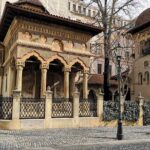
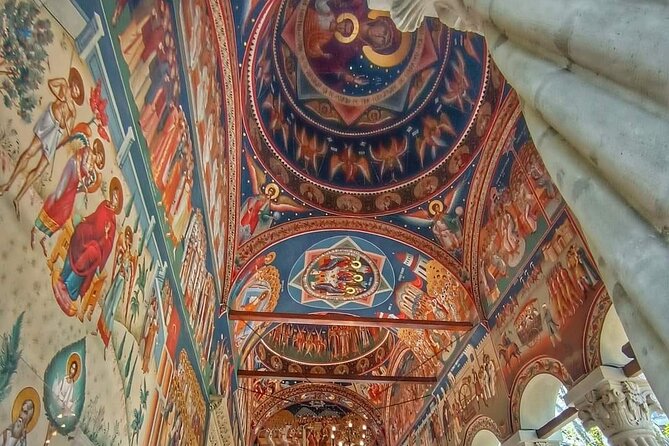
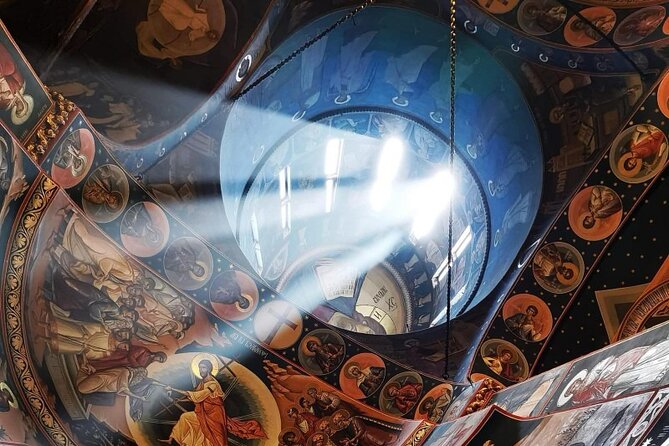
Stop one is Stavropoleos Monastery, right in Bucharest’s core. This is where the tour earns its “culture plus stories” promise: the monastery is described as a jewel of Romanian architecture in the Brâncoveanu style, with walls featuring extraordinary frescoes.
Why I think this opener works: it grounds you in a specific architectural language early, before you move on to streets and civic buildings. Also, it’s a quick stop (around 20 minutes), which is good for keeping the walk energetic while still giving you a meaningful introduction to the city’s spiritual and artistic side.
The tour notes also indicate admission ticket free for this stop, which helps keep the experience smooth. If you like watching how a city protects its past in plain sight, this is a great first marker for Bucharest.
Curtea Veche Square: Saint Anthony Church, Princely Court Ruins, Manuc’s Inn
Next comes Biserica Sfantul Anton – Curtea Veche, centered on an area with deep historical significance. You’re looking at one of the oldest squares in Bucharest, and the stop is framed by several recognizable layers of the city: the church of Saint Anthony, ruins of the princely court, and Manuc’s Inn.
Manuc’s Inn is called out as one of the last caravanserais in Eastern Europe. That detail matters because it shifts your understanding from “old buildings” to “old systems”—how people and commerce moved, and how hospitality and travel worked centuries ago.
The time here is also about 20 minutes, so think of it as a guided “what you’re looking at and why it matters” primer. If you enjoy ruins because they invite imagination, this stop is likely to stick with you.
Lipscani: The City’s Nightlife Heart on Foot
The tour then moves to Lipscani, Bucharest’s famous street sometimes described as the city’s beating heart. The framing here is about continuity: a crossroads of history, culture, and modern life.
There’s a practical reason I like this stop even though it’s shorter (about 10 minutes). It gives you a “present-day Bucharest” reference point while you’re still mentally sorting the old stuff. You can connect what you saw at earlier stops to where people actually go today.
This is also a helpful stop for orientation if you plan to return later for dinner or a drink. Even if you don’t stay out late, you’ll likely know where you are in the city once you’ve walked through this corridor.
You can also read our reviews of more guided tours in Bucharest

BNR Palace: Belle Époque Charm Next to the Romanian National Bank

From Lipscani, you’ll head to the BNR Palace, the Romanian National Bank headquarters area. The tour describes the surrounding vibe in Belle Époque terms, and even in a short stop (around 10 minutes) there’s enough exterior architecture here to make the idea click.
What I like about mixing this with religious and historical stops: Bucharest doesn’t only wear one outfit. The city’s evolution includes banking-era grandeur, and the tour gives you a taste without turning it into a lecture hall.
If you’re the type who enjoys comparing styles—old Orthodox architecture versus formal civic-administrative grandeur—this stop helps you build that visual timeline fast.
Macca Villacrosse Passage: A Passageway That Works in Any Season

Stop five is Macca Villacrosse Passage (with the gallery noted as Villacrosse Gallery). This place is described as magical, with a history that has served different roles over time. Today, the focus is on its role as a comfortable corridor with elegant bars, especially useful when weather turns harsh.
I think this is a smart inclusion because it gives you a break from open-air walking without derailing the flow of the tour. Even if you don’t stop for a drink, you’ll understand why passageways like this matter in cities where weather can be annoying.
The stop is brief (10 minutes), but it’s long enough to register the atmosphere and learn what the space was meant for—movement, shelter, and social life in one.
Calea Victoriei and Umbrella Street: Elegant Architecture and a Quick Photo Moment
Then the tour heads to Calea Victoriei, described as Bucharest’s most beautiful and elegant avenue. You’ll see the mix of historical buildings, higher-end shops, and refined bistros, and the tour also points out the famous umbrella street for a group photo.
This part of the walk is given about 20 minutes, and it’s one of the easiest for people who want classic “wow, that’s pretty” architecture without getting lost in technical detail. If you like clean lines and grand facades, this stretch will likely make you slow down naturally.
The umbrella street moment also does something useful: it gives your group a shared memory without needing you to hunt for viewpoints on your own. It’s a small thing, but it helps with the overall feeling of “we did the highlights.”
Piata Revolukiei: Understanding the 1989 Revolution Around Key Landmarks
Next is Revolution Square (Piata Revolukiei), framed as the symbol of the end of Ceausescu’s dictatorial regime. This stop is more than architecture photography; the guide is expected to reconstruct the last events leading up to the bloody revolution of 1989.
Why this stop is valuable is simple: landmark knowledge turns into real understanding when there’s a story attached. You’ll be looking at the square in relation to surrounding institutions, including references to the Romanian Athenaeum, the Royal Palace, and the National Library.
With about 20 minutes allocated here, you should come away with a clearer mental timeline, not just a “big square with impressive buildings.” It’s the kind of context that makes later independent exploring feel more confident.
Piaka Constitukiei and the Parliament Building Outside: Scale You Can See
The tour ends at Constitution Square (Piaka Constitukiei). The main payoff is seeing the Parliament building from the outside, with the tour noting it as the largest administrative building in Europe and also the heaviest in the world.
That kind of scale can sound abstract until you’re actually standing where the building fills your view. Even with only an exterior look (about 20 minutes), you’re likely to feel the weight of what the structure represents.
The guide’s role here is to add historical context about why the structure was built and what it means in the city’s story. When a guide links the building to the politics and era behind it, the walk ends with more than photos—it ends with understanding.
Price and value for 36.76: A guided orientation sprint
At $36.76 per person for about 2 hours 30 minutes, this tour is priced for people who want a strong overview without spending the day in transit. The value gets better when you consider two things from the tour notes.
First, the route highlights admission ticket free for the listed stops. That doesn’t mean you’ll pay $0 for everything in the city, but it does suggest your guided route shouldn’t come with surprise entry charges for these highlights.
Second, the small max 15 group size keeps attention on the guide instead of turning it into a crowded bus style experience. The time allocation is short at each stop, which is a trade-off: you won’t do full museum-style study, but you’ll cover a lot and leave knowing what to follow up on.
If your time in Bucharest is limited, this format is efficient. If you’re in Bucharest for a while and want to slow down, you can use this walk as your “first draft,” then return to places that genuinely pull you in.
Weather, comfort, and practical tips that make the walk easier
This experience requires good weather. If the weather doesn’t cooperate, the tour notes say you’ll be offered a different date or a full refund, which is helpful if you’re planning around forecasts.
Plan for a straightforward walking day. Bring a light layer if the morning feels cool, and wear shoes that handle typical Bucharest sidewalks. Also, the meeting point and route are said to be near public transportation, which matters if you want flexibility around your schedule.
Service animals are allowed, and the tour states that most people can participate. Still, if you have mobility limits, keep in mind you’re moving between multiple stops over roughly 2.5 hours.
Should you book this Bucharest walking tour?
Book it if you want a guided, friendly way to get your bearings fast. The combination of native Italian speaking guidance, humorous storytelling (with guides like Giuseppe and Filippo mentioned often), and a route that starts at Stavropoleos Monastery and ends at Constitution Square is an efficient way to understand why Bucharest feels like it’s always balancing past and future.
Skip it or think twice if you don’t feel comfortable with Italian, or if you want long time inside buildings and museums. This is built for an overview with short, smart stop times—great for orientation, less ideal for deep, slow study of a single site.
FAQ
How long is the Bucharest walking tour?
It’s about 2 hours 30 minutes (approx.).
What does the tour cost?
The price is $36.76 per person.
Is there a limit on group size?
Yes. The tour has a maximum of 15 travelers.
What language is the guide?
The tour includes a native Italian speaking guide.
Where do we meet and where does the tour end?
You start at Strada Stavropoleos 5, București 030167, Romania and end at Piața Constituției, București, Romania.
Are the entry tickets included?
The tour notes list admission ticket free for the stops on the route.
What happens if the weather is bad?
This experience requires good weather. If it’s canceled due to poor weather, you’ll be offered a different date or a full refund.
Can I cancel and get a refund?
Yes. You can cancel for a full refund up to 24 hours in advance. Within 24 hours, the amount paid is not refunded.
Do I need a paper ticket?
No. The tour uses a mobile ticket.