REVIEW · BUCHAREST
Communist Era Bucharest Tour
Book on Viator →Operated by Claires Bucharest Guided Tours · Bookable on Viator
Communism in Bucharest looks like architecture. This private walking tour uses the city streets to explain how the Eastern Bloc shaped everyday life and big political theater, with stops that range from modernized squares to the drama of 1989. You also get to choose a morning or afternoon slot, which helps if you’re juggling museum time and dinner plans.
I especially like the stop-by-stop structure that keeps things understandable, even when the topics get heavy. I also love how the tour focuses on major landmarks you can actually see up close from the sidewalk, including Revolution Square and the outside impact of Casa Poporului.
One consideration: this subject is intense, and guides bring their own framing. If you want a strictly academic, emotionally neutral approach, plan to ask questions early and don’t be afraid to steer the conversation toward what you want to understand.
In This Review
- Key highlights at a glance
- Why Bucharest’s communist imprint is so visible
- Entering the route: 3 hours, pickup, and a realistic pace
- Piaka Unirii and the Unirii fountains: a communist plan made visible
- Bulevardul Unirii: socialist symbols, public space, and 17 fountains
- Casa Poporului from the outside: why that building still dominates
- Victoria Avenue and the “people’s” financial buildings
- University Square and the National Theatre: culture under political pressure
- Revolution Square and 1989 viewpoints: the balcony moment
- Iuliu Maniu Statue and the Memorial of Rebirth: remembering the turning points
- What you’ll actually learn from guides like Alina and Claire
- Price and logistics: what $30.72 buys you
- Who should book this tour (and who might not)
- Should you book this Communist-era Bucharest tour?
- FAQ
- FAQ
- How long is the Communist Era Bucharest tour?
- Is this tour private?
- Do I get pickup, or do I meet at a specific place?
- Where is the meeting point?
- Is the tour offered in English?
- Do I need to bring tickets?
- Is there an admission fee for the stops?
- What kind of walking is involved?
- Can I choose morning or afternoon?
- What is the cancellation policy?
Key highlights at a glance
- Private tour with your group only, so you can ask questions without feeling rushed
- English-speaking guide with real context for what changed before and after 1989
- Photo-friendly stops around Revolution Square, memorial points, and key monuments
- Many outdoor, free-admission viewpoints, so you’re not stuck in lines
- A walkable 3-hour route built around major squares and landmark streets
Why Bucharest’s communist imprint is so visible
Bucharest is one of those cities where ideology didn’t just sit in books. It shaped streets, public spaces, and monumental buildings you still see today. On this tour, you’ll learn to read the city like a clue trail.
You’ll notice how planners tried to create order and authority using width, symmetry, and “for the people” language. Then you’ll see how those same spaces now serve ordinary life—commuters, shoppers, tourists, and families—often in ways that were unimaginable when the concrete was still fresh.
You can also read our reviews of more tours and experiences in Bucharest.
Entering the route: 3 hours, pickup, and a realistic pace
This is built as a 3-hour walking experience, and it’s private, meaning only your group participates. You’ll pick a morning or afternoon time, and you’ll get a mobile ticket.
Pickup is offered from your centrally located hotel or from the meeting point outside the main entrance of Manuc’s Inn (Hanul lui Manuc), 62 Strada Franceză in the Old Centre. The tour ends back at the meeting point, so you don’t need to re-plan your evening transit.
Comfortable walking shoes matter here. The route is not described as grueling, but it is a city walk with multiple stops, and the overall physical level is listed as moderate.
Piaka Unirii and the Unirii fountains: a communist plan made visible
Your first stop is Piaka Unirii, described as the heart of Bucharest shaped by Communist planned modernization. That’s your first lesson of the day: how regimes build a future on paper, then stamp it onto real neighborhoods.
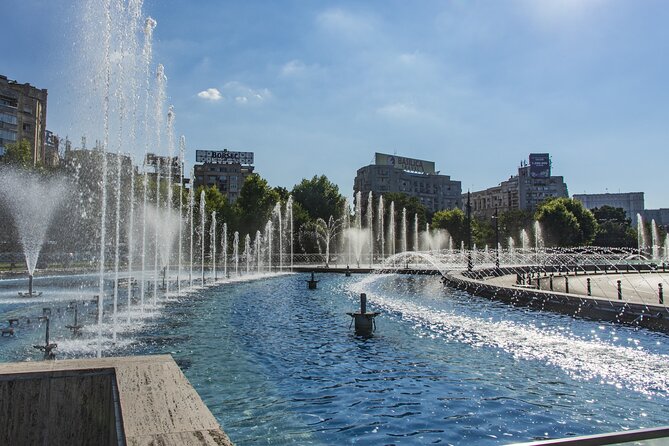
The square is known for the newly restored Unirii fountains, and the vibe you’ll get now is the important contrast. These are not “museum” monuments. They’re a current-use public space, the kind you can experience with everyday motion—people waiting, strolling, taking photos, hanging out.
The practical bonus: it’s free admission, and it’s a great “orientation square.” Even if you haven’t studied Bucharest, this stop helps you understand why certain streets and civic spaces feel central.
Bulevardul Unirii: socialist symbols, public space, and 17 fountains
Next comes Bulevardul Unirii, formerly the Boulevard of Socialist Victory. It’s presented as the Champs-Élysées of Bucharest, which is a helpful comparison because it signals a long, showpiece boulevard—built to look important, not just move traffic.
A standout detail here is the 17 artesian fountains, decorated to represent the four seasons. That’s a clever way to connect ideology to aesthetics. You get public art that pretends to be timeless (seasons!) while still being engineered for a specific political message.
Again, admission is free for this stop. And it’s a quick one, which is good because the day’s heavier moments are still coming.
Casa Poporului from the outside: why that building still dominates
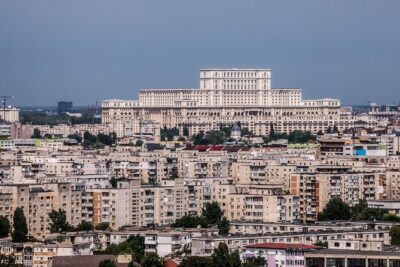
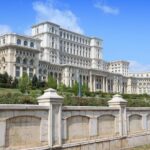
Some tours rush you into interior visits. This one keeps you outside, which actually works well for understanding scale and intent. Nicolae Ceaușescu’s massive parliament building, Casa Poporului, looms over the center, and your guide explains the idea behind it: a house of the people.
The tour calls out its reputation as the heaviest building in the world. Whether you care about engineering trivia or not, the point is the same. A monument like this is not neutral. It’s power you can see from a distance.
What to watch for as you stand near it: the way the building swallows the skyline. Your guide’s job is to connect that feeling to what it represented politically, then relate it to what visitors and residents experience today.

Victoria Avenue and the “people’s” financial buildings
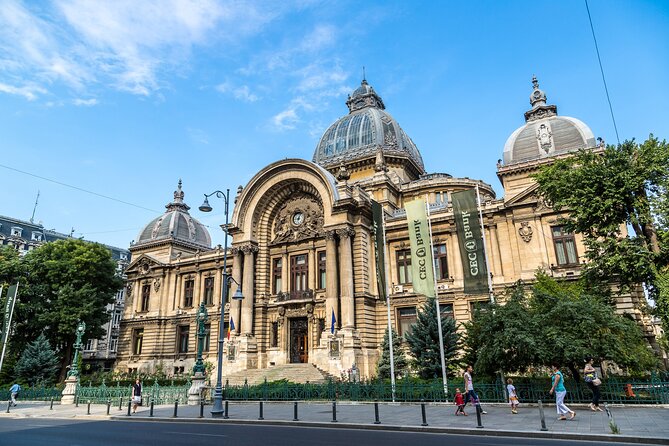
A big theme on this walk is how the regime showed up in everyday institutions. You’ll take a walk along part of Victoria Avenue, lined with shops, and learn what it was like in the Communist era.
This is one of the best moments to ask questions. When a city’s commerce changes under different systems, it affects everything from how neighborhoods function to how people gather. Even with limited time, a good guide can make that shift feel real instead of abstract.
You’ll also see two banking landmarks tied to the story of the state:
- CEC Bank, described as the bank of the people during Communist years
- The National Bank of Romania, highlighted for its grandeur and history
These stops help you connect the political message to the practical side of control: money, services, and the institutions people had to rely on.
University Square and the National Theatre: culture under political pressure
Next is University Square, where you’ll see the oldest and largest university in Bucharest. This matters because universities are often where regimes test ideas, manage talent, and shape future leaders.
Your guide also covers the Intercontinental Hotel Bucharest, completed and opened in 1971. That’s another useful contrast point: the state’s big urban projects didn’t only serve ideology. They also aimed at status, international visibility, and modern identity.
Then there’s a pass by the National Theatre of Bucharest, an iconic building with many design changes over its short history. If you’ve ever wondered how art institutions survive changing governments, this kind of building history gives you a tangible answer.
Revolution Square and 1989 viewpoints: the balcony moment
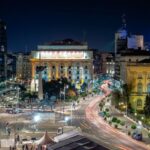
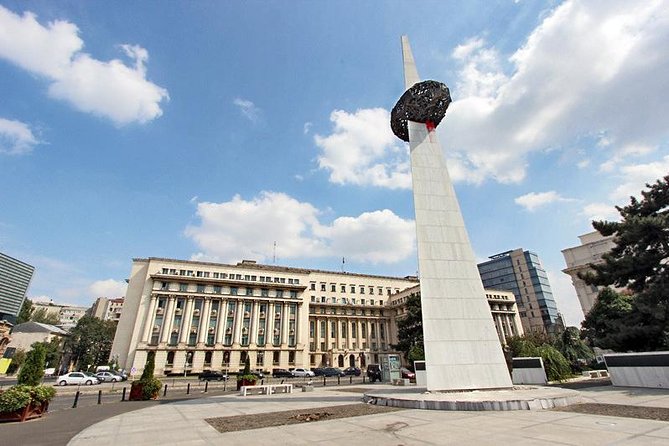
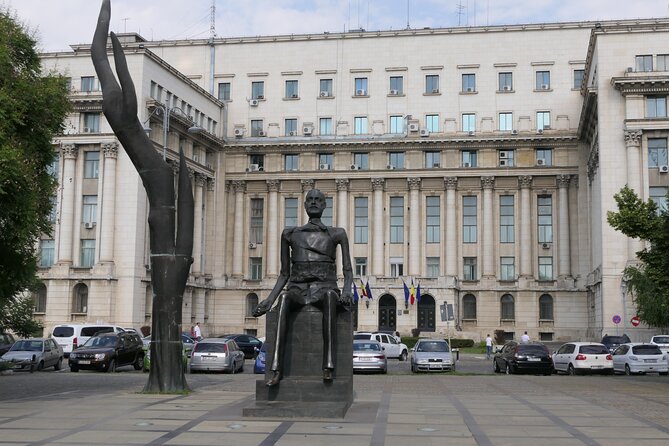
Piaka Revolukiei (Revolution Square) is the emotional and visual center of the tour. This is where your guide places the start area of the 1989 revolution and the memorials that mark life-changing events.
Expect the story to move from speeches and symbols to consequences you can still recognize in public space. You’ll see multiple key points, including the balcony where Nicolae Ceaușescu made his final speech, plus the former headquarters of the Communist party.
The tour also points out monuments and landmarks such as:
- The Monument of National Rebirth
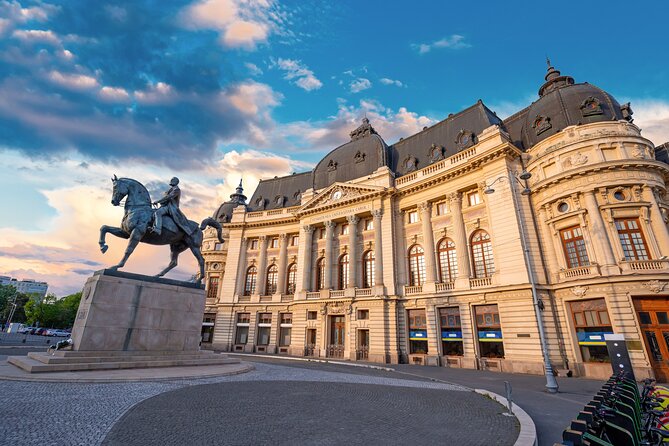
- The equestrian statue of King Carol I
- The University library
…and more within the same area.
This is also where the tour’s photo value spikes. The square is designed for visibility, which means your camera gets plenty of angles—especially around the memorial layout and the balcony viewpoint. Admission is listed as free for this stop.
Iuliu Maniu Statue and the Memorial of Rebirth: remembering the turning points
After Revolution Square, you’ll move to Iuliu Maniu Statue, where the tour focuses on the struggle of three-time prime minister Iuliu Maniu during the early years of Communism. This stop adds balance by widening the story beyond the late-stage spectacle of 1989.
Then you’ll see the Memorial of Rebirth, described as a 25-meter structure commemorating struggles and victims of the Romanian Revolution of Christmas 1989. A memorial this tall is meant to be seen from farther away—so it becomes a permanent reference point in the city’s memory.
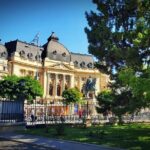
The itinerary also includes a final look at an older historical building with beautiful gardens, described as built for the people of Bucharest by the people of Bucharest and dating back over 100 years. Even without a formal museum stop, that combination of architecture plus greenery helps the last phase of the walk feel reflective rather than purely political.
What you’ll actually learn from guides like Alina and Claire
A huge reason this tour rates so well is the way guides connect facts to real life. In the past, guides such as Alina and Claire have been described as energetic and focused on context—explaining what changed, what stayed, and what the personal cost looked like.
You should expect a mix of themes, not just a timeline. The goal is to understand daily life under Communist rule and how it differs from Romania today, not just to memorize names and dates. In some cases, guides are also described as willing to clarify and adjust to your interests on the spot.
There is one more nuance to know: framing can vary. Some people want the tour to stress the harms more strongly; others feel the guide’s approach may be more balanced or less negative than what they heard elsewhere. If you care deeply about the emotional weight of the story, say so at the start. A good guide can usually steer the emphasis.
Also, even though it’s in English, a small number of visitors have noted trouble understanding a guide clearly. Your best move: keep your ears open early, and if you miss a point, ask for repetition right away so you don’t lose the thread later.
Price and logistics: what $30.72 buys you
At $30.72 per person for about 3 hours, the value here comes from the combination of private access and landmark density. You’re not paying museum fees and you’re not spending time traveling between far-flung sites.
Because it’s private, your guide can react to your questions as you walk. That matters a lot on a topic like Communist-era history, where the “why” behind events is often the most useful part for visitors.
If you like structure, the schedule is easy to picture: multiple key squares and civic buildings, with plenty of short stops where the guide explains what you’re seeing and why it matters.
One more practical tip: this tour is often booked about 35 days in advance, so if you’re traveling in a busy season or have a tight schedule, try to lock in your time slot earlier rather than later.
Who should book this tour (and who might not)
Book it if you want a clear, guided street-level way to understand Communist-era Bucharest. It’s ideal if you like learning through place—squares, boulevards, civic institutions, and the visual language of power.
It’s also a solid choice if you don’t want a day-long commitment. Three hours fits easily between a historic museum morning and dinner, and many stops are outdoors with free admission noted for several squares and memorial points.
You might hesitate if you’re expecting a strictly academic, heavily sourced lecture with no interpretation. This is a guided narrative through visible landmarks, and personal framing is part of the package.
Should you book this Communist-era Bucharest tour?
Yes—if you want the city’s political history to feel concrete instead of distant. The route hits the big visual markers most people care about, from Unirii and its fountains to the symbolism-heavy streets around Revolution Square.
I’d book this especially if you value a guide who can explain how Communist planning shaped the city’s structure and how that same structure still affects your experience of Bucharest today. Just go in with questions, and you’ll get far more out of the walk.
FAQ
FAQ
How long is the Communist Era Bucharest tour?
It runs for about 3 hours.
Is this tour private?
Yes. It’s a private tour/activity, and only your group will participate.
Do I get pickup, or do I meet at a specific place?
Pickup is offered, meeting either at your centrally located hotel or at the meeting point outside the main entrance of Manuc’s Inn.
Where is the meeting point?
Outside the main entrance of Manuc’s Inn (Hanul lui Manuc), 62 Strada Franceză, in the Old Centre.
Is the tour offered in English?
Yes, it is offered in English.
Do I need to bring tickets?
A mobile ticket is provided.
Is there an admission fee for the stops?
The listed stops such as Piaka Unirii, Bulevardul Unirii, Piaka Revolukiei, Iuliu Maniu Statue, and the Memorial of Rebirth are shown as free admission.
What kind of walking is involved?
You should have a moderate physical fitness level, and comfortable walking shoes are recommended.
Can I choose morning or afternoon?
Yes. You can select either a morning or an afternoon excursion.
What is the cancellation policy?
Free cancellation is available up to 24 hours in advance for a full refund. If you cancel less than 24 hours before the experience starts, the amount paid is not refunded.