REVIEW · BUCHAREST
10-Day Private Tour of Romania with Pick Up
Book on Viator →Operated by Romania Private Guide · Bookable on Viator
Romania’s highlights, stitched into one private route. What makes this trip work is the pickup plus a private guide/driver so you’re not wrestling schedules between Bucharest, Transylvania, and the painted-monastery regions. You’ll move in comfort while still getting the kind of close-up context that turns famous sights into something you actually understand.
I like the way the day-to-day stops are built for contrast: you go from Bucharest’s heavy communist-era symbols to the Village Museum’s idea of everyday Romanian life. I also like that the itinerary doesn’t just chase photo ops; it explains why places like the Revolution Square, the Dacian sites, and the fortified monasteries mattered.
One thing to plan for: entrance fees are not included for most stops, so your total cost depends on what you choose to pay for each site. Also, some major road access is seasonal (the Transfăgărășan Highway is fully open only June–October), so timing matters.
In This Review
- Key things you’ll like about this Romania private tour
- Private pickup and a driver who keeps the trip moving
- Bucharest: People’s House, Revolution Square, and a classic cultural walk
- Wallachia and the road to the Transfăgărășan Highway
- Hunedoara and Dacian power: Corvin Castle to Sarmizegetusa Regia
- Salt mine air, gardens in Cluj, and wooden churches with real scale
- Maramureș: Merry Cemetery and the memorial that refuses to let go
- Bukovina painted monasteries: Voroneț blue and the fortified church circuit
- Tihuța Pass, Ciocănești painted houses, and Dracula-adjacent atmosphere
- Museums with unusual themes: egg art and a sculptor’s private world
- Wild scenery at Bicaz Gorges
- Medieval Transylvania: Sighisoara and Biertan’s fortified church
- Brasov: Black Church, Bran Castle, and Pelesh Castle without going full costume party
- Price and value: what you’re really paying for
- Should you book it?
- FAQ
- Is pickup included?
- Is this tour private?
- Do I need to pay entrance fees separately?
- How long is the tour?
- What language is the guide?
- Can the itinerary change after we start?
Key things you’ll like about this Romania private tour
- Private pickup and flexibility so you can adjust as the trip unfolds, not just follow a rigid plan.
- English guide/driver throughout with licensed guidance and car Wi‑Fi for smoother travel days.
- Bucharest through multiple lenses, from the People’s House to the Revolution Square and the Ateneul Român.
- UNESCO-painted monastery days in Bukovina with the famous Voroneț blue frescoes.
- Old-world fortresses and churches across Transylvania, Maramureș, and Wallachia.
- A strong mix of iconic and off-the-mainstream stops, including a unique egg museum and a private sculptor’s museum.
Private pickup and a driver who keeps the trip moving
The biggest value in a private circuit like this is simple: you get transportation that’s timed around your day, not around public schedules. Pickup is offered, and you just send the pickup address and time in advance (and your phone number helps). That matters in Romania, where getting from one region to another can eat up a whole day if you’re trying to DIY every leg.
Because you travel in a private vehicle with Wi‑Fi, you can treat long transfers as travel time you can actually use. And because the driver/guide is available throughout, you’re not changing people midstream or hunting for answers once you arrive. If you care about history and symbolism (and most people do after seeing the scale of Bucharest’s main landmarks), having a real guide in the car changes how you experience everything.
There’s also a practical benefit to the flexibility: you can make changes even after the start of the tour. That’s useful when weather shifts, when you want a bit more time at a church, or when you realize one stop is more gripping than expected.
You can also read our reviews of more private tours in Bucharest

Bucharest: People’s House, Revolution Square, and a classic cultural walk
Bucharest on this route starts with two sights that feel like they belong to different worlds, even though they’re tied to the same story.
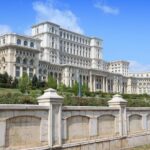
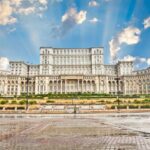
First is the Palace of Parliament, also called the People’s House. It’s controversial for a reason: it’s the kind of oversized, power-showcase building that grows out of totalitarian ambition. The tour framing here helps you read the architecture as propaganda rather than just stone. Even the “selfie problem” is part of the reality: it’s so massive you’re often trying to fit a whole facade into one frame, standing in front of what’s described as the world’s second-largest administrative building after the Pentagon. That scale hits harder when someone explains how it fits into the communist-era mindset.
Then you shift to Revolution Square, a place tied to the December 1989 uprising that ended Nicolae Ceaușescu’s rule. You don’t just look at the square. You connect it to the broader power structure, including the Senate Palace area that used to house the Central Committee. It’s one of those stops where you understand why people describe Romania as a place where the past is never far away.
After the heavy stuff, the route eases you into Romanian culture and everyday life. The Bucharest National Village Museum (Dimitrie Gusti) is the counterbalance. Instead of palaces and regimes, you see a curated landscape of tradition—what Romanian villagers built and how they imagined a harmonious relationship with their surroundings. It’s a different kind of learning: less political, more human-scale.
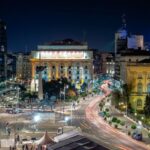
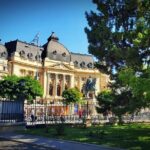
You also get the Romanian Athenaeum, a major symbol of Romanian culture and a stop on Calea Victoriei. This is the kind of building that looks “important” even before you learn why. The tour includes the European Heritage element, which gives the facade more meaning than a quick photo.
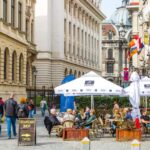
Finally comes Old Town time. You walk the historical city centre and get a sense of Bucharest’s layers, including Hanul lui Manuc, a fortified inn built around 1806 for merchants and travelers. It’s the sort of place where the architecture makes sense if you imagine the traffic of old markets and passing caravans. The guide’s suggestions here are key: you’ll be pointed toward restaurants, churches, museums, and an experiential library for books and souvenirs.
Practical tip for Bucharest day planning: because this mix includes major indoor sites and outdoor squares, wear shoes you can stand in. You’ll move more than you think, especially if you want extra time near landmarks rather than just passing through.
Wallachia and the road to the Transfăgărășan Highway
The route then swings into southern Romania’s royal and defensive past.
Curtea de Argeș is introduced through its royal tombs and its connection to the old Wallachian princely court ruins. You’re not just looking at a single church. You’re seeing how court life, royal burial, and architecture overlap in one concentrated spot—plus the emotional weight of the monastery’s story.
Then the day turns dramatic at Poienari Castle. The viewpoint over the Argeș River and the cliffside ruins give you immediate “how was this even built here” perspective. The story included with the stop ties Vlad and the 1462 conflict with the Turks to the fortress’s later fate. You get a clear sense of why this region became a chessboard for power: geography and fortifications shaped what leaders could do.
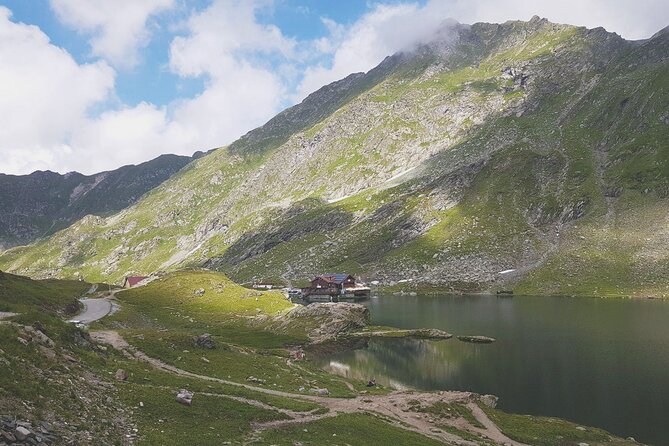
After that, you hit one of Romania’s most famous road experiences: the Transfăgărășan Highway. Timing is the big factor you need to respect. The road is fully open only from June to October, so if you’re traveling outside that window, you may need to adjust expectations. When it is open, it’s known for spectacular scenery and a high point around 2042 meters, plus the tunnel that links the Lake Balea sides. This isn’t a “drive past it” kind of road. You’re meant to watch the terrain change and feel why it gained a global reputation after international TV attention.
By the time you reach a stop like Sibiu’s Piata Mare (Big Square), the mood shifts again from fortress drama to city form. Piata Mare is tied to Sibiu’s reputation for well-loved old-city planning and a European Capital of Culture connection. It’s a calmer experience after the mountains: architecture, street layout, and city life in a compact, walkable center.
Hunedoara and Dacian power: Corvin Castle to Sarmizegetusa Regia
Transylvania’s highlight streak continues with a big Gothic-Renaissance presence: Corvin Castle (also known as Hunyadi Castle). It’s often listed as one of the largest castles in Europe, and it’s the kind of place where you can see how design turns into theater. The tour frames it not just as a castle you visit, but as a work built for strength and status.
From there, you move to Densus Church, described as the oldest stone church in Romania. What I like here is the layering: the church’s present form is 13th century, but the site connects to a Roman temple and even draws materials linked to Dacian fortresses. Inside, mural paintings include Jesus shown wearing Romanian traditional clothing, created by artists named in the guide narrative. That mix of art, time periods, and cultural identity makes the stop feel unusually grounded.
Then comes Sarmizegetusa Regia, the Dacian capital and military-religious-political center before wars with Rome. It’s set on a 1200-meter-high mountain and made of six citadels in a strategic defensive system across the Orăștie Mountains. Even without advanced archaeology knowledge, the idea lands: this wasn’t a random fort. It was an integrated defense structure built around the terrain. For me, this is one of the stops that makes Romania’s story feel larger than castles alone.
How to enjoy this day most: give yourself permission to slow down at the Dacian site. It can be tempting to rush because it’s “ancient.” Taking a slower pace helps you spot how the land layout supports defense.
Salt mine air, gardens in Cluj, and wooden churches with real scale
The next stretch is a nice change of pace: physical environments and craftsmanship.
Salina Turda (Turda Salt Mine) is described as one of the most interesting Transylvania stops, with the added twist of saline air that’s often said to help respiratory issues like allergies or asthma. That’s not a cure pitch; it’s a “you might feel the difference” kind of idea tied to the environment. Either way, it’s a fun contrast to castles and churches.
You then get a route tied to Cluj area highlights, including Gradina Botanica Alexandru Borza and time connected to Cluj Napoca’s old city centre. The buildings you see are described as Baroque, Renaissance, and Gothic, with some dating back to the 17th century. The feel here is practical: a city stop that doesn’t require a full city trip planning effort, but still gives you architectural variety and a sense of modern Romania’s roots.
Finally comes Surdești Wooden Church. This is the kind of stop that sticks because of how much scale can fit into wood. It’s said to have towers measuring about 54 meters, and it was built in 1721. The guide’s framing helps you notice craft details instead of treating it like just another church stop. It’s also emotionally easy to enjoy—wooden structures have a warmth that stone can’t quite replicate.

Maramureș: Merry Cemetery and the memorial that refuses to let go
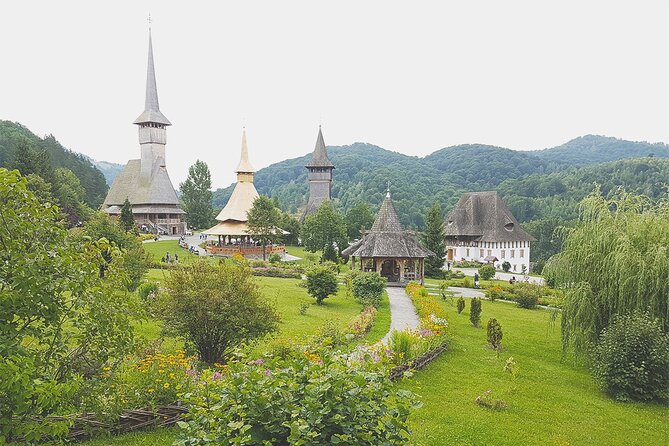
Maramureș is where Romanian folklore and wooden architecture often meet at full volume.
Sapanta’s Merry Cemetery is introduced through its colorful crosses and humorous poems. This is one of those cultural experiences where the tone is surprising: people use wit, not only mourning. If you like cultural traditions that don’t follow the “expected” Western script, this is likely to land well.
Then you shift to a more serious stop: the Memorial of the Victims of Communism and of the Resistance. This is where the tour keeps its balance. After days of beauty and folklore, you’re reminded of how quickly everyday life can be crushed by totalitarian control. The framing is clear: it’s about how Romanian people fought to escape oppression and how much pain and suffering the regime caused in a short time.
If your goal is to understand Romania instead of just check boxes, this memorial stop does important work. It connects the architecture you saw in Bucharest to the human story behind it.
Bukovina painted monasteries: Voroneț blue and the fortified church circuit
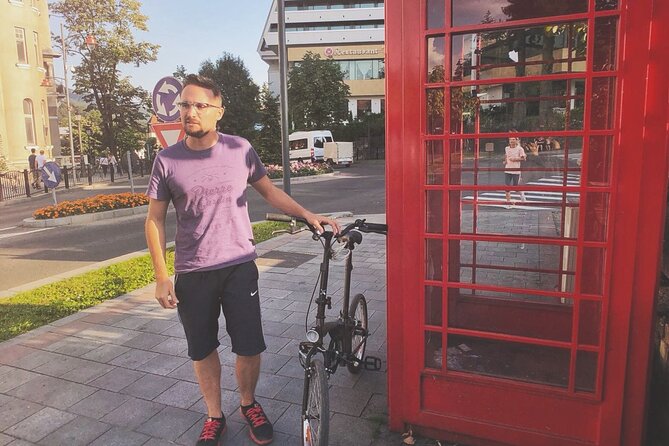
Bukovina days are the visual payoff of the whole trip.
Manastirea Voronet is described as one of the famous painted monasteries from southern Bukovina, built by Stephen the Great in 1488 in a rapid timeframe. The standout detail is the intense blue shade called Voroneț blue. The guide ties it to the nickname the Sistine Chapel of the East, and it makes sense: the color is so distinctive that it becomes the headline, not a side note.
Then you continue with Humor Monastery, Sucevita Monastery, and Moldovita Monastery. What connects them is the idea of protection: fortified churches built with thick walls and strategic location so religious life could survive threats and attacks. Sucevita is framed as an UNESCO-included cultural landmark, while Moldovita is described as combining Byzantine, Gothic, and Moldavian elements with murals on the inside and outside.
You might think these would blur together after a while. In practice, the stops are close enough to form a full “fortified monasteries” story, but different enough that you can compare how each monastery uses its artwork and defensive design.
A practical note: monastery stops can mean lots of stairs and uneven surfaces. Build in some flexibility if you want extra photo time and slower looking.
Tihuța Pass, Ciocănești painted houses, and Dracula-adjacent atmosphere
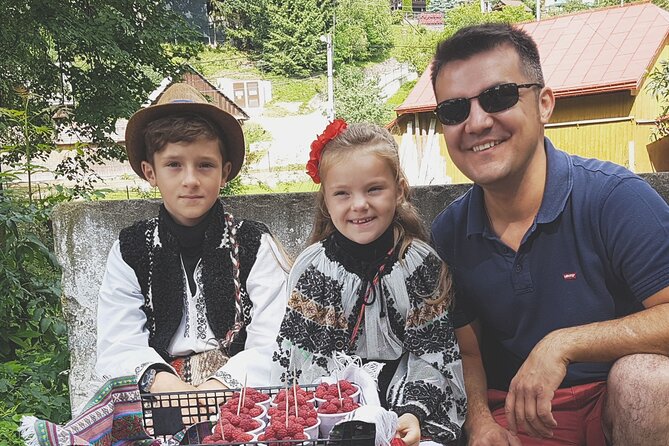
Not every stop in this circuit is about religion or royal tombs. You also get mountain-pass scenery and a couple of cultural detours.
Tihuța Pass is introduced as a high mountain pass connecting Bistrița with Vatra Dornei. The Dracula connection is part of the appeal here: Bram Stoker popularized it in his novel under a different name, and the tour explains that Stoker likely got the name from a map rather than visiting. You also get a stop at Hotel Castel Dracula at about 1,116 meters elevation. The hotel’s medieval-villa style and its name change after 1989 are part of the attraction story.
Then Ciocănești enters with the painted-house tradition. The village is described as famous for merry-painted houses with traditional motifs along the Golden Bistrița River, surrounded by pine forests and meadows. It’s a “people live here” stop, not a museum stop, and the atmosphere matters.
And if you’re wondering whether this adds up or feels like a detour: it does feel like tonal variety. You go from fortress monasteries to mountain-air villages, which keeps the trip from becoming one long parade of stone.
Museums with unusual themes: egg art and a sculptor’s private world
Some tours only give you famous monuments. This one also brings in smaller, quirky places that help you understand modern Romanian culture in a more personal way.
Lucia Condrea’s museum is built around egg art. It’s described as unique in Romania and possibly in the world, with more than 5,500 exhibits displayed across two levels in 56 display cases. That’s the kind of stop that’s short enough to fit a busy day but weird enough (in the best way) to keep your photos from repeating.
Next is Nicolae Popa’s museum near Târgu Neamț. It’s in the sculptor’s own house and is tied to a very specific life story: wounded in WWII, imprisoned by communists for opposing the regime, and left with little besides his house. The tour frames the museum as driven by effort and commitment to Romanian values. If you like art that has a backbone of lived experience, this one can be unexpectedly moving.
Wild scenery at Bicaz Gorges
Bicaz Gorges brings a natural break between manmade monuments.
The description is straightforward: you walk along the river banks as the river has cut through mountains and virgin forests. That kind of scenery gives your mind a reset. Even if you’re traveling hard, this stop helps you avoid museum fatigue.
Because admission for this stop is listed as included, it’s also one less line item to worry about when you’re budgeting.
Medieval Transylvania: Sighisoara and Biertan’s fortified church
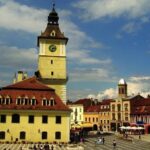
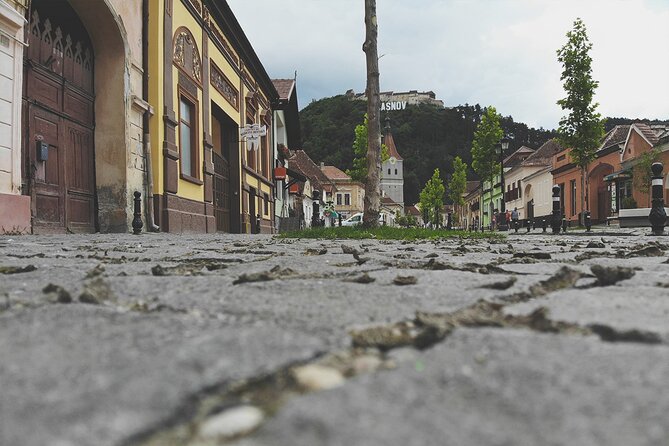
Sighisoara is where the trip gives you a real medieval-town feeling. You visit the Clock Tower and the Arms museum, and the citadel is described as built in 1280 with continuous habitation for over 700 years. That matters because the town doesn’t feel staged. It’s a place where daily life still happens inside old walls.
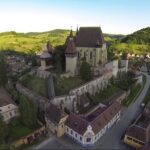
Then you head to Biertan Fortified Church, described as a UNESCO World Heritage site and one of the Saxon settlements. The tour frames it around its hillock location, three defensive walls, and seven bastions. You come away understanding why fortification was necessary for the community’s survival, not just for looks.
If you’re a fan of architecture but don’t want only castles and palaces, these two stops are a strong pair. They show how people protected community life.
Brasov: Black Church, Bran Castle, and Pelesh Castle without going full costume party
The final stretch centers on Brasov and the Dracula area, but it’s handled more intelligently than a typical theme-only day.
In Brasov, you tour the Old Town with the Black Church, Old Town square, and Middle Age city walls. There’s also free time to absorb the atmosphere in local cafés, which is a welcome reset after days packed with set visits.
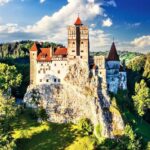
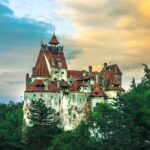
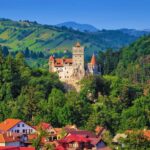
Bran Castle is included next. It’s introduced as between myth and history. The Dracula tie is explained through how Bran matches popular depictions, and the tour notes that Bram Stoker’s descriptions are widely believed to have influenced the fictional setting. This stop also includes practical taste experiences around the castle: handmade cheeses, pálinka, and traditionally-produced ham and sausages.
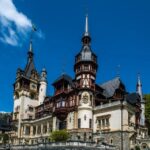
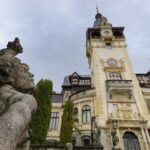
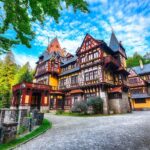
Finally is Peles Castle, described as the Romanian royal family’s summer residence and one of the most important European attractions in the route’s framing. It’s the kind of castle that feels like a reward for sticking with the long circuit. After forts, passes, and churches, you get a more refined royal aesthetic.
Price and value: what you’re really paying for
At $3,918.13 per person for a 10-day private tour, this isn’t an entry-level deal. The math makes sense only if you value privacy, pacing, and expert interpretation.
Here’s what your price is doing:
- You get a private car and a licensed English-speaking guide/driver for the full journey.
- You get flexibility to change the daily itinerary even after it begins.
- Car costs are handled (gasoline, parking, road tolls), and Wi‑Fi is included in the vehicle.
- Your guide’s accommodation/meals/entrance fees are covered, which often correlates with a more consistent guiding experience.
What isn’t included is the biggest wildcard for budgeting: your own accommodation, meals, and entrance fees. Most stops list admission as not included, so the final total will depend on which sites you pay for. Still, that structure can be good for you if you prefer a menu-like approach: pay for the sites you care about most and skip the ones you don’t.
Also, the tour offers group discounts, which can improve value if your group size is large enough to keep the “per person” cost down.
Should you book it?
Book this private Romania tour if you want a guided, car-based route that covers the country’s biggest emotional themes: power and resistance in Bucharest, medieval fortification across Transylvania, painted-monastery artistry in Bukovina, and wooden-church craftsmanship in Maramureș. The mix is intentional, and it’s hard to replicate that level of pacing without hiring similar planning power.
Don’t book it if your travel style is low-cost and you hate managing extra ticket costs. Because entrance fees are mostly not included, you’ll want to budget for that, and you should plan around seasonal access like the Transfăgărășan Highway being fully open only June–October.
If you want, tell me your travel month and your group size, and I’ll help you sanity-check whether the seasonal pieces (and the ticket-heavy days) will fit your priorities.
FAQ
Is pickup included?
Pickup is offered, but you need to provide your pickup time and address. The tour notes that sharing your phone number is also helpful.
Is this tour private?
Yes. This is a private tour/activity, meaning only your group participates.
Do I need to pay entrance fees separately?
Most stops list admission tickets as not included. A few items are listed as included or free (for example, Transfăgărășan Highway is noted as free, and Bicaz Gorges is noted as included), but you should expect many sites to require separate payment.
How long is the tour?
The tour duration is 10 days (approximately).
What language is the guide?
The tour is offered in English, with a private licensed English-speaking guide/driver available throughout the trip.
Can the itinerary change after we start?
Yes. There is flexibility regarding changes to the daily itinerary even after the tour starts.