REVIEW · BUCHAREST
Transylvania & Bucovina Private Tour – 6 days
Book on Viator →Operated by Yolo Tours Romania · Bookable on Viator
Romania hits different when you stop planning. This private 6-day route strings together famous sights like Bran and Peles, plus the UNESCO painted churches of Bucovina, with the driving and hotels handled for you.
I really like that you get a guide-led, no-stress pace (pickup, transportation, and lodging are taken care of), and you also get real cultural depth beyond postcards with fortress towns, fortified churches, and multiple UNESCO stops. The one thing to consider: you’ll pay extra for entrance fees and meals, and the days are full enough that you’ll want a moderate fitness level.
In This Review
- Key Things I Think You’ll Care About
- Why This 6-Day Private Route Works for People Who Hate Planning
- Is $1,419.55 a Good Value for Transylvania and Bucovina?
- Day 1: Sinaia Orthodox Monastery, Peles Castle, and Your First Night in Brasov
- Day 2: Bran Castle, Rasnov Fortress, and the Road Into Sibiu
- Day 3: Biertan Fortified Church and Sighisoara’s UNESCO Old Town
- Day 4: Red Lake and Bicaz Gorges, Then Into Bucovina and Voronet
- Day 5: Voronet’s Painted Monasteries, Marginea Black Pottery, and Humor and Sucevita
- Day 6: Neamț Monastery and Neamț Fortress Back to Bucharest
- What a Private Guide Really Adds (Especially When It’s Gabriel)
- Who Should Book This Tour, and Who Might Prefer DIY
- FAQ
- What time does the tour start?
- Is this a private tour?
- What’s included in the price?
- Are entrance fees and meals included?
- How many nights do I stay in hotels, and what hotel level is used?
- What fitness level do I need?
- Final Decision: Should You Book It?
Key Things I Think You’ll Care About
- A true private tour: only your group, so questions don’t get shuffled to the end of the day
- UNESCO heavy route: Biertan and Sighisoara plus the painted churches around Voronet and the region
- Big scenery days, not just monuments: Red Lake and the Bicaz Gorges are built into the flow
- Castle stops without the chaos: Bran and Peles fit into a larger story of the region
- Hotels for five nights in 3- and 4-star comfort, with breakfast included
- A guide can make or break it: the tour reviews strongly point to excellent storytelling, including a guide named Gabriel
Why This 6-Day Private Route Works for People Who Hate Planning
If you like Romania but don’t want to become a part-time map app, this is a smart way to do it. The tour is built as a guided loop that covers both Transylvania and Bucovina, two regions that feel different the moment you cross into the next valley and stop seeing the same kinds of sights.
You’re also not just doing famous names. The schedule mixes castle culture (Bran, Rasnov, Peles) with town life (Brasov and Sighisoara’s old cores) and then shifts into Eastern Christian heritage through churches and monasteries. That variety matters because you don’t get “same photo, different castle” fatigue.
One small practical tip: the start time is early (7:30 am), which is the price of avoiding slow sightseeing days and getting time in the right places. If mornings are hard for you, plan on being ready to go without a long coffee debate.
You can also read our reviews of more private tours in Bucharest

Is $1,419.55 a Good Value for Transylvania and Bucovina?
At $1,419.55 per person, this isn’t a budget-only tour. But it can still be a strong value depending on how you travel.
Here’s the value math I’d use:
- You’re getting hotel pickup and drop-off, plus private round-trip transportation across multiple regions.
- Five nights of lodging in 3- or 4-star hotels are included, along with breakfast.
- A professional guide is part of the package, which matters when you’re moving through layers of history and terminology (fortified churches, UNESCO listings, regional identities).
Where the cost usually creeps up is what’s not included: entrance fees/photo fees and lunch & dinner. Those are normal costs in Romania, but they can add up fast on a multi-day route packed with UNESCO and major sights. If you’re the kind of traveler who snacks all day, consider budgeting meals separately so there are no surprises.
Also, this is often booked around 45 days in advance, which suggests a steady demand for this exact mix of sights and comfort level. If you want the dates that match your broader trip, you’ll likely be happiest planning ahead.
Day 1: Sinaia Orthodox Monastery, Peles Castle, and Your First Night in Brasov

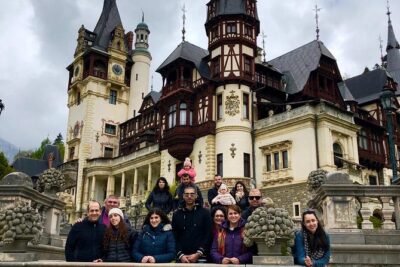
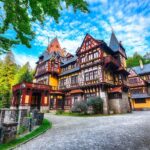
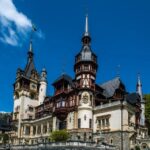
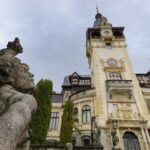
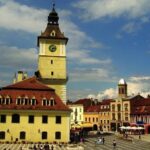
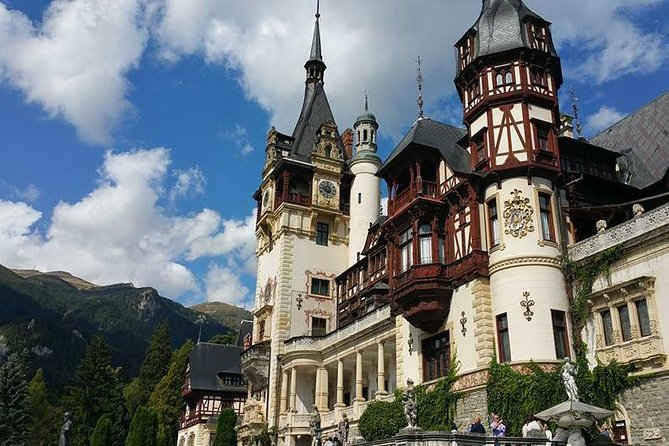
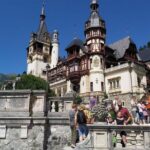
You start in Bucharest, then head for the first “wow” stops near Sinaia and the Carpathians. The day includes Sinaia Orthodox Monastery, Peles Castle, and then your arrival in Brasov with a guided tour of the city highlights.
Why this first day works: Peles and the monastery give you two different entry points into Romanian culture—one through a religious site, the other through the castle world. Even if you’re not a history nerd, castles plus regional architecture usually click fast. You get familiar with the area’s look and feel before the schedule gets more intense.
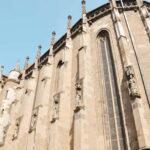
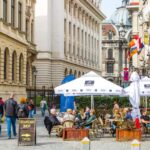
In Brasov, the tour focuses on classic defensive and old-town features: the Black Church, the Citadel of Brasov, Ecaterina’s Gate, and several towers and bastions, including the White Tower, Black Tower, and the Blacksmiths / Weavers / Ropemakers / Drapers bastions. That grouping is smart because it tells you why Brasov mattered—this wasn’t just a pretty town. It was protected, organized, and strategically important.
Possible drawback for day one: it’s a lot of moving around in one stretch—castle, monastery, then city core. You’ll want shoes that handle uneven old-street paving and maybe a light layer for changing temperatures.
Day 2: Bran Castle, Rasnov Fortress, and the Road Into Sibiu

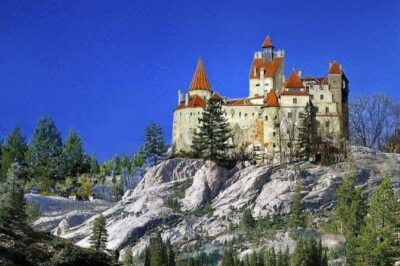
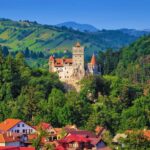
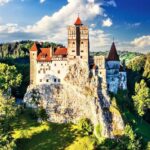
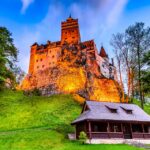
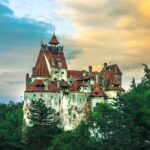
Day two leans into the Transylvania stories people recognize. You visit Bran Castle (often called Dracula’s Castle) and then stop at Rasnov Fortress. After that, you continue to Sibiu and tour its historic center.
I like how the schedule uses Bran as a starting point, not a final destination. Bran is a magnet, but Rasnov and Sibiu help you understand the region’s reality: fortifications, trade, and local communities shaped what you see today.
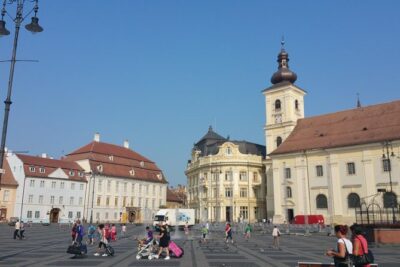
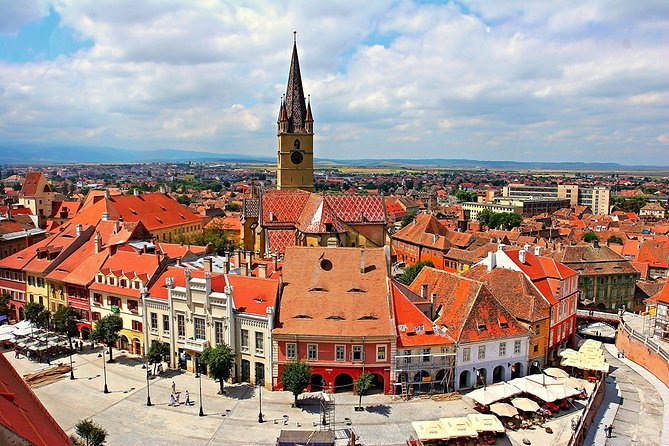
In Sibiu, the guided highlights list a mix of major landmarks and small surprises: the Evangelical Church, Holy Trinity Orthodox Cathedral, the Bridge of Lies, the historic center, and The Stairs Passage. You’ll also have time tied to museums and towers, including the Brukenthal Museum, plus the city’s towers and bastions.
The practical value here is that Sibiu is walkable and camera-friendly, but it’s also easy to get lost if you’re DIY-ing it. With a guide, you get the “what to look for” context: which buildings reflect religious influence, which parts reflect defense, and what specific streets or gates signal the old town layout.
One note: Bran can draw crowds at certain hours. A private schedule won’t magically erase every line, but it generally helps you avoid the worst timing problems compared to going totally independent.
Day 3: Biertan Fortified Church and Sighisoara’s UNESCO Old Town
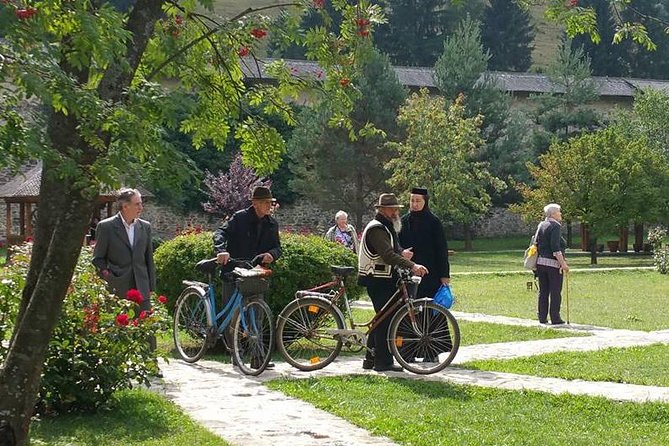
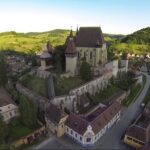
Day three is where the trip really starts stacking UNESCO value in a way that feels earned. You begin with a visit to Biertan Fortified Church, including a walk in the village and a UNESCO experience built around that protected church community. Then you continue to Sighisoara for another UNESCO-focused guided visit.
Biertan is the kind of stop that rewards paying attention. Fortified churches aren’t just “a church with walls.” They reflect how communities defended themselves and how religion and everyday safety overlapped. Even if your goal is scenic Romania, this is the day that adds substance to your photos.
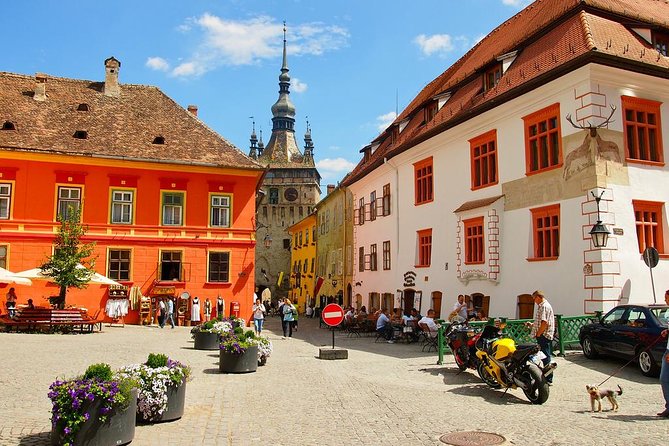
In Sighisoara, the guided highlights include the Clock Tower & History Museum, the Church on the Hill, the House of Dracula, the roofed stairways, and the German cemetery. That combo is useful because it covers multiple layers:
- the civic center (clock tower),
- the religious center (church on the hill),
- the old legends and architecture (House of Dracula),
- the street-level connection points (roofed stairways),
- and the quieter, history-heavy aspects (German cemetery).
If you’re wondering whether “UNESCO” turns into a checklist, this day is your proof that it doesn’t have to. It becomes a story you can follow—when you have someone guiding you.
You can also read our reviews of more tours and experiences in Bucharest
Day 4: Red Lake and Bicaz Gorges, Then Into Bucovina and Voronet
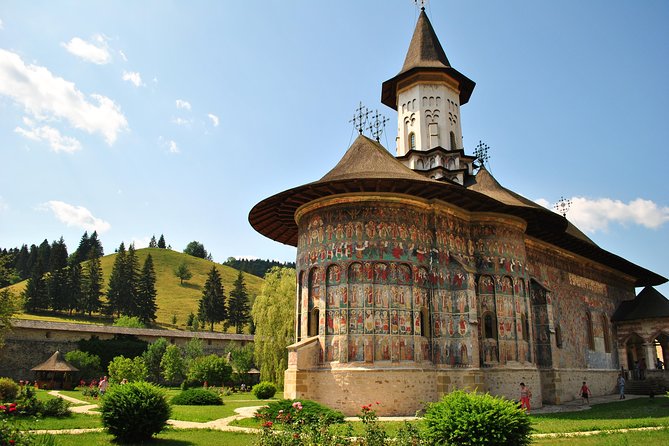
On day four you shift from Transylvania’s fortress-and-town vibe to something wilder: the Red Lake and the dramatic Bicaz Gorges road trip, followed by arrival in Voronet, where you’ll stay for the next part of the journey.
The Red Lake stop is more than a scenic break. It’s described as a natural storage dam lake and the largest natural mountain lake in Romania. That’s the kind of fact that makes a viewpoint feel less random. You’re not just stopping because it looks good; you’re stopping because the site has a specific role in the region’s water and landscape story.
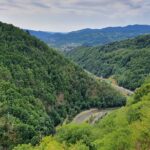
Then comes Bicaz Gorges, with a drive that slices through limestone cliffs for about three miles. The road twists and turns steeply uphill through the gorge, cutting through sheer 1,000-foot limestone cliffs. This is the kind of scenery that changes your posture. You stop thinking about castles and start thinking about geology and scale.
After all that motion and wide views, arriving in Voronet is a nice change of rhythm. Bucovina feels more focused—church-by-church, monastery-by-monastery—until you realize how much cultural identity is packed into these painted sites.
Day 5: Voronet’s Painted Monasteries, Marginea Black Pottery, and Humor and Sucevita
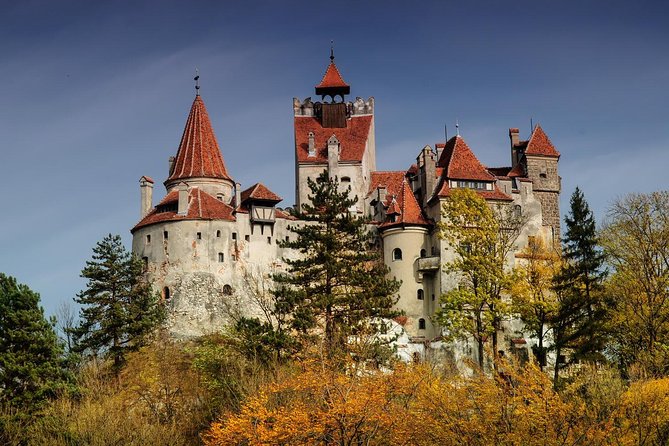
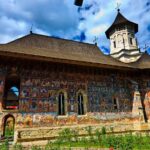
Day five is the UNESCO showcase for Bucovina’s painted churches. You’ll visit Voronet Monastery (UNESCO), the Painted Eggs Museum, Humor Monastery (UNESCO), Sucevita Monastery (UNESCO), and later Moldovita Monastery (UNESCO). You’ll also stop at Marginea village for black pottery workshops.
This day matters because it shows you a side of Romania that many first-timers miss. The painted churches are UNESCO-listed, and the tour’s structure makes it clear they’re not separate “one-offs.” They’re part of a regional artistic and spiritual tradition that stretches across multiple sites.
The inclusion of the Painted Eggs Museum and the black pottery workshops is also smart. It keeps the day from feeling like straight-line sacred architecture. Even without getting too technical, you’ll feel how local craft traditions sit alongside the religious heritage.
One practical point: lunch is mentioned in the day’s flow, but lunch is not included in the package. So plan for that and keep your expectations aligned. I like having guided time in these spots, but it’s better when you don’t assume every meal is handled.
If you’re photographing, expect you’ll want a quick strategy: quick wide shots, then focus on details—especially on busy days when you’ll be moving between multiple monasteries.
Day 6: Neamț Monastery and Neamț Fortress Back to Bucharest
Your final day keeps the Bucovina theme but turns toward fortress-and-foundations. You start at Neamț Monastery and then visit Neamț Fortress in Târgu Neamț, before transferring back to Bucharest for hotel drop-off.
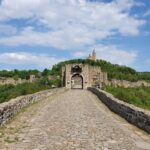
The Neamț Fortress story is very specific: perched high on a rocky hill overlooking the town for almost six centuries, it played a vital role in defense against predatory raids. That gives you a clear reason to care where you stand. You’re not just looking at stone. You’re looking at a site that was positioned for survival.
Then Neamț Monastery adds depth. It’s founded in the 12th century, described as one of Romania’s oldest and most important religious settlements. It’s also framed like a fortress, with high walls and a defense tower feel, and it sits at the foot of the Ceahlău Mountains surrounded by older forests.
It’s a strong closing combo: defense (fortress) and faith (monastery), tied to the landscape. That pairing tends to leave people with the sense that Romania isn’t only about one famous castle or one spooky legend—it’s about how people lived in specific places over long stretches of time.
What a Private Guide Really Adds (Especially When It’s Gabriel)
Private tours don’t automatically mean better. The guide is the difference between a tour that’s just “a drive with stops” and one that actually makes the stops click.
Based on the tour’s reputation, one guide name that stands out is Gabriel. The praise isn’t vague; it’s about him being able to connect history, culture, and language in a way that feels practical, not like a lecture. That matters most in places where you might not know what you’re looking at.
Even if you’re not into facts for their own sake, a great guide helps you:
- understand why a building is here, not just that it exists,
- connect symbols and design choices to the region’s identity,
- and keep you moving at a pace that fits real people, not a slideshow schedule.
So if you’re the type who likes to ask one or two questions along the way, this kind of private format is worth it.
Who Should Book This Tour, and Who Might Prefer DIY
This tour is a good fit if you:
- want a private experience but also hate the planning work,
- like mixing castles, fortified towns, UNESCO sites, and scenery,
- enjoy a structured day and don’t mind that the schedule is packed,
- have moderate physical fitness and can handle some walking around historical areas,
- care more about context than just collecting photos.
It may be less ideal if you:
- want to completely control meal choices and don’t want to budget for lunch/dinner and entrance fees,
- need lots of free time for wandering without guidance (this is designed to cover a lot),
- or prefer a slower pace where you can linger for hours in just one location.
Also, if you’re someone who loves DIY planning and already knows the region well, you could piece together parts of the route. But if you’d rather spend your energy on the sights instead of logistics, that’s exactly what this format is trying to solve.
FAQ
What time does the tour start?
The start time is listed as 7:30 am.
Is this a private tour?
Yes. It’s a private tour/activity, and only your group participates.
What’s included in the price?
Hotel pickup and drop-off, a professional guide, five nights of accommodation in 3- and 4-star hotels, breakfast, and a fuel surcharge are included.
Are entrance fees and meals included?
No. Entrance fees/photo fees and lunch & dinner are not included.
How many nights do I stay in hotels, and what hotel level is used?
You stay for five nights in 3- or 4-star accommodation.
What fitness level do I need?
The tour notes a moderate physical fitness level.
Final Decision: Should You Book It?
Book it if you want Transylvania and Bucovina as a guided loop with UNESCO stops, fortress towns, and dramatic scenery, without turning your trip into a routing project. The strongest “yes” is the combination of included transportation and lodging, plus the kind of guide storytelling that makes places feel connected rather than random.
Pass or consider a lighter option if you’re strict about meal control and you’re hoping everything—especially entrances—stays fully included. For the right traveler, though, this is one of those trips where you arrive overwhelmed by Romania’s variety, and leave feeling like you actually understood it.