REVIEW · BUCHAREST
3-Day Tour of Transylvania’s Landmarks from Bucharest
Book on Viator →Operated by Boutique Romania · Bookable on Viator
Three days in Transylvania feels like a movie set. This trip strings together dramatic Carpathian scenery and major historic landmarks at a calm, guided pace. You’ll base out of Romania’s capital, ride in a Euro 6 air-conditioned vehicle, and let the operator handle the transport and accommodations.
What I like most is the built-in balance. You get long enough time at places like Peleș Castle and Sighișoara’s hilltop sights, without the sprint-from-stop-to-stop vibe that ruins photos and patience.
The one thing to weigh is the cost of admission fees. The tour covers transport and accommodations, but ticket prices for castles and churches are not included, and some days involve walking with stairs like Sighișoara’s 180-step climb.
In This Review
- Key highlights to notice before you book
- Why this 3-day Transylvania route from Bucharest makes sense
- Day 1: Peleș Castle, Bran Castle, and the medieval-city glow of Brașov
- Peleș Castle in Sinaia
- Bran Castle: Dracula’s Castle, with a history-first reality check
- Brașov: Gothic, Baroque, Renaissance, and the feel of a walled citadel
- Day 2: Sighișoara’s wall ring and scholars’ stairs, then Biertan and Sibiu
- Sighișoara’s citadel on a hill (and the view from the stairs)
- Biertan’s fortified church: when religion doubled as defense
- Sibiu: German-looking old town, Great Square, and the Bridge of Lies
- Day 3: Transfăgărășan or Olt Valley drives and Curtea de Argeș’s monastery legends
- Transfăgărășan Highway (season dependent) and the mountain pass feeling
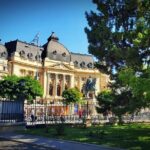
- Curtea de Argeș Monastery: Georgian-Armenian lines with Islamic motifs
- Price and logistics: what you’re really paying for
- Guide quality and comfort: the difference between a route and an experience
- Should you book this 3-day Transylvania landmarks tour?
- FAQ
- How long is the tour?
- What time does the tour start?
- Do you get pickup from Bucharest?
- Is this a private tour?
- What’s included in the tour price?
- Are entrance fees included?
- Is there a single room supplement?
- What happens if the Transfăgărășan Highway is not open?
- What physical condition is required?
- What if the weather is poor?
- Can I get a full refund if I cancel?
Key highlights to notice before you book
- One guide for most of the journey: reviews repeatedly name Ovidiu Botoni as the guide, sometimes with a colleague helping on part of the route.
- Castles plus the real Saxon towns: you don’t just do Dracula myths; you also see merchant-house Sighișoara and German-looking Sibiu.
- Fortified church stop in Biertan: the fortified church served as a Lutheran bishop seat for centuries.
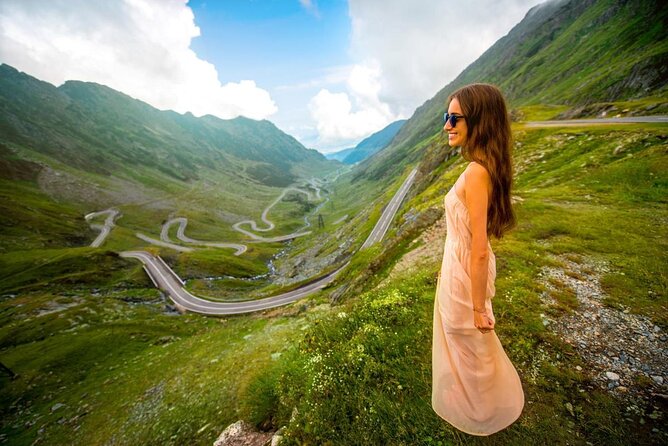
- Scenic mountain driving planned by season: July–September can include Transfăgărășan; if not, you shift to the Olt Valley route.
- Private tour feel with comfortable transport: air-conditioned vehicle, parking fees covered, pickup offered, and only your group participates.
Why this 3-day Transylvania route from Bucharest makes sense
I like trips that feel efficient without feeling rushed, and this one is built that way. You start in Bucharest at 10:00am, then spend most of your time in the Carpathian region where castles, fortified churches, and medieval towns are close enough for a multi-day rhythm.
The big practical win is that transportation and stays are handled for you. You ride in a modern, air-conditioned vehicle (Euro 6), and parking fees are covered, so your day is about seeing Romania—not coordinating logistics or hunting for places to park.
This is also set up for people who want structure. The same highly experienced guide travels with you for the journey, which matters when you’re moving between very different worlds: royal castles in mountain resorts, Saxon citadels, and Orthodox monasteries with Georgian-Armenian and Islamic geometric influences. If you like context—why a building looks the way it does, what changed over time—this pacing helps you catch the connections.
One more practical point: this works best if you’re okay with walking during town visits. The itinerary includes steps—Sighișoara’s Covered Staircase is part of the walk—so a moderate fitness level is the right expectation.
You can also read our reviews of more tours and experiences in Bucharest
Day 1: Peleș Castle, Bran Castle, and the medieval-city glow of Brașov
Day 1 is all about contrasts. You leave Bucharest and head north into the mountain resort area of Sinaia, then continue toward Brașov, stacking royal grandeur, fortress history, and Transylvania’s most photogenic city streets.
Peleș Castle in Sinaia
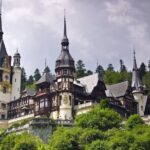
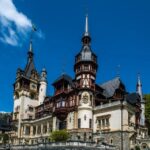
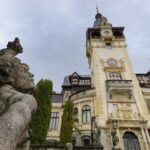
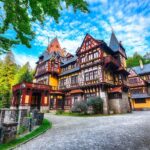
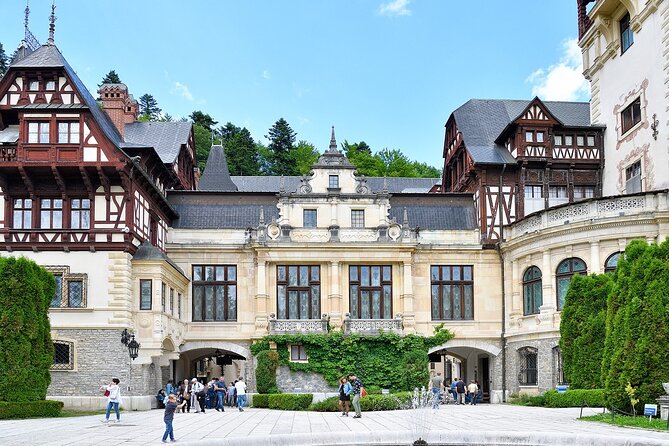
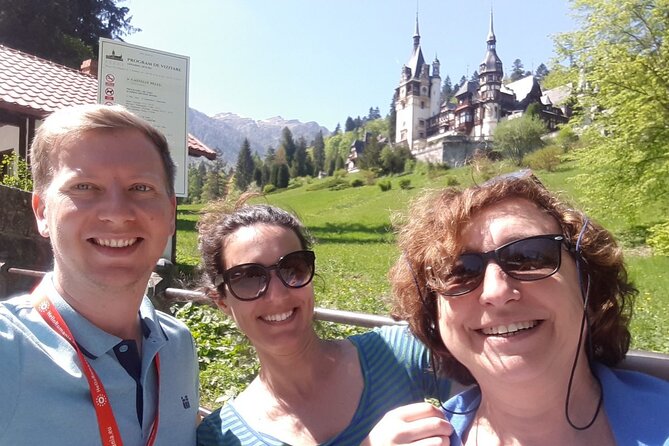
Peleș Castle is the kind of place that makes you slow down even if you’re on a schedule. Built for King Carol I starting in 1873, it mixes Neo-Renaissance and Gothic Revival architecture, while the interior leans heavily Baroque in character, with luxurious furnishings and intricate carved woodwork.
What makes it worth your time on a short trip is that it sets the tone for the region. This isn’t a ruined shell of a castle; it’s a crafted statement of power and taste. You’ll want time to look up at details as much as you want the classic exterior photo.
Ticket note: admission is not included.
Bran Castle: Dracula’s Castle, with a history-first reality check
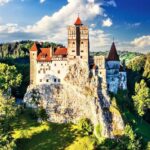
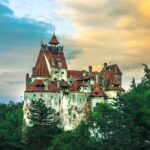
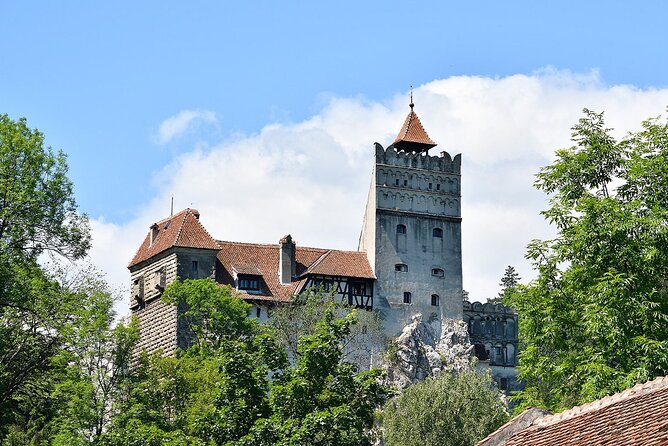
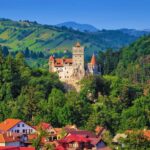
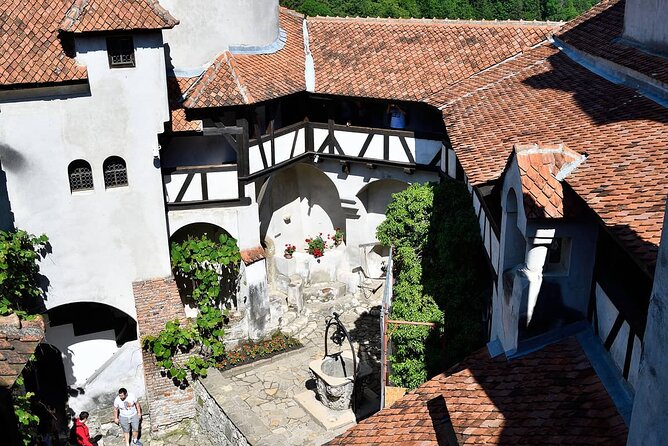
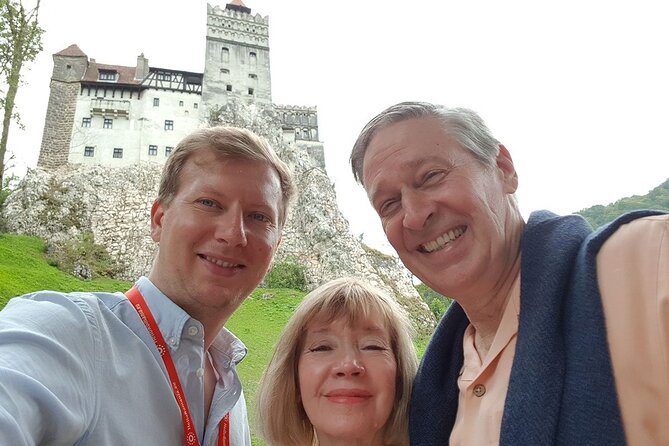
Bran Castle is famous, but this stop gives you the useful perspective you won’t get if you only chase the Dracula story. Yes, it’s nicknamed Dracula’s Castle. But the tour frames the association as shaky: there’s no proven link to Vlad Țepeș, and Bram Stoker’s Dracula isn’t supported by evidence tied to Bran.
Still, the fortress matters historically. The site goes back to the early 13th century, and Mongols destroyed an early wooden structure in 1242. Later, the stone castle was built with authority granted to local Saxons in the late 1300s, and today the museum includes Queen Marie of Romania’s furniture and art collection.
My practical advice: treat Bran as a fortress museum and architecture stop first, and the Dracula layer second. You’ll enjoy it more—and you’ll come away with fewer myths stuck in your head.
Ticket note: admission is not included.
Brașov: Gothic, Baroque, Renaissance, and the feel of a walled citadel
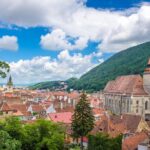
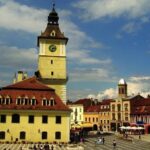
After the castles, Brașov gives you a city you can walk through. It’s described as framed by the Carpathians, with a mix of Gothic, Baroque, and Renaissance architecture. The city has a layered origin story too: founded in 1211 by the Teutonic Knights on a Dacian site, then settled by Saxons in the 1200s.
On this tour you’ll have about 1 hour 30 minutes in Brașov. That’s enough to orient yourself and catch some key streets and facades without turning the afternoon into a chore. If you’re the kind of person who likes wandering for ten minutes, then “finding something else,” this is a good length.
Admission note: listed as free time.

Day 2: Sighișoara’s wall ring and scholars’ stairs, then Biertan and Sibiu
Day 2 is where the medieval world starts to feel complete. You’ll bounce between fortified Saxon landscapes and big-name Transylvanian urban charm, with walking that’s scenic and purposeful.
Sighișoara’s citadel on a hill (and the view from the stairs)
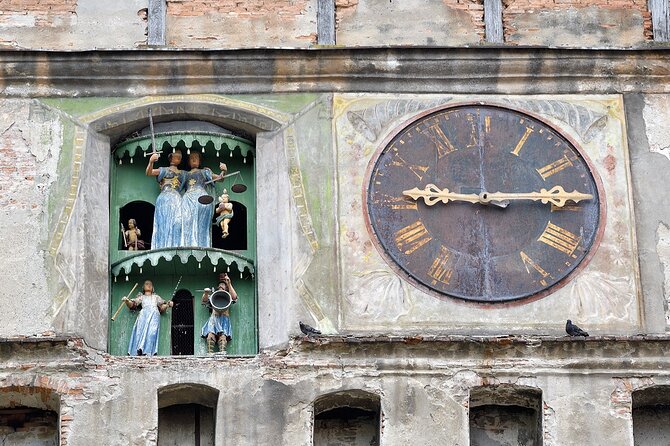
Sighișoara sits on a fortified hill with a 930-meter ring of walls, 14 defense towers, and five artillery bastions. The Historic Center is known for well-preserved merchant houses with pastel colors and German architectural influence. The Clock Tower is the tallest point, dating back about 700 years.
The walk matters here. You’ll tour by foot and climb the 180-step Covered Staircase (Scara Școlarilor, or Scholars’ Stairs) to reach the Gothic-style Biserica din Deal (Church on the Hill) and the Saxon Cemetery.
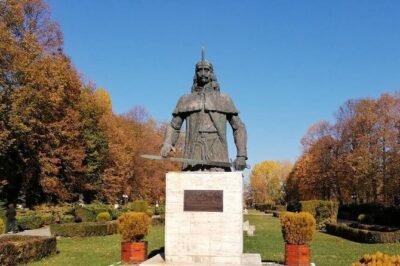
Also on the agenda: the birthplace linked to Vlad Țepeș, traditionally tied to the Dracula legend. This stop can be a quick emotional hook, but the real payoff is that Sighișoara lets you see how a fortified Saxon town was organized and defended.
Time on the ground: about 2 hours, with admission ticket listed as free.
Biertan’s fortified church: when religion doubled as defense
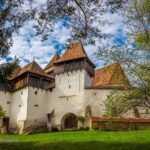
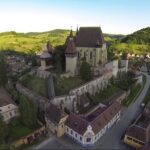
Biertan is a smaller place, but it’s an important one. The fortified church there is described as one of the region’s most important Saxon protected sites. Even more specific, the church served as the seat of the Lutheran Evangelical bishop from 1572 to 1867.
You’ll also get the bigger context: Transylvanian Saxons founded Biertan sometime between 1224 and 1283, and the town had economic importance as commerce shifted over time. It later lost significance as nearby cities grew.
If you like architecture with a function behind it, this stop hits hard. You’re not just looking at stone; you’re seeing how a community prepared for risk and built institutions that lasted.
Ticket note: admission is not included. Time: about 1 hour.
Sibiu: German-looking old town, Great Square, and the Bridge of Lies
Sibiu is the larger old-town finale for Day 2. The Old Town is described as strikingly German in appearance, and parts of the medieval wall still encircle the area, with three of the original 39 towers remaining standing today.
You’ll see landmarks like Great Square, Brukenthal Palace (a late-Baroque masterpiece that houses one of Romania’s impressive museums), and the Bridge of Lies (Podul Minciunilor). The Haller House is also on the route, known for the preserved Renaissance structure and Sibiu’s distinctive window setup.
Time on the ground is about 2 hours. That’s enough to take a real loop through the center. It’s also a good day to pick one detail to focus on—windows, church facades, or tower lines—so the day doesn’t blur into a list of pretty buildings.
Admission note: listed as free time.
Day 3: Transfăgărășan or Olt Valley drives and Curtea de Argeș’s monastery legends
Day 3 is your scenic payoff day. You’ll get mountain-road drama and then shift into Orthodox religious architecture with a legend-heavy backstory.
Transfăgărășan Highway (season dependent) and the mountain pass feeling
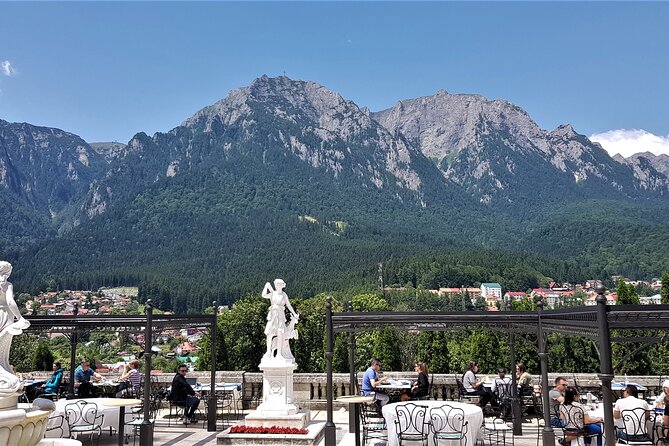
If you’re traveling July through September, you may drive Romania’s famous Transfăgărășan Highway. It’s described as crossing the southern section of the Carpathians, cutting through peaks like Moldoveanu and Negoiu, and unifying Transylvania and Wallachia.
If the highway isn’t open, the route changes to the Olt Valley. That route is framed as an ancient trade corridor first used by Romans, later by medieval merchants traveling deep into Transylvania.
This matters because highway access can change the mood of the day. When it’s open, you’ll likely feel like you’re traveling through a national highlight reel. When it’s closed, the backup route keeps the day scenic without derailing your itinerary.
Ticket note: admission is listed as free; time: about 2 hours for the drive/sight day segment.
Curtea de Argeș Monastery: Georgian-Armenian lines with Islamic motifs
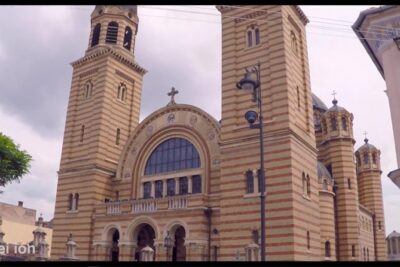
After the driving day, you’ll visit Curtea de Argeș Monastery. Romania has around 600 Orthodox monasteries overall, but Curtea de Argeș is singled out for its unique blend of architectural influences from Georgia and Armenia, plus Islamic geometric motifs.
It was built between 1515 and 1517, and it’s famous for construction legend stories centered on a masterbuilder called Meșterul Manole, tied to commissioning by Prince Negru Voda (Radu Negru). The number of legend variations is noted as well, with over 100 versions circulated.
Expect a shorter stop—about 45 minutes. That’s enough for looking, reading a bit, and soaking up why this monastery is often referenced as a cultural meeting point.
Ticket note: admission is not included.
You’ll then return to Bucharest after sightseeing so you can prepare for departure.
Price and logistics: what you’re really paying for
The tour price is $1,089.92 per person for roughly three days. At this level, the value question is less about “is it cheap?” and more about “is it organized in a way that saves you time and stress?”
Here’s what’s included:
- Air-conditioned vehicle and private transportation
- Parking fees
- Accommodations (handled by the operator)
- Pickup offered
- A mobile ticket
And here’s what’s not included:
- Entrance fees (and tickets for places like Peleș, Bran, Biertan, and Curtea de Argeș are explicitly listed as not included)
- A single room supplement of 60 E/person
So you’re paying for the heavy lifting: transport across a large loop, a steady guide presence, and the “how do we get there” work taken off your plate. If you’re the type who hates planning drives, timing, and where to sleep, this is the kind of package that feels worth it fast.
One more angle: group discounts are mentioned. For private tours, that doesn’t always mean “always cheaper,” but it can mean your cost per person may improve if you’re booking as part of a larger group setup.
The hidden cost to budget for is entrances. Castles and church museums can add up quickly, especially if you want full access without skipping interiors.
Guide quality and comfort: the difference between a route and an experience
The names that show up in the reviews point to what you should look for: a guide who manages pace and keeps the day from becoming a checklist.
Ovidiu Botoni is repeatedly mentioned as a guide on this type of trip, and one review notes a colleague named Vio stepping in for part of the journey. Other guides named in reviews include Octavian and Julian. The consistent theme isn’t the name—it’s the behavior: keeping a full program without forcing you to sprint, and being patient enough to let you absorb a place instead of constantly moving you along.
Comfort also seems well handled. Reviews reference new, comfortable vans and stays that felt cozy in B&B-style lodging, with the tour company arranging quality options after short notice due to cancellation elsewhere. Even if your specific accommodations differ, the service style comes through: you’re not left improvising.
Two practical “bring this mindset” tips:
- Plan to walk. Sighișoara’s stairs are real, and town time is on foot.
- Pack for weather. This experience is noted as requiring good weather, and the route options shift based on road access for the Transfăgărășan segment.
Should you book this 3-day Transylvania landmarks tour?
I’d book this if you want three days that feel structured but not frantic, and you care about more than just Dracula snapshots. The mix of Peleș Castle, Bran Castle with a history-first lens, Sighișoara’s fortified hilltop streets, Biertan’s defensive church, Sibiu’s German-looking old town, and Curtea de Argeș’s architectural mash-up gives you a well-rounded Transylvania view.
Choose it especially if you:
- Don’t want to plan intercity drives and lodging
- Prefer a guide to connect the dots between Saxon fortifications, royal-era monuments, and Orthodox monuments
- Like the idea of mountain driving with a route plan that accounts for season and road access
I’d hesitate if you’re trying to minimize walking or you don’t want to budget for entrance fees on top of the tour cost. Also, if you’re hoping for one long, slow day in nature over castles, this route is more historic-town focused.
If that sounds like your style, this is a strong, good-value way to see a lot of iconic Romania without turning the trip into logistics homework.
FAQ
How long is the tour?
It’s a 3-day tour, approximately.
What time does the tour start?
The meeting start time is 10:00am.
Do you get pickup from Bucharest?
Pickup is offered.
Is this a private tour?
Yes. Only your group will participate.
What’s included in the tour price?
Included items are an air-conditioned vehicle, private transportation, and parking fees, plus accommodations handled by the operator.
Are entrance fees included?
No. Entrance fees are not included, and some stops specifically list admission tickets as not included.
Is there a single room supplement?
Yes, the single room supplement is 60 E per person.
What happens if the Transfăgărășan Highway is not open?
If it’s not open, your guide will take you through the scenic Olt Valley instead.
What physical condition is required?
You should have a moderate physical fitness level.
What if the weather is poor?
The experience requires good weather. If it’s canceled due to poor weather, you’ll be offered a different date or a full refund.
Can I get a full refund if I cancel?
Yes. Free cancellation is available, and you can cancel up to 24 hours in advance for a full refund.