REVIEW · BUCHAREST
Half-Day Jewish Heritage Walking Tour in Bucharest
Book on Viator →Operated by Laura Genescu · Bookable on Viator
Bucharest’s Jewish story lives in stone and streets. What makes this tour feel different is the historical photos on an iPad/tablet, which put the buildings in context as you walk, plus a private, small-group guide approach that keeps the pace focused on your interests. One thing to factor in: admission costs can vary depending on what you add beyond the main stops, and a $25 per person admission fee is listed for venues such as the Jewish state theater.
I like that the guide doesn’t just rattle dates. You’ll get real-world framing—how the Polish-Jewish community built, repaired, redesigned, and restored the landmarks over time, and how Bucharest’s Jewish life changed through war and politics. The main trade-off is time: at 3 to 4 hours, it’s a smart overview, not a slow museum marathon.
In This Review
- Key things I’d highlight before you book
- The real value: a guided walking story, not a stop-and-go checklist
- Great Synagogue: where architecture tells multiple lifetimes
- The “Choral” Temple: a Vienna connection you can see in Bucharest
- Jewish Museum in a former synagogue: history you can walk into
- Timing and pace: what 3 to 4 hours feels like in real life
- Price and value: what you’re paying for (and what can add up)
- What you’ll likely learn (beyond dates and doors)
- Is this for you? Who will enjoy it most
- Should you book this Bucharest Jewish Heritage Walking Tour?
- FAQ
- How long is the Half-Day Jewish Heritage Walking Tour in Bucharest?
- Where does the tour start?
- What time does the tour start?
- Is this tour private?
- What language is the tour offered in?
- Are admission tickets included?
- Do I get a mobile ticket?
- Does the guide use any visuals during the tour?
- What happens if the weather is bad?
- Is transportation included?
Key things I’d highlight before you book
- Tablet-based historical photos that connect past photos to what you see on the street
- Private small-group focus (up to 8) that makes Q&A feel natural
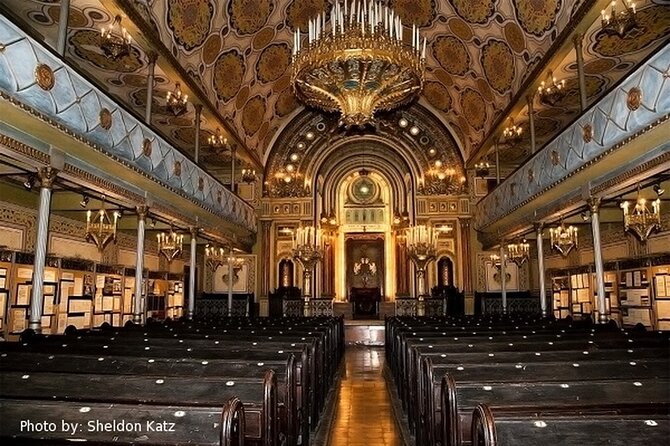
- The Great Synagogue’s changing look—1845 origins through Rococo repaint in 1936 and restoration after 1945
- Choral Temple architecture echoes from Vienna, including the Leopoldstadt-Tempelgasse comparison
- A WWII-surviving synagogue repurposed as a museum, so you’re walking into memory, not just reading it
- A guide who can connect Jewish heritage to today, including discussion of theater and community life when relevant
The real value: a guided walking story, not a stop-and-go checklist
This is a half-day walking tour designed to keep you active while you learn. You’ll start in a very central place—Starbucks on Str. Franceză 62 at 9:30 am—and the tour ends back there. That loop matters. It keeps the experience simple if you’re using public transit, and it means you’re not hunting for your next meeting point after 3 to 4 hours of history.
You’re also not stuck listening to someone talk at you from one viewpoint. The guide uses a tablet with historical images, so you can actually see how the neighborhood looked before. It’s a small tool, but it changes the whole feeling of the tour. Instead of history floating in space, you can match it to details on the buildings.
Finally, this is billed as private (your group only). In practice, that usually means you can ask follow-up questions without feeling like you’re holding up a train of strangers. In recent groups, guides named Laura Genescu, Jacky, and Loan have been praised for being personable and for answering questions patiently—exactly the kind of vibe that helps a subject like Jewish heritage in Bucharest land in a personal way.
You can also read our reviews of more walking tours in Bucharest


Great Synagogue: where architecture tells multiple lifetimes
Your first stop is the Great Synagogue. It’s not just one story—it’s layers stacked on layers, and the building shows it.
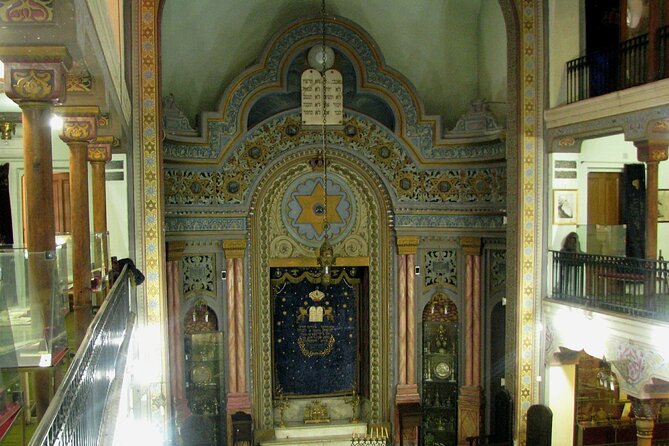
Here’s what you’ll learn about its timeline: it was raised in 1845 by the Polish-Jewish community. Repairs followed in 1865, then the synagogue was redesigned in 1903 and 1909. Then comes the surprise detail: it was repainted in Rococo style in 1936, attributed to Ghershon Horowitz. That’s the kind of fact that makes the building feel human—someone made deliberate aesthetic choices, not just structural ones.
And then history gets brutal. In 1945, it was restored after it had been devastated by the far-right Legionnaires, linked to the Iron Guard movement. Standing there, you’re essentially facing a monument that went through reinvention and survival.
What I like about starting here: it sets the emotional and visual baseline for everything else. Even if you don’t know Bucharest’s Jewish timeline yet, you’ll leave Stop 1 understanding that this community’s presence was not static. It changed in response to politics, culture, and conflict—while the buildings still carried the evidence.
A practical note: this stop includes an admission ticket. That’s helpful because it keeps you from doing the math mid-tour. Still, if you’re budgeting tightly, remember there can be additional admission fees if the guide adds related cultural stops beyond the core three venues.
The “Choral” Temple: a Vienna connection you can see in Bucharest
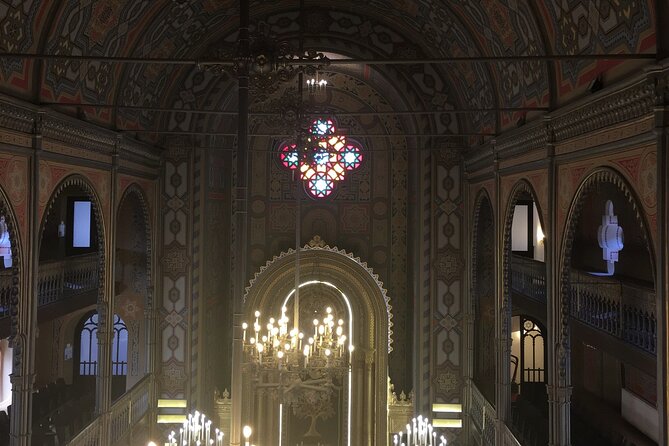
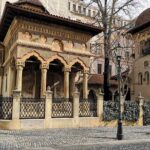
Next you’ll visit the Choral Temple, a synagogue built between 1864 and 1866. It was designed by Enderle and Freiwald, and what makes it especially interesting is how closely it copies an earlier Vienna synagogue: the Leopoldstadt-Tempelgasse Great Synagogue, built in 1855 to 1858.
This is one of those learning moments that turns “architecture spotting” into real understanding. You’re not just looking at a pretty façade. You’re seeing how styles traveled, how communities influenced one another, and how models moved across borders. It’s a reminder that Jewish life in Central and Eastern Europe wasn’t sealed off in one city. People, ideas, and building plans moved.
At around 30 minutes, the stop is long enough to notice the key features and still keep the tour flowing. If you like historical comparisons—how one city’s design choices show up elsewhere—this is the stop that will likely stick with you.
It’s also a good contrast to the Great Synagogue. One is known for its layered and dramatic reinforcements over decades; the other highlights a different kind of continuity: imitation and adaptation of a well-known template.
Jewish Museum in a former synagogue: history you can walk into
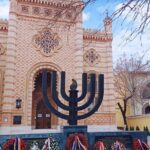
Stop 3 is the Museum of History of the Jewish Community (often named as the Jewish Museum in Bucharest or the Museum of the History of the Romanian Jewish Community). The key detail isn’t just what’s inside—it’s the building itself.
The museum is located in the former Templul Unirea Sfântă synagogue, a structure that survived World War II. That means the location carries its own credibility. You’re not only learning from exhibits; you’re standing in a space that endured.
You’ll have about 20 minutes here. That’s not meant to replace a full museum day. Think of it as a fast, guided orientation—enough time to grasp the museum’s focus and connect what you saw at the previous two synagogues to what the exhibits are trying to explain about community history.
One reason I value this placement in a walking tour: you end with the “memory house” before you head back to your real-life schedule. You’ll likely walk away with a clearer sense of what you were seeing earlier. The Great Synagogue explains the changing look and survival story. The Choral Temple shows cultural and architectural links. The museum ties the theme together with a WWII-surviving setting and a focus on the Jewish community’s history in Romania.
If you’re hungry for more, this is the kind of stop that often makes you want to return later—on your own time—so you can slow down with the exhibits that caught your attention most.
Timing and pace: what 3 to 4 hours feels like in real life
This tour runs about 3 to 4 hours and starts at 9:30 am. That morning start is a practical win in Bucharest. Streets are usually easier to navigate than later in the day, and you’re more likely to get clear light for seeing building details.
The pace is designed for a walking format, with each venue taking roughly:
- Great Synagogue: 20 minutes (tickets included)
- Choral Temple: 30 minutes (tickets included)
- Jewish Museum: 20 minutes (tickets included)
That means your guide isn’t trying to cram in everything. Instead, you get enough time at each stop to make the context stick. And since the guide uses historical photos on a tablet, you don’t need to be an architecture expert to follow along.
The one thing to watch for is weather. The experience lists good weather required. If it’s canceled due to poor conditions, you’ll be offered a different date or a full refund. For planning, I’d treat this like an outside-history tour: dress for walking, and keep a light layer handy.
You can also read our reviews of more historical tours in Bucharest




Price and value: what you’re paying for (and what can add up)

The price is listed as $318.06 per group for up to 8 people. That turns the cost into something more like a private guide booking than a per-person admission scramble.
So where does the value come from?
First, you’re paying for narration that connects dates, buildings, and community shifts into a single story. Second, the guide brings tablet-based historical photos, which usually means extra preparation time behind the scenes. Third, you’re not sharing attention with a large crowd since it’s private for your group.
Now the budget reality check: admissions to these three stops are listed as included (tickets noted at each stop). But the pricing notes also mention an admission fee of $25.00 per person for additional synagogue/museum items and the Jewish state theater, which are not included in the base price. The way to handle this is simple: if you want everything to stay “predictable,” ask your guide ahead of time whether you’ll be stopping at any additional cultural venues beyond the three core stops.
If you’re comparing to a cheaper option, the big difference usually isn’t the walking. It’s the guided interpretation and the fact that you get a private group experience with historical visuals.
What you’ll likely learn (beyond dates and doors)
This tour works best if you come with curiosity and a willingness to ask questions. A subject like Jewish heritage in a specific city has real emotional weight, and the guides in recent groups were praised for handling that with care.
From the details you’ll hear, you can expect a few themes to repeat:
- Jewish community life left a physical footprint in Bucharest, and the buildings were shaped by local communities, not just abstract trends.
- The Great Synagogue’s look changed over time, including a Rococo repaint in 1936.
- Political violence affected what survived, including the 1945 restoration after devastation linked to the Iron Guard/Legionnaires.
- Architecture ties Bucharest to wider regional Jewish culture, including the Vienna template behind the Choral Temple.
- A museum set in a former synagogue lets you experience history as place, not only text.
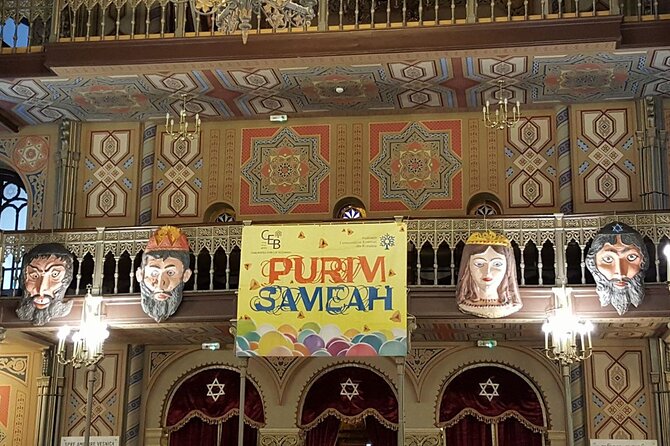
Some guides also connected the discussion to cultural life, with mention of Yiddish theatre in Romania—an area that can come up when the tour relates to the Jewish state theater (with additional admission if you go). Even if you don’t visit a theatre building on your specific day, that kind of context can change how you interpret everything you’re seeing.
Is this for you? Who will enjoy it most
I’d say this is a good fit if you want:
- a focused half-day walking tour with a private guide
- clear context and historical photos to help you connect the dots
- a structured look at three major sites in Bucharest’s Jewish heritage
It’s also a strong choice if your group likes asking questions. When a guide can answer calmly and move at your group’s pace, the tour becomes more than a route. Recent guides like Loan and Laura were praised for patience and for being able to connect past, present, and future of Jewish life in Romania.
If you want a long, slow museum day with time to read every exhibit and sit down often, this one is likely too short. You’d treat it as your “orientation tour,” then return later for deeper exploring.
Should you book this Bucharest Jewish Heritage Walking Tour?
I think you should book it if you want an efficient, meaningful way to understand Jewish heritage through three landmark stops, with historical photos helping you make sense of what changed over time. The Great Synagogue’s layered timeline, the Choral Temple’s Vienna connection, and the museum’s WWII-surviving setting give you a strong three-part story in just a few hours.
If you’re very budget-sensitive and plan to add extra cultural venues like the Jewish state theater, confirm what’s included for your exact departure so you’re not surprised by admission fees. Otherwise, this is the kind of tour where the guide’s storytelling and the tablet visuals do most of the heavy lifting—so you walk away with real context, not just snapshots of buildings.
FAQ
How long is the Half-Day Jewish Heritage Walking Tour in Bucharest?
It’s listed as approximately 3 to 4 hours.
Where does the tour start?
The meeting point is Starbucks, Str. Franceză 62, București 030106, Romania.
What time does the tour start?
Start time is 9:30 am.
Is this tour private?
Yes. It’s described as private, with only your group participating.
What language is the tour offered in?
The tour is offered in English.
Are admission tickets included?
Admission tickets are included for the listed tour stops: Great Synagogue, the Choral Temple, and the Museum of History of the Jewish Community. The pricing info also notes an additional $25.00 per person admission fee for venues such as the Jewish state theater, which is not included.
Do I get a mobile ticket?
Yes, the tour includes a mobile ticket.
Does the guide use any visuals during the tour?
Yes. Historical photos are presented on an iPad/tablet during the tour.
What happens if the weather is bad?
The experience requires good weather. If canceled due to poor weather, you’ll be offered a different date or a full refund.
Is transportation included?
Private transportation or hotel pick-up is not included in the price.