REVIEW · BUCHAREST
4 Days Private Tour in Transylvania Brasov Sighisoara Sibiu
Book on Viator →Operated by Supplier · Bookable on Viator
A few things in Romania hit fast and hard, in a good way. This private 4-day Transylvania route is built for that: Peleș Castle and Bran Castle early on, then UNESCO towns and fortified churches, with big mountain views on Day 4. I like the private, flexible setup (it’s your group only, and the schedule can be adjusted), and I like that the sights are spaced so you still get time to walk and take photos. One possible drawback: this is a packed loop with long travel days, so if you hate getting in and out of the car a lot, you’ll want to pace your expectations.
What makes it interesting is the mix. You get royal glamour at Peleș, the Dracula legend at Bran, and then the real medieval structure behind Transylvania’s story—Saxons, fortified churches, and walled cities—before finishing with a dramatic road through the Carpathians.
In This Review
- Key highlights at a glance
- Price and logistics: what $872.67 per person really buys
- A private loop that actually feels flexible
- Day 1: Peleș, Bran, and a medieval first evening in Brașov
- Day 2: Rupea and Viscri’s fortified church, then UNESCO Sighișoara walls
- Day 3: Biertan fortified walls, then Sibiu as Transylvania’s cultural hub
- Day 4: Transfăgărășan Road, Bâlea Lake, Vidraru Dam, and Curtea de Argeș
- Your best strategy: pace yourself across castles, forts, and towns
- Guide quality can make or break the day
- Accommodation and meals: plan for your own comfort
- Who this tour suits best
- Should you book this 4-day private Transylvania tour?
- FAQ
- How long is the private tour?
- Where does the tour start?
- Is this tour private or shared?
- What’s included in the price?
- Are entrance tickets included?
- Is accommodation included?
- Are meals included?
- Is pickup offered?
- What’s the cancellation policy?
Key highlights at a glance
- A true private tour where only your group participates, with pickup offered from Bucharest
- Historic heavy hitters: Peleș, Bran, Rupea, fortified churches, and multiple UNESCO areas
- Sighisoara and Sibiu time to see more than just a quick photo stop
- Mountain Day 4 with Transfăgărășan Road, Bâlea Lake, and Vidraru Dam views
- Driver-guide support: past guests called out Mircea (sometimes using Frank) for smooth, expert guidance
- Budget reality built in: entrances are not included, but total entry costs are noted upfront
Price and logistics: what $872.67 per person really buys
At $872.67 per person for about 4 days of private touring, this isn’t a budget “hop-on hop-off” plan. You’re paying for three things: a dedicated air-conditioned vehicle, a private schedule that’s meant for your pace, and local guiding that ties the stops together instead of leaving you to guess.
Your biggest added cost is simple: accommodation and meals are not included. The tour notes an average hotel room price around $70 per night with breakfast, and it puts restaurant meals at about $15–20 per person. On top of that, entrances to attractions are noted as costing roughly $35–40 per person total. So the all-in figure usually looks like: tour price + 3–4 hotel nights + a few meals + some entry fees.
Is it good value? For me, it makes sense if you’re traveling with at least a couple people and you want comfort plus zero navigation stress. If you’re flying solo and you’re only going to use the car for short jumps, the cost can feel heavy. The best move is to check how the private transport is allocated for your group size—because the value gets better when you split the ride.
One more practical note: you start around 9:00am. That’s a real morning start. If you’re someone who likes slow breakfasts and late starts, you’ll do better choosing hotels that are close to where you’ll depart.
You can also read our reviews of more private tours in Bucharest

A private loop that actually feels flexible
This tour is designed as a private experience, not a fixed group bus plan. The program is described as flexible and able to be customized. In plain terms, that matters because Transylvania can be quirky on the ground—traffic, weather in the mountains, and timing at castles and UNESCO sites. With a private setup, you can usually handle those moments without feeling like you’re missing half the day.
I also like that most of the stops in the plan list admission ticket free. At the same time, the package still states that entrances are not included and gives a realistic cumulative entry budget. That usually means you should plan for some paid entry somewhere in the chain, even if some parts are free or handled differently. Budgeting $35–40 keeps you from getting surprised.
Your day-to-day comfort comes from the included private transportation and air-conditioned vehicle. That’s not a luxury detail in Romania—it’s a practical one. Distances between towns and castles add up, and air-conditioning turns long drives into a tolerable connection time.
Day 1: Peleș, Bran, and a medieval first evening in Brașov
Day 1 is a classic Transylvania punch list, but it’s arranged in a way that reduces whiplash. You start in the Carpathians near Sinaia at Peleș Royal Castle, then shift to Bran Castle (the Dracula stop), and finish with a walk through Brașov’s historical center.
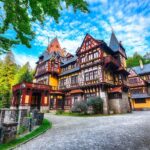
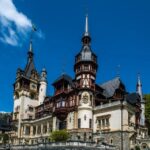
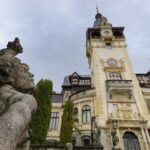
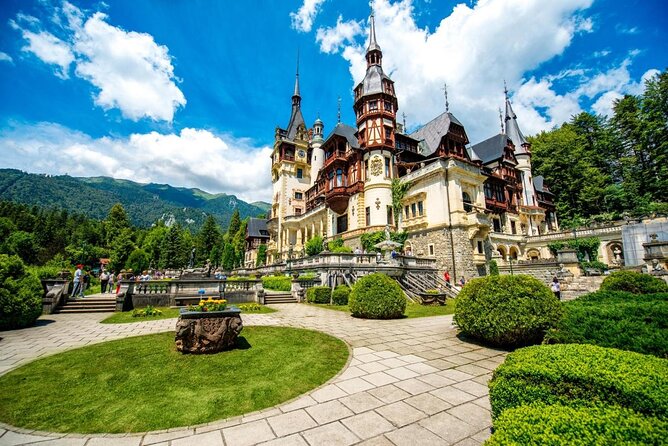
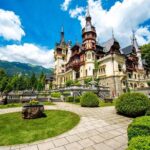
Peleș Castle is the royal-bling moment. It’s a Neo-Renaissance castle built for King Carol I, constructed between 1873 and 1914, and inaugurated in 1883. Even if you’re not the type who loves interior tours, this place is worth it for the setting and the sense of scale. The stop time is listed as 2 hours, which is long enough to see the highlights without rushing.
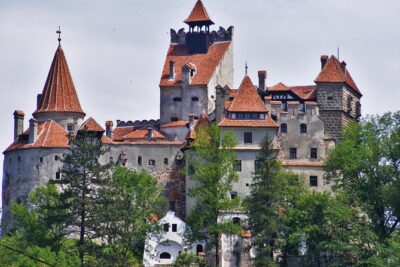
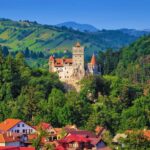
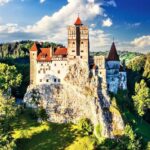
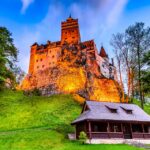
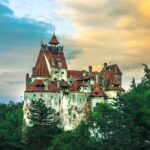
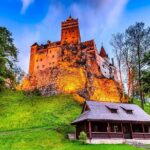
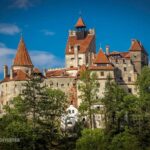
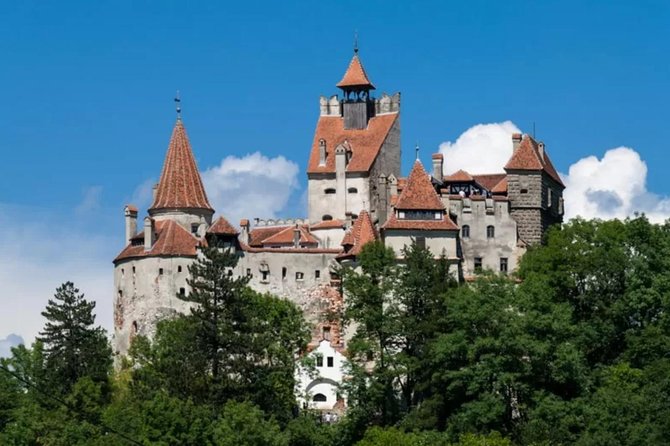
Then you head to Bran Castle, perched high on rock and wrapped in the Dracula legend created around Bram Stoker’s Dracula. Here’s the key thing to know: it’s not only about the story. Bran Castle sits on a site linked to a Teutonic Knights stronghold dating to the early 1200s, and the documentation for Saxon privileges is dated 1377. That mix makes the stop more than a gimmick. You get medieval atmosphere with a pop-culture magnet attached.
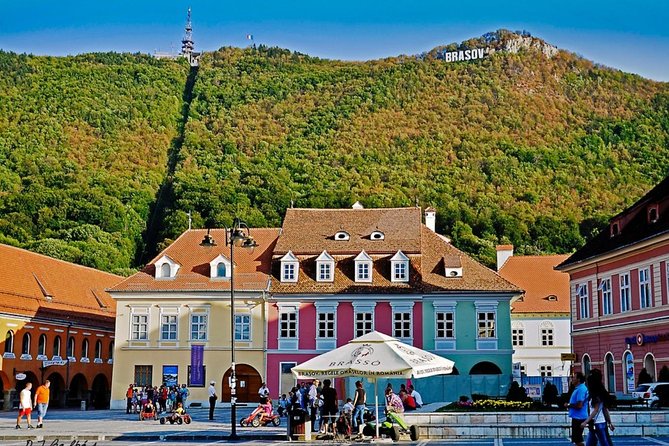
Finally, Brașov Historical Center brings you back to everyday medieval life—cobblestone streets, colorful buildings, and major Gothic presence, including the famous Black Church. You get 2 hours, which is just right for a first evening: find your bearings, grab a drink, and plan an easy morning route for the next day.
Possible drawback on Day 1: you’re doing three major stops with two-hour blocks. If you’re the kind of person who needs quiet time to absorb details, you might want to spend extra time on just one (Peleș or Bran) and keep the Brașov walk light.
Day 2: Rupea and Viscri’s fortified church, then UNESCO Sighișoara walls
Day 2 leans into the real defensive side of Transylvania. You start at Rupea Citadel, then see Viscri Fortified Church, and end with Sighișoara’s UNESCO medieval center.
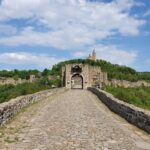
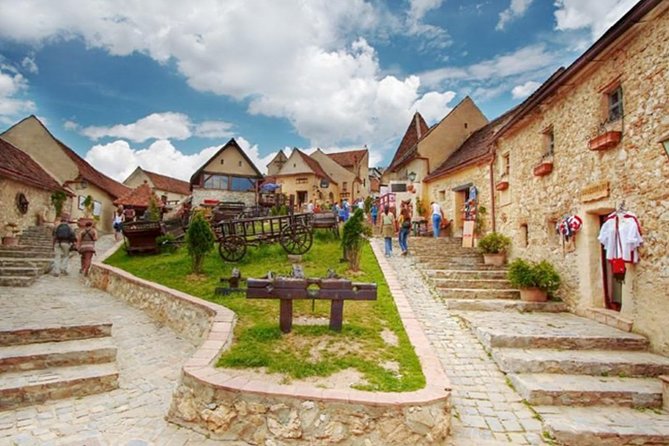
Rupea Citadel is older than it looks on a map. Early human settlement traces stretch back to the Paleolithic and early Neolithic. Documentary records point to the 1300s, when Saxons revolted against King Charles I of Hungary and used the citadel as refuge. Archaeologists also connect the current fort to a Dacian defense position later conquered by the Romans. If you like historical layers, Rupea gives you that feel without requiring a museum ticket.
Then comes Viscri Fortified Church, a Lutheran fortified church tied to the Transylvanian Saxon community. It began Roman Catholic and became Lutheran following the Reformation. This is part of the larger UNESCO World Heritage group focused on fortified churches. The useful takeaway for you: this isn’t just a church you photograph. The whole point is the defensive design—church plus village fortifications as one system.
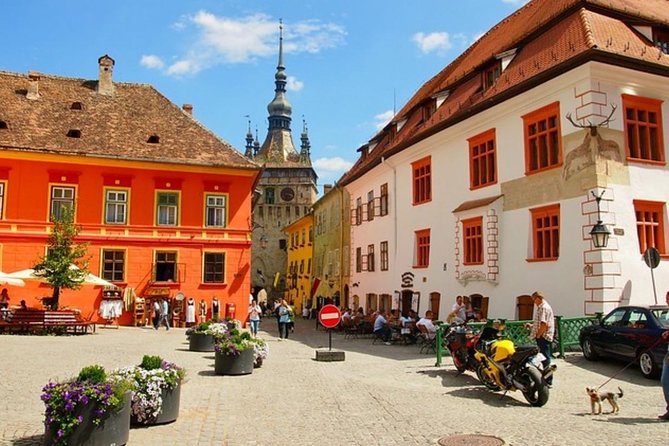
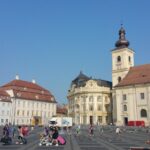
Your day ends in Sighișoara, which is UNESCO for a reason. The historical center is encircled by preserved walls, and the streets are still built for slow wandering—colorful houses, medieval shapes, and the dramatic clock presence in the Clock Tower area. The plan gives 3 hours here, so you can do more than a glance-and-go. It’s enough time to walk the walls’ rhythm and soak up the medieval layout.
Also, Sighișoara’s Dracula connection is specific: it includes Vlad Dracula’s birthplace. That keeps the “legend” part anchored to a real place rather than floating around in fog.
Day 3: Biertan fortified walls, then Sibiu as Transylvania’s cultural hub
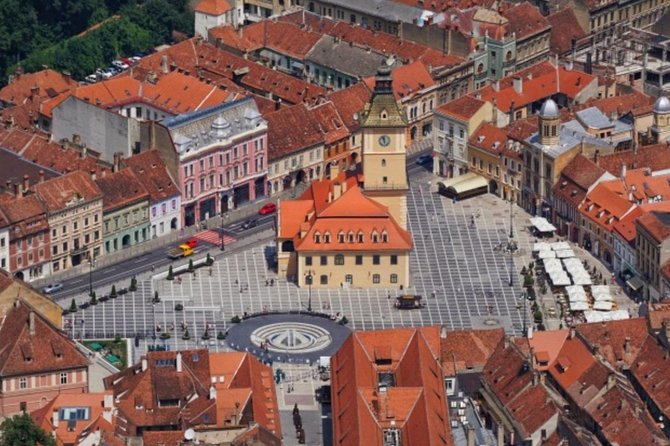
Day 3 is about big fortifications, then a calmer city day in Sibiu.
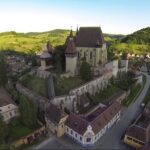
You start at Biertan Fortified Church, a UNESCO site perched high in the village. This is a fortress-in-plain-sight. The complex includes three tiers of defensive walls, each about 35 feet high, with towers and gates linked into the design. The whole idea is that the church was extremely hard to conquer during medieval times.
It also includes details that make your visit feel hands-on rather than abstract: late-gothic architecture, heavy doors, and a notable wooden altar. The plan also highlights a large multi-paneled wooden altar and a remarkable wooden door that once protected treasures in the sacristy.
After Biertan, you also visit Mălâncrav fortified churches (included as part of the Day 3 theme). Even though the plan description doesn’t list individual architectural specifics for Mălâncrav, the point is clear: you’re comparing fortress-church styles across Transylvania’s Saxon heritage belt.
Then you move to Sibiu, described as a major cultural center and former hub of the Transylvanian Saxons. It was European Capital of Culture in 2007 (shared with Luxembourg). What I like about Sibiu is the “walkable intelligence” feel—streets that make sense, architecture that gives you visual clues, and enough time (2 hours) to get the overview without feeling like you have to sprint.
You can also read our reviews of more tours and experiences in Bucharest
Day 4: Transfăgărășan Road, Bâlea Lake, Vidraru Dam, and Curtea de Argeș
Day 4 is where the scenery and engineering show up. You get a full mountain-and-history arc: Transfăgărășan Highway, Bâlea Lake, Vidraru Dam, and Curtea de Argeș Monastery (with the cathedral on site).
You start at Bâlea Lake in the Făgăraș Mountains at 2,034 meters. The plan notes year-round chalet access plus a meteorological and rescue station. In summer, the lake is accessible by car on the Transfăgărășan road; in other seasons you reach it by cable car from the Bâlea Cascadă chalet. That’s a big practical detail for you: dress for cold and changing conditions, and understand that seasonal access can change the experience even though the stop remains the same.
There’s also a fun modern twist: in 2006, the first ice hotel in Eastern Europe was built near the lake. Even if you don’t plan to stay there, it adds a quirky layer to what’s already an atmospheric place.
Next is the Transfăgărășan Highway (DN7C). It’s a major paved mountain road and described as the second-highest paved road in Romania after Transalpina. The road spans about 90 km and connects Transylvania and Wallachia through the southern Carpathians, originally built in the early 1970s as a strategic military route. This is one of those drives that makes you understand why maps don’t replace roads.
You then pause briefly at Vidraru Dam. The stop time listed is 15 minutes, so think of it as a quick look for photos and context rather than a long explanation stop. Still, it’s notable: completed in 1966, an arch dam on the Argeș River forming Lake Vidraru, with an elevation and capacity big enough to be a landmark in its own right.
Finally, you end at Curtea de Argeș Monastery and the cathedral dedicated to the Dormition of the Mother of God. The building dates to the early 16th century. The exterior is pale grey limestone, and the interior is brick with frescoes. The plan also notes a nearby Moorish-style royal palace and a legend about architect Meșterul Manole (Manoli). Even if you don’t go deep into the legend, the cathedral setting gives your day an ending that feels more reflective than scenic.
Your best strategy: pace yourself across castles, forts, and towns
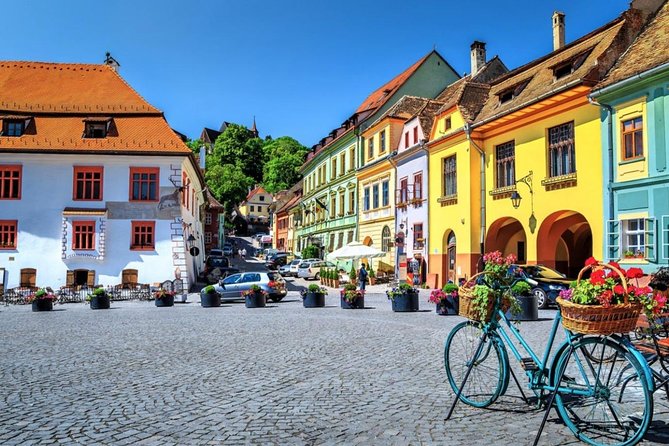
This tour works when you treat it like three themes, not one checklist.
First theme: royal and legend power at Peleș and Bran. Here, it’s okay to enjoy the drama and not try to read every plaque.
Second theme: fortified churches and medieval walls, meaning Rupea, Viscri, Biertan, and Sighișoara. These places reward slow walking. If you rush, you’ll miss the defensive logic—tiers of walls, gates, and the sense that religion and protection were linked.
Third theme: mountain Romania on Day 4. This is where weather affects the day. You’ll want layers, good shoes, and a realistic expectation that views can change fast at altitude. The stop timing is fairly tight in places, so moving efficiently matters.
If you’re booking, I suggest you plan your hotel choice around comfort and convenience for the morning start. You don’t need a fancy five-star. You just need sleep, breakfast, and a short walk to wherever you’re picked up.
Guide quality can make or break the day
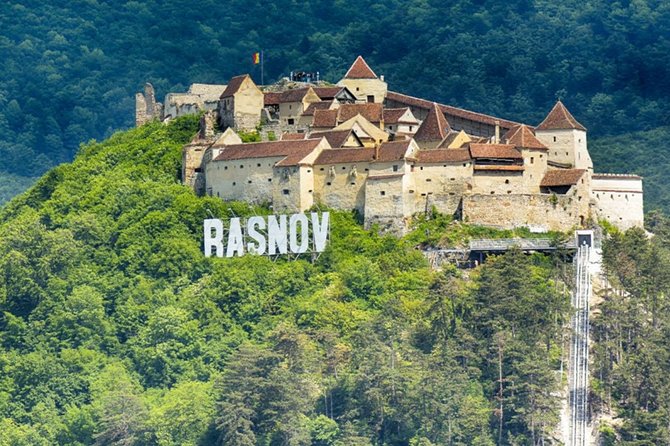
One thing I’m glad the plan hints at is strong human guidance. A past traveler highlighted Mircea as an extremely knowledgeable guide, and even noted he uses Frank for people who struggle with Romanian pronunciation. That sort of small, practical kindness matters more than you’d think. It helps people relax, ask questions, and stay engaged during transitions.
Private tours also mean your questions don’t get swallowed by a big bus group. If you care about the real medieval context behind Dracula’s popularity, or you want to understand why these fortified structures look the way they do, a good guide can connect dots quickly.
Accommodation and meals: plan for your own comfort
Since accommodation and meals aren’t included, you’ll need to choose them smartly. The tour notes hotels averaging about $70 per night with breakfast. That’s a useful baseline. Aim for places that are close to your overnight city center so you can walk in the evening without another round of driving.
For meals, the plan suggests around $15–20 per person at restaurants. I’d treat that as a realistic range rather than a guarantee. Big tourist areas and castle towns can cost more. The good news: your itinerary includes time in towns like Brașov, Sighișoara, and Sibiu, so you’re not locked into one restaurant for days.
Who this tour suits best
This fits you if:
- you want a private feel with air-conditioned comfort and a driver who can keep timing sensible
- you enjoy medieval architecture and want the fortified-side context, not only legends
- you’re happy with a packed 4-day pace that still gives walking time at the main sites
- you like contrast: castles → fortified churches → UNESCO towns → mountain road and dramatic viewpoints
It might not suit you if:
- you want a slow, minimalist trip with lots of downtime
- you dislike driving days, especially when the Carpathians are part of the plan
- you struggle with weather changes at altitude on Day 4 (you can still go, just plan for layers)
Should you book this 4-day private Transylvania tour?
I’d book it if you want Transylvania in one confident, guided circuit: royal castles up front, fortified heritage and UNESCO walls in the middle, and the big mountain payoff at the end. The private format and flexibility help you keep the trip feeling human, not robotic. You’re also not stuck guessing how to string together Brașov, Sighișoara, and Sibiu—the order already makes sense.
Before you commit, do two quick checks:
1) Confirm what’s included beyond transportation (especially how entrance fees line up with the noted totals).
2) Choose your hotel locations carefully, since accommodation isn’t part of the price.
If those two boxes are checked, this is the kind of trip that gives you memorable variety without requiring you to be a Romania logistics expert.
FAQ
How long is the private tour?
It lasts about 4 days.
Where does the tour start?
The experience is in Romania with the location listed as Bucharest, and the start time is 9:00am.
Is this tour private or shared?
It’s private. Only your group participates.
What’s included in the price?
The price includes private transportation in an air-conditioned vehicle. A mobile ticket is also included.
Are entrance tickets included?
The package notes that entrances to tourist attractions are not included, with cumulative entry costs around $35–40 per person. Some stops in the schedule also show admission ticket free, so it’s worth confirming how fees apply for your dates.
Is accommodation included?
No. Accommodation is not included. The data suggests an average hotel room cost around $70 per night with breakfast.
Are meals included?
No. Meals are not included, with restaurant meals estimated around $15–20 per person.
Is pickup offered?
Yes, pickup is offered.
What’s the cancellation policy?
You can cancel for a full refund if you cancel at least 24 hours in advance of the start time.