REVIEW · BUCHAREST
7 days Private Romania Grand Tour from Bucharest
Book on Viator →Operated by Trip2Ro · Bookable on Viator
Crammed schedules are not the move here. This private Romania grand tour links major medieval sites with UNESCO churches and legendary landscapes, all with door-to-door transport from Bucharest. I like how it keeps the day-to-day pace realistic, so the sights feel like part of a story instead of a checklist.
Two things I especially like are the air-conditioned minivan comfort for long transfers, and the way the route pairs famous castles with smaller, local stops like wooden churches and regional ceramics. That mix is what makes the trip feel like Romania, not just postcards.
One consideration: not every church or castle is priced into the tour the same way, so you’ll want to expect some entrance fees not included days—budget a bit for that, especially for the UNESCO sites.
In This Review
- Key points to know before you go
- A Private Romania Grand Tour That Gets the Rhythm Right
- Pickup in Bucharest: Your Day Starts Before the First Stop
- Day 1: Cozia Monastery and Sibiu’s Medieval Squares
- Day 2: Alba Iulia, Turda Salt Mine, and Cluj-Napoca
- Day 3: Wooden Churches in Şurdești, Barsana, and Vadu Izei
- Day 4: The Merry Cemetery, Moldovița, Sucevița, Marginea Ceramics
- Day 5: Piatra Neamț, Bicaz Gorges, Red Lake, and Late Arrival in Sighișoara
- Day 6: Sighișoara UNESCO Center, Bran Castle, and Brasov’s German-Style Layers
- Day 7: Peles Castle and a Bucharest Finish with Triumph Arch and Parliament Palace
- Price and Value: What You’re Really Paying For
- Who This Tour Fits Best (and Who Might Want Something Else)
- Should You Book This 7-Day Private Grand Tour?
- FAQ
- How long is the Romania grand tour?
- Does the tour include pickup and drop-off from Bucharest?
- Is this a private tour?
- Are entrance fees included?
- Is accommodation included, and how many breakfasts are covered?
- Is there a single room supplement?
- What affects whether the tour runs?
Key points to know before you go
- Private pace, your group only: no joining strangers; your guide works around you.
- Bucharest round-trip transport: pickup and drop-off are built in, so you’re not solving logistics mid-trip.
- UNESCO churches and painted monasteries: wooden architecture in Transylvania and iconic religious art in Bucovina.
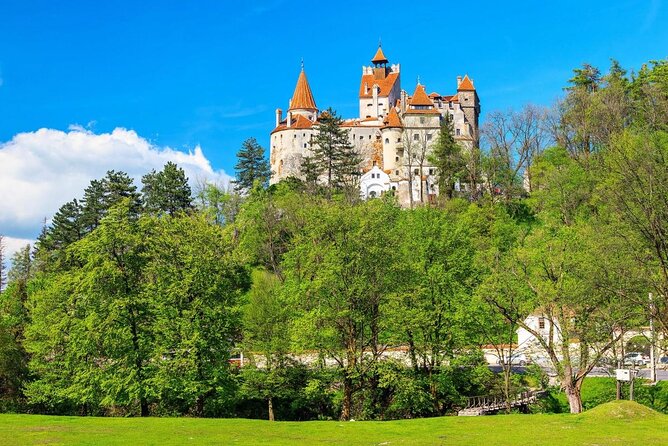
- Castles with context: Bran Castle and Peles Castle are more than the Dracula brand.
- Long driving days, timed well: the itinerary is spread with smart stops, viewpoints, and breaks.
- Entrance fees vary: some sights are listed free, others not, so confirm your exact dates and inclusions.
A Private Romania Grand Tour That Gets the Rhythm Right
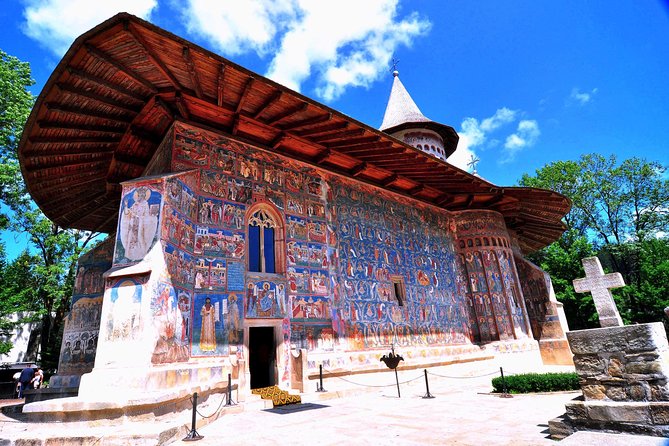
When you’re trying to fit Transylvania, Maramures, and Bucovina into one trip, the biggest challenge is travel fatigue. This tour answers that with private, air-conditioned transport and a local driver/guide who keeps timing under control. You spend more energy looking at the world and less energy figuring out how to get to the next stop.
What also helps is the shape of the route. You don’t just bounce between castles; you move through valleys and towns where history shows up in daily life—churches, squares, crafts, and the way people built their homes. And because it’s a private tour, you can absorb that at a pace that feels human.
You can also read our reviews of more private tours in Bucharest

Pickup in Bucharest: Your Day Starts Before the First Stop
The tour starts at 9:00 am with pickup and drop-off in Bucharest included. That matters more than it sounds. If you’ve ever joined a big group tour where you meet at some random point, you know the first hour can disappear fast. Here, you’re already in “trip mode” from the beginning.
You’ll also be traveling in a private vehicle with an air-conditioned minivan, which is a real quality-of-life upgrade once you’re doing multiple regions in a week. Long drives in Romania can be scenic, but your comfort helps you enjoy the scenery instead of just surviving the road.
Day 1: Cozia Monastery and Sibiu’s Medieval Squares
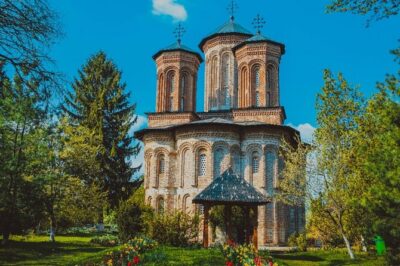
You begin with Cozia Monastery in the Olt Valley. This is a Wallachian landmark with Armenian-style decorations on the façade and richly frescoed interiors. It’s also a quick but meaningful start: you get to understand the region’s religious and artistic roots before the itinerary turns more “famous sights” later.
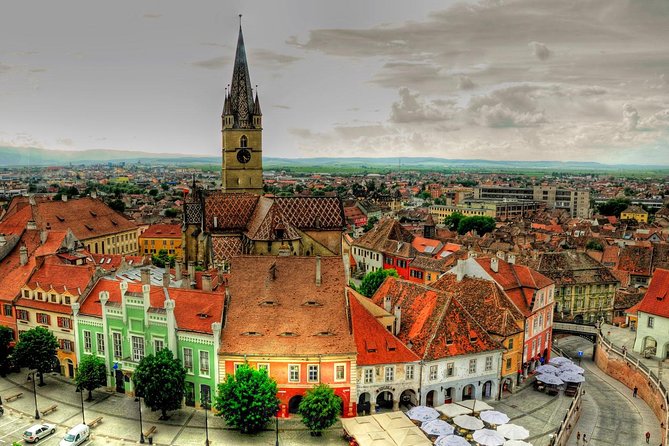
After that, you head to Sibiu, one of Transylvania’s most satisfying medieval cities. The draw isn’t only what’s big and dramatic. It’s the three squares—Big Square, Small Square, and Huet Square—that make you feel like you’re walking inside an older city plan. Add towers, 15th-century bastions, and the famous houses with the eyes, and Sibiu becomes a place you can enjoy even if you only have a few hours.
Practical note: Sibiu is also known for a mix of Catholic, Orthodox, and Protestant influences, and you’ll see religious monuments that reflect that history. If you like architecture and city layout, this day gives you lots to look at without feeling rushed.
Day 2: Alba Iulia, Turda Salt Mine, and Cluj-Napoca
Alba Iulia gives you the political-history angle. This is where Great United Romania was made on December 1, 1918, shortly after World War I. It’s the kind of stop that helps the rest of the week click into place. When you understand why borders shifted, castles and regions feel less random.
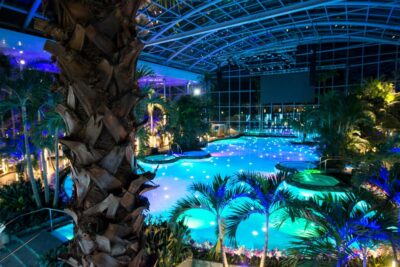
Then it’s underground time at Salina Turda (Turda Salt Mine). The big hook is the descent—about 400 feet—followed by the subterranean “world” inside. You’ll find an amphitheater, a bowling alley, an underground lake, and even a Ferris wheel. That sounds like a gimmick until you’re there; the scale of the space does the convincing.
One cost reality: the salt mine entrance is listed as not included. If you’re comparing value across Romania tours, this is one of the main places where your final spend can rise. Still, it’s a strong stop because it breaks up the stone-church monotony with something very different.
In the afternoon, you reach Cluj-Napoca, known for St. Michael’s Church and a sculptural complex tied to King Mattia Corvino. Cluj is also a university city with lectures in several languages, so it has energy beyond tourism. You also get the feel of Cluj as a cultural and economic hub for Hungarians, alongside Romanians.
Day 3: Wooden Churches in Şurdești, Barsana, and Vadu Izei
Day 3 is all about traditional wooden architecture and small, regional details. You start at Şurdești Wooden Church, a UNESCO site. It’s described as the tallest wooden church in Europe at one point, with a 54 m tower and total height up to 72 m (and later the record was surpassed elsewhere). Even if you don’t care about rankings, this stop matters because it shows how communities used wood to create serious, lasting architecture.
The church’s design includes a double-eaved roof and distinct arches above the porch. That’s the kind of detail that’s easier to notice when you have a guide walking you through what to look for.
Next comes Barsana Monastery in Maramures. UNESCO protected parts of the Maramures Region for the wooden architecture, and Barsana fits that goal with dramatic spires and stylized vernacular church-building. You’ll also see the complex described as a convent with sixteen nuns. It’s a more “lived-in” feeling stop than some tour-only monuments.
Then you end with Vadu Izei, where you’ll see the Romanian whirlpool/washing mechanism called a valtoare. It’s described as a simple system that uses the speed of a mountain stream to wash laundry and fabric—sometimes framed as the World’s First Natural Washing Machine. Even if you treat that as a story rather than a tech history claim, you still get a fascinating look at how people used local water and built practical tools into daily life.
You can also read our reviews of more tours and experiences in Bucharest

Day 4: The Merry Cemetery, Moldovița, Sucevița, Marginea Ceramics
This is the day that leans hard into Bucovina’s religious art and cultural character.
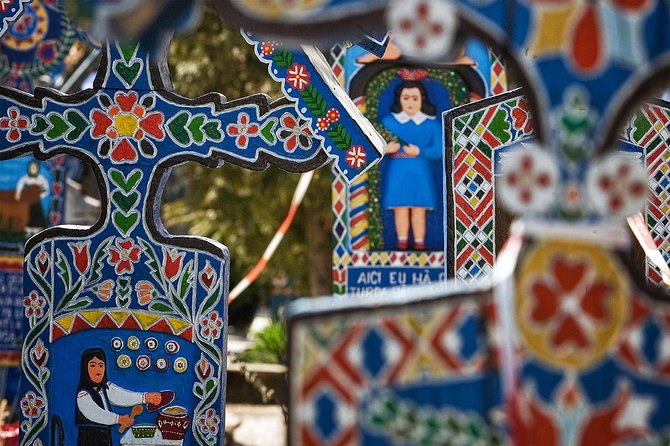
You start with Merry Cemetery (Cimitirul Vesel) in Săpânţa, famous for over 800 wooden crosses with colorful scenes and limericks describing people’s lives. It’s not solemn in the usual museum way. You’re looking at death recorded with local humor and everyday detail, which can be surprisingly moving.
Then you visit a cluster of painted monasteries:
- Moldovița Monastery, founded in the 16th century, known for frescoes inside and out.
- Sucevița Monastery, founded by the Movila brothers, with Gothic and Byzantine elements and frescoes on the northern façade protected by walls.
If you like religious art, this pair of stops gives you a strong visual comparison without you needing to be an art scholar. The frescoes and architectural blending tell you a lot about how cultures met in the region.
Next you switch to hands-on craft at Marginea (Ceramica neagră). You’ll get time with local artisans working with famous black ceramics. The highlight here is the workshop observation and the chance to buy typical items like decorated eggs and ceramic pieces using traditional techniques. This is the kind of stop that makes a trip feel connected to the people, not just the monuments.
Finally, there’s Manastirea Voronet. The tour lists it as a one-hour stop. Even without turning it into a big “facts lecture,” it’s worth treating it as a centerpiece moment—because it comes after a whole day of monasteries, you’ll be ready to see the common themes and differences.
Day 5: Piatra Neamț, Bicaz Gorges, Red Lake, and Late Arrival in Sighișoara
This day is structured like a scenic road trip with a legend thread.
A short stop first at Piatra Neamț gives you a citadel background tied to Stephen the Great, plus an 18th-century synagogue. It’s brief, but it helps you understand why this area mattered historically, not just visually.
Then you reach Bicaz Gorges, where the selling point is the dramatic road through cliff terrain with a stream nearby. There’s also a market along the way with handicrafts and souvenirs. That market moment isn’t just about shopping. It’s a window into how locals profit from passing traffic while keeping the scene human-scale.
After that comes Red Lake, described as a natural barrier lake formed after a landslide, with tree trunks still present. The emotional payoff here is the combination of natural formation and legend. The tour includes time to learn stories tied to the lake’s name, which adds meaning to what you’re seeing.
By the end of the day, you arrive late evening in Sighișoara, described as Vlad Dracula’s birth place. The tour doesn’t rush you with a huge schedule at night; you’re set up for the next day when the historic center is the focus.
Day 6: Sighișoara UNESCO Center, Bran Castle, and Brasov’s German-Style Layers
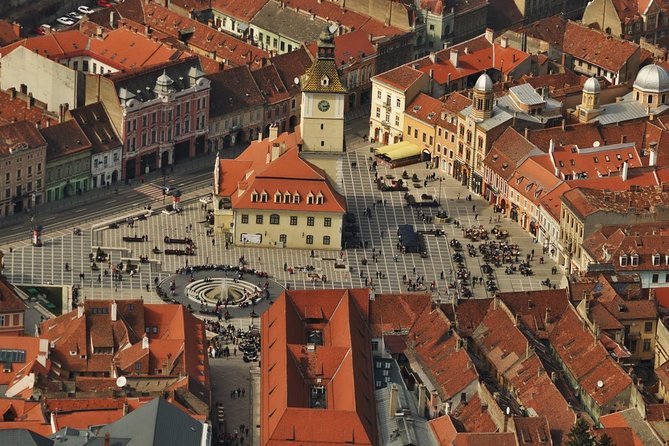
Morning and early afternoon bring you into Centrul Istoric Sighișoara, a UNESCO-listed fortified town center. You’ll focus on the Tower of the Clock, colorful houses, and streets and churches that reflect the town’s multicultural, multi-confessional mix. The key point to remember: this is a living town layout, not a “dead” historic set.
Sighișoara is also tied to Vlad Dracula, listed here as born in 1431. Even if you’re not a horror fan, I like this angle because it turns myth into a reason to notice the town’s defensive design and architecture choices.
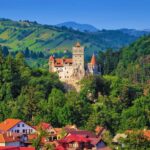
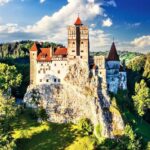
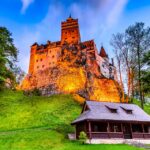
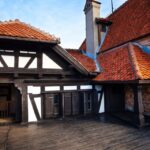
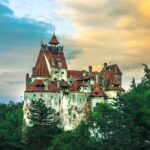
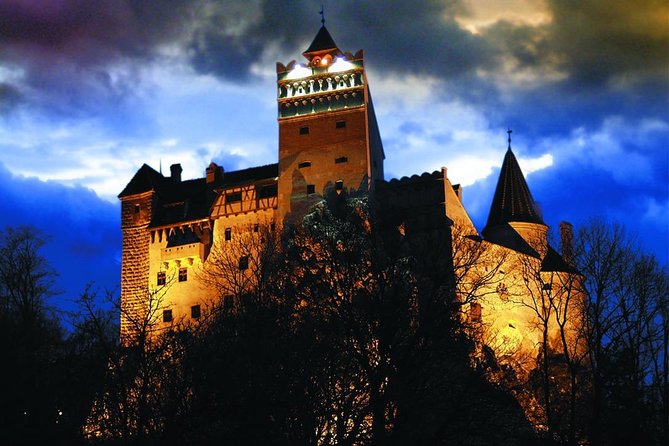
Then you head to Bran Castle, commonly branded Dracula’s Castle. The guide context matters: Bran was on the border between Wallachia and Transylvania in the Middle Ages, which explains why a stronghold was essential for defense and control. That turns the castle from a theme-park stop into a border-story stop.
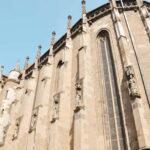
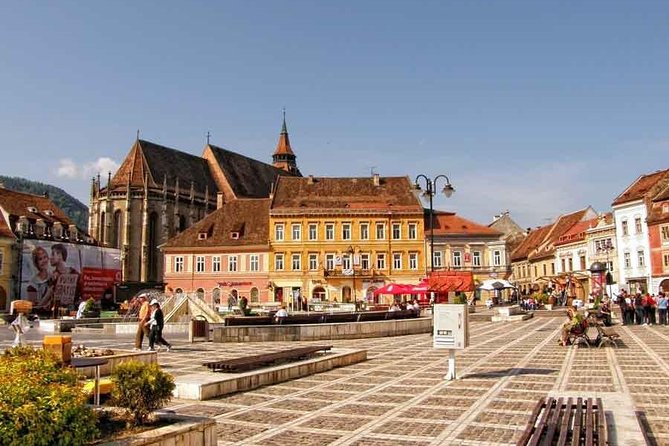
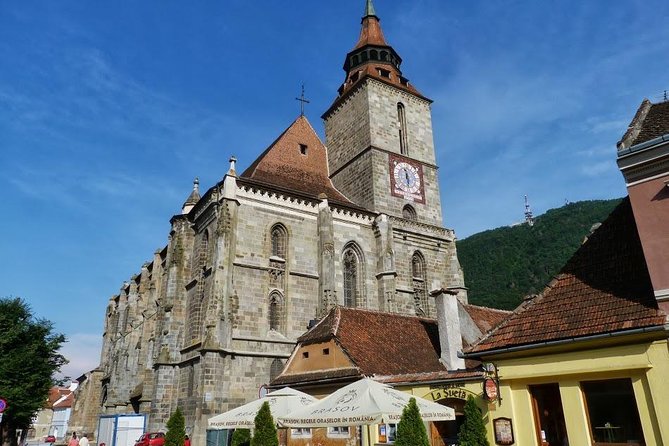
Next is Brasov, described as a historically fortified Transylvanian town with German architecture layers—Gothic, Baroque, and Renaissance overlaps. You’ll also visit the First Romanian School in the Schei district, and you’ll pass through medieval-style gate history with references like the Catherine’s and Schei Gate. The stop also includes the Black Church.
One note: Brasov’s key sights are listed with entrance tickets not included, so this is another day to watch your budget.
Day 7: Peles Castle and a Bucharest Finish with Triumph Arch and Parliament Palace
You close with two kinds of Romania: royal elegance and big-city landmarks.
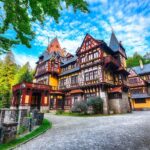
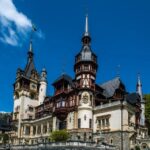
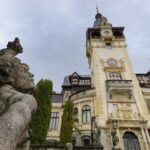
First is Peles Castle, the summer residence of Romania’s first king, King Charles I of Hohenzollern. It’s described as designed by a Czech architect and famous for being modern for its time, built between the 19th and 20th centuries. You’ll also admire rooms that differ in style, including the Florentine room. This is the kind of stop where you’ll feel the effort put into design, not just defensive walls and religious paintings.
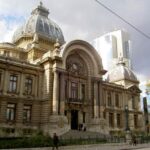
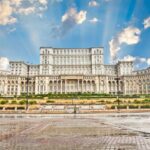
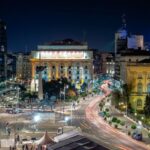
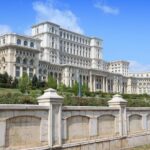
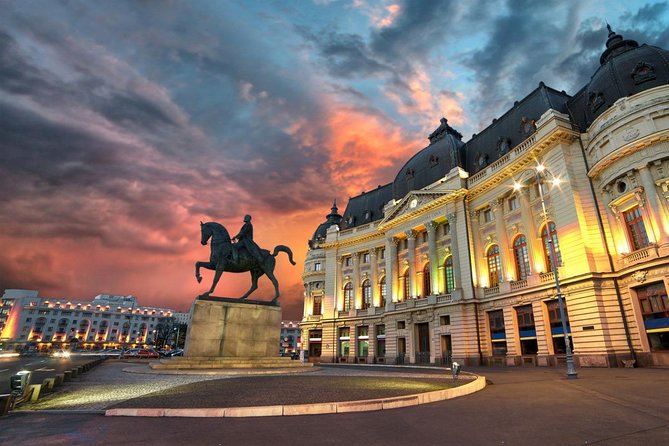
Then you head back to Bucharest for a panoramic tour. You’ll cover Triumph Arch, Atheneum, Revolution Square, and the Parliament Palace. This finale works because it brings the week full circle: mountains and legends out, capital city monuments in.
Price and Value: What You’re Really Paying For
At $1,719.59 per person, this isn’t a budget trip. You’re paying for a private route across a wide region with pickup/drop-off from Bucharest, private transport, and a driver/guide throughout. You’re also getting 6 nights of accommodation and 6 breakfasts included, based on the tour details.
The value improves because some major stops are listed with free admission, like Cozia Monastery and Sibiu. But several high-interest sites are listed as not included—Turda Salt Mine, multiple wooden and painted churches, and major castle entries like Bran and Peles. So the total cost can end up higher depending on how you spend on entrances during the week.
There’s also a single room supplement of 150 euro, paid locally in cash or credit card. If you’re traveling solo, factor that in early so there are no surprises.
If you want to judge value fairly: compare this as a “transport + guidance + lodging” package first, then treat entrances as a separate line item. That’s the cleanest way to understand what you’re actually buying.
Who This Tour Fits Best (and Who Might Want Something Else)
This is a great fit if you:
- Want private touring without planning drivers between regions.
- Like history but also enjoy culture you can see—church architecture, fortified towns, crafts.
- Don’t want to spend vacation time on navigation and check-in chaos.
It may be less ideal if you:
- Want a trip with lots of free-entry attractions with minimal extra fees.
- Prefer very slow days with lots of leisure time. This route is scenic, but it’s still an efficient circuit.
One more fit check: the tour is listed as suitable for most travelers and includes pickup near public transportation, but it doesn’t spell out special assistance features. If you have mobility needs, I’d confirm details before booking.
Should You Book This 7-Day Private Grand Tour?
Yes, if you want a well-structured week that connects Romania’s big-name highlights to the details that give them meaning. I like that you’re not just chasing Dracula trivia; you’re also seeing UNESCO-listed wooden churches, painted monasteries, and craft traditions like Marginea black ceramics.
Before you book, do two practical things:
- Ask for a quick list of the entrances that are not included for your exact dates, so your budget matches reality.
- Confirm the lodging count for your departure (the description mentions nights broadly, while the inclusions list spells out 6 nights). One short clarification now can prevent confusion later.
If you do those checks, this is the kind of tour that leaves you with stories tied to places, not just photos.
FAQ
How long is the Romania grand tour?
It runs for about 7 days, starting at 9:00 am in Bucharest.
Does the tour include pickup and drop-off from Bucharest?
Yes. Hotel pickup and drop-off in Bucharest are included.
Is this a private tour?
Yes. It’s described as private, and only your group participates.
Are entrance fees included?
Some entrances are listed as free, while others are listed as not included. You should plan for additional entrance costs at the stops marked as not included.
Is accommodation included, and how many breakfasts are covered?
The inclusions list 6 nights of accommodation and 6 breakfasts.
Is there a single room supplement?
Yes. A single room supplement of 150 euro is listed to be paid locally in cash or by credit card.
What affects whether the tour runs?
The experience requires good weather, and it also requires a minimum number of travelers. If it’s canceled due to weather or not meeting the minimum, you’ll be offered a different date or a full refund.