REVIEW · BUCHAREST
Bucharest 3-hours Walking Tour (Small Groups)
Book on Viator →Operated by Mara's Tours&Travel · Bookable on Viator
Bucharest history, packed into a walk. This 3-hour small-group route ties French influence to the city’s architecture and even language, then lands you at the places tied to the end of Nicolae Ceausescu’s rule. You also get stops at some of Bucharest’s oldest surviving sights.
What I like most is the guide-style focus: with names like Elena and Mara leading tours, the stories feel personal and easy to follow in English. I also love the balance of “wow” buildings plus smaller spiritual and street-level places, from Manuc’s Inn to Stavropoleos Monastery.
One consideration: most major interiors are not included, and the finish at the Romanian Athenaeum requires an extra ticket fee on-site (cash only). If you hate carrying cash on trips, plan ahead.
In This Review
- Key highlights before you lace up
- Where the tour fits in: a smart 3 hours for first-time bearings
- Starting point at Unirii Square: the “Champs-Elysees” moment and what to look for
- Palace of Parliament views without the ticket: big architecture, quick context
- Manuc’s Inn (Hanul lui Manuc): caravanserai history in the middle of modern Bucharest
- St. Anthony’s Church and Curtea Veche ruins: the oldest layer of the city
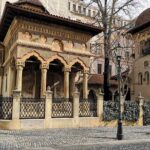
- Stavropoleos Monastery: Orthodox art in a calmer pocket of the old town
- Lipscani and Calea Victoriei: why Bucharest got called Little Paris
- Revolution Square: learning the human meaning behind the dates
- Romanian Athenaeum ending: iconic exterior finish plus a ticket option
- Price and value: what $54.31 buys you in real terms
- Pace, comfort, and who this works best for
- Should you book this Bucharest 3-hour walking tour?
- FAQ
- FAQ
- How long is the Bucharest walking tour?
- What is the price per person?
- Is the Romanian Athenaeum entrance included?
- Is there an admission fee for the other stops?
- How large is the group?
- Does it run only in good weather?
Key highlights before you lace up
- Small group size (max 10) for a calmer pace and plenty of guide Q&A
- French-style Bucharest on Lipscani and Calea Victoriei, including the Little Paris angle
- Communism to democracy story with context around 1989 and Ceausescu’s fall
- Oldest buildings stop: St. Anthony’s Church plus ruins tied to Romanian legends
- Orthodox art at Stavropoleos Monastery in the old town area
- Optional Athenaeum visit to cap the walk at one of the city’s icons
Where the tour fits in: a smart 3 hours for first-time bearings
This is the kind of tour I’d recommend when you want a fast orientation to Bucharest’s center without spending your day bouncing between far-apart sites. The route is built around time periods, moving from big political architecture to older religious landmarks, then into the streets where foreign style and local life blended.
You also get a comfortable walking rhythm that’s meant for mixed travelers. It’s not a sprint. The group stays small, and the guides tend to manage the pace with practical needs in mind—so you’re not stuck waiting long gaps just to keep everyone together.
English is available, and you’ll start with a proper “read the city” moment rather than random photo stops. That matters, because Bucharest can look confusing until someone explains the map in plain language.
Finally, the tour includes a traditional Romanian snack, which is a nice touch when you’re walking in the middle of a day.
You can also read our reviews of more walking tours in Bucharest


Starting point at Unirii Square: the “Champs-Elysees” moment and what to look for
The walk begins at Unirii Square, where you get a panoramic view down Unirii Boulevard—often compared to Romania’s Champs-Elysees. From here, the Palace of the Parliament looms as a dominant backdrop to the whole area.
This opening sets the tone: Bucharest isn’t just pretty streets. It also has massive political statements. The Palace of the Parliament is described here as the second-largest administrative building in the world, and even from outside, it lands as a kind of architectural lesson.
One practical note: the stop includes time for views, but admission to the Palace isn’t included. If you’re tempted to go inside, treat that as a separate plan you’d do with your own ticket and timing. For this tour, the value is in seeing how it fits the city’s layout and history.
Palace of Parliament views without the ticket: big architecture, quick context
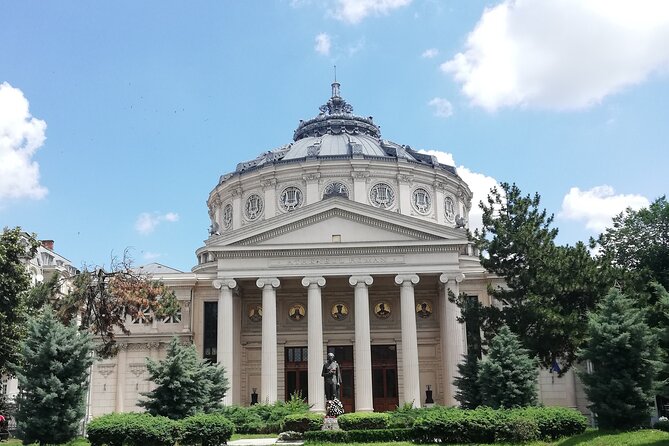
At this point, your guide’s job is to connect what you’re seeing to what happened here. The tour frames this area as a symbol of power and ideology—useful context once you start hearing about the political collapse and the shift to a different Romania.
A downside for some people: if you specifically want museum-style time and indoor exhibits, you won’t get that in this walking format. You’re there for the view and the story.
But if you want to understand why Bucharest developed the way it did, this “outside first” approach is a win. It helps you later recognize buildings and districts as chapters, not just landmarks.
Manuc’s Inn (Hanul lui Manuc): caravanserai history in the middle of modern Bucharest
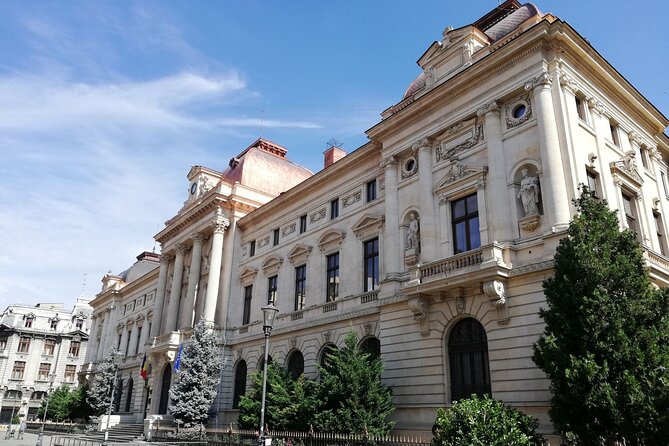
After the wide political scale, the route slips into older textures at Manuc’s Inn, also known as Hanul lui Manuc. The stop here is short and focused, but it’s packed: it’s described as a caravanserai and the city’s largest inn.
This is one of those places that’s easy to miss if you’re just wandering. The tour gives you the “why it matters” angle—how inns like this fit older trade and travel routes, then how the old quarter has transformed into today’s lively downtown.
One of the simplest ways to enjoy this stop: slow down, look at the setting, and notice where the building sits in relation to surrounding streets. That contrast—historic function inside a modern city—makes the rest of the walk easier to understand.
The good news: Manuc’s Inn admission is free for this stop, so you’re not juggling tickets mid-walk.
St. Anthony’s Church and Curtea Veche ruins: the oldest layer of the city
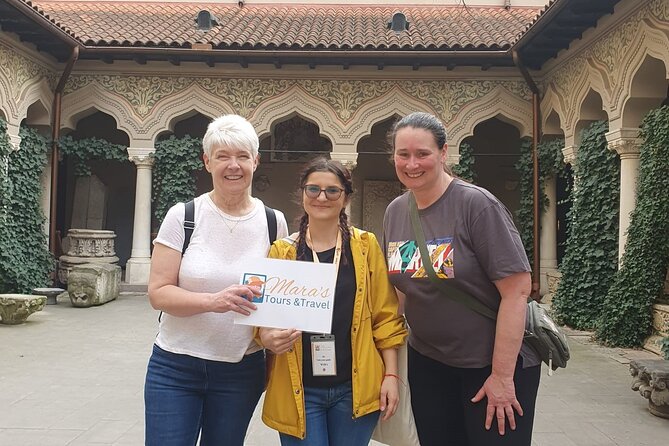
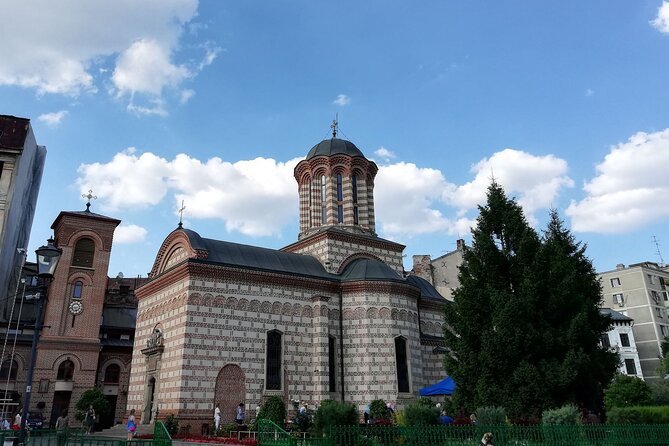
St. Anthony’s Church (Biserica Sfantul Anton – Curtea Veche) is billed as the oldest church in Bucharest, and you feel it in how the stop is framed. The guide uses it as an anchor point for understanding how the city’s story got built over time.
Right after, you’ll also see the ruins of the former Royal Court. This part is interesting because it ties Bucharest to a well-known legend: the tour points out the surprising connection between Bucharest and Vlad the Impaler—often linked to Dracula.
A good way to approach this stop is to treat it like a history map with mythology overlaid. Even if you’re not a hardcore folklore person, it helps you grasp how Bucharest turned real political figures and local memory into stories that still shape the city’s identity.
This is another stop where admission is free, so you can spend your time on the explanation rather than ticket lines.


Stavropoleos Monastery: Orthodox art in a calmer pocket of the old town
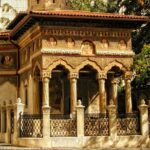
Next comes Stavropoleos Monastery, described as one of the most beautiful monuments of Christian Orthodox art in the old town. This is where the tour gives you a contrast from the busier streets you’ll walk through next.
Monasteries and churches often work best when you don’t rush them. The tour’s timing is short, but it’s enough to let the guide point out what makes the place special—then you can take a minute to absorb the atmosphere around you.
If you like architecture, this stop is a good break. If you don’t, it still works because it’s a place you can emotionally “reset” before heading into the street-level French-style blocks later.
Like the other older sites, this one is free to visit on the route.
Lipscani and Calea Victoriei: why Bucharest got called Little Paris
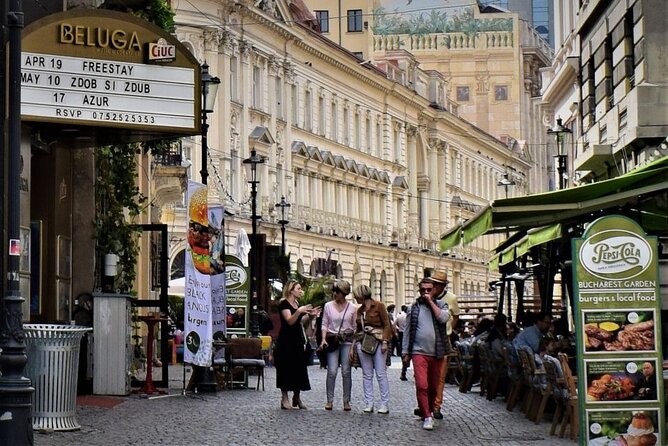
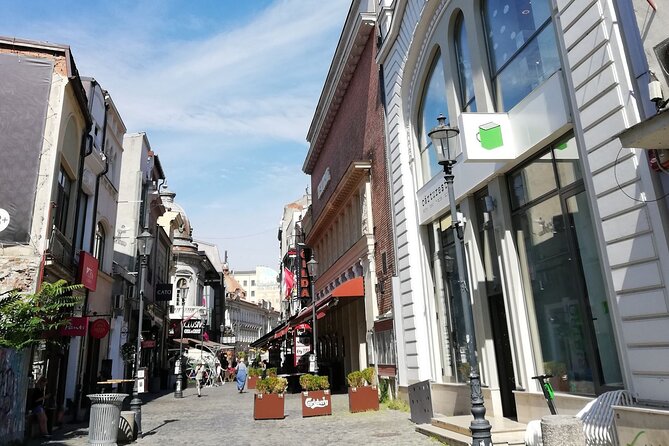
Now the walk speeds up in spirit, moving from older sacred buildings to the streets where style, trade, and everyday life show up fast. Lipscani is where the tour focuses on the 18th and 19th centuries, with French-style buildings and hidden passageways.
This is the core “French influence” theme made concrete. You’ll hear how the city earned the nickname Little Paris, not as a gimmick, but because the look and feel of certain streets echoed French architecture and urban patterns.
Hidden passageways are a big part of why you don’t just stick to the main sidewalks here. The guide steers you into side lanes that can look like shortcuts, but they’re also where the city feels more intimate and local.
This is also a great area for photos, but don’t treat it like a single-street photo shoot. The value is noticing the rhythm: frontage, alley depth, doorways, and how the buildings create a street “corridor” effect that changes how you experience Bucharest.
This stop is free, so the “cost” here is only your time and attention.
Revolution Square: learning the human meaning behind the dates
After the aesthetic streets, Revolution Square shifts the tone. This is where the tour focuses on the meaning of communist rule in Romania and how the Nicolae Ceausescu regime collapsed. The guide also explains how Romania changed after the 1989 revolution.
I like this stop because it prevents history from becoming a list of names and dates. When a guide talks about everyday impact—what the shift meant—you start understanding why certain buildings and urban plans feel the way they do.
A practical tip: this is one of the places where you might want to slow your pace even more than usual. It’s less about moving quickly to see something, and more about listening so you can mentally place what you just saw earlier in the walk.
As with many stops here, there’s no extra admission cost in the route itself.
Romanian Athenaeum ending: iconic exterior finish plus a ticket option
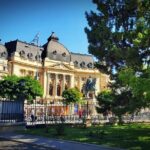
The tour ends in front of the Romanian Athenaeum (Ateneul Roman), a true Bucharest icon. It’s often the “final boss” of a first walk because it looks instantly recognizable, even if it’s your first time in the city.
The guide frames it as a testament of Romania’s development during the Monarchy. The emotional effect is simple: after walking through political power, religious layers, and street history, the Athenaeum lands as a different kind of symbol—culture, stability, and civic pride.
Here’s the key practical detail: entrance isn’t included, and the ticket costs 15 lei (about 3 EUR) and is cash only. So if you want to go inside, keep some local currency handy before you reach the finish.
If you don’t go in, you still get a strong closing point for your day—perfect for planning your next meal or stopping for a quick coffee nearby.
Price and value: what $54.31 buys you in real terms
At $54.31 per person for about 3 hours, this is priced like a classic “big picture” walking tour: you’re paying for expert guidance, a tight route, and time management across multiple eras.
Here’s what makes the value feel fair:
- You get a structured path through the city center, not just random stops.
- The group size is capped at 10 travelers, which usually means less standing around.
- A traditional snack is included, so you’re not stuck hunting for something immediately after a walk.
- It’s in English and uses mobile ticketing, which reduces fuss.
What you don’t get for the price is museum-style entrances at the big finale. The Palace of Parliament time is exterior-focused, and the Athenaeum entrance is optional and extra. That’s normal for a walking tour, but it’s worth planning so you don’t reach the end and feel stuck without cash.
If you only have a short stay in Bucharest and want a high-ROI overview, this tour is the kind that can save you time. Instead of guessing which neighborhoods connect to which historical stories, the guide gives you a framework you can reuse as you explore on your own.
Pace, comfort, and who this works best for
This tour works best for people who want active sightseeing at a manageable pace. It’s also a strong fit if you enjoy history that connects to places—architecture, religion, politics, and street culture—rather than history told like a textbook.
Because it’s in a small group and typically stays around the 3-hour mark (it can run a bit long on some days), it suits travelers who like moving regularly but still want time at stops. I’d especially recommend it for:
- First-time Bucharest visitors who want orientation quickly
- People who prefer guided context over reading up alone
- Travelers who like “old town + big story” mixed together
Service animals are allowed, and it’s near public transportation, which helps if you want flexibility before or after the walk.
If you’re the type who hates walking and wants a full sit-down museum day, this may not be your best match. But for the people who enjoy getting their bearings fast, it’s a smart use of one afternoon.
Should you book this Bucharest 3-hour walking tour?
Book it if you want a compact, story-driven overview of Bucharest—French-style streets, the oldest churches, the Orthodox monastery stop, and the political turning point at Revolution Square. It’s also a great choice if you’re short on time and want someone else to connect the dots across centuries.
Skip it or at least be ready with a plan if you mainly want indoor tickets and long museum visits. The route is built for walking and exterior viewing, with the Athenaeum interior as an optional add-on that needs cash.
FAQ
FAQ
How long is the Bucharest walking tour?
The tour lasts about 3 hours.
What is the price per person?
The price is $54.31 per person.
Is the Romanian Athenaeum entrance included?
No. Entrance to the Romanian Athenaeum is not included, and it costs 15 lei (about 3 EUR) and is cash only.
Is there an admission fee for the other stops?
The tour notes that admissions for several stops are free, but the Palace of Parliament and the Romanian Athenaeum have admission tickets not included.
How large is the group?
The tour has a maximum of 10 travelers.
Does it run only in good weather?
It requires good weather. If it’s canceled due to poor weather, you’ll be offered a different date or a full refund.