REVIEW · BUCHAREST
Bucharest: Walking tour with Italian speaking guide for small groups
Book on GetYourGuide →Operated by S.C. VIAGGIARE BUCAREST S.R.L. · Bookable on GetYourGuide
Bucharest comes with stories, not just sights. This 3-hour walking tour pairs an Italian-speaking guide with tight stops at key neighborhoods, so you leave with a clear feel for how Bucharest connects its past to the present. I love the small-group format and the way the guide turns architecture into easy-to-follow anecdotes, like the kind you’d never notice on your own. The one drawback to plan for is the pace: you’ll see a lot in short bursts, so it’s not built for long, slow museum-style visits.
If you want to get oriented fast, this is a strong first-day choice. You’ll start at the famous Caru’ cu bere area, then move through classic Old Town scenes, photo-worthy corners, and major landmarks tied to the 1989 revolution.
One more thing to consider: the tour is Italian only, and the walking time adds up. Wear comfy shoes and be ready to stand and look for stretches of the route.
In This Review
- Key things that make this tour worth it
- A 3-hour route that helps you understand Bucharest fast
- Meeting at Caru’ cu bere: a perfect Bucharest start point
- Stavropoleos Monastery: when Bucharest turns quiet
- Manuc’s Inn: historic lodging with old-city charm
- Old Town and Lipscani Street: energy you can actually walk through
- Calea Victoriei: elegance and contradiction in one boulevard
- National Bank of Romania and the architectural “pause”
- Pasajul Villacrosse and the art of noticing details
- Cărturești Carusel and Umbrellas Street: quick photo stops, smart timing
- Revolution Square: understanding why the buildings look the way they do
- Romanian Athenaeum: the last big stop for a reason
- Price and what you actually get for $35
- Practical tips before you go
- Who should book this Bucharest walking tour
- Should you book it?
- FAQ
- Where does the tour start?
- How long is the walking tour?
- What language is the guide?
- Is the tour wheelchair accessible?
- What sights are included?
- Is audio recording allowed?
Key things that make this tour worth it
- Italian-speaking guide with strong storytelling and practical context (names like Filippo Di Cataldo and Giuseppe come up in guide feedback)
- Small group pacing that still covers major Bucharest highlights in about 3 hours
- Old Town focus around Lipscani Street energy, monasteries, and historic inns
- Architecture route that mixes landmarks like the National Bank, Romanian Athenaeum, and street-level photo stops
- Revolution Square time with enough guided explanation to understand why the buildings matter
- Photo stops at spots such as Umbrellas Street and Cărturești Carusel without dragging the tour off-track
A 3-hour route that helps you understand Bucharest fast
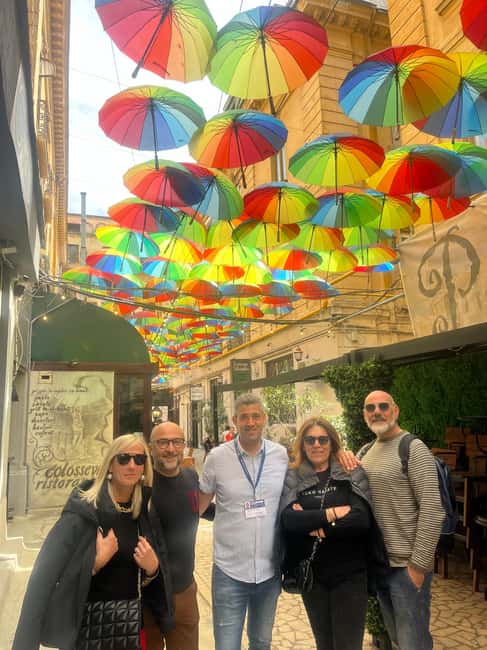
Bucharest can feel a bit like a film with jump cuts: different eras show up in the same block. That’s exactly why this tour works. In three hours, you get a guided path through the city’s most recognizable layers, with the kind of commentary that helps you connect the dots between streets, styles, and major historical turning points.
What I like most is that it’s built around walking segments that keep things moving. You’re not stuck listening for half a day. You’ll stop often enough to absorb what you’re seeing, then continue down the street while the guide explains how each location fits into the bigger story of the city.
The guide also matters. In feedback from this experience, guides such as Filippo Di Cataldo and Giuseppe are highlighted for being friendly and relatable, with historical explanations that stay human instead of turning into a lecture. That’s a real value add in a city where buildings can look similar until someone points out what to notice.
Finally, this isn’t just a checklist tour. You’ll learn the “why” behind several places, which makes the rest of your independent time in Bucharest easier.
You can also read our reviews of more walking tours in Bucharest


Meeting at Caru’ cu bere: a perfect Bucharest start point
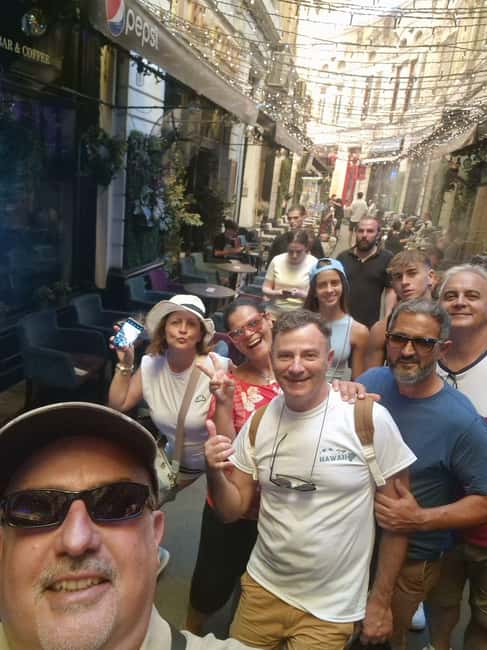
Your tour begins in front of Caru’ cu bere, a well-known restaurant on Stavropoleos Street 5. It’s a smart meeting choice because it’s central to the Old Town feel, and it signals right away that this will be a street-level introduction to Bucharest—not a drive-by photo tour.
This start also sets expectations for the rest of the walk. Caru’ cu bere sits in the atmosphere of Old Town life, where history isn’t sealed behind glass. Instead, it’s around you as you step from sidewalk to sidewalk. If you arrive a bit early, you can take a look around and get a sense of the area’s scale and energy before the group assembles.
One practical tip: since the tour is walking-focused, treat the first minutes like “warming up.” You’ll likely get your bearings quickly, then the guide will start pulling you into the first couple of major stops—places where you’ll compare what you see with what you learn.
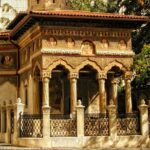
Stavropoleos Monastery: when Bucharest turns quiet
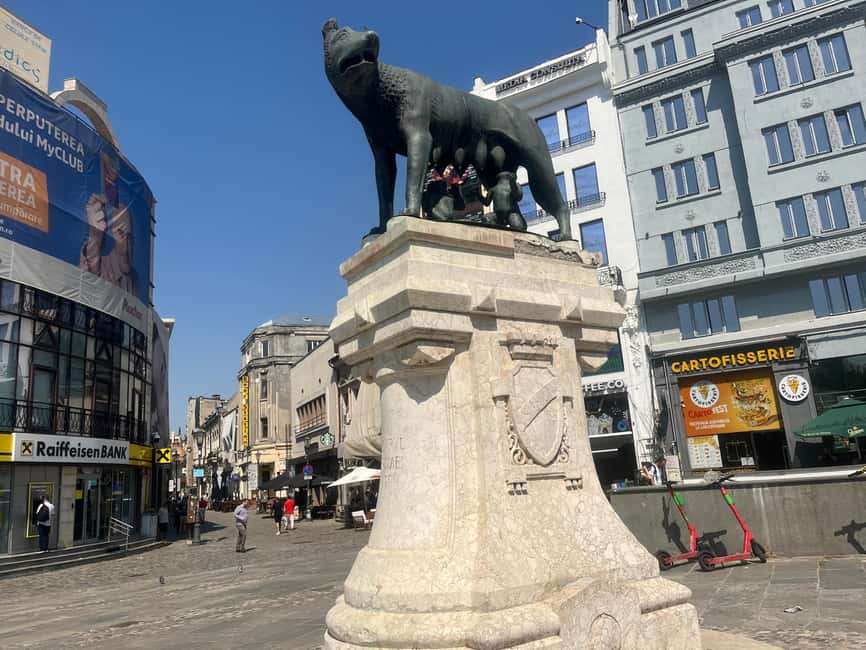
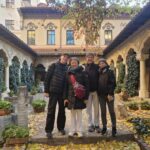
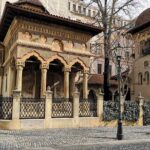
The first real stop is the Stavropoleos Monastery, with a short visit time. Even in a brief window, monasteries like this are useful because they slow the whole pace down. You step out of street noise and into a different rhythm—one that makes the rest of your Old Town impressions easier to interpret.
Monastery architecture can be easy to appreciate, but harder to understand on your own in a city this layered. A good guide helps you notice the specific details that explain why this site matters and what it represents in Bucharest’s religious and cultural life.
Because your time here is limited, don’t plan to “perfectly see everything.” Instead, focus on the parts the guide points out. Think of it as an orientation stop: you’re learning what to look for, not trying to memorize every element.
If you like architecture, this short visit is a great setup before you move into more urban landmarks right after.
Manuc’s Inn: historic lodging with old-city charm
Next up is Manuc’s Inn, again with a short, guided visit. Inns like this matter because they connect history to movement—people, trade, travel, and city life. They’re often the kind of place you walk past without realizing how central they were.
Even with only around ten minutes, the guide’s job is to point you toward the meaningful pieces: why it’s known, what kind of role it played, and how it fits the surrounding Old Town streetscape.
This stop also gives a nice texture change after the monastery. One is quieter and spiritual; the other is more social and built around visitors and activity. Together, they help you understand Old Town as a mix, not a museum district.
If you’re the type who likes photos, this is a good place to capture building facades and doorways that feel unmistakably Bucharest.
Old Town and Lipscani Street: energy you can actually walk through
Then you move into Bucharest Old Town, tied closely to Lipscani Street—the kind of area famous for nightlife, but also full of real historical sites around it. This is where the tour starts to feel like you’re walking through a living neighborhood, not just between landmarks.
Lipscani’s value for you on this tour is context. When the guide explains what’s nearby and why those buildings and squares matter, you start recognizing patterns: the mix of old structures, later additions, and the way the street layout influences how the area feels today.
Your guided time here is designed to do two things:
1) help you understand the neighborhood’s main story, and
2) give you enough confidence to explore further on your own afterward.
You’ll also have at least one stop that functions like a quick “gallery moment” in the Old Town atmosphere, including a short visit inside the area and guided orientation as you continue walking.
If you have limited time in Bucharest, this section is one of the best uses of your hours. You’ll see enough to know what direction to head when you’re deciding where to eat or linger later.
You can also read our reviews of more guided tours in Bucharest

Calea Victoriei: elegance and contradiction in one boulevard
The route also leads you toward Calea Victoriei, described as Bucharest’s most elegant boulevard. On foot, you’ll get the visual contrast: historic buildings alongside modern storefront life—plus high-fashion shops and fine bistros (all part of what gives the boulevard its reputation).
Why it’s worth including: it shows how Bucharest doesn’t separate eras into neat zones. You can be looking at grand civic or historic architecture while still noticing the city’s everyday rhythm right next to it.
This part of the tour works especially well if you’re curious about why the city feels both traditional and forward-looking. The guided framing helps you avoid treating it as just “a nice street.” You learn what you’re looking at.
National Bank of Romania and the architectural “pause”
At the National Bank of Romania, you get a guided look with a relatively short time window. Big, formal buildings like this can be visually impressive without being instantly meaningful. With a guide, you learn how to read the architecture—what kind of presence it was designed to project and why it became part of Bucharest’s civic landscape.
A ten-minute guided visit might sound short, but this stop is one of those times where focused attention beats wandering. If you can’t linger, the goal is to understand the building’s role before you move on.
After that, you’ll continue with an architectural passage stop: Pasajul Villacrosse. Passages like this are the kind of Bucharest you can miss if you’re only thinking about big monuments. The guide’s timing helps you see the passage as a pathway through the city’s layers—an in-between space where old design meets everyday movement.
Pasajul Villacrosse and the art of noticing details
Pasajul Villacrosse is one of those places that rewards your eyes more than your feet. The guided time here is meant to help you see what makes a passage special: the way it connects streets, the style of the interior spaces, and the sense of Bucharest’s architectural “in-between” world.
If you like travel photography, this is a great stop. You might find angles and lines that make nice frames in a way that open squares don’t always offer.
Also, passages make the tour feel more local. You’re not only standing around famous addresses—you’re moving through spaces that show how Bucharest circulates.
Cărturești Carusel and Umbrellas Street: quick photo stops, smart timing
Then come two lighter moments designed to break up the heavier historical segments.
First is a photo stop for Cărturești Carusel—a fun visual pause that gives you a memorable, modern-feeling Bucharest image. Even if your time here is just long enough for a couple of shots, the guide’s inclusion makes sense. It keeps the tour from becoming purely monumental.
Next is Umbrellas Street, another photo stop. It’s brief, on purpose. If you’re doing this as your first walking tour, you’re not trying to spend your whole day in one corner. You’re collecting highlights and learning how different parts of the city speak to different moods.
If you want better photos, use the short time wisely: take one wider shot to capture the scene, then step to a spot where you can frame details. The best trick is to keep moving after your first photo so you don’t waste the rest of the stop.
Revolution Square: understanding why the buildings look the way they do
Revolution Square is the emotional anchor of the tour. You’ll get a guided look with enough time to understand it as more than a landmark photo.
This square is tied to the end of Ceausescu’s dictatorial regime in December 1989. That historical context changes how you experience the surrounding architecture. Instead of simply admiring buildings, you start reading them as parts of Romania’s shifting identity across different periods.
The guided portion helps you connect what you see around the square to what happened there and why it still matters. You’ll also notice major nearby institutions and landmarks, including:
- the Romanian Athenaeum
- the Royal Palace
- the National Library
Even if your personal history interests run more toward modern Europe or political turning points, this stop gives you a usable framework for understanding why Bucharest’s civic spaces matter.
Romanian Athenaeum: the last big stop for a reason
Your final major guided stop is the Romanian Athenaeum, with a focused look. It’s one of those buildings people recognize in passing, but a guide helps you appreciate its significance in the city’s cultural identity.
This timing also works for you because it lands near the end of the tour. By then, you’ve already built an understanding of Bucharest’s layers: sacred spaces, old-city lanes, civic architecture, and then a cultural monument tied into the civic heart.
And since you end back at Caru’ cu bere, your tour “returns you” to the area where you can keep exploring independently. It’s convenient for grabbing a meal or just continuing to wander with more confidence.
Price and what you actually get for $35
At $35 per person for about three hours with an Italian-speaking guide and small-group walking, the value is solid. You’re paying for three things that add up quickly:
- guided time from a real person (Italian language included),
- a structured route that stitches multiple neighborhoods together, and
- explanation that makes architecture and squares easier to understand.
If you were to do this on your own, you’d likely spend extra time figuring out what you’re seeing and why it matters. This tour compresses that learning into a walk that’s easy to fit into a first or second day in Bucharest.
Also, the stops are varied—monastery, inns, civic buildings, a major square, and cultural landmark. That variety matters if your goal is orientation rather than a single-interest day.
The only price-related caution is the pace: you get a taste of many places, not hours inside each one. If you prefer deep, slow museum time, this may feel like more “sights” than “experience.” For most first-timers, though, it’s a strong way to start.
Practical tips before you go
This tour is straightforward: you’ll walk, stop, look, and listen. The big practical requirement is simple—comfortable walking shoes. The itinerary mixes short visits (often around ten minutes) with longer guided time at major stops like Revolution Square.
You should also know what not to bring or do. Alcohol and drugs aren’t allowed, and you should avoid littering. Audio recording isn’t permitted during the tour, so plan on taking notes or photos instead.
Finally, the tour is not set up for everyone. It’s marked as wheelchair accessible, but it is not suitable for hearing-impaired people and for very young children (under the age limits listed). If any of that applies to your group, check carefully before booking.
Who should book this Bucharest walking tour
You’ll likely love it if you:
- are visiting Bucharest for the first time and want a smart orientation loop,
- prefer small-group interaction rather than a big bus crowd,
- want Italian storytelling and historical context without reading guidebooks all day,
- enjoy architecture, street-level neighborhoods, and photo-friendly stops.
This is less ideal if you:
- want long indoor time or museum-style pacing,
- don’t understand Italian and need a different language option,
- have mobility needs that require frequent long breaks (the tour is walking-heavy, even if stops are frequent).
Should you book it?
If you want a practical, well-paced introduction to Bucharest—Old Town energy, major civic landmarks, and a clear explanation of why Revolution Square changed everything—then yes, I’d book this. The route is built for first-time understanding, and the guide’s approach (with names like Filippo Di Cataldo and Giuseppe associated with great storytelling) is exactly what turns buildings into something you remember.
If you’re the kind of traveler who likes to linger for hours in one place, you might find the short stop times a bit fast. But for many people, that’s the point: you get the best highlights in a single, manageable walking day.
FAQ
Where does the tour start?
The guide waits in front of Caru’ cu bere at Stavropoleos Street 5, Bucharest, and you’ll enter the meeting location shown on your navigator.
How long is the walking tour?
The tour lasts about 3 hours.
What language is the guide?
The guide provides the tour in Italian.
Is the tour wheelchair accessible?
Yes, the experience is listed as wheelchair accessible.
What sights are included?
You’ll see stops such as Stavropoleos Monastery, Manuc’s Inn, Bucharest Old Town (including Lipscani Street), Cărturești Carusel, National Bank of Romania, Pasajul Villacrosse, Umbrellas Street, Revolution Square, and the Romanian Athenaeum.
Is audio recording allowed?
No. Audio recording is not allowed during the tour.