REVIEW · BUCHAREST
Bucharest: Sweet Delights History and Desserts Walking Tour
Book on GetYourGuide →Operated by MARA’S TOURS & TRAVEL · Bookable on GetYourGuide
Dessert can be a history lesson. This 3-hour Bucharest walk turns the city’s ups and downs into a trail of Romanian sweets and big history stops, starting at the Romanian Athenaeum and ending with papanasi in the Old Town area.
I especially like how the guide connects each bite to a specific era—monarchy glitz, then communist pressure, then the mix of influences that made Bucharest feel like Little Paris. I also like that the pace is relaxed enough to actually absorb the architecture as you go, not just sprint between treats.
One heads-up: this is built around eating. If you don’t love sweets (or you’re trying to keep sugar low), you may find it a bit much. Also, the Romanian Athenaeum entrance is not included and costs 15 lei cash only if you want to go in.
In This Review
- Key things you’ll get from this Bucharest sweets walking tour
- Entering Bucharest’s sweet-and-history story at the Romanian Athenaeum
- Eclair stop to Carol I: where monarchy glamour shows up in the streets
- Revolution Square and the 1989 turning point, with chocolate as the bridge
- Calea Victoriei and “Little Paris”: look for the architecture clues
- Capsa Pastry: the feel of old-school cake counters
- Old Town legends, then papanasi closes the chapter
- Price, tastings, and why $77 can be good value
- Who this Bucharest sweet tour is best for (and who should skip it)
- Tour vibe and pacing: how to enjoy it without feeling rushed
- Should you book Mara’s Bucharest sweets and history walk?
- FAQ
- How long is the Bucharest Sweet Delights History and Desserts walking tour?
- Where does the tour start?
- How much does the tour cost?
- What language is the tour in?
- How big is the group?
- What desserts are included?
- Is the Romanian Athenaeum entrance included?
- What if I need to change my plans?
- What should I wear?
Key things you’ll get from this Bucharest sweets walking tour
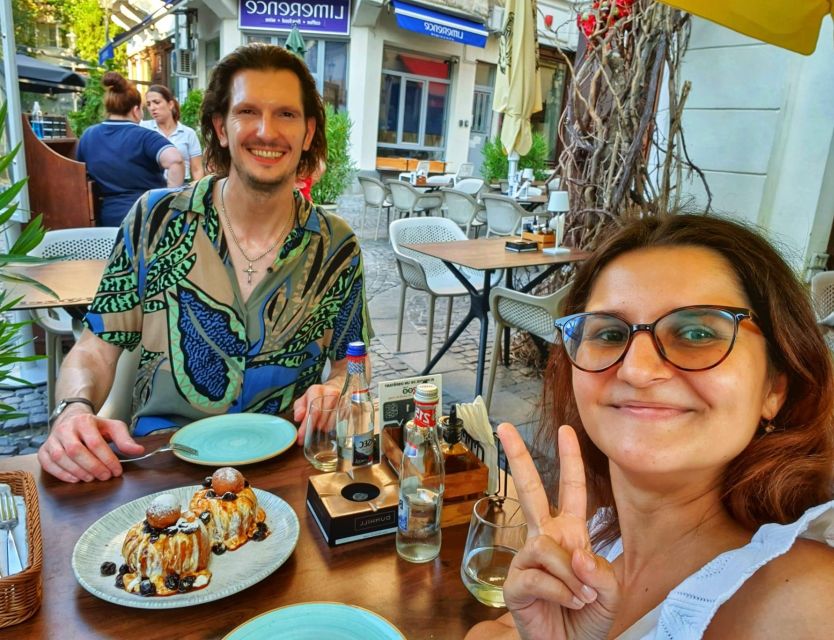
- French-influenced pastries as a time machine: the start leans into eclairs and the Little Paris idea.
- Real landmarks tied to real turning points: Revolution Square connects food to the communist era and 1989.
- Multiple tastings, not just one bite: you’ll have an eclair, a chocolate truffle, a Romanian doughnut, plus a famous Romanian sweet snack.
- Small group feel (up to 10 people): easier questions, quicker back-and-forth, and less crowd noise.
- A guide who brings personality: both Mara and Elena are described as friendly and lively, with strong city knowledge.
- A classic finish: papanasi closes the story the way Bucharest does—with dessert you’ll remember.
Entering Bucharest’s sweet-and-history story at the Romanian Athenaeum
The tour kicks off at the Romanian Athenaeum, right on the stairs by the building. The exact meeting pin is Strada Benjamin Franklin 10, and the guide will have a visible tag plus a sign reading Mara’s Tours&Travel, so you shouldn’t have to guess for long.
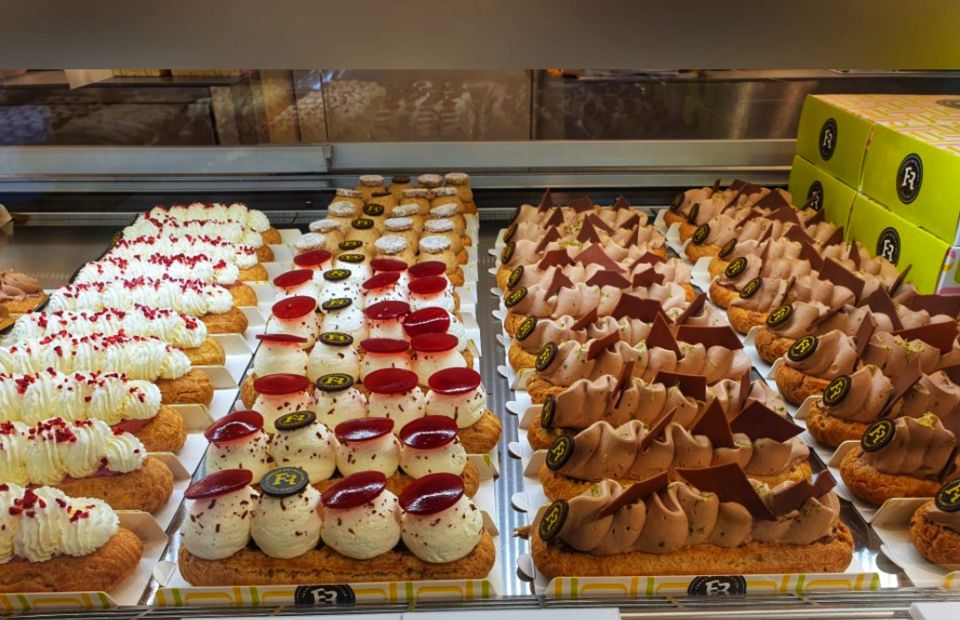
This opening matters because it sets the tone: Bucharest isn’t just a postcard city. It’s a place where different styles and political eras got layered on top of each other—and the city’s desserts track that same pattern. You’ll start the walk with a first taste (an eclair) while the guide frames Bucharest’s “Little Paris” reputation and the period when Romania’s monarchy looked outward and adopted European craft and fashion.
If you’re the type who likes to understand what you’re seeing before you see it, this is a smart start. You get context before the streets get confusing.
Practical note: the tour includes a stop outside the Athenaeum. If you want to go inside, that entrance fee is 15 lei (about 3 EUR), cash only—and you’d pay separately.
You can also read our reviews of more walking tours in Bucharest

Eclair stop to Carol I: where monarchy glamour shows up in the streets
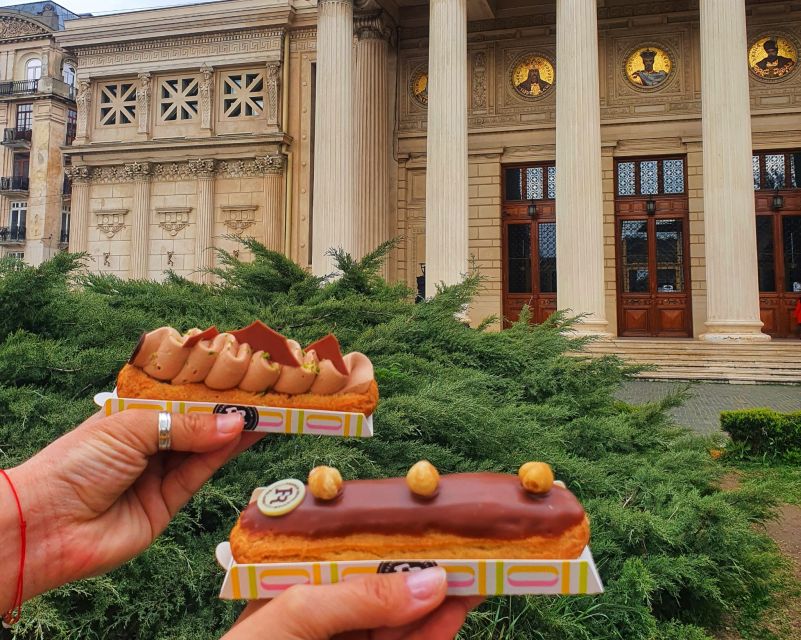
After the Athenaeum, you’ll move toward the Equestrian Statue of Carol I. This section is short, but it’s meant to anchor you in the royal era of modern Romania—when Bucharest had money, ambition, and a taste for European influence.
The guide’s framing here is useful for your walk. You start to notice why French-style buildings and grand boulevards matter. They’re not random decoration. They’re tied to the same era that helped bring new pastry techniques and a more refined approach to cakes, pastries, and cream-filled desserts.
And yes, you’re still eating as you learn. That’s the point. The tour uses sweets as a simple way to remember time periods. Monarchies fall. Recipes evolve. Food keeps receipts.
Revolution Square and the 1989 turning point, with chocolate as the bridge
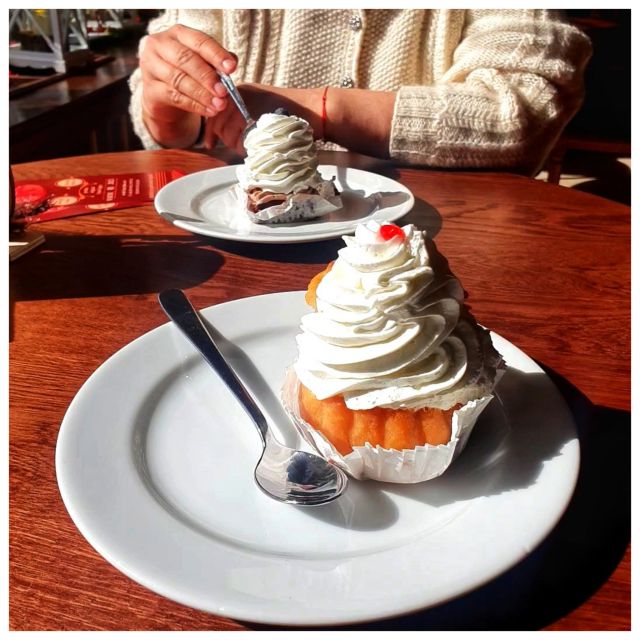
One of the most important parts of the tour is the stop at Revolution Square. This is where the mood shifts. The guide connects the city’s everyday life during communist times to what changed in 1989, and then you’ll get a sweet linked to that story.
The tour includes a tasting through a famous Romanian chocolate bar at this point, which is a clever way to make the era feel less abstract. Chocolate isn’t just dessert; it becomes a clue about what was available, what people grabbed when they could, and how daily life changed under different systems.
If you want a walking tour that goes beyond “pretty building, quick fact, move on,” this is the section that does it. You’ll come away with a clearer sense of how Bucharest’s politics shaped its people—and how culture kept moving even when the system was tight.
Calea Victoriei and “Little Paris”: look for the architecture clues
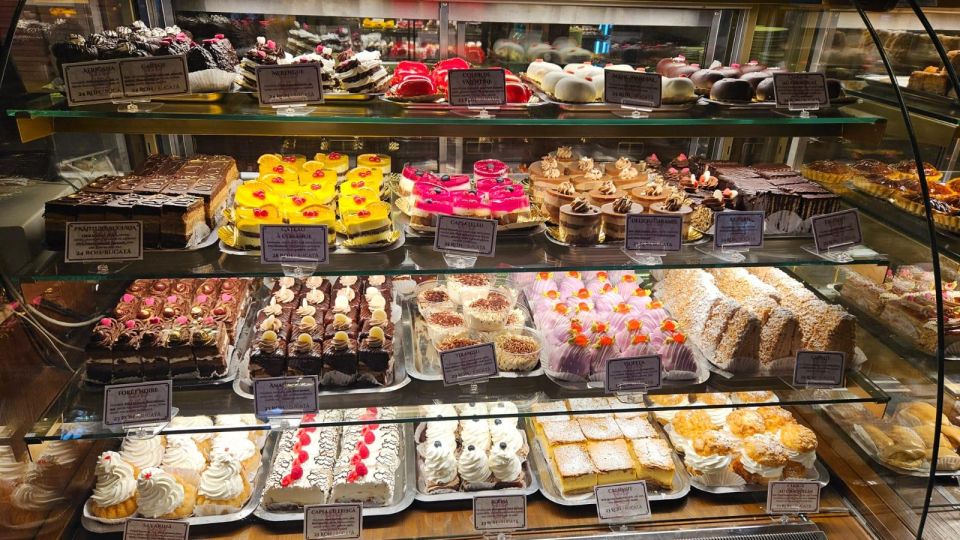
Next you’ll head along Calea Victoriei (the guide will highlight “Victory Street” as part of the route). This is where the Little Paris label becomes more than a slogan. You’ll spend time admiring the French-style buildings and understanding why Bucharest earned that comparison.
What I like about this portion is the balance. You get enough history to understand the comparison, but not so much that you feel like you’re trapped in a lecture. You can look up. You can notice balconies, facades, and the overall “European capital” feel that made Bucharest stand out to visitors in its past.
And because you’re mid-tour, you’ve already had a few bites. That means you don’t feel rushed—your brain has room to absorb what you’re seeing.
Capsa Pastry: the feel of old-school cake counters
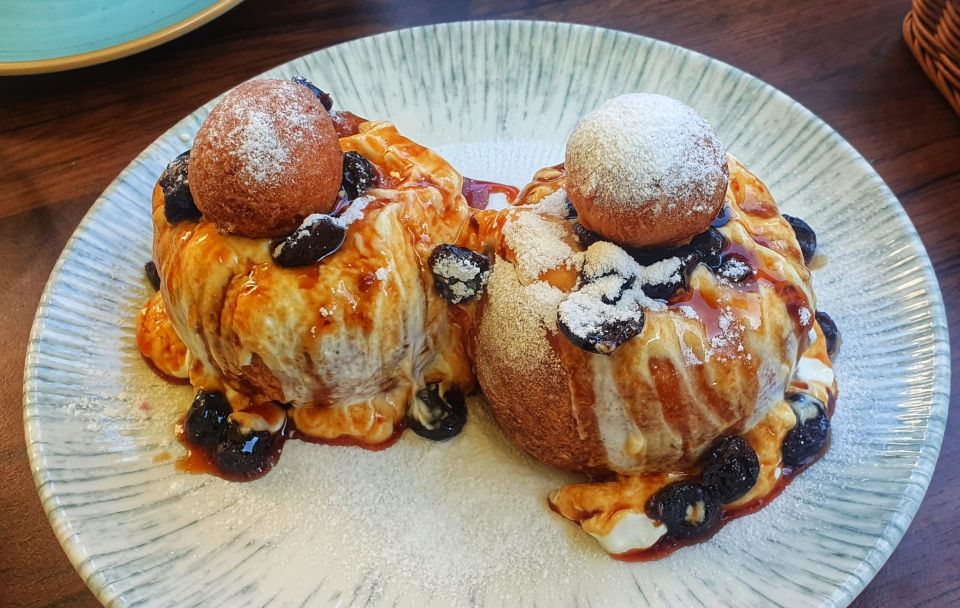
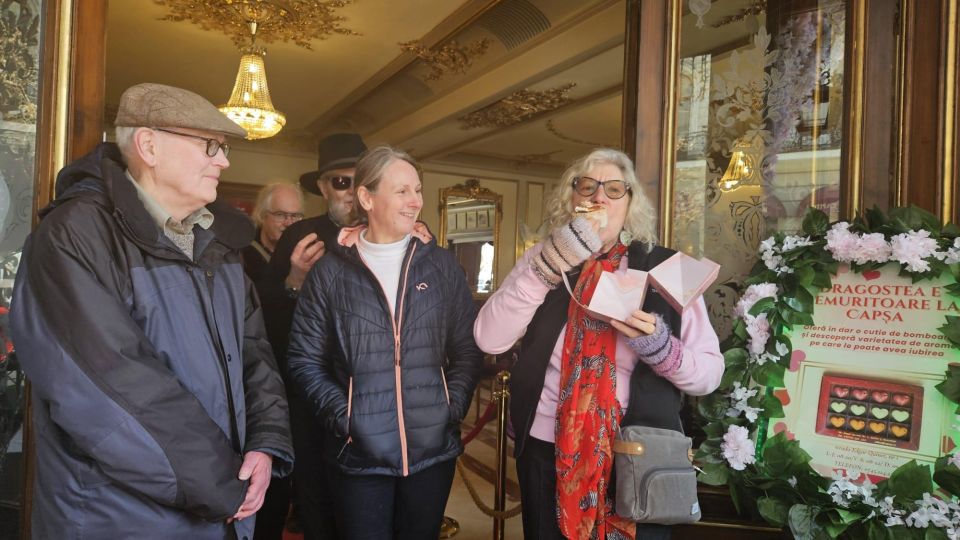
You’ll then reach Capsa Pastry for another guided tasting stop. Capsa is one of those names you’ll hear when people talk about classic Romanian desserts and historic pastry culture, and this is the moment where the tour leans into the craft side of the story.
At this stage, the tour also includes a dessert tasting (guided, with explanation). This works well because by now you’ve got the big picture—European influences, Ottoman/Balkan layers, and the way these show up in what people make and buy. Now you get a more tangible sense of how desserts became part of Bucharest identity.
One thing I’d suggest: pace yourself. You’ll have multiple sweets across the tour, and Capsa is the kind of place where it’s easy to over-commit if you aren’t paying attention to your hunger level.
You can also read our reviews of more historical tours in Bucharest





Old Town legends, then papanasi closes the chapter
The tour finishes the story in the Old Town. Here the guide connects medieval legends and customs with the influence of different empires—basically, how Bucharest’s culture became the blend people recognize today.
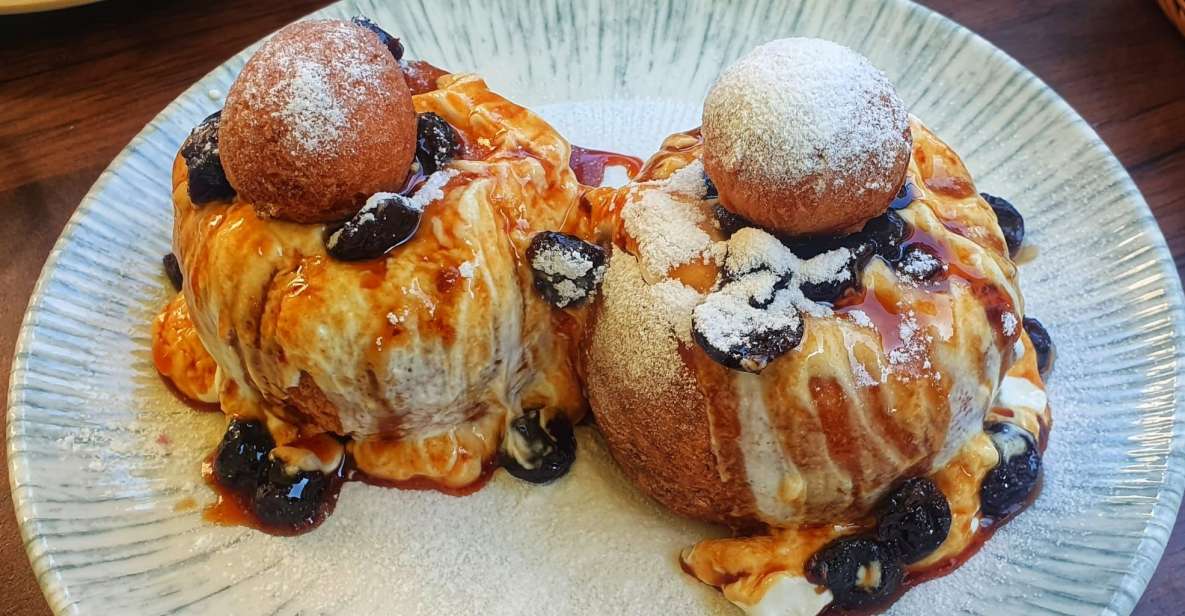
After that, you’ll reach the final act: papanasi. It’s the most famous Romanian dessert mentioned in the tour, and it’s a fitting finish because it gives the whole walk a satisfying bookend. You’ve tasted several styles and time periods, and now you get something that feels unmistakably Romanian.
Finish location: the walk ends at City Grill Covaci. That’s a handy drop-off point if you want a sit-down meal afterward or just a quick rest before continuing your day.
Price, tastings, and why $77 can be good value
At $77 per person for about 3 hours, this tour isn’t trying to be the cheapest walking tour in the world. But it also isn’t just a history lecture with a cookie.
Here’s what you’re paying for in practical terms:
- A licensed-feeling local guide (English speaking) who links desserts to specific eras.
- A small group capped at 10 participants, which makes it easier to ask questions and hear details.
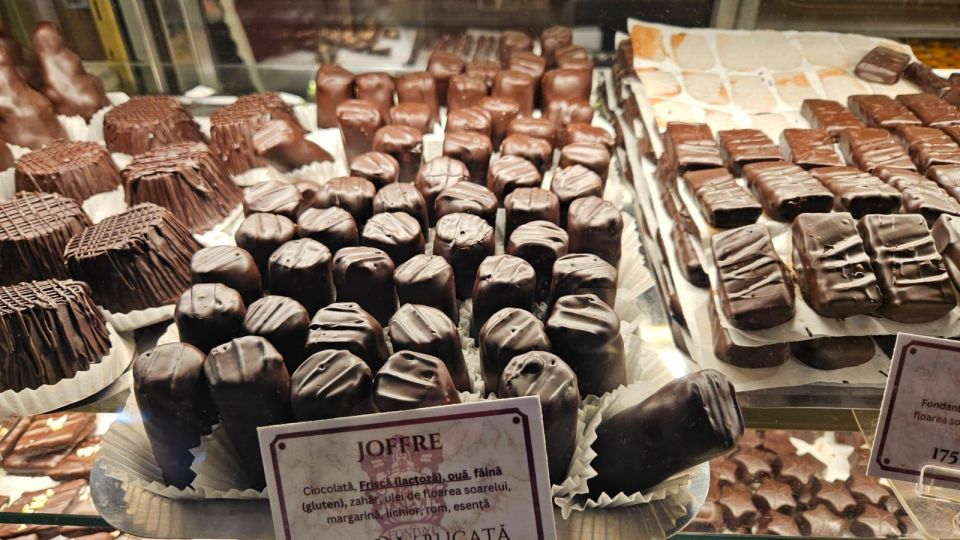
- Built-in tastings: 1 eclair, 1 chocolate truffle, 1 Romanian doughnut, plus a famous Romanian sweet snack.
- Water included.
When you compare that to the cost of desserts you’d buy on your own while also paying for guide time, the math usually works out better than it looks at first glance—especially because everything is in central spots where you don’t waste time getting between stops.
Two practical cautions:
- The tour doesn’t include Athenaeum entrance (15 lei cash only). If you’re the type who wants the full experience inside, factor that in.
- This is dessert-forward. If you’re not hungry, you’ll feel it by the end.
Who this Bucharest sweet tour is best for (and who should skip it)
This experience is best for you if:
- You like food as a way to understand culture, not just as an activity.
- You want an easy central Bucharest overview tied to meaningful landmarks.
- You enjoy asking questions and getting personal, human stories from a guide.
It’s less ideal if:
- You dislike sweets or you’re avoiding sugar for health or personal reasons.
- You want mostly “one big museum moment.” This tour is a walk with tastings, not an indoor attraction itinerary.
If you’re traveling in a small group, or even just as a couple, the cap on group size helps. One review-style detail that kept showing up in feedback is the guide’s friendliness and the way the tour can feel tailored when there are fewer people in the group.
Tour vibe and pacing: how to enjoy it without feeling rushed
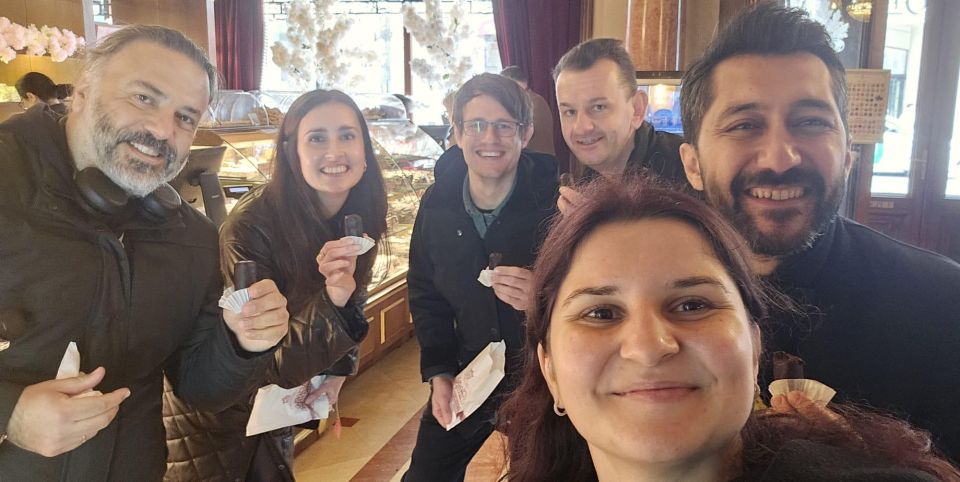
The tour is designed as a relaxed stroll with guided pauses. Expect a mix of:
- short, focused stops (like the statue area),
- a major history concentration at Revolution Square,
- and longer time windows for architecture and dessert-focused locations.
The practical win for you is that you’re not only learning dates and names. You’re using landmarks as anchors for the story. And because you eat at key points, you get “memory hooks” that stick.
Bring comfy shoes. You’re walking. Also, if you have any allergy constraints, you should be cautious—but the tour data here only confirms specific items, not ingredients.
Should you book Mara’s Bucharest sweets and history walk?
I’d book it if you want Bucharest in one afternoon: the “Little Paris” look, the hard pivot of communist-era history, and a dessert finish with papanasi. The included tastings make it feel like more than a typical walking tour, and the small group size helps the guide actually connect with you.
Skip it only if sweets are a deal-breaker for you. Otherwise, it’s a smart value pick for first-time Bucharest visitors who want real context without getting trapped in a museum schedule.
FAQ
How long is the Bucharest Sweet Delights History and Desserts walking tour?
The tour lasts about 3 hours.
Where does the tour start?
Meet your guide on the stairs of the Romanian Athenaeum. The address listed is Strada Benjamin Franklin 10.
How much does the tour cost?
It costs $77 per person.
What language is the tour in?
The tour is in English.
How big is the group?
The group is limited to 10 participants.
What desserts are included?
The tour includes 1 eclair, 1 chocolate truffle, 1 Romanian doughnut, plus 1 famous Romanian sweet snack, along with water.
Is the Romanian Athenaeum entrance included?
No. Entrance to the Romanian Athenaeum costs 15 lei (about 3 EUR) and is cash only.
What if I need to change my plans?
You can cancel up to 24 hours in advance for a full refund. You can also reserve now and pay later.
What should I wear?
Wear casual clothing and comfy shoes, since it’s a walking tour.