REVIEW · BUCHAREST
Communism Walking Tour from Lenin to Ceausescu in Bucharest
Book on Viator →Operated by Bike the City · Bookable on Viator
Bucharest’s politics are written in stone. This 2.5-hour communism walking tour connects major power sites to the daily cost of dictatorship, ending where Nicolae Ceaușescu delivered his last public address. I especially like how the guide turns architecture into clear cause-and-effect stories, from Revolution Square’s showdown to University’s Square’s grim turning point, and I also like that many stops are listed as admission-ticket free so you can focus on the walk and the explanations. One watch-out: the tour is offered in English, and if English is difficult for you, you may want a translation app ready.
The second big plus for me is the stop-by-stop pacing. You get short visits that keep momentum, with enough time at places like Palace of Parliament and Piaka Revolukiei to understand what you’re actually seeing, instead of just snapping photos and moving on.
It’s also a good deal. For $24, you’re paying for a local guide who can link the city’s communist-era planning—like the Socialist Victory Boulevard—to what still shows up on today’s streets. The route is compact, and the tour caps at 25 people, which usually keeps the experience from feeling too rushed.
In This Review
- Key highlights worth your time
- Getting Oriented with the Palace of Parliament
- Manastirea Antim and the Socialist Victory Boulevard trade-offs
- Palatul Patriarhiei: Paris-inspired architecture with political consequences
- Piaka Unirii: 1980s urban design and the Dancing Fountains moment
- Old Town as a symbol of the old regime’s decline
- University’s Square: where the revolution’s violence is part of the map
- Royal Palace’s transformation into the Palace of the Republic
- Ateneul Roman and the identity you see on the 5 lei
- Revolution Square (and Ceaușescu’s last speech)
- Price and pacing for a 2.5-hour route
- The guide makes the difference (Alex and Lucia as examples)
- Should you book this communism walking tour?
- FAQ
- FAQ
- How long is the Communism Walking Tour in Bucharest?
- How much does the tour cost?
- Where do I meet the guide?
- Where does the tour end?
- What language is the tour offered in?
- Is food included?
- Do I need entry tickets for the stops?
- Is free cancellation available?
- Is the tour limited in group size?
Key highlights worth your time

- Palace of Parliament as the starting punchline: a look at a truly oversized administrative monument and why it was built.
- Manastirea Antim vs. Socialist Victory Boulevard: a chance to understand what got removed to make room for the new order.
- Palatul Patriarhiei’s Opera-like styling: Paris-inspired details paired with political shifts.
- Piaka Unirii and the 1980s design language: plus the Dancing Fountains moment.
- University’s Square’s role in Romania’s 1989 revolution: where the story turns from control to revolt.
- Revolution Square’s central committee backdrop: the place tied to Ceaușescu’s final speech.
Getting Oriented with the Palace of Parliament
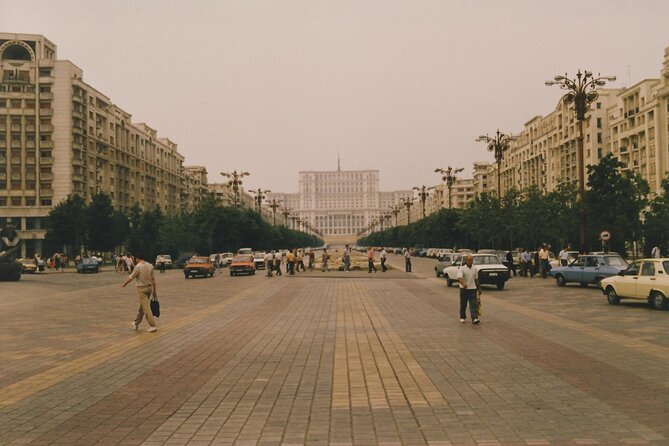
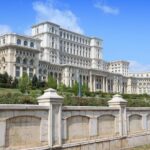
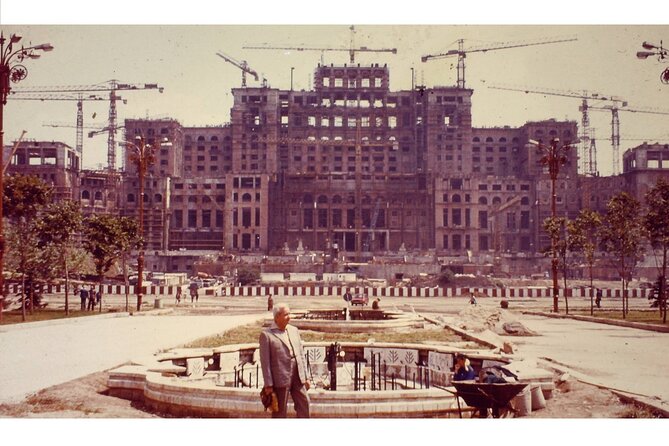
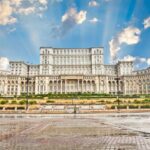
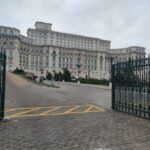
I like starting big. You begin right in front of the Palace of Parliament, described as the second-biggest administrative building in the world, and tied to what the tour calls the last megalomaniac communist project. Even if you’ve seen photos, it’s the scale that hits first: this is power as physical size, power you can’t ignore.
Your guide will frame what you’re looking at: why this kind of state-building was meant to dwarf everyone else in the city. It’s not just about the building itself, though. The real value is how this first stop sets up the rest of the walk—so when you later see plazas and boulevards shaped by the same ideology, the pattern feels obvious rather than random.
Tip: take a minute to look at edges and transitions. Buildings like this are designed for control of space—where you stand matters, and your guide will point out what to notice.
You can also read our reviews of more walking tours in Bucharest
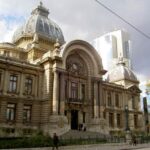
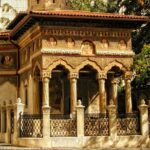
Manastirea Antim and the Socialist Victory Boulevard trade-offs
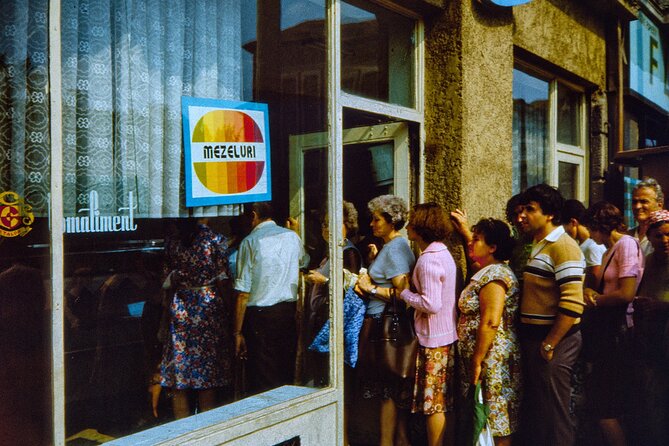
Next you’ll move into a part of the old city where modern planning ran straight through history. Manastirea Antim is presented as a survivor, not a centerpiece—because it was nearly demolished to make space for the Socialist Victory Boulevard.
This is one of the stops where the tour’s tone really helps. Communism here isn’t shown only as ideology; it’s shown as decisions made by planners and enforced by the state. By the time you reach this point, you’ll understand that communist Bucharest wasn’t only about what got built. A lot of it was also about what got erased or pushed aside.
Practical consideration: this is a relatively short stop, so come with curiosity. You’ll get the best experience if you pause where your guide directs you and let the explanation connect the street-level view to the big-picture project.
Palatul Patriarhiei: Paris-inspired architecture with political consequences
Then comes Palatul Patriarhiei, tied to a really interesting contrast. The building is described as inspired by the Garnier Opera from Paris, yet the stop is used to discuss how the same space can connect to both the start of democracy in Romania and the start of the communist movement.
That may sound like a contradiction at first. The tour’s job is to show why it isn’t. Architecture can carry multiple eras at once—sometimes because styles travel, and sometimes because regimes repurpose places to fit new narratives. Your guide will help you read the building as more than aesthetics.
What I like here: you get a reminder that political change doesn’t always overwrite everything instantly. Sometimes it reinterprets what already exists. That makes the rest of the route feel more grounded in real life, not just slogans.
Piaka Unirii: 1980s urban design and the Dancing Fountains moment

Moving on, you’ll reach Piaka Unirii, built during the 1980s and connected to the Socialist Victory Boulevard. The tour highlights it as a major landmark now known for its Dancing Fountains, which gives you a rare chance: you’re standing in a communist-planned space that can still feel playful today.
This stop matters because it shows how “regime-made” spaces can outlive the regime itself. The fountains are a modern-facing feature, but your guide will frame what the city looked like when the boulevard and square were being pushed forward. You’ll get a better sense of how the state tried to project a future, not just a present.
One drawback to consider: because this stop is short, the fountains may be more of a quick wow than a deep photo session. If you care a lot about photos, arrive ready to move fast and follow your guide’s timing.
Old Town as a symbol of the old regime’s decline
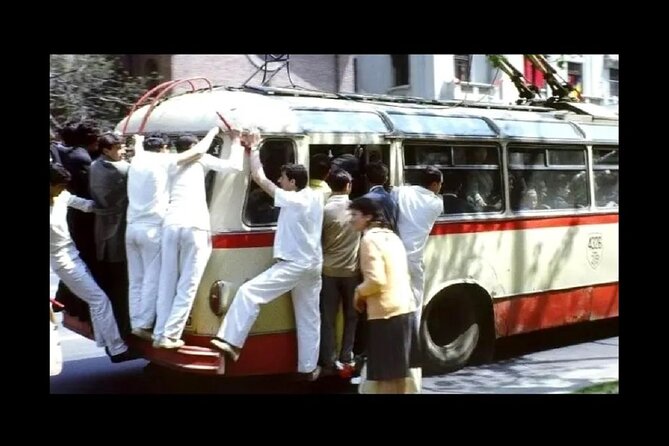
After the more monumental squares and boulevards, the walk turns toward symbolism in a quieter way. The tour describes the Old Town as a symbol of the old regime that became abandoned during the communist era.
This is where the emotional tone shifts. It’s easy to talk about communist Bucharest as construction and spectacle. But abandonment tells another story—about how the state treated certain social spaces and what it allowed to fall out of use.
I find this stop useful even for people who think they already know the basics. Abandonment changes what people do day to day. It changes what thrives, what stays empty, and what kinds of neighborhoods survive the big political waves.
University’s Square: where the revolution’s violence is part of the map
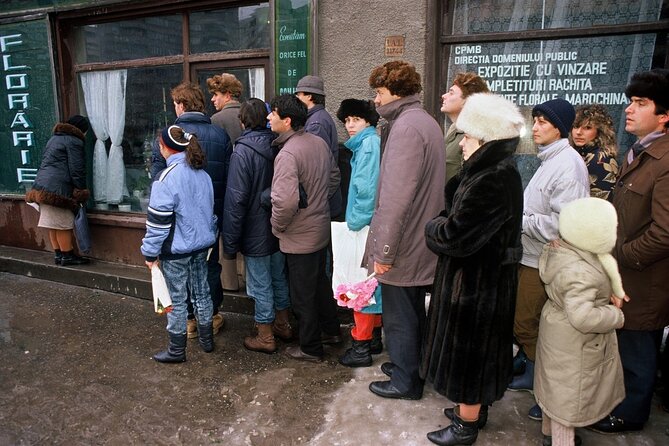
Then you’ll be at University’s Square, one of the route’s most serious moments. The tour emphasizes Romania’s role as the only country from the communist block said to end in a bloody revolution, and it connects that history to where many victims were shot.
This is not the place for casual wandering. The guide’s explanation is the point, because it turns the open space into a timeline you can follow with your eyes. You’ll learn what happened here and why this square matters to the country’s collective memory.
Practical note: because it’s a focused, emotional stop, keep your questions simple. Ask what to look for or what date the guide is centering, and you’ll get more out of the time.
Royal Palace’s transformation into the Palace of the Republic
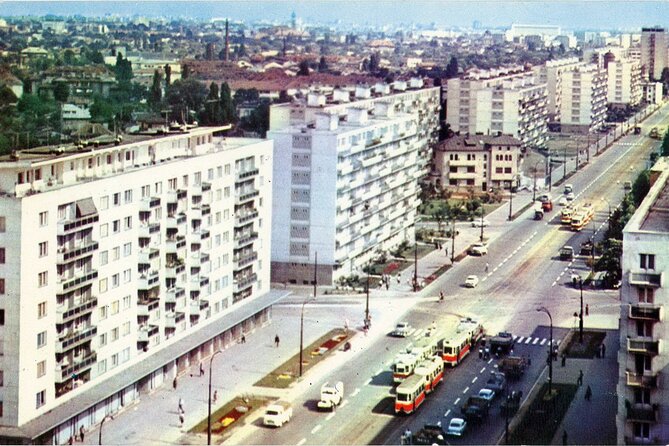
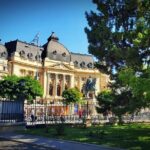
At Palatul Regal / the Royal Palace, the story becomes architectural about-turning. The tour explains the building as the winter residence of Romania’s royal family, then shifts to the first years of communism when it became the Palace of the Republic and a protocol building. Today it’s described as the National Art Museum.
This is such a powerful stop because it compresses regime change into one address. The same walls that once represented monarchy later served the communist state’s public image. You can almost see the political message in the shift of purpose—status, then replacement.
If you like history that you can physically trace, this is a great moment. The tour helps you notice how power changes what a building is used for, not just who lives in it.
Ateneul Roman and the identity you see on the 5 lei
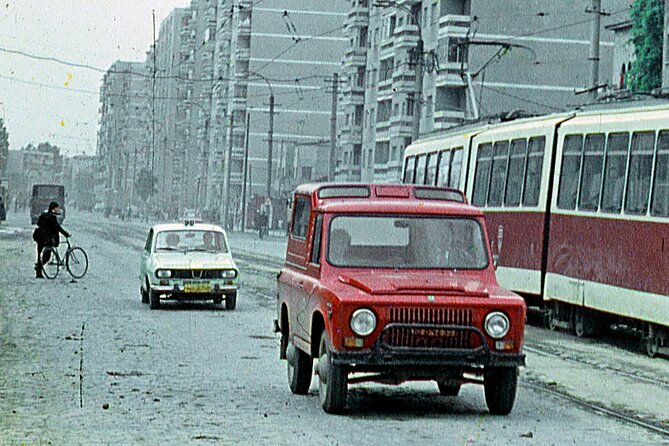
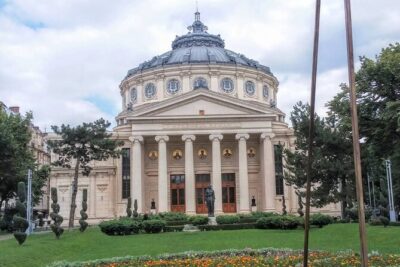
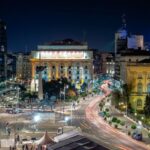
Next up: Ateneul Roman, presented as one of Bucharest’s most representative buildings and even pictured on the 5 lei banknote. This stop is short, but it works because it pulls politics and identity into the same frame.
Why it fits this tour: even under communist rule, cultural symbols were never only about culture. They were also about legitimacy—what the state wanted people to value, and what could stay recognizable even after ideology shifted.
I like this kind of ending interlude because it softens the heavy moments with a tangible connection to everyday life. If you’ve been handling Romanian money, you may spot the building again afterward.
Revolution Square (and Ceaușescu’s last speech)
Finally, you arrive in Revolution Square (Piața Revoluției), where the tour centers on the Central Committee of the Communist Party as the main building backdrop. This is also the moment tied to Nicolae Ceaușescu’s last speech in front of the Romanian people.
This ending is strong because it gathers everything you walked through. You started with monumental construction meant to project dominance. Along the way you saw what was sacrificed, what was repackaged, and how public space was reshaped for control. Here, you reach the point where that control visibly fractures.
If you want one takeaway, it’s this: the tour doesn’t treat communism as a single story. It treats it like a system that shaped streets, buildings, and public gatherings—until people pushed back.
Price and pacing for a 2.5-hour route
At $24 per person for about 2 hours 30 minutes, this is priced like an efficient city lesson. You’re paying for a local guide and for the structure that keeps you moving through key sites without having to plan each step yourself.
Value-wise, the itinerary is built around stops described as admission-ticket free, so you aren’t hit with surprise entry fees for the main sights. You’ll also find this format works well because it’s not a marathon: you get short visits across central Bucharest, finishing near Revolution Square.
Logistics that matter:
- Start time is 10:30 am.
- The route starts at Bulevardul Unirii 5, Buchști 040101 and ends at Piața Revoluției.
- The group maximum is 25 people, which helps with hearing the guide in an outdoor setting.
- It’s offered in English, with mobile tickets provided.
- The tour is run by Bike the City.
As for what you should bring: comfortable shoes are a smart call for a walking route, and a translation app can be helpful if English isn’t your strongest language.
The guide makes the difference (Alex and Lucia as examples)
The standout theme here is storytelling quality. Names like Alex and Lucia show up in the guide experience, with praise for linking the dots across the city’s communist-era scenes. One review specifically called out how the guide connected the Palace of Parliament story to Ceaușescu’s era step by step, which is exactly what you want on this kind of route.
Also pay attention to the tone: guides are described as adapting to groups, using humor, and keeping explanations clear enough for mixed-age groups. That matters because communist-era history can get heavy fast. Good guides pace the information so it lands without feeling like a lecture.
If you’re the kind of person who likes small details—like why a building’s design matters or how a boulevard changed a neighborhood—this tour style will feel like money well spent.
Should you book this communism walking tour?
Yes, if you want a guided, political-city map of Bucharest rather than a museum-only approach. This walk is ideal for people who like architecture and public space, and for anyone who wants context behind what they see—especially at Palace of Parliament, University’s Square, and Revolution Square.
I’d hesitate if you rely on very detailed English explanations and you’re not comfortable with English narration. The tour is in English, and a couple of people have noted difficulty understanding the guide when they needed help beyond basic translation.
If you’re deciding, here’s my simple call: book it if you want answers on the street. Pass if you prefer purely self-paced sightseeing with no historical framing.
FAQ
FAQ
How long is the Communism Walking Tour in Bucharest?
The tour lasts about 2 hours 30 minutes.
How much does the tour cost?
It costs $24.00 per person.
Where do I meet the guide?
The meeting point is Bulevardul Unirii 5, București 040101, Romania.
Where does the tour end?
The tour ends at Revolution Square (Piața Revoluției), Bucharest, Romania.
What language is the tour offered in?
The tour is offered in English.
Is food included?
No. Food and drinks are not included.
Do I need entry tickets for the stops?
The stops listed are marked as admission ticket free.
Is free cancellation available?
Yes. You can cancel up to 24 hours in advance for a full refund.
Is the tour limited in group size?
Yes, it has a maximum of 25 travelers.