REVIEW · BUCHAREST
Contrasts of Communism – Small Group Walking Tour in Bucharest
Book on Viator →Operated by My nice Romania · Bookable on Viator
Bucharest changes when you know the 1989 story. This small-group tour (max 8) turns the city into a timeline, linking the revolution sites to what life looked like under communism and what replaced it. I also love the way guide Elena makes it human, using historical photos and conversational explanations instead of a script.
You’ll move by foot and public transit for about 3 hours, and most stops come with free admission tickets. One consideration: the subject matter is heavy, and the route expects moderate fitness plus quite a bit of walking.
In This Review
- Key Highlights at a Glance
- Reading Bucharest Through the 1989 Revolution Sites
- Meeting at Strada Boteanu 3 and Ending at Unirii Boulevard
- Revolution Square: Where the 1989 Story Hits Hardest
- University Square (KM0): Freedom of Speech Has a Location
- Eroii Revolutiei Neighborhood: Working-Class Bucharest Plus Street Art
- Memorial Cemetery at Cimit. Eroilor Revolutiei: Quiet Paths, Real Names
- Parcul Carol I: Views From One of Bucharest’s Highest Points
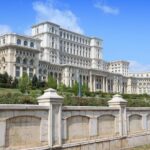
- Palace of Parliament: The Outside View of Ceaușescu’s Last Whim
- Bulevardul Unirii and the Dancing Fountains: Ending With Contrast
- What Makes Elena’s Guidance Feel Different
- Transportation, Walking Pace, and How to Prepare
- Price and Value: Why $42.05 Can Make Sense
- Who This Tour Is Best For (and Who Should Skip It)
- Should You Book Contrasts of Communism in Bucharest?
- FAQ
- How long is the Contrasts of Communism walking tour in Bucharest?
- What is the price per person?
- Is the tour offered in English?
- How many people are in the group?
- Where do you meet and where does the tour end?
- Is mobile ticketing used?
- Are the main stops admission tickets included?
- Does the tour involve walking and public transportation?
- What fitness level is required?
- What happens if weather is bad?
Key Highlights at a Glance
- Revolution Square → the last speech site: Stand where the final moment of 1989 unfolded.
- KM0 of freedom of speech: University Square is framed as a turning point, not just a location.
- Working-class neighborhood by public transit: You get out of the tourist bubble and see how the 1970s blocks are changing.
- Memorial Cemetery with personal stories: Quiet paths, names, and context around those killed in 1989.
- Palace of Parliament view from the outside: A dramatic final contrast, without needing an inside visit.
Reading Bucharest Through the 1989 Revolution Sites
Bucharest can feel like it’s wearing two faces at once. One face is classic Central European city life: streets, cafés, and everyday routines. The other face is communist-era planning and memory, where buildings and squares keep pointing back to 1989.
That’s what I like about this tour: it doesn’t treat communism as a dusty history chapter. It treats it like a system that shaped where people lived, how they spoke, what they feared, and how they rebuilt afterward. Even if your history knowledge is basic, the route gives you a clean framework you can keep using the rest of your trip.
And the small group size matters. When you’re with only a handful of people, you can ask questions without feeling like you’re holding up a bus full of strangers. Elena’s style leans friendly and direct, more like a smart local friend than a performer reading bullet points.
You can also read our reviews of more walking tours in Bucharest

Meeting at Strada Boteanu 3 and Ending at Unirii Boulevard
The tour meets at boteca13, Strada Boteanu 3 in Bucharest. You finish near Bulevardul Unirii 25, close to the fountains and the older central areas.
Why this start and finish help you: you’ll spend your morning (roughly) moving through big symbolic sites and side streets, then end near places you can keep exploring on your own. It’s a nice rhythm for a first visit, because you get context before you wander too far.
Also, this isn’t a sit-and-stare tour. There’s walking plus use of public transport during the route, which keeps the experience tied to how Bucharest actually works now. If you like real neighborhoods and not just postcards, this pacing fits.
Revolution Square: Where the 1989 Story Hits Hardest
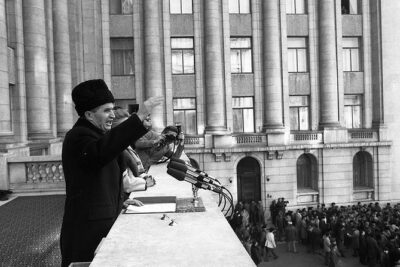
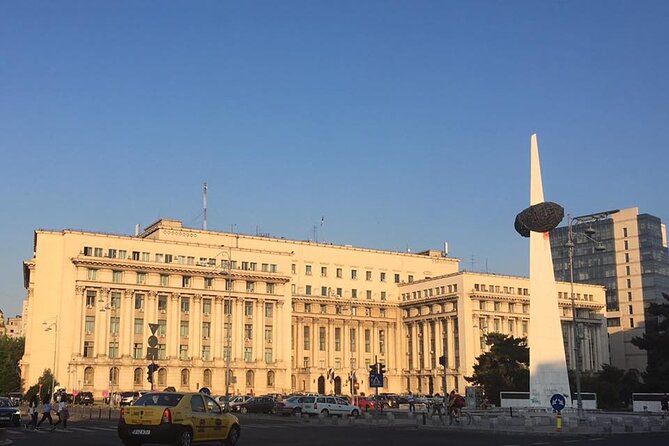
Your first stop is Revolution Square, a place you’ll hear mentioned even if you don’t know much Romanian history. You stand where Nicolae Ceaușescu held his last speech in 1989, and the guide connects the rise and fall of the dictatorship to what came next.
This stop works because it’s not just about one man or one speech. You’re given the wider context: how a system built around control created the conditions for sudden change, and how that change played out on the ground. You’ll also get a clear sense of why this square became a reference point for memory—people didn’t just watch history; they lived through it.
If you’re sensitive to political violence and aftermath, expect the tone to match the topic. This tour doesn’t try to lighten the mood at the cost of meaning. For me, that honesty is part of the value.
University Square (KM0): Freedom of Speech Has a Location
Next comes University Square, described as KM0 of Romanian freedom of speech. You’ll stand where the first heroes died for liberty in Bucharest on 21 December 1989, and then unpack what that moment means for the country’s political climate today.
What I like here is the shift from monuments to ideas. A lot of history tours stop at what happened. This one asks how you recognize those consequences later—through culture, politics, and public attitude. It’s a useful mental bridge if you’re trying to understand why Romania’s modern debates don’t feel abstract.
Also, this is where the tour starts to feel like a conversation. Elena is comfortable answering questions and adjusting the explanation to what you want to understand. People with a casual interest get the clean story. People who want specifics get them too.
Eroii Revolutiei Neighborhood: Working-Class Bucharest Plus Street Art
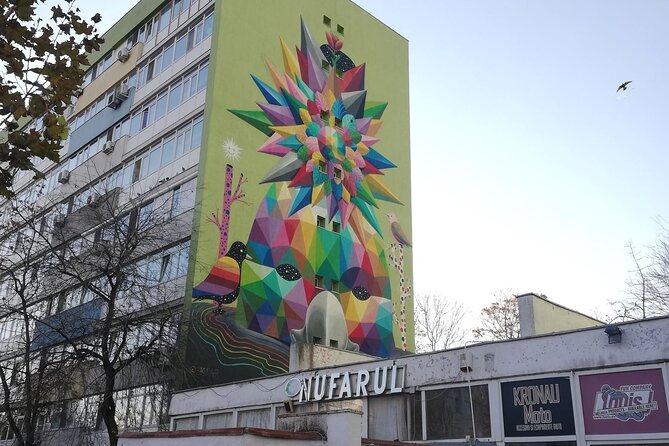
At Eroii Revolutiei, the tour leaves the obvious tourist route. You travel there off the beaten path using public transportation, then explore a typical working-class neighborhood.
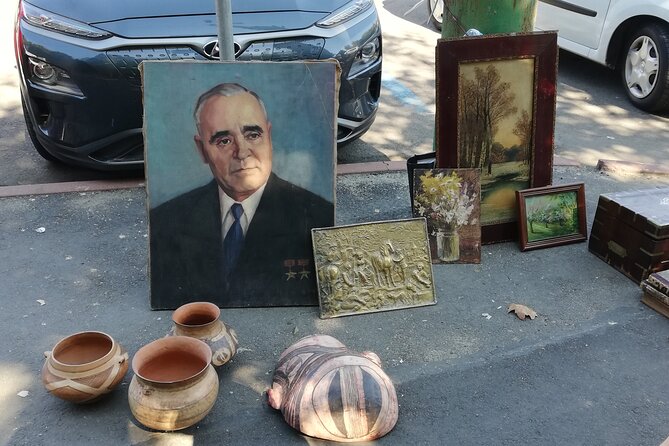
This is one of the most interesting contrasts on the whole walk: the 1970s-era grey communist blocks still shape the streetscape, but colorful street art shows up as a kind of public voice. It’s not just decoration; it signals that space and identity can change after decades of control.
Practical note: this portion has a different feel. You’ll likely spend a little less time standing still and more time moving through real streets. If you prefer history that includes present-day visuals—rather than history locked behind barriers—this is the moment you’ll appreciate most.

Memorial Cemetery at Cimit. Eroilor Revolutiei: Quiet Paths, Real Names
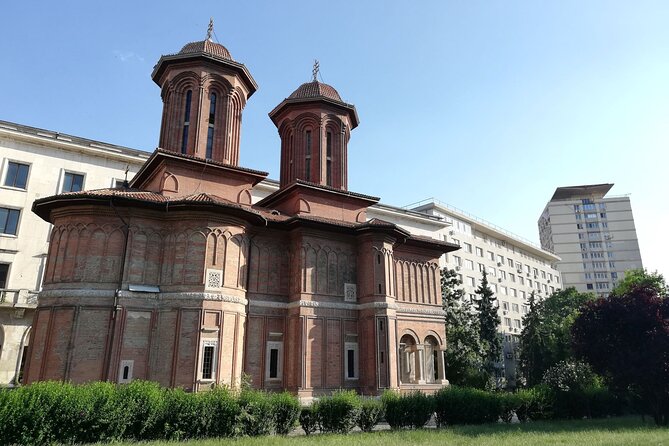
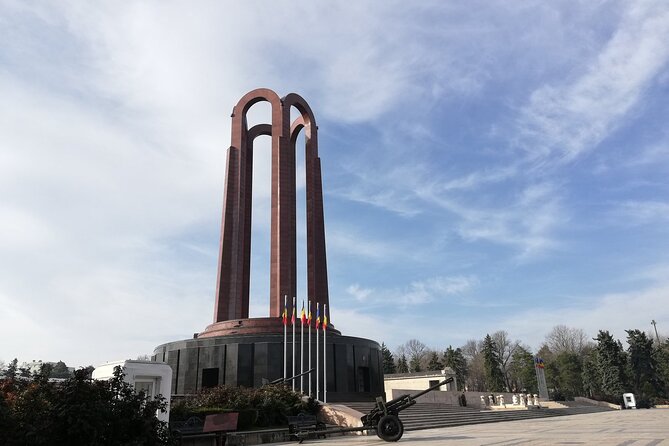
Then you go to Cimit. Eroilor Revolutiei, the Memorial Cemetery dedicated to the Heroes killed in the revolution of 1989. The paths are calm, and the stories shared here focus on personal details, not slogans.
This stop balances the earlier high-drama square moment. Revolution Square is about power and collapse. The cemetery is about what that collapse cost real people. It’s a reminder that large political events are made out of individual lives, families, and choices.
If you like tours that create space for reflection, you’ll appreciate the cemetery pacing. It’s also a good reset after the emotional intensity of the earlier stops.
Parcul Carol I: Views From One of Bucharest’s Highest Points
Parcul Carol I gives you a view from one of the higher points in Bucharest. From up there, the city layout makes more sense, and you can better understand how communist-era planning tried to impose order on urban life.
You’ll also learn about the Monument of the Heroes for the Freedom of the Motherland, built in honor of communist party leaders. That detail matters, because it flips your expectations. Monuments aren’t always about common heroes; sometimes they are tools of messaging, built to shape public memory.
I found this stop useful because it teaches you to read the city more critically. After this, you start noticing what a building or statue might be trying to persuade you to believe.
Palace of Parliament: The Outside View of Ceaușescu’s Last Whim
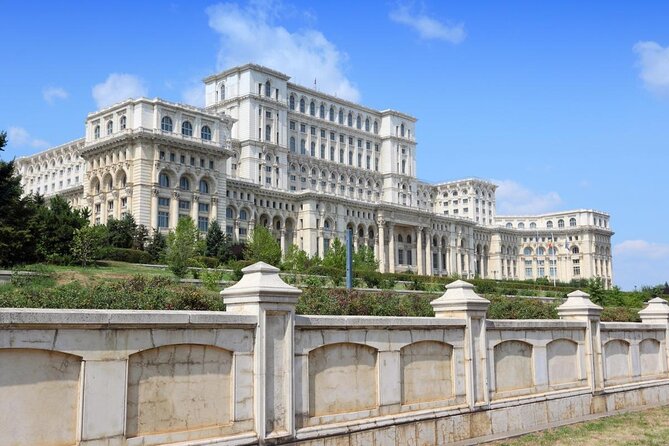
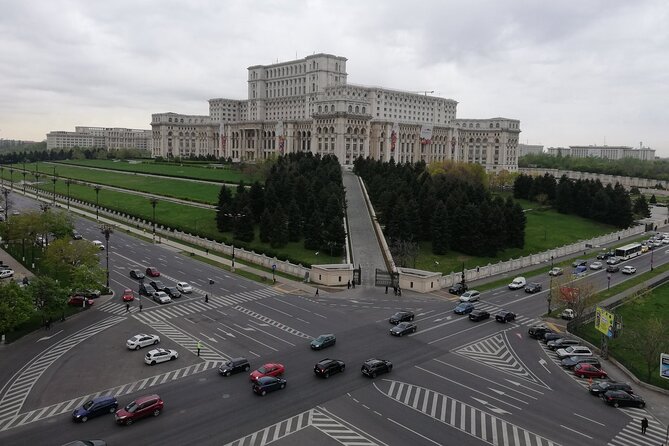
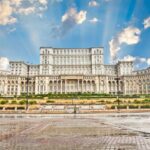
The tour returns toward the city center for a stop in front of the Palace of Parliament. This is the second-largest administrative building in the world, and it was the last whim of Nicolae Ceaușescu.
Important practical detail: the tour does not include admission to go inside. You’re there to stand in front and absorb the scale, the symbolism, and the sheer force of the structure. For many visitors, that’s enough. The exterior is already a statement.
If you love architecture, you’ll still get plenty here. The value isn’t an interior tour guide—it’s the historical meaning attached to the building’s creation and what that meant for Romania.
Bulevardul Unirii and the Dancing Fountains: Ending With Contrast
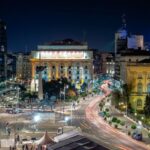
You finish near the dancing fountains on Unirii Boulevard. It’s designed as a home-court advantage to humble world leaders, which turns a tourist-friendly landmark into a political clue.
That’s a smart way to end: you’ve seen the revolution sites, the neighborhoods, and the memorials. Now you close with a place that shows how power still tries to stage-manage perception—even in entertainment-sized form.
It’s also a convenient landing point for independent exploring afterward. From here, you can keep walking or hop on public transport to catch old town streets and nearby sights.
What Makes Elena’s Guidance Feel Different
Elena is the name you’ll most often hear tied to this tour, and the pattern in people’s praise is consistent. She’s friendly, answers questions, and uses photos to connect past and present.
I like guides who don’t just say facts, but explain how those facts connect to daily life. That comes through here. You’re not only learning dates. You’re learning how a dictatorship can shape speech, fear, housing, and even the way people look at the city.
The other thing that shows up clearly is pacing. This tour doesn’t sprint. It’s set up so you can stop, ask, and reflect, and it stays grounded in what you’re seeing right now. One reviewer even described it as a gift because you get feet on the ground and real conversation, not just a ride-by highlight reel.
Transportation, Walking Pace, and How to Prepare
This is a 3-hour experience with quite a bit of walking. It also includes public transportation during the route. The good news is it’s structured, so you’re not constantly guessing where to go or how to connect transit on your own.
Still, prep matters:
- Wear comfortable shoes. Expect long blocks on foot.
- Bring a layer. Bucharest weather can change fast.
- Plan your energy. The cemetery stop helps slow you down, but the overall route is active.
One more note: the tour requires good weather. If the day is poor, you’ll be offered another date or a refund. That’s smart for a walking-heavy format.
Price and Value: Why $42.05 Can Make Sense
At about $42.05 per person for roughly 3 hours, this can feel like a bargain if you care about context. The value comes from two places.
First, most stops have free admission tickets, with the exception of the Palace of Parliament stop where admission is not included. Second, the small group format and the guide’s interaction level change the experience. You’re not just seeing locations; you’re building an understanding you can carry with you when you go back out into the city.
If you’re the type who likes to ask questions, clarify details, and compare what you see to what you’ve learned, a small-group tour like this often beats self-guided history reading. You get a real-time translator of meaning—why this square mattered, why this neighborhood looks like it does, and what the monuments are trying to say.
Who This Tour Is Best For (and Who Should Skip It)
This tour is a great fit if you want:
- a practical route through key sites connected to the 1989 revolution
- a guide who explains impact on everyday life, not just political headlines
- a city-first approach that includes both symbols and side streets
You might think twice if:
- you want a purely light sightseeing morning with minimal political weight
- you don’t feel comfortable with moderate walking and some public transit
If you’re curious about Romania’s present political climate and how the past still echoes, this is one of the faster ways to get your bearings.
Should You Book Contrasts of Communism in Bucharest?
I’d book this tour if your Bucharest goal is understanding, not just photos. The route connects the big revolution sites with quieter places like a memorial cemetery and then returns to the bold statement of the Palace of Parliament. That contrast is the whole point.
If you’re traveling with limited time and you want the clearest framework for what 1989 changed, this delivers. And if you care about conversation, Elena’s approach is a big reason the ratings are so consistently high.
One last tip: go in with comfortable shoes and an open mind. The topic is serious, but the tour is also thoughtful—and it makes Bucharest feel less like a random collection of sights and more like a story you can follow.
FAQ
How long is the Contrasts of Communism walking tour in Bucharest?
It lasts about 3 hours.
What is the price per person?
The price is $42.05 per person.
Is the tour offered in English?
Yes, it’s offered in English.
How many people are in the group?
The group is limited to a maximum of 8 travelers.
Where do you meet and where does the tour end?
You meet at boteca13, Strada Boteanu 3, București 010027, Romania. The tour ends near Bulevardul Unirii 25.
Is mobile ticketing used?
Yes, the tour uses a mobile ticket.
Are the main stops admission tickets included?
Admission is free for stops like Revolution Square, University’s Square, Eroii Revolutiei, Cimit. Eroilor Revolutiei, and Parcul Carol I. The Palace of Parliament stop has admission not included.
Does the tour involve walking and public transportation?
Yes. It includes walking and uses public transportation during the route.
What fitness level is required?
You should have a moderate physical fitness level.
What happens if weather is bad?
If it’s canceled due to poor weather, you’ll be offered a different date or a full refund.