REVIEW · BUCHAREST
4h Jewish Legacy in Bucharest – Private Tour by Car and Walking
Book on Viator →Operated by Supplier · Bookable on Viator
Jewish Bucharest hits harder when guided. This private 4-hour tour knits together active synagogues and major memorial sites, starting with the Choral Temple and ending at the Jewish State Theatre area, with hotel pickup and comfortable driving between stops. I especially like meeting Jewish guides in person and getting real context, not just dates and names, and I like how the route mixes faith, community life, and remembrance. One thing to plan for: some buildings can be closed on certain days, and the theatre stop depends on whether there are rehearsals.
If you want a serious, respectful look at Bucharest’s Jewish legacy without exhausting yourself, this format is the sweet spot. The car keeps things easy in a big city, and the walking parts are short and purposeful. The practical drawback is that several entrance fees are not included, so your final bill is a little higher than the headline price.
In This Review
- Key highlights you’ll feel on the ground
- Jewish Bucharest by car and foot: a 4-hour route that makes sense
- Choral Temple: an active synagogue with a documented fight to survive
- Museum time at the Holy Union Temple: a synagogue built in 1836
- Holocaust Memorial: a free stop that asks you to slow down
- Teatrul Evreiesc de Stat: Hebrew culture, with a real-world schedule catch
- How pickup, car rides, and timing work in Bucharest
- Guides make the difference: the Radu and Sebastian effect
- Entrance fees and value: what you’ll likely pay beyond the base price
- Who this tour fits best (and who should adjust)
- Should you book this Jewish Legacy in Bucharest tour?
- FAQ
- What is the duration of the tour?
- Is the tour private?
- Is hotel pickup included?
- What is included in the price?
- Are entrance fees included for each site?
- How much are the entrance fees listed for the paid stops?
- What time does the tour start?
- Can you always visit the Jewish State Theatre?
Key highlights you’ll feel on the ground
- Hotel pickup, private car, and short walks keep the pace comfortable for a 10:00 start.
- Choral Temple is still active, including daily religious services in a small hall.
- Holy Union Temple history becomes museum time at a synagogue built in 1836.
- Holocaust Memorial is free and designed to be read slowly, not just photographed.
- Teatrul Evreiesc de Stat may be limited if there are rehearsals that day.
- Guides like Radu and Sebastian bring lived-in context, including family-level stories and career detail.
Jewish Bucharest by car and foot: a 4-hour route that makes sense
This is a private tour, so you’re not squeezed into someone else’s schedule. You get a professional English-speaking guide, plus private transportation in a climate-controlled vehicle for the driving chunks. The time is well structured: about an hour at each main stop, with enough continuity that you can connect the dots between community life, persecution, and what remains today.
The day starts at 10:00 am, with convenient pickup and drop-off at your hotel. If you’re meeting nearby instead, the tour is also described as near public transportation, which is helpful if your lodging is out of the strict pickup zone.
What you’ll likely enjoy most is the way the stops build one another. You begin with an active synagogue that survived devastation. Then you step into a former synagogue that now tells the story of a once-thriving community. After that, you move to the Holocaust Memorial for a heavy, direct moment of remembrance. The final cultural stop points to the continuing presence of Jewish arts and language in Bucharest.
You can also read our reviews of more walking tours in Bucharest
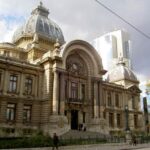
Choral Temple: an active synagogue with a documented fight to survive
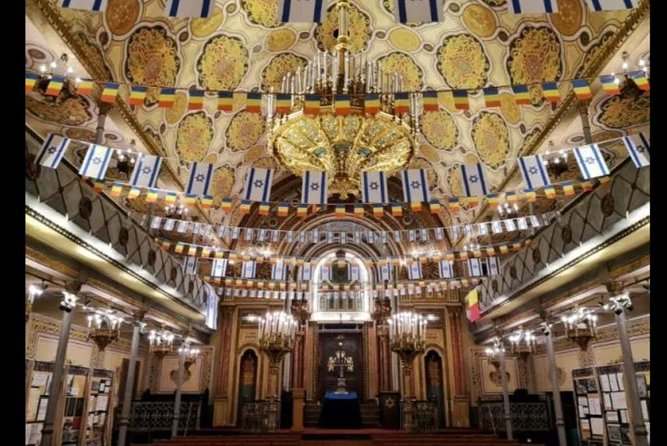
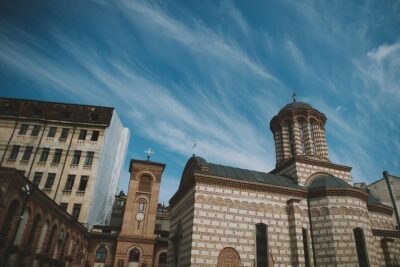
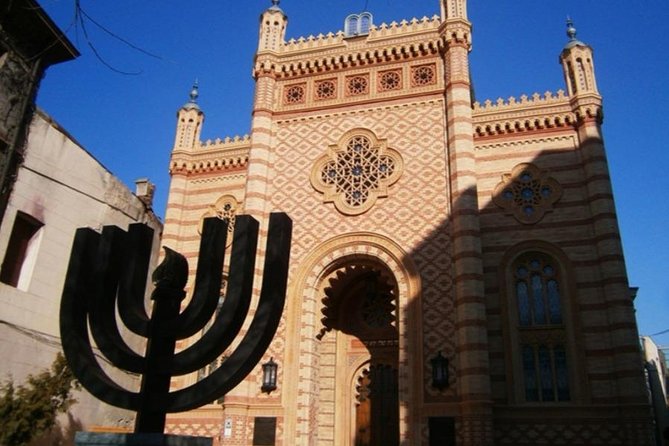
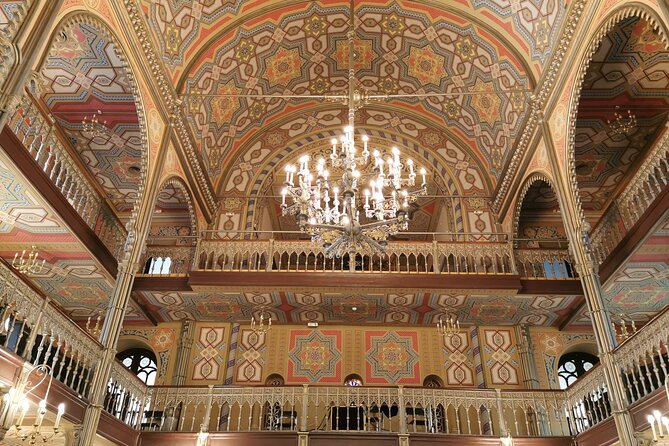
Your first stop is the Choral Temple, a synagogue in Bucharest that is described as a copy of Vienna’s Leopoldstadt-Tempelgasse Great Synagogue. That detail matters because it shows how communities kept cultural ties across borders—then had to defend them.
The story here is not polite or distant. The temple was devastated by far-right Legionaries and Nazi forces, then restored after World War II in 1945. Today it still hosts daily religious services in a small hall, and it’s one of the few active synagogues in Bucharest and in Romania.
Two practical notes for your visit:
- Plan to treat this as a functioning place of worship, not just a photo stop. Even if you’re learning and looking, keep your tone quiet and your movement respectful.
- Admission is not included, so budget 30 RON (about €6) for your ticket if you want to go inside.
If you’re lucky with timing, you may see the rhythm of daily life rather than only a static display of history. That difference is big. History behind glass doesn’t respond; an active service does.
Museum time at the Holy Union Temple: a synagogue built in 1836
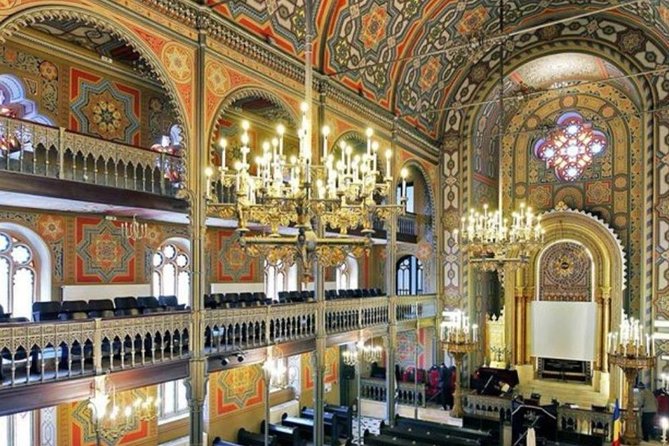
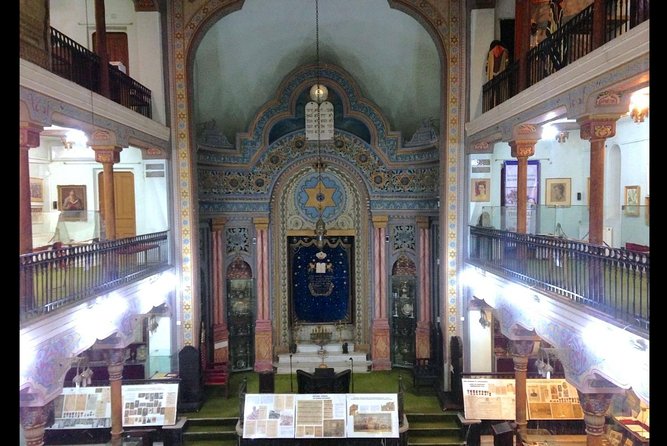
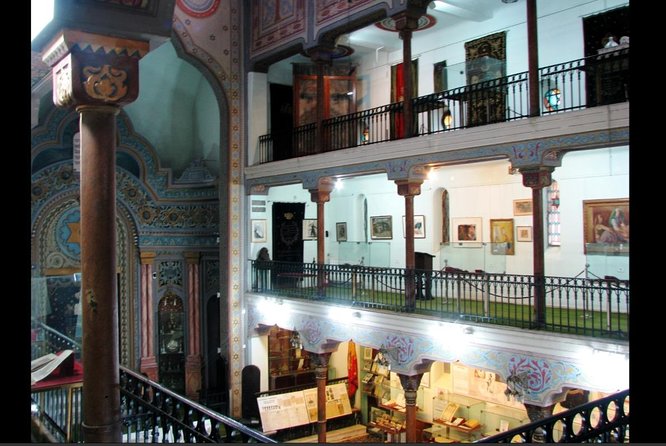
Next comes the Museum of History of the Jewish Community, housed in the Holy Union Temple synagogue, constructed in 1836. This matters because the building itself is part of the education. You’re not just looking at objects; you’re looking at a former house of worship that later became a museum.
Inside, you’ll find separate exhibitions focused on how the once lively Jewish community in Bucharest lived. There’s also an impressive Jewish liturgical collection, and the museum credits much of it to Moses Rosen, Romania’s chief rabbi from 1964–1994, who founded the museum.
This stop is where the tour often feels most practical for visitors. The exhibits can help you understand the day-to-day patterns behind the larger historical events you’ll hear later. It’s a change from walking through names and dates to building a mental picture of community life—housing, rituals, books, and what people valued.
Admission is not included, so set aside 30 RON (about €6) for the museum ticket.
Holocaust Memorial: a free stop that asks you to slow down
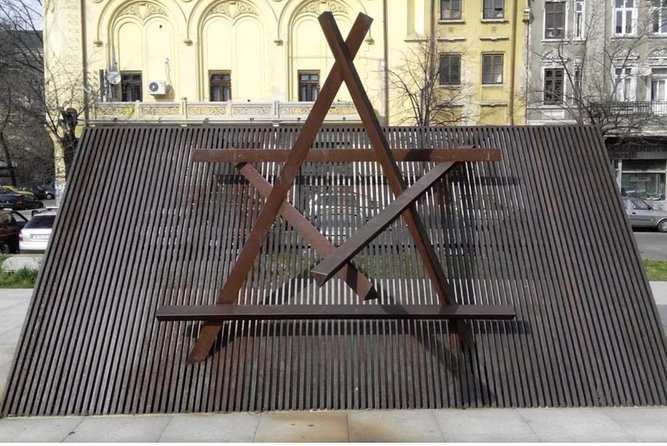
Then you shift to the Holocaust Memorial, unveiled in October 2009. It recognizes Romania’s role in the genocide of Europe’s Jews, and it references findings tied to the Wiesel Report, which concluded that no country outside Germany was responsible for the deaths of more Jews than Romania.
The design is strikingly simple: a column with each side bearing a single Hebrew letter. Together, they read zachor, meaning remember. There’s also a hall of remembrance and plaques containing the names of many Romanian Holocaust victims.
This is the kind of stop where you should give yourself permission not to rush. The structure invites you to read it, not just pass through it. If you’re trying to understand why this memorial is so often singled out, that’s the answer: it’s direct, language-based, and name-based.
Good news: admission is free, which makes it a high-value emotional stop in the middle of a paid tour day.
Teatrul Evreiesc de Stat: Hebrew culture, with a real-world schedule catch
The final stop is Teatrul Evreiesc de Stat (Jewish State Theatre), an important building for Hebrew culture. The tour description allows about an hour here, but there’s a key limitation: the theatre can be visited only if there are no rehearsals.
So don’t assume you’ll automatically see everything on the day you book. If the theatre is restricted, your guide may still help you make the most of the time. In the past, guides have also handled unexpected closures at other synagogues by adjusting the day’s route.
Admission is not included, with an indicated cost of 25 RON (about €5) per person.
If you care about Jewish language and performance, this is a meaningful closing note. Even if you only get exterior viewing or partial access, you’ll still connect the tour’s earlier themes—community, faith, survival—with how culture kept speaking.
You can also read our reviews of more private tours in Bucharest


How pickup, car rides, and timing work in Bucharest
Bucharest can eat your time if you’re relying on transfers between neighborhoods. This tour solves that with hotel pickup and private transportation in a climate-controlled vehicle.
Because it’s private, you’re also less likely to feel like you’re sprinting between sites to match a larger group’s pace. That matters on days when you hit delays, or when a particular building isn’t available as expected.
Still, keep expectations realistic about the middle of the day. Some synagogues may be closed due to holidays, and the theatre depends on rehearsal schedules. The tour has built-in flexibility in practice—guides have compensated by driving around to cover key areas when an inside visit wasn’t possible.
When you book, it also helps to aim ahead. One detail you might find telling: this experience is often booked about a month in advance on average. If you’re traveling in a busy season, don’t wait until the last moment to lock in your preferred date.
Guides make the difference: the Radu and Sebastian effect
This is one of those tours where the guide isn’t just a narrator. In multiple accounts, guides are singled out for making the day feel personal and grounded in lived experience.
One name you’ll likely see is Radu—mentioned as an excellent guide with deep historical knowledge and described as a retired chemical engineer. That combination is a real travel advantage: you get clear, structured explanations, plus an eye for detail and context. Radu is also described as born in Bucharest, which helps explain the wealth of hometown perspective.
Another guide name that appears is Sebastian, described as welcoming, comfortable, and ready to share the best of his hometown with strong English and solid professionalism.
Here’s what that means for you: the same itinerary can feel like a list of stops or like a story. A strong guide connects the dots—between why the Choral Temple was restored, how the museum preserves community memory, and why the Holocaust Memorial’s design is so specific.
Entrance fees and value: what you’ll likely pay beyond the base price
The tour price is $130.97 per person for about four hours. That sounds straightforward, but several entrances are not included, so the real value comes from how the day’s structure matches your interests.
Based on the listed on-site ticket costs:
- Choral Temple: 30 RON (about €6)
- Museum of Jewish Community history: 30 RON (about €6)
- Jewish State Theatre: 25 RON (about €5)
- Holocaust Memorial: free
Admission totals roughly add up to the equivalent of around €17 on the paid sites, depending on what you choose and how the day runs. Also, if a closure happens (holiday, access limits), you may not pay for every stop.
Where the value really lands is in the private format. You’re paying for:
- a dedicated English-speaking guide,
- private car time (especially useful in Bucharest),
- and a route that connects faith sites, museum learning, and remembrance without making you plan bus routes.
If you’re comfortable doing independent walking tours and museum tickets on your own, this may feel pricey. If you want someone to handle the transitions and bring meaning to each stop, it can feel like a good deal.
Who this tour fits best (and who should adjust)
This experience is best for you if:
- you want a focused, respectful Jewish heritage overview in one half-day,
- you prefer private explanations rather than group pacing,
- you like context from guides who can connect architecture to lived community history,
- and you’re comfortable visiting major remembrance spaces.
It’s also a solid pick if you want the day to feel meaningful rather than casual. The Holocaust Memorial stop is not optional on the route, and the tone is meant to be serious.
If you’re traveling with kids, you might want to prepare them for a heavy remembrance moment. The tour is about four hours and includes multiple indoor/outdoor transitions, so plan snacks and pacing accordingly.
Should you book this Jewish Legacy in Bucharest tour?
I’d book it if you want the best version of Bucharest’s Jewish legacy in a compact format: active synagogue life at the start, museum understanding in the middle, remembrance that doesn’t flinch, and a cultural finale at the theatre.
Make one adjustment before you commit: accept that some sites can be closed and that the theatre stop depends on rehearsals. That’s not a reason to avoid it; it’s just the reality of religious and cultural schedules. If that uncertainty would stress you out, then you might prefer a more flexible self-guided plan.
If, instead, you like having a plan that can adapt—and you value strong guides such as Radu or Sebastian—this tour is an efficient and emotionally grounded way to understand Bucharest beyond the usual postcard route.
FAQ
What is the duration of the tour?
The tour lasts about 4 hours.
Is the tour private?
Yes. It’s a private tour/activity, so only your group participates.
Is hotel pickup included?
Yes, pickup and drop-off are offered at your hotel.
What is included in the price?
The price includes a professional English-speaking guide and private transportation.
Are entrance fees included for each site?
No. Entrance tickets for places like the Choral Temple, the Museum of the Jewish Community, and Teatrul Evreiesc de Stat are not included. The Holocaust Memorial stop is free.
How much are the entrance fees listed for the paid stops?
Choral Temple is 30 RON, the Museum of the Jewish Community is 30 RON, and Teatrul Evreiesc de Stat is 25 RON. (The Holocaust Memorial is free.)
What time does the tour start?
The tour starts at 10:00 am.
Can you always visit the Jewish State Theatre?
Not always. The theatre can be visited only if there are no rehearsals.