REVIEW · BUCHAREST
Bucharest Private City Tour 4h with Hotel Pickup & Drop-Off
Book on GetYourGuide →Operated by Day Trip Romania · Bookable on GetYourGuide
Bucharest tells its story in big contrasts. This private half-day route hits Communist-era icons and Romanian traditions with just enough time to actually understand what you’re looking at.
I especially like how the tour balances major landmarks with places that explain everyday Romanian life, like the National Village Museum. I also love the private, air-conditioned car with Wi-Fi, plus a licensed English guide who keeps things moving without feeling rushed.
One drawback to consider: it’s a packed 4-hour loop with several photo stops, so if you want long interior time at every site, you may feel the schedule is tight.
In This Review
- Key things you’ll notice on this Bucharest tour
- Starting at Your Hotel: The Comfort Setup That Makes 4 Hours Work
- Palace of the Parliament: When You Feel Tiny in Megalomania
- What to watch for
- Piața Unirii: A Brief Passing Moment on the Way to Village Life
- Dimitrie Gusti National Village Museum: Romania in Wood, Adobe, and Stone
- Why this stop is valuable
- A small consideration
- Revolution Square: Where Bucharest Turns Into a Timeline
- Calea Victoriei (Victory Avenue): Royal Grandeur Meets Communist Power
- How to enjoy this segment more
- National History Museum, Romanian Athenaeum, and CEC Palace: Contrast Without Losing the Thread
- Time reality check
- Senate Palace and the Central Committee Building: The Revolution’s Physical Starting Point
- Old City Centre: Bohemian Streets for Your Last Hour
- Practical tip
- Price and Value: Is $131 Per Person Worth It?
- Who This Tour Suits Best (And Who Should Pick Something Else)
- Should You Book This Bucharest Private City Tour?
- FAQ
- What is the duration of the Bucharest private city tour?
- Does the tour include hotel pickup and drop-off?
- Is transportation provided, and is it comfortable?
- What language is the tour guide?
- Are entrance fees included for the stops?
- Is food and drinks included?
- Is the tour designed for a private group?
Key things you’ll notice on this Bucharest tour
- Hotel pickup and drop-off so you can skip the logistics and start sightseeing fast
- Palace of the Parliament for a firsthand look at how totalitarian ambition reshaped a city
- National Village Museum where Romanian building styles, churches, and folk symbols are all under one roof-and-garden layout
- Revolution Square + Calea Victoriei to connect street-level sights to the December 1989 revolution story
- Victorian-era and state architecture stops like the Romanian Athenaeum and CEC Palace for contrast after the heavy history
- Real time management guidance examples from English-speaking guides like Vlad and Alex, who were praised for adapting to guests
Starting at Your Hotel: The Comfort Setup That Makes 4 Hours Work
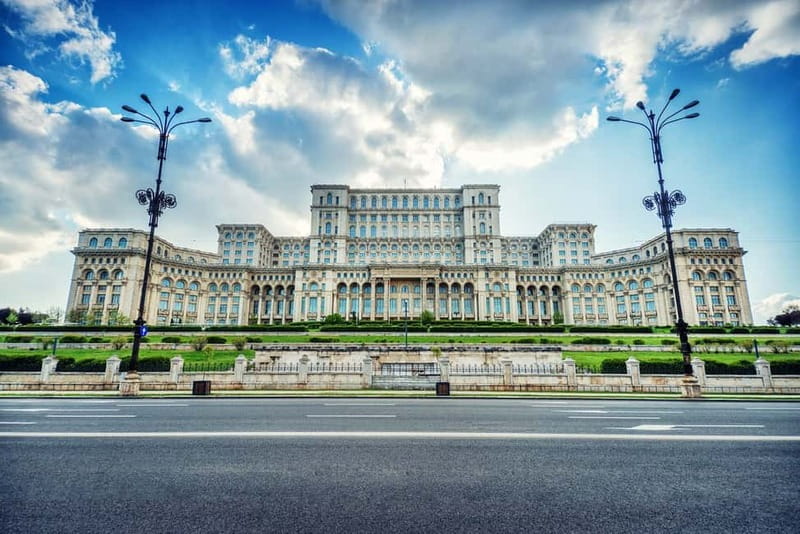
This tour is designed for people who want the highlights without turning the day into a maze. You get pickup from your address and return the same way, which matters in Bucharest where distances can add up. The ride is in a private, air-conditioned vehicle, and there’s Wi-Fi on board, which is handy for map-checking and keeping your phone charged.
Because it’s private, you’re not stuck with a fixed group pace. The route is time-blocked, but the guide can flex based on what you care about most. In past experiences with guides on this program, people highlighted good timing and clear explanations (including examples like Vlad and Alex being efficient and responsive).
The other practical advantage: you’ll spend fewer minutes figuring out where to go and more time looking. For a first Bucharest trip, that’s a big deal.
You can also read our reviews of more city tours in Bucharest



Palace of the Parliament: When You Feel Tiny in Megalomania
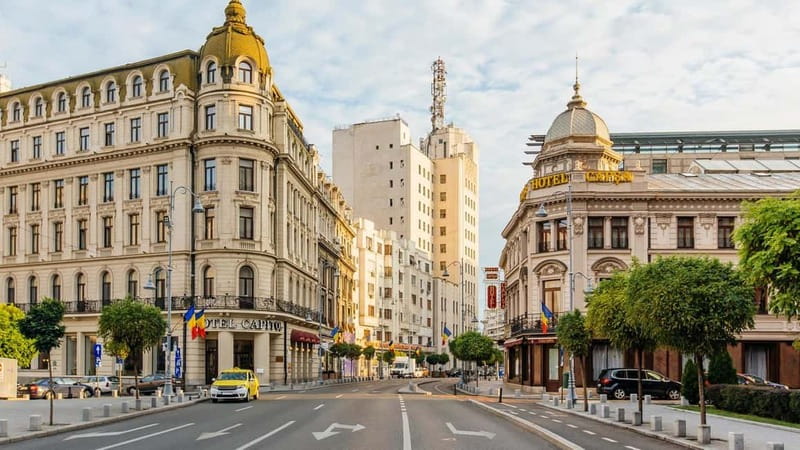
The tour’s first major architecture moment is the Palace of the Parliament, also known as the People’s House. You’ll get a photo stop and sightseeing for about 30 minutes—not to see every corner, but to get the point of the building.
This is the kind of structure that doesn’t just dominate a skyline. It communicates power in stone and scale. The tour frames it through the impact of communist rule, including how damaging a totalitarian regime can be for a nation. When you stand in the vicinity, you really do get that unsettling feeling of scale and intention. It’s hard not to feel small next to something built to make others feel small.
What to watch for
- Look at how the building’s size overwhelms the human scale around it
- Notice how the grandeur can feel strangely pointless once you connect it to the history being explained
- Use your camera early; 30 minutes moves quickly when everyone wants the same angles
If you only do one “wow” building in Bucharest, this is the one that carries the most meaning per minute.
Piața Unirii: A Brief Passing Moment on the Way to Village Life
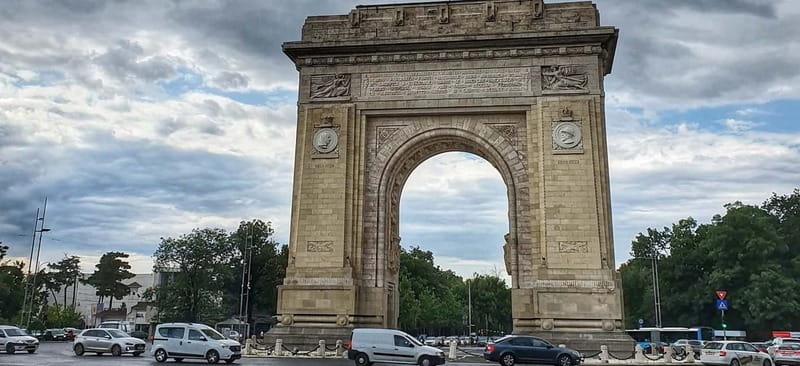
You pass Piața Unirii for about 10 minutes. This is a quick transfer point rather than a deep stop, but it helps your route feel continuous. Think of it as a reset from the massive Parliament zone toward a very different kind of Bucharest learning: how people lived long before the 20th-century political drama.
Even a short pass can help you get your bearings. When you later see the city’s older quarters, you’ll better understand how Bucharest’s neighborhoods connect.
Dimitrie Gusti National Village Museum: Romania in Wood, Adobe, and Stone
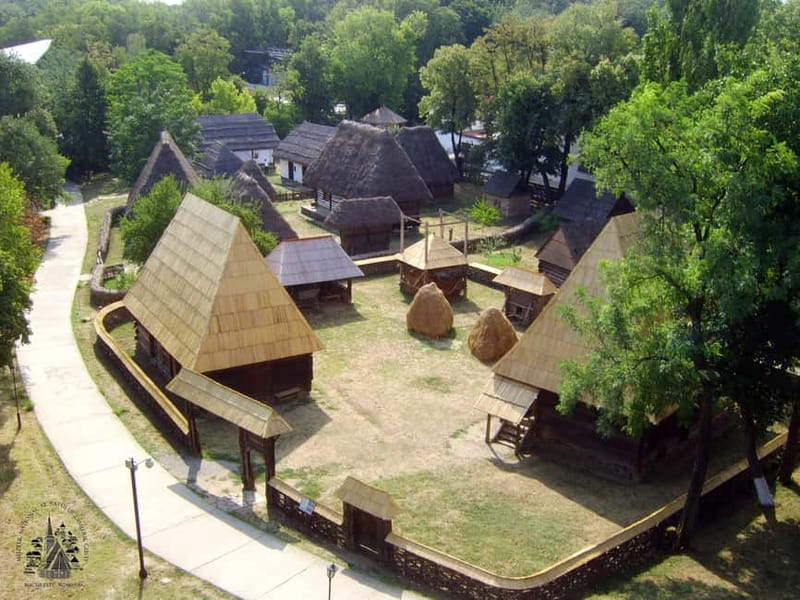
Next comes one of the most human stops on the itinerary: the Dimitrie Gusti National Village Museum. You’ll have around 1 hour for photo stops and sightseeing here.
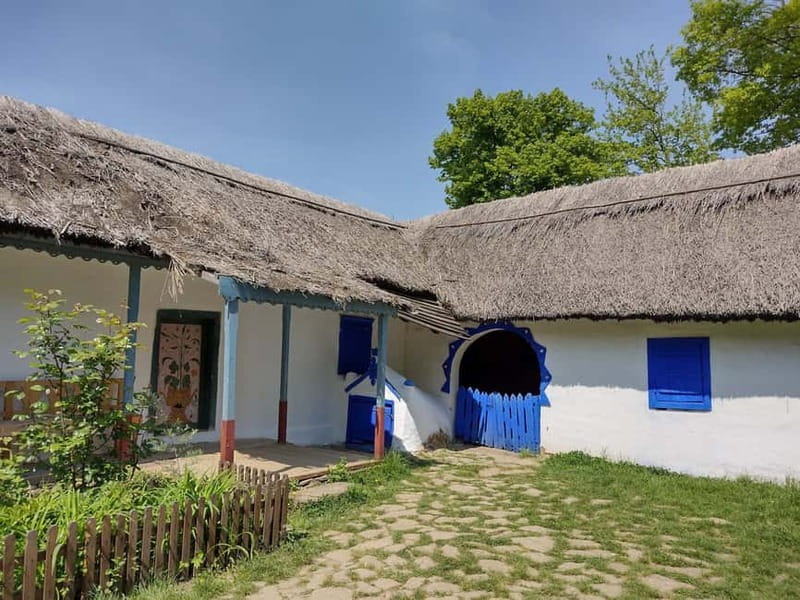
This museum is built around Romanian traditions, and it’s not just about objects behind glass. The experience aims to show what it meant for Romanian villagers to create sustainable, practical living spaces. The tour explanation focuses on harmony with surroundings—how villagers built their lives and homes close to local materials and needs.
You’ll also see traditional houses made from wood, adobe, stone, and other regional building approaches. The tour connects these to national symbols like the mill and the wooden church, and it’s a great reminder that culture isn’t only politics and monuments. It’s also how everyday people worked, prayed, gathered, and survived.
You can also read our reviews of more private tours in Bucharest



Why this stop is valuable
- It gives you a baseline understanding of Romanian life before modern upheavals
- It makes the later political landmarks easier to interpret, because you’ll see what was at stake
- It’s visually satisfying even if history isn’t your main interest
A small consideration
Because you have about an hour, you’ll want to pick a few areas to focus on rather than trying to photograph everything. Your guide can help you choose what’s most representative.
Revolution Square: Where Bucharest Turns Into a Timeline
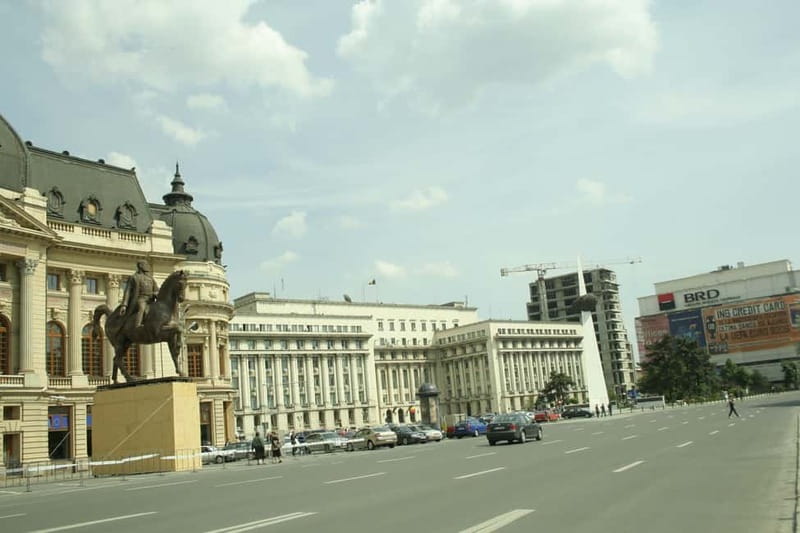
Then you arrive at Revolution Square. You’ll have a 30-minute guided tour with time for photos.
This stop is all about context. Revolution Square is tied to the events around the overthrow of Nicolae Ceaușescu, and the tour uses that connection to explain how the communist regime fell apart in real time. You’ll also be guided through key ideas about danger and damage under totalitarian rule, not in abstract terms but in how streets and buildings became stages.
One of the vivid details included on this route is the story of Ceaușescu fleeing by helicopter. Even if you’ve heard bits of the revolution story before, hearing it anchored to specific places helps it land.
Calea Victoriei (Victory Avenue): Royal Grandeur Meets Communist Power
Calea Victoriei is one of Bucharest’s most revealing contradictions. You’ll spend about 45 minutes here with photo stops, guided tour, and sightseeing.
On one side, you get the Royal Palace. On the other side, the route emphasizes the presence of the Central Committee of the Romanian Communist Party. That contrast is the whole point: different eras claiming the same city energy, using architecture to send messages.
The tour also nudges you to look for the smaller atmospheric layers along the way. The walk-through includes mentions of old orthodox churches, a stretch of music stores, and the general bohemian mix of places you can wander later—casinos, restaurants, museums, theatres, tea shops, retail stores, and gift shops with souvenirs.
How to enjoy this segment more
- Slow down your camera and look at building facades as you pass
- Pay attention to how the guide connects political events to the street
- If you’re the type who likes taking notes, this is a good place to do it, because the narrative ties together
National History Museum, Romanian Athenaeum, and CEC Palace: Contrast Without Losing the Thread

After the political streets, the tour shifts into architectural contrast. You’ll stop at key landmarks including the National History Museum and the Romanian Athenaeum, plus the CEC Palace.
This part of the route matters because it shows Bucharest as more than a single era. The Athenaeum is a landmark tied to Romania’s cultural identity, and the National History Museum reinforces the idea that the city’s story spans generations, not only 1940s to 1980s.
The CEC Palace adds another layer of state architecture, reminding you that governments, institutions, and money all shape a city’s face.
Time reality check
This segment supports the bigger picture, but it’s still a half-day tour. So expect photos and guided highlights rather than long interior exploration.
Senate Palace and the Central Committee Building: The Revolution’s Physical Starting Point
The final major history anchor is the Senate Palace, presented as a focal building tied to the communist Central Committee. The route explains that this area served as a starting point of the Revolution of December 1989 and the removal of Ceaușescu from power.
The tour also includes the idea that the fall left behind secrets about wealth and controversy linked to the state security service. Even if you don’t leave with every detail, you leave with something more useful: an understanding of why Bucharest’s buildings matter. They are not decoration. They are part of the political story you just followed.
And yes, you might find yourself looking at these grand facades a little differently now—less as symbols of power, more as evidence of how systems can harm a nation.
Old City Centre: Bohemian Streets for Your Last Hour
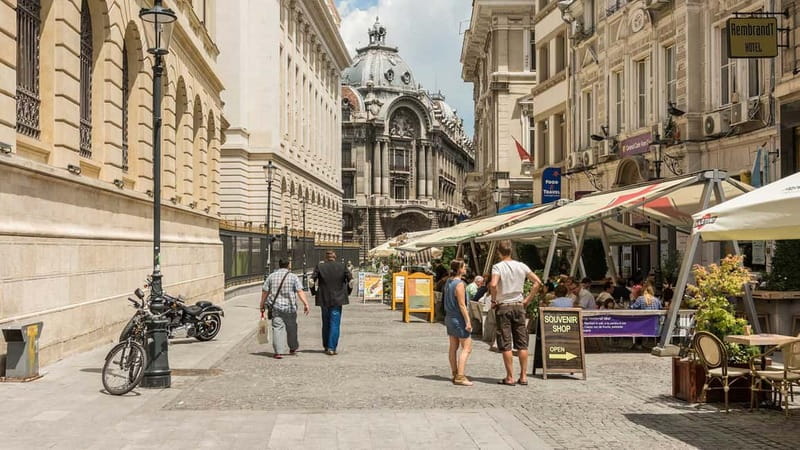
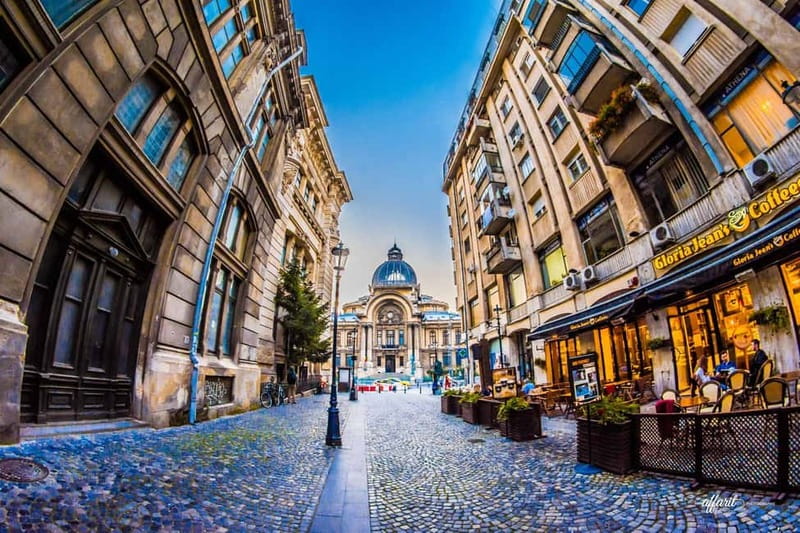
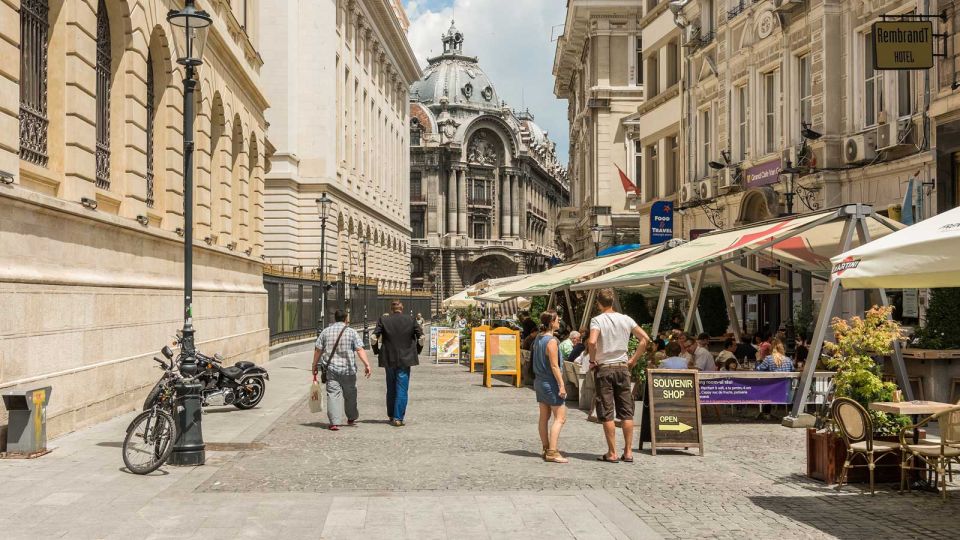
You end with Bucharest Old Town, with about 1 hour for photo stops and guided time.
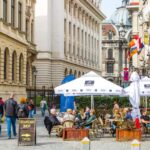
This is your chance to let Bucharest breathe after the heavy history. Old Town can feel more relaxed, and it gives you a softer landing: smaller streets, mixed-use atmosphere, and the kind of energy where you can imagine the city’s everyday rhythm.
The tour won’t replace independent wandering, but it’s a smart way to finish. You’ll get a guided framework first, then you can decide later what to revisit on your own.
Practical tip
If you’re thinking of returning for dinner or a late walk, ask your guide for which streets to prioritize based on what you like—churchy quiet areas, museums, or food-and-tea zones.
Price and Value: Is $131 Per Person Worth It?
At $131 per person for a private 4-hour tour, the value depends on two things: how much you’d otherwise pay for guide + transportation, and how much you care about making the history stick.
Here’s why it can be good value:
- Hotel pickup and drop-off saves time and taxi costs, especially if you’re not staying centrally
- A licensed English guide turns landmark photo ops into understanding
- The vehicle is private and air-conditioned, so you’re not squeezed into a public transfer
- Wi-Fi on board is a small convenience that adds up
- The tour includes the main highlight sequence: Parliament, Village Museum, Revolution Square, Calea Victoriei, and major architecture stops
Where value can feel less strong:
- Entrance fees aren’t included, so you should budget separately for what you want to go inside
- The schedule includes several photo stops, so it may not satisfy you if you expect long museum time
In short: for a first visit and a short stay, this is often the kind of tour that pays back your time.
Who This Tour Suits Best (And Who Should Pick Something Else)
This works especially well if:
- You’re in Bucharest for a limited time and want structure
- You like history, but you also want it explained with street-level locations
- You want comfort—private ride, AC, Wi-Fi—without paying for a full day
It may be less ideal if:
- You’re planning a deep museum day and want hours inside buildings rather than guided highlights
- You prefer fully self-guided travel where you control every minute
A good compromise: book this for orientation, then pick one or two sites to return to later under your own pace.
Should You Book This Bucharest Private City Tour?
I’d book this tour if you want Bucharest’s highlights with real context and a guide who can keep the day smooth. The strongest reason is the combination of big political architecture with a surprisingly grounded stop at the National Village Museum, followed by the connective tissue of Revolution Square and Calea Victoriei. It’s the kind of route that helps you understand why the city looks the way it does.
If you’re on the fence, decide based on your time and style: if 4 hours feels right and you’re happy with photos plus guided explanations, this tour is a smart buy. If you want long interior time at each major stop, you might want a more focused itinerary instead.
FAQ
What is the duration of the Bucharest private city tour?
The tour lasts 4 hours.
Does the tour include hotel pickup and drop-off?
Yes. Pickup and drop-off are included from your address.
Is transportation provided, and is it comfortable?
You travel in a private, air-conditioned vehicle with Wi-Fi on board.
What language is the tour guide?
The live tour guide speaks English.
Are entrance fees included for the stops?
No. Entrance fees are not included and depend on what’s planned in the itinerary.
Is food and drinks included?
No. Food and drinks are not included.
Is the tour designed for a private group?
Yes. It is a private group experience.