REVIEW · BUCHAREST
The Jewish heritage of Bucharest – half day walking tour
Book on GetYourGuide →Operated by Razvan Trancu · Bookable on GetYourGuide
A few streets in Bucharest carry huge stories. This Jewish heritage half-day walk links what still stands—synagogues, a restored temple, and memorials—with the Jewish quarter’s wartime and Communist-era history. I especially like how it stays practical (short visits, clear pacing, good meeting points) and how the guide—Razvan Trancu—makes the past feel real without drowning you in names. One thing to plan for: key sites can close for religious holidays, and you may need to budget extra entrance fees when open.
You’ll also get time to see the Great Synagogue and the Coral Temple, plus a stop for culture at the Jewish State Theater. If you’re sensitive to heavy subject matter, expect the Holocaust memorial and related context to be direct and emotional. Heat matters too in summer; openings can shift, so it’s smart to check ahead.
Bold names you’ll remember: Great Synagogue, Coral Temple, Holocaust Memorial, Teatrul Evreiesc de Stat
Best for: first-timers who want meaning, not just photos
Bring: cash for entrance fees when sites are open
In This Review
- Key things I’d plan around
- Jewish heritage in Bucharest: small streets, big history
- Meeting at Starbucks: an easy start, then quick orientation
- Jewish Museum Bucharest: why an ex-temple setting matters
- Great Synagogue Bucharest: a major stop with Holocaust context
- Teatrul Evreiesc de Stat: Jewish life beyond religion
- Laude-Reut Educational Complex and Jerusalem Lion Square
- Avraham Kosher break time: snacks and a practical pause
- Coral Temple: Neo-Mudejar style and 150+ years of story
- Bucharest Holocaust Memorial: ending where the emotion lands
- Price and value: what $318 per group really buys
- Timing, openings, and the closures you must check
- Who this tour suits best (and who may want a different style)
- A real guide matters: Razvan Trancu’s approach
- Should you book this Jewish Heritage Bucharest walking tour?
- FAQ
- Where do I meet for the Bucharest Jewish heritage walking tour?
- How long is the tour?
- How big is the group?
- What languages are available?
- Is the tour wheelchair accessible?
- Are there entrance fees for the stops?
- What should I bring?
- Which Jewish holidays can affect opening times?
Key things I’d plan around
- Small group pace (up to 7 people) makes the questions actually work.
- Razvan Trancu’s style uses clear storytelling and visual support on an iPad, which helps a lot.
- You see both worship spaces and culture sites: museum in an ex-temple, plus the Jewish State Theater.
- The ending at the Bucharest Holocaust Memorial is timed as a final emotional anchor.
- Closure dates and hours can affect which buildings you can enter, especially on major Jewish holidays.
Jewish heritage in Bucharest: small streets, big history
Bucharest doesn’t feel like a “museum city” at first. You mostly see modern blocks and everyday Old Town streets. But step into the Jewish quarter area and you start spotting the layers: what survived, what changed, and what was erased.
This is a 3-hour walking tour that hits the major touchpoints without pretending you can cover everything. It’s built around a simple idea: the architecture you can still see matters, but so does the story of what happened when the community was forced into tragedy and then reshaped under Communism.
You’ll move at a comfortable walking pace through narrow lanes and city fragments that used to be part of Jewish daily life. Then the tour lands where the meaning sharpens—at the Holocaust Memorial.
You can also read our reviews of more walking tours in Bucharest


Meeting at Starbucks: an easy start, then quick orientation
You meet at the Starbucks entrance door, which is a practical win if you’re trying to arrive on your own schedule. From there, you begin with an Old Town orientation walk.
That first stretch is short—just enough to get your bearings. It matters because the rest of the route is about recognizing locations that don’t always look “historic” from a distance. Getting oriented early helps the buildings and street rhythm click in your mind.
Jewish Museum Bucharest: why an ex-temple setting matters
The Jewish Museum Bucharest is hosted in an ex-temple, and that setting adds weight to what you’ll learn. A temple turned into a museum tells you something blunt about survival and reuse—faith spaces can change function when history breaks them.
During your visit, you’ll have guided time to understand how Jewish community life in Bucharest developed, flourished, and was disrupted. You’ll also get a sense of how memory is preserved when the original neighborhood fabric can’t fully remain.
In practical terms, this museum stop is the tour’s “structure.” You’ll walk out with a clearer timeline, which makes the synagogue and memorial stops hit harder later.
Great Synagogue Bucharest: a major stop with Holocaust context
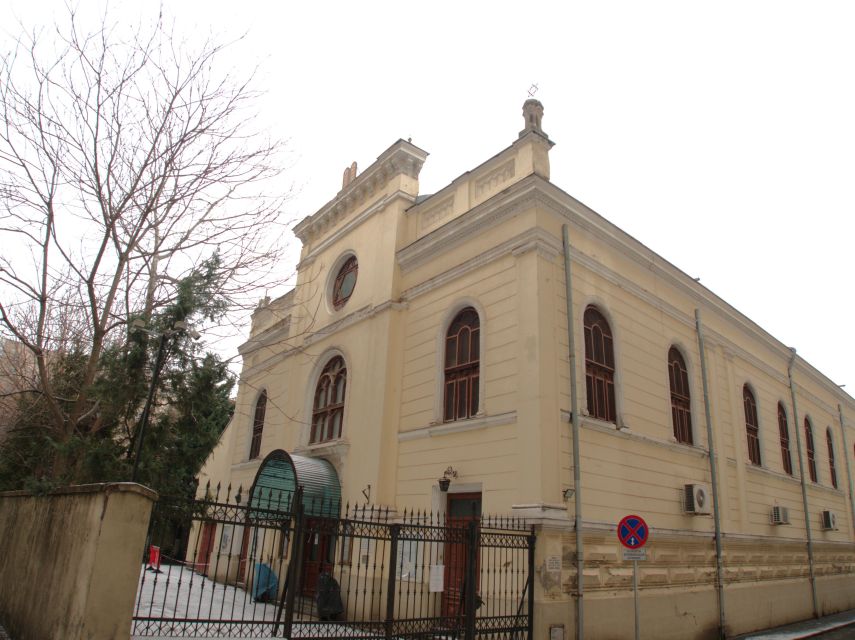
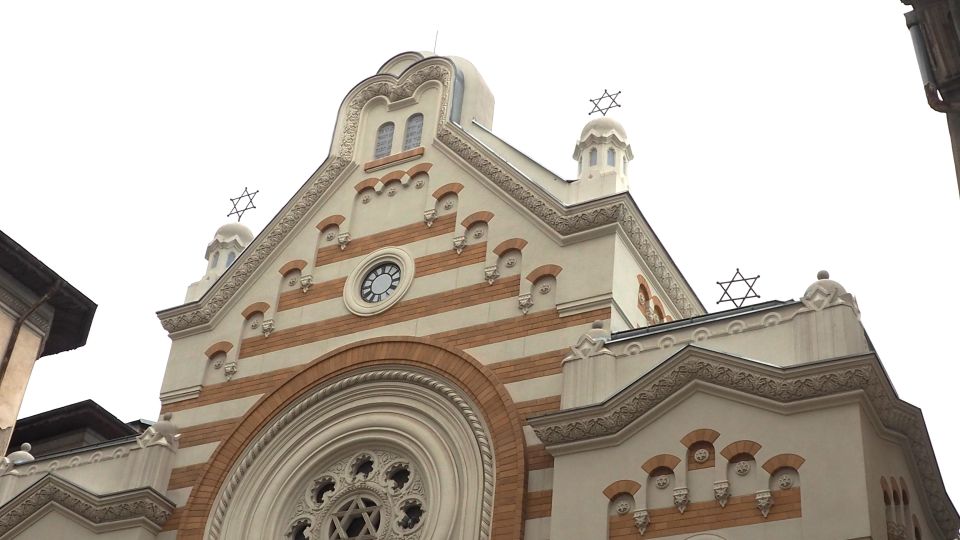
The Great Synagogue is one of the headline buildings in Bucharest’s Jewish heritage story. You’ll have a guided visit window that’s long enough to look carefully and take in what makes it distinctive.
The key value here is the Romanian Holocaust history connected to the synagogue site. Even if you’ve read about the Holocaust before, a place-based story can change how you understand it. Architecture becomes a kind of memory aid: you’re not just learning facts, you’re watching how the community’s story is anchored in buildings.
One more thing to plan for: the Great Synagogue and the Coral Temple have closure restrictions during major Jewish holidays. That can affect whether you can enter both buildings.
Teatrul Evreiesc de Stat: Jewish life beyond religion
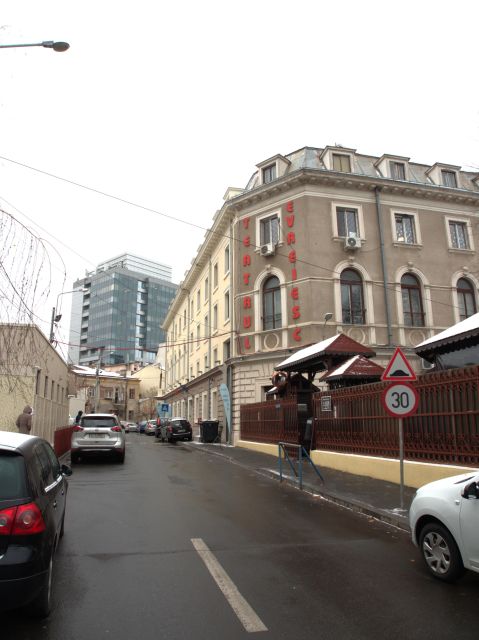
A lot of visitors expect Jewish heritage to be only about synagogues and cemeteries. This stop nudges you past that. The Jewish State Theater—Teatrul Evreiesc de Stat—reflects a different side of community life: culture, public performance, and ideas in shared space.
You’ll pass by with guided time to understand what the theater represents in the broader story of Jewish presence in Bucharest. It’s a reminder that Jewish history here isn’t just “before the war and after the war.” It includes everyday creative life, public identity, and institutions that helped people feel connected.
If you like cities where history shows up in unexpected places, this theater stop is a good proof-of-concept. It keeps the tour from turning into a single-note memorial route.
You can also read our reviews of more historical tours in Bucharest

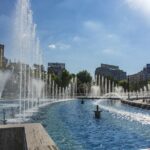
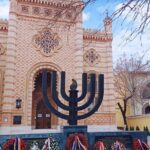


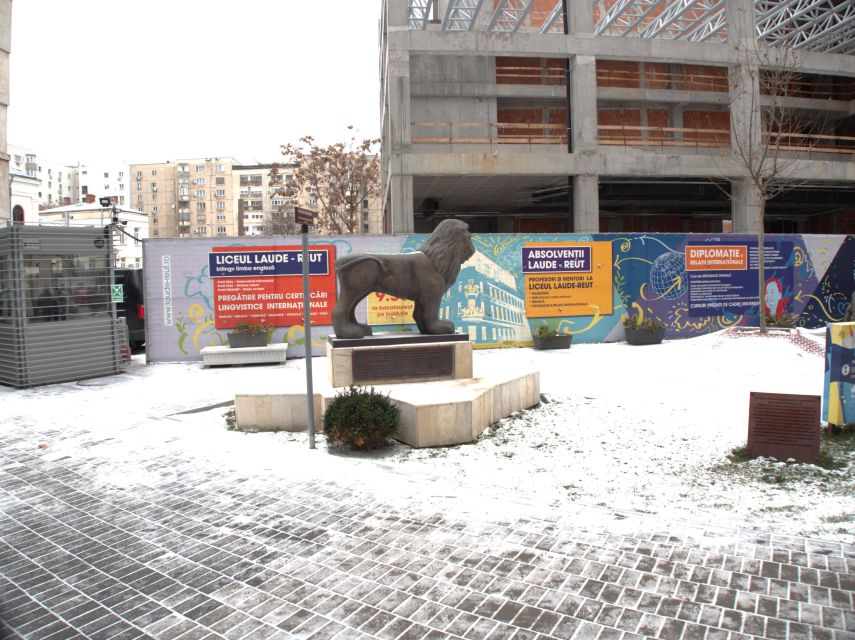
Laude-Reut Educational Complex and Jerusalem Lion Square
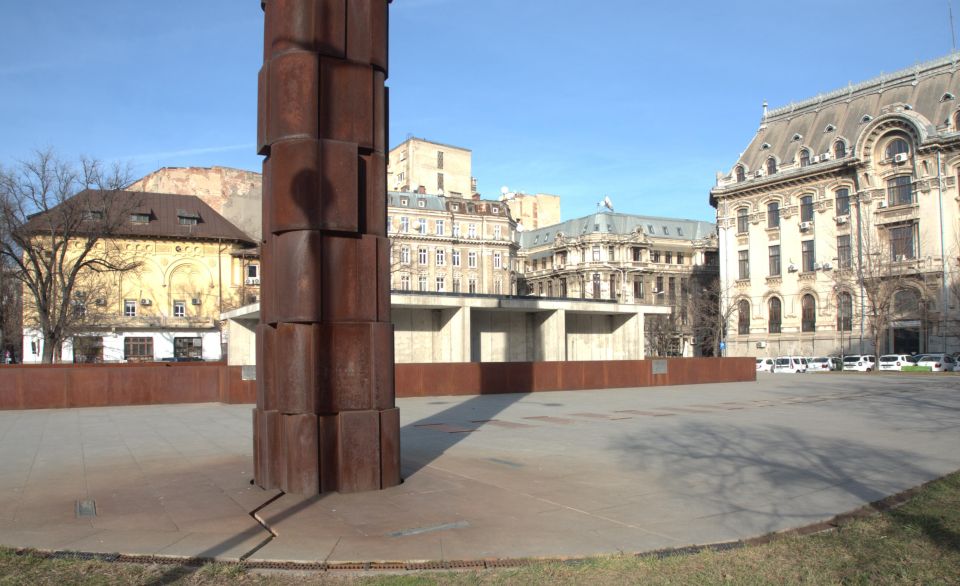
You’ll pass by the Laude-Reut educational complex and Jerusalem Lion Square. Even as “pass-by” stops, they serve a purpose.
They point you toward the community’s emphasis on education and future-minded continuity. In a walking tour, you don’t always have time for deep entry into every site, but these quick looks help you map the neighborhood’s identity beyond the biggest monuments.
Think of them as signposts. They help you understand where community life aimed itself, not only where it broke.
Avraham Kosher break time: snacks and a practical pause
Halfway through, you get a break at Avraham Kosher, with time for local snacks. This is the moment to recharge before the last portion of the tour.
It’s also a useful reality check. You can learn about history and still need food and water. In hot weather, this break is the difference between enjoying the last stops and feeling drained.
Important: snacks and any personal purchases are not included, so treat this as a do-what-you-need moment. Cash is a safe bet since you’ll likely want to handle entrance fees too.
Coral Temple: Neo-Mudejar style and 150+ years of story
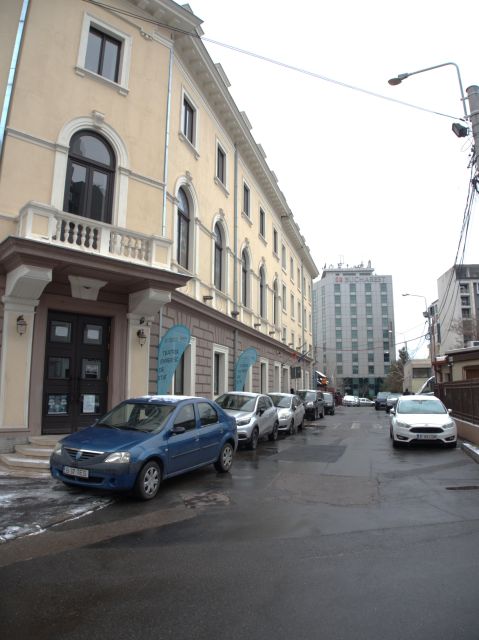
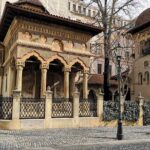
The Coral Temple is a standout stop. It’s described as Neo-Mudejar style, and it has been recently restored. You’ll also learn that its history reaches back 150+ years, which makes it more than a decorative building.
This is a “slow down” location. You’ll have guided visit time long enough to look at details and understand why the temple’s survival matters. In tours focused on Jewish heritage in Europe, the missing pieces often feel bigger than what remains. Here, the remaining structure is an anchor.
Like the Great Synagogue, the Coral Temple may close during major Jewish holidays (Rosh Hashana, Pesach, Shavuot, Yom Kippur, and Sukkot). On open days, it’s one of the most meaningful architectural moments of the whole route.
Bucharest Holocaust Memorial: ending where the emotion lands
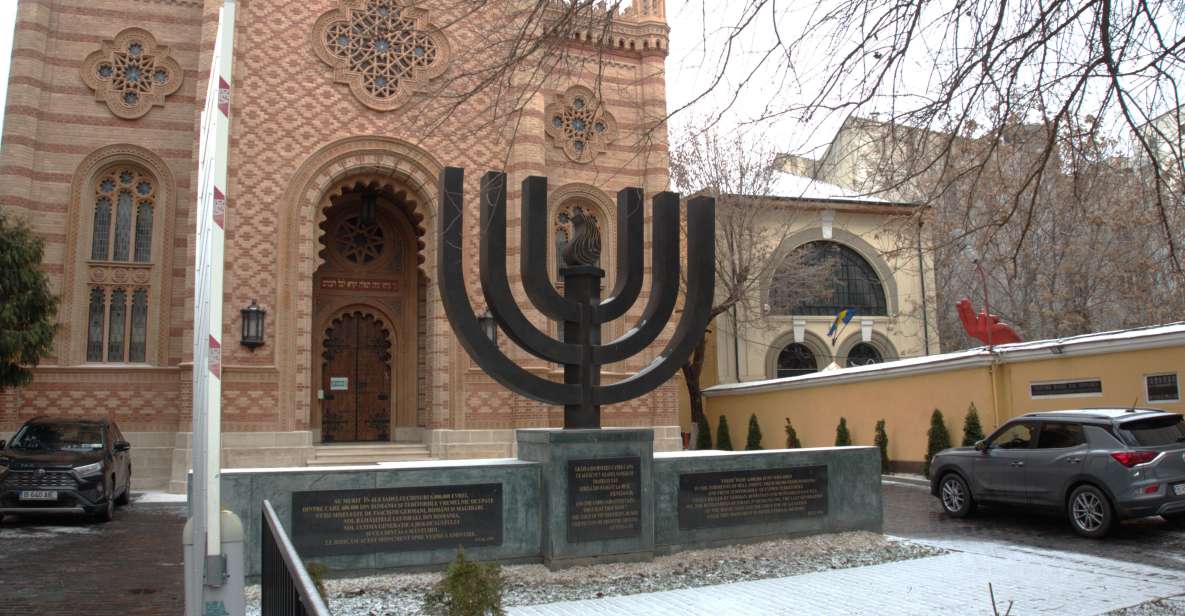
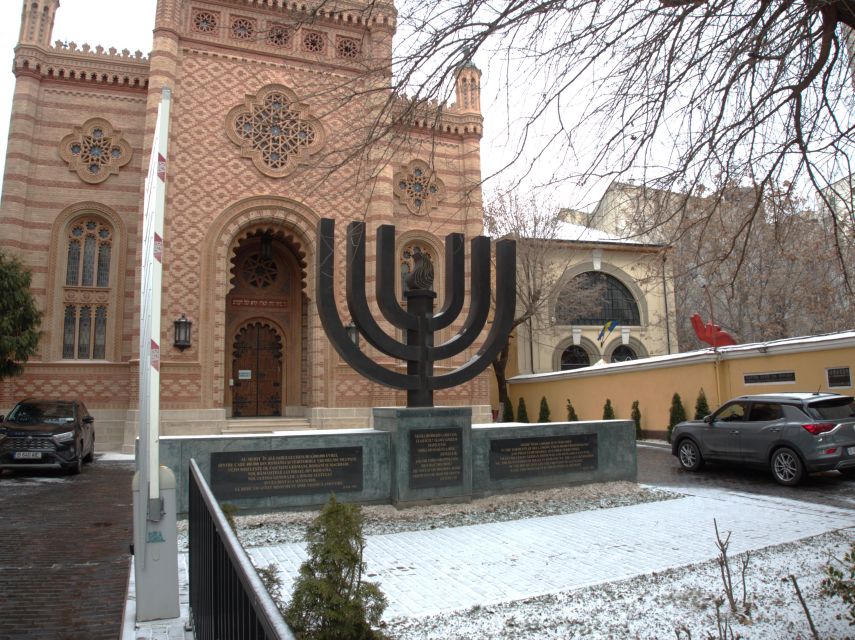
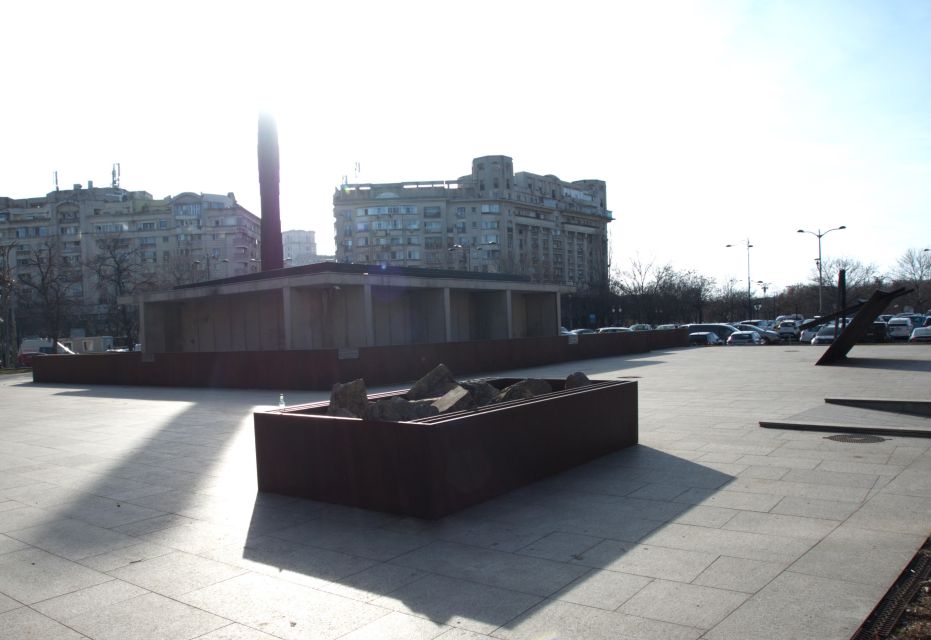
The tour ends at the Holocaust Memorial, with a focused visit window. Placing this at the end matters. You’ve already seen synagogues, cultural space, and a community museum, so the memorial doesn’t feel like a random stop.
By the time you arrive, you can connect what you saw to what happened. The result is often quieter and more personal than you expect. Even if you’ve seen Holocaust memorials elsewhere, the Bucharest context makes the story feel specific rather than generic.
If you want to make the most of the ending, don’t rush it for photos. Let your brain connect the earlier stops to this final place.
Price and value: what $318 per group really buys
The price is $318 per group (up to 12), while the small group limit is 7 participants. That’s a big clue about how this tour is meant to feel: less like a mass walking route, more like a guided conversation at city pace.
You’re paying for several things at once:
- a real local guide (Razvan Trancu has strong feedback for storytelling and responsiveness)
- guided time at major heritage sites
- help interpreting what you’re seeing, not just where to stand
Entrance fees and snacks aren’t included. Entrance fees are listed as 30 lei per person (about 6 USD) in each location when open, so it can add up if you’re entering multiple sites. Still, for a guided route that covers the biggest anchors in a single half-day, it tends to work out as fair value.
Where you can save money is in being smart about your day plan: choose a single heritage-focused tour rather than stacking three different short ones. This route already hits the major “must see” stops.
Timing, openings, and the closures you must check
This tour is heavily dependent on when buildings are open. The Coral Temple and the Great Synagogue are closed during major Jewish holidays: Rosh Hashana, Pesach, Shavuot, Yom Kippur, and Sukkot.
Visiting hours are also specific:
- Mon–Thu: 9:00 to 14:00
- Fri: 9:00 to 12:00
The Jewish Community Museum is noted as closed on Fridays. On top of that, opening schedules can be affected by high temperatures, and there may be safety-related closures due to events in Israel.
So what should you do?
- If your travel dates include a Friday, a major holiday, or hot mid-day time slots, message ahead and ask what’s expected to be open.
- If you’re traveling in summer, carry water and plan for slower movement on the hottest streets.
Who this tour suits best (and who may want a different style)
This Jewish heritage walk is ideal if:
- you want the big Bucharest Jewish anchors in one route
- you prefer guided interpretation over self-guided wandering
- you’re okay with a serious historical theme delivered in a clear, respectful way
It may be less ideal if:
- you need guaranteed entry into every synagogue or temple building on the exact dates you chose
- you dislike walking routes that include memorial context as part of the main storyline
The good news is that the tour is designed for flow. Even when entry isn’t possible, the guide’s commentary is still built around what you can see and what that change in access means.
A real guide matters: Razvan Trancu’s approach
Razvan Trancu is specifically highlighted for several things that make the experience easier to hold onto. His English is reported as strong, and his explanations connect historical facts to the street-level reality you’re walking through.
He also uses iPad photos to support the story. That can be a big deal in a city where you’re often trying to visualize what used to be there. Add humor and easy responsiveness, and the whole tour doesn’t feel like a lecture you survive. It feels like a guide who’s chosen the details you’ll remember later.
Also worth noting: there’s emphasis on taking care of people’s comfort when the weather is extremely hot. That’s not a small detail. It changes how much attention you can give to the heavy themes.
Should you book this Jewish Heritage Bucharest walking tour?
Book it if you want a focused, meaningful way to understand Bucharest’s Jewish community history—especially if you’re pairing this with other Old Town exploring and want one guided anchor that connects the dots.
I’d hesitate only if your dates land on the closure windows (major holidays, Fridays for certain sites) or if you need guaranteed interior access to every building. In those cases, you can still book, but you should check ahead about what’s open and what the route will prioritize.
If you like history that’s tied to actual streets, this tour does that well.
FAQ
Where do I meet for the Bucharest Jewish heritage walking tour?
You meet at the Starbucks entrance door.
How long is the tour?
The tour lasts about 3 hours.
How big is the group?
It’s a small group limited to 7 participants.
What languages are available?
The live guide speaks Italian and English.
Is the tour wheelchair accessible?
Yes, it’s listed as wheelchair accessible.
Are there entrance fees for the stops?
When sites are open, there is an entrance fee of 30 lei per person (around 6 USD) for each location.
What should I bring?
Bring cash, since entrance fees are paid on site when open.
Which Jewish holidays can affect opening times?
The Coral Temple and the Great Synagogue are closed during Rosh Hashana, Pesach, Shavuot, Yom Kippur, and Sukkot. The museum is closed on Fridays, and schedules may also shift due to heat or safety-related decisions.